
From Wikipedia, the free encyclopedia

Public holidays in Italy are established by the Italian parliament and, with the exception of city or community patronal days, apply nationwide.[2] These include a mix of national, religious and local observances. As for Whit Monday, there is an exception for South Tyrol. In Italy there are also State commemoration days, which are not public holidays.
Overview[edit]

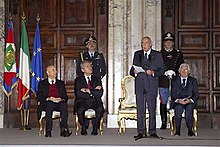
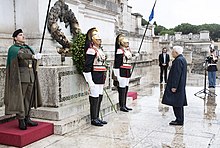
Italy’s National Day, the Festa della Repubblica (Republic Day),[1] is celebrated on 2 June each year, with the main celebration taking place in Rome, and commemorates the birth of the Italian Republic in 1946.[3] The ceremony of the event organized in Rome includes the deposition of a laurel wreath as a tribute to the Italian Unknown Soldier at the Altare della Patria by the President of the Italian Republic and a military parade along Via dei Fori Imperiali in Rome.

Liberation Day is a national holiday in Italy that takes place on 25 April commemorating the victory of the Italian resistance movement against Nazi Germany and the Italian Social Republic, puppet state of the Nazis and rump state of the fascists, in the Italian Civil War, a civil war in Italy fought during World War II. The date was chosen by convention, as it was the day of the year in 1945 when the National Liberation Committee of Upper Italy (CLNAI) officially proclaimed the insurgency in a radio announcement, propounding the seizure of power by the CLNAI and proclaiming the death sentence for all fascist leaders (including Benito Mussolini, who was shot three days later).[4]
17 March was proclaimed a national holiday in 1911, the 50th Anniversary of the Unification of Italy, in 1961, the 100th anniversary of the Unification of Italy, and in 2011, the 150th anniversary of the Unification of Italy. The law no. 222 of 23 November 2012[5] the Giornata dell’Unità nazionale, della Costituzione, dell’inno e della bandiera («Day of National Unity, the Constitution, the anthem and the flag») was established to be celebrated on 17 March of each year, on the day of the proclamation of the Unification of Italy in 1861, however it is not to be considered a festive day.
Until 1977 the following were also considered public holidays in Italy for civil purposes:[6]
- 19 March, Saint Joseph Day;
- 40 days after Easter, Ascension of Jesus;
- 60 days after Easter, Corpus Christi;
- 29 June, Saints Peter and Paul, patron saints of Rome (it remained a public holiday only in the municipality of Rome);
- 4 November, National Unity and Armed Forces Day.
These public holidays were suppressed, during the austerity caused by the 1973 oil crisis, on the basis of the law n. 54 of 5 March 1977.[6] In particular, in 1977 National Unity and Armed Forces Day became a moveable feast, and celebrations occurred every first Sunday of November.[7] National Unity and Armed Forces Day is an Italian national day since 1919 which commemorates the victory in World War I, a war event considered the completion of the process of unification of Italy. It is celebrated every 4 November, which is the anniversary of the armistice of Villa Giusti becoming effective in 1918 declaring Austria-Hungary’s surrender.[7] Italy entered World War I in 1915 with the aim of completing national unity and for this reason, the Italian intervention in World War I is also considered the Fourth Italian War of Independence,[8] in a historiographical perspective that identifies in the latter the conclusion of the unification of Italy, whose military actions began during the revolutions of 1848 with the First Italian War of Independence.[9][10]


In addition to the 12 national holidays, each city or town celebrates a public holiday on the occasion of the festival of the local patron saint. For example, Rome on 29 June (Saints Peter and Paul), Milan on 7 December (Saint Ambrose), Naples on 19 September (Saint Januarius), Venice on 25 April (Saint Mark the Evangelist) and Florence on 24 June (Saint John the Baptist).[2] In South Tyrol, the holiday is instead on Whit Monday. This makes the total public holidays in Italy 13.
The Italian national patronal day, on 4 October, celebrates Saints Francis and Catherine. Notable patronal festivals in Italy are the Festival of Saint Agatha in Catania, the Feast of Saints Peter and Paul in Rome, the Feast of San Gennaro in Naples and Little Italy, New York[11] and the Feast of Our Lady of the Hens in Pagani.
This number does not correspond to the number of days off work as public holidays falling on weekends are not transferred. When a holiday falls on a Tuesday or a Thursday it is common practice to make a ponte (pl. ponti. English: «bridge») in order to have a long weekend. Schools are usually closed.
Christmas in Italy (in Italian: Natale) begins on 8 December, with the feast of the Immaculate Conception, the day on which traditionally the Christmas tree is mounted and ends on 6 January, of the following year with the Epiphany (in Italian: Epifania).[12] The term «Natale» derives from the Latin natalis, which literally means «birth».[13]
During the Italian public holidays, peaks of tourist flows in Italy are recorded, particularly in winter due to the Christmas and New Year’s Day holidays,[14] in spring, due to the Easter holidays,[15] and in summer, due to the favourable climate.[16] For internal tourism, peaks of tourist flows are also recorded on the occasion of the three national civil holidays, Liberation Day (25 April), International Workers’ Day (1 May) and the Festa della Repubblica (2 June),[17][18] as well as for three religious holidays, the Ferragosto (15 August),[19] All Saints’ Day (1 November)[20] and the Feast of the Immaculate Conception (8 December), especially in the presence of ponti.[21]
Current holidays[edit]


Current holidays in Italy are:[23]
| Date | English Name | Italian Name | Remarks |
|---|---|---|---|
| Every Sundays | In Italy, Sunday is always a public holiday[a] | ||
| Variable[b] | Patronal festival | Festa del santo patrono | Public holiday established by each comune limited to its own territory to celebrate the saint who has the role of patron saint of the municipality |
| 1 January | New Year’s Day | Capodanno | |
| 6 January | Epiphany | Epifania | |
| Sunday after the first full moon following the spring equinox[c] | Easter Sunday | Pasqua | |
| Monday after Easter | Easter Monday | Lunedì dell’Angelo, Lunedì in Albis or more commonly Pasquetta | |
| 25 April | Liberation Day | Festa della Liberazione | The day commemorates the victory in 1945 of the Italian resistance movement against Nazi Germany and the Italian Social Republic, puppet state of the Nazis and rump state of the fascists, in the Italian Civil War, a civil war fought in Italy during World War II. |
| 1 May | Labour Day | Festa del Lavoro (or Festa dei Lavoratori) | |
| 2 June | Republic Day | Festa della Repubblica | The day commemorates the institutional referendum held by universal suffrage in 1946, in which the Italian people were called to the polls to decide on the form of government following World War II and the fall of Fascism. The day is one of the national symbols of Italy. |
| 15 August | Assumption Day | Assunzione (Ferragosto) | Ferragosto is a public holiday celebrated on 15 August in all of Italy. It originates from Feriae Augusti («Festivals [Holidays] of the Emperor Augustus»), the festival of Augustus, who made 1 August a day of rest after weeks of hard work on the agricultural sector. As the festivity was created for political reasons, the Catholic Church decided to move the festivity to 15 August which is the Assumption of Mary allowing them to include this in the festivity. |
| 1 November | All Saints’ Day | Tutti i santi (or Ognissanti) | |
| 8 December | Immaculate Conception | Immacolata Concezione (or just Immacolata) | |
| 25 December | Christmas Day | Natale | |
| 26 December | Saint Stephen’s Day | Santo Stefano | In Italy, Saint Stephen’s Day became a public holiday in 1947, where previously it was a normal working day; the Catholic Church also celebrates it as a religious holiday, even if not as a precept, as it is in Germany and other German-speaking countries. The reason for the public holiday in Italy, not required by the Catholic Church despite the fame of the saint, is to be found in the intention of prolonging the Christmas holiday, creating two consecutive public holidays, which also happens in the case of Easter Monday, a non-religious holiday, but which only wants to lengthen Easter.[24] Before 1947 the two days were working days, with banks and offices open. |
State commemorations[edit]
The following days are not public holidays, but are nevertheless official State commemorations.[1][23]
Civil solemnities[edit]
| Date | English Name | Italian Name | Remarks |
|---|---|---|---|
| 10 February | National Memorial Day of the Exiles and Foibe | Giorno del ricordo | Made a national day by law no. 92 of 30 March 2004.[25] It is an Italian celebration for the memory of the victims of the Foibe and the Istrian–Dalmatian exodus, which led to the emigration of hundreds of thousands (between 230,000 to 350,000) of local ethnic Italians (Istrian Italians and Dalmatian Italians) from Yugoslavia after the end of World War II. |
| 11 February | Lateran Treaty Day[1] | Patti Lateranensi | Treaty between the Kingdom of Italy and the Holy See establishing, among others, the recognition of the Vatican City as an independent state. |
| 9 September | Day of Remembrance for Sailors Lost at Sea | Giornata della memoria dei marinai scomparsi in mare | Made a national day by law no. 204 of 14 December 2012.[1] |
| 28 September | Four Days of Naples Day[1] | Insurrezione popolare di Napoli contro i nazifascisti or Quattro giornate di Napoli | It was an uprising in Naples against Nazi German occupation forces from September 27 to 30 September, 1943, immediately prior to the arrival of Allied forces in Naples on 1 October during World War II. |
| 4 October | Saint Francis and Saint Catherine | San Francesco e Santa Caterina | Made a national day by law no. 132 of 4 March 1958.[1] Patron saints of Italy.4/3/1958 n. |
| 4 November | National Unity and Armed Forces Day | Giorno dell’Unità Nazionale e Festa delle Forze Armate | A public holiday from its inception in 1919 till 1977, it commemorates the victory of Italy in World War I, a war event considered the completion of the process of unification of Italy. It is celebrated every 4 November, which is the anniversary of the armistice of Villa Giusti becoming effective in 1918 declaring Austria-Hungary’s surrender. |
| 12 November | Remembrance day for military and civilian fallen in international peace missions | Giornata del ricordo dei Caduti militari e civili nelle missioni internazionali per la pace | Made a national day by law no. 162 of 12 November 2009.[1] |
Celebratory days[edit]


| Date | English Name | Italian Name | Remarks |
|---|---|---|---|
| 7 January | Tricolour Day | Festa del tricolore | Flag day made a national day by law no. 671 of 31 December 1996. The official celebration of the day is held in Reggio Emilia, the city where the Italian tricolour was first adopted as flag by an Italian sovereign state, the Cispadane Republic, on 7 January 1797. |
| 26 January | National day of remembrance and sacrifice of the Alpini | Giornata nazionale della memoria e del sacrificio degli Alpini | Made a national day by law no. 44 of 5 May 2022.[1] |
| 27 January | International Holocaust Remembrance Day | Giorno della Memoria | Made a national day by law no. 211 of 20 July 2000.[27] It is an international memorial day that commemorates the victims of the Holocaust, which resulted in the murder of one third of the Jewish people, along with countless members of other minorities between 1933 and 1945 by Nazi Germany, an attempt to implement their «final solution» to the Jewish question. |
| 1 February | National day of civilian victims of wars and conflicts in the world | Giornata nazionale delle vittime civili delle guerre e dei conflitti nel mondo | Made a national day by law no. 9 of 25 January 2017.[1] |
| 20 February | National day of health, social and social care and voluntary workers | Giornata nazionale del personale sanitario, sociosanitario, socioassistenziale e del volontariato | Made a national day by law no. 155 of 13 November 2020.[1] |
| 21 February | National Braille Day | Giornata nazionale del Braille | Made a national day by law no. 126 of 3 August 2007.[1] |
| 6 March | Day of the Righteous of Humanity | Giornata dei Giusti dell’umanità | Made a national day by law no. 212 of 20 December 2017.[1] |
| 17 March | Anniversary of the Unification of Italy | Anniversario dell’Unità d’Italia | The day celebrates the birth of Italy as a modern nation state, which took place following the proclamation of the Kingdom of Italy on 17 March 1861. However, the complete unification of Italy took place only in the following years. 17 March was proclaimed a national holiday in 1911, the 50th Anniversary of the Unification of Italy, in 1961, the 100th Anniversary of the Unification of Italy, and in 2011, the 150th Anniversary of the Unification of Italy. With the law no. 222 of 23 November 2012[5] the Giornata dell’Unità nazionale, della Costituzione, dell’inno e della bandiera («Day of National Unity, the Constitution, the anthem and the flag») was established to be celebrated on 17 March of each year, on the day of the proclamation of the Unification of Italy in 1861, however it is not to be considered a day festive. |
| 18 March | National day in memory of the victims of the coronavirus epidemic | Giornata nazionale in memoria delle vittime dell’epidemia di coronavirus | Made a national day by law no. 35 of 18 March 2021.[1] |
| 21 March | National day of memory and commitment in remembrance of the victims of the mafia | Giornata nazionale della memoria e dell’impegno in ricordo delle vittime delle mafie | Made a national day by law no. 20 of 8 March 2017.[1] |
| 22 April | Earth Day | Giornata della Terra | Earth Day is an international annual event on 22 April to demonstrate support for environmental protection. First held on 22 April 1970, it now includes a wide range of events coordinated globally by EarthDay.org (formerly Earth Day Network).[28] including 1 billion people in more than 193 countries.[28][29] |
| 5 May | National day against pedophilia and child pornography | Giornata nazionale contro la pedofilia e la pedopornografia | Made a national day by law no. 41 of 4 May 2009.[1] |
| 9 May | Remembrance day dedicated to victims of terrorism | Giorno della memoria dedicato alle vittime del terrorismo | Made a national day by law no. 56 of 4 May 2007.[1] |
| Europe Day | Giornata dell’Europa | Europe Day is a day celebrating «peace and unity in Europe»[30][31] celebrated on 5 May by the Council of Europe and on 9 May by the European Union. | |
| 14 June | World Blood Donor Day | Giornata mondiale del donatore di sangue | World Blood Donor Day is held on 14 June each year. The event was organised for the first time in 2005, by a joint initiative of the World Health Organization, the International Federation of Red Cross and Red Crescent Societies to raise awareness of the need for safe blood and blood products, and to thank blood donors for their voluntary, life-saving donations of blood. |
| 2 October | Grandparents’ Day | Festa nazionale dei nonni | Made a national day by law no. 159 of 31 July 2005.[1] |
| 3 October | National day in memory of the victims of immigration | Giornata nazionale in memoria delle vittime dell’immigrazione | Made a national day by law no. 45 of 21 March 2016.[1] |
| 4 October | World Animal Day | Giornata mondiale degli animali | World Animal Day is an international day of action for animal rights and welfare celebrated annually on 4 October, the feast day of Francis of Assisi, the patron saint of animals. |
| 9 October | National day in memory of the victims of environmental and industrial disasters caused by human negligence | Giornata nazionale in memoria delle vittime dei disastri ambientali e industriali causati dall’incuria dell’uomo | Made a national day by law no. 101 of 4 June 2011.[1] |
| 12 October | Columbus Day | Giornata nazionale di Cristoforo Colombo | In Italy, Columbus Day has been officially celebrated since 2004.[32] The «Lega Navale Italiana» has created a Regata di Colombo as a celebration of the Italian explorer Christopher Columbus (Italian: Cristoforo Colombo) achievement.[33] Italians have celebrated their «Cristoforo Colombo» naming after him many civilian and military ships, like the ocean liner SS Cristoforo Colombo. |
| 24 October | United Nations Day | Giornata delle Nazioni Unite | United Nations Day is an annual commemorative day, reflecting the official creation of the United Nations on 24 October 1945. In 1947, the United Nations General Assembly declared 24 October, the anniversary of the Charter of the United Nations, to «be devoted to making known to the people of the world the aims and achievements of the United Nations and to gaining their support for» its work.[34] |
| National day of entertainment | Giornata nazionale dello spettacolo | Made a national day by law no. 164 of 28 October 2021.[1] | |
| 9 November | Freedom day | Giorno della libertà | Made a national day by law no. 61 of 15 April 2005.[1] |
| 21 November | National Tree Day | Giornata nazionale degli alberi | Made a national day by law no. 10 of 14 January 2013.[1] |
| 25 November | International Day for the Elimination of Violence against Women | Giornata internazionale per l’eliminazione della violenza contro le donne | The United Nations General Assembly has designated November 25 as the International Day for the Elimination of Violence against Women (Resolution 54/134).[35] The premise of the day is to raise awareness around the world that women are subjected to rape, domestic violence and other forms of violence; furthermore, one of the aims of the day is to highlight that the scale and true nature of the issue is often hidden. |
| Third Sunday of November | National day in memory of road victims | Giornata nazionale in memoria delle vittime della strada | Made a national day by law no. 227 of 29 December 2017.[1] |
| 1 December | World AIDS Day | Giornata mondiale contro l’AIDS | World AIDS Day, designated on 1 December every year since 1988,[36] is an international day dedicated to raising awareness of the AIDS pandemic caused by the spread of HIV infection and mourning those who have died of the disease. |
See also[edit]
- Culture of Italy
- Christmas in Italy
- Ferragosto
- Traditions of Italy
Notes[edit]
- ^ So automatically Easter is a civil holiday due to the fact that it is always on Sunday.
- ^ The date depends on the saint’s feast day, which is established by the calendar of saints. The date of the feast can be moved at the discretion of the comune.
- ^ It can fall between 22 March and 25 April
References[edit]
- ^ a b c d e f g h i j k l m n o p q r s t u v w x «Le feste mobili. Feste religiose e feste civili in Italia» (in Italian). Retrieved 29 December 2022.
- ^ a b «Festività nazionali in Italia» (in Italian). Governo Italiano — Dipartimento per il Cerimoniale dello Stato. Retrieved 1 March 2022.
- ^ «Festività nazionali in Italia» (in Italian). Italian Embassy in London. Archived from the original on 24 June 2012. Retrieved 15 April 2012.
- ^ «Fondazione ISEC – cronologia dell’insurrezione a Milano – 25 aprile» (in Italian). Retrieved 28 September 2019.
- ^ a b «LEGGE 23 novembre 2012, n. 222» (in Italian). Retrieved 29 December 2022.
- ^ a b «LEGGE 5 marzo 1977, n. 54» (in Italian). Retrieved 27 December 2022.
- ^ a b «Perché il 4 novembre è festa». Il Post (in Italian). 4 November 2014.
- ^ «Il 1861 e le quattro Guerre per l’Indipendenza (1848–1918)» (in Italian). Retrieved 12 March 2021.
- ^ «La Grande Guerra nei manifesti italiani dell’epoca» (in Italian). Archived from the original on 23 September 2015. Retrieved 12 March 2021.
- ^ Genovesi, Piergiovanni (11 June 2009). Il Manuale di Storia in Italia, di Piergiovanni Genovesi (in Italian). ISBN 9788856818680. Retrieved 12 March 2021.
- ^ «San Gennaro – The Patron Saint of Naples and Little Italy, NYC». Archived from the original on 25 February 2009. Retrieved 4 October 2022.
- ^ «The Best Christmas Traditions in Italy». Walks of Italy. 25 November 2013. Retrieved 26 January 2021.
- ^ «Natale, origine del nome». Etimo Italiano (in Italian). Archived from the original on 8 December 2015. Retrieved 26 January 2021.
- ^ «Vacanze di Natale 2021, dove andare: caccia alle destinazioni meno battute» (in Italian). Retrieved 23 April 2022.
- ^ «Pasqua: città d’arte piene di turisti e prove d’estate sulle spiagge» (in Italian). Retrieved 23 April 2022.
- ^ «Stagionalità» (in Italian). Retrieved 23 April 2022.
- ^ «Turismo, Pasqua-25 aprile boom in Italia: ponte ricchissimo da 5,5 miliardi» (in Italian). Retrieved 23 April 2022.
- ^ «Festa del 2 giugno, il turismo riparte: 9 mln di italiani in viaggio» (in Italian). Retrieved 23 April 2022.
- ^ «Turismo, ponte di Ferragosto verso il tutto esaurito anche nella provincia di Viterbo» (in Italian). Retrieved 23 April 2022.
- ^ «Ponte Ognissanti, 10 milioni di italiani in viaggio: meta preferita sono le città d’arte» (in Italian). Retrieved 23 April 2022.
- ^ «8 dicembre: Assoturismo-CST, l’incertezza frena il turismo, per Ponte Immacolata 4 milioni di pernottamenti ma tante camere vuote» (in Italian). Retrieved 23 April 2022.
- ^ «Il Natale accende Verona con le luminarie, alberi, stelle e proiezioni grafiche». Verona Sera (in Italian). Retrieved 26 January 2021.
{{cite web}}: CS1 maint: url-status (link) - ^ a b «Ufficio del Cerimoniale di Stato» (in Italian). Retrieved 29 December 2022.
- ^ «Santo Stefano: perché si festeggia il 26 dicembre?» (in Italian). Retrieved 28 December 2022.
- ^ «Legge n. 92 del 30 marzo 2004» (in Italian). Retrieved 30 December 2022.
- ^ «Fratelli d’Italia, divisi su tutto» (in Italian). 12 December 2016. Retrieved 17 March 2021.
- ^ «L. 20 luglio 2000, n. 211 (1) Istituzione del «Giorno della Memoria» in ricordo dello sterminio e delle persecuzioni del popolo ebraico e dei deportati militari e politici italiani nei campi nazisti» (PDF). MELA (in Italian). 30 July 2000. Retrieved 3 January 2020.
- ^ a b «EARTH DAY 2020: WHAT IS IT AND HOW DO PEOPLE MARK IT AROUND THE WORLD?». independent.co.uk. 21 April 2020. Retrieved 19 February 2021.
- ^ «The 50th Anniversary Of Earth Day Unites Tens Of Millions Of People Across The World In Action And A Multi-Platform Event». yahoo.com. 24 April 2020. Archived from the original on 22 April 2021. Retrieved 19 February 2021.
- ^ «Europe Day». European Union. 16 June 2016. Archived from the original on 1 July 2019. Retrieved 8 May 2020.
- ^ «Día de Europa: ¿Cuándo y por qué se celebra?» [Europe Day: When and why is it celebrated?]. okdiario.com (in Spanish). 5 June 2018. Retrieved 8 May 2020.
- ^ «Governo Italiano – Dipartimento per il Cerimoniale dello Stato». Governo.it. November 23, 2012. Archived from the original on May 22, 2013. Retrieved January 30, 2015.
- ^ «Regata della «Giornata Nazionale di Cristoforo Colombo»«. Lega Navale Italiana. Archived from the original on April 14, 2015.
- ^ United Nations General Assembly Session 2 Resolution 168. United Nations Day A/RES/168(II) 31 October 1947.
- ^ «International Day for the Elimination of Violence against Women». United Nations. United Nations. 2013. Retrieved 21 March 2013.
- ^ «About World Aids Day». worldaidsday.org. National Aids Trust. Archived from the original on 20 November 2015. Retrieved 4 December 2014.
From Wikipedia, the free encyclopedia
Public holidays in Italy are established by the Italian parliament and, with the exception of city or community patronal days, apply nationwide.[2] These include a mix of national, religious and local observances. As for Whit Monday, there is an exception for South Tyrol. In Italy there are also State commemoration days, which are not public holidays.
Overview[edit]
Italy’s National Day, the Festa della Repubblica (Republic Day),[1] is celebrated on 2 June each year, with the main celebration taking place in Rome, and commemorates the birth of the Italian Republic in 1946.[3] The ceremony of the event organized in Rome includes the deposition of a laurel wreath as a tribute to the Italian Unknown Soldier at the Altare della Patria by the President of the Italian Republic and a military parade along Via dei Fori Imperiali in Rome.
Liberation Day is a national holiday in Italy that takes place on 25 April commemorating the victory of the Italian resistance movement against Nazi Germany and the Italian Social Republic, puppet state of the Nazis and rump state of the fascists, in the Italian Civil War, a civil war in Italy fought during World War II. The date was chosen by convention, as it was the day of the year in 1945 when the National Liberation Committee of Upper Italy (CLNAI) officially proclaimed the insurgency in a radio announcement, propounding the seizure of power by the CLNAI and proclaiming the death sentence for all fascist leaders (including Benito Mussolini, who was shot three days later).[4]
17 March was proclaimed a national holiday in 1911, the 50th Anniversary of the Unification of Italy, in 1961, the 100th anniversary of the Unification of Italy, and in 2011, the 150th anniversary of the Unification of Italy. The law no. 222 of 23 November 2012[5] the Giornata dell’Unità nazionale, della Costituzione, dell’inno e della bandiera («Day of National Unity, the Constitution, the anthem and the flag») was established to be celebrated on 17 March of each year, on the day of the proclamation of the Unification of Italy in 1861, however it is not to be considered a festive day.
Until 1977 the following were also considered public holidays in Italy for civil purposes:[6]
- 19 March, Saint Joseph Day;
- 40 days after Easter, Ascension of Jesus;
- 60 days after Easter, Corpus Christi;
- 29 June, Saints Peter and Paul, patron saints of Rome (it remained a public holiday only in the municipality of Rome);
- 4 November, National Unity and Armed Forces Day.
These public holidays were suppressed, during the austerity caused by the 1973 oil crisis, on the basis of the law n. 54 of 5 March 1977.[6] In particular, in 1977 National Unity and Armed Forces Day became a moveable feast, and celebrations occurred every first Sunday of November.[7] National Unity and Armed Forces Day is an Italian national day since 1919 which commemorates the victory in World War I, a war event considered the completion of the process of unification of Italy. It is celebrated every 4 November, which is the anniversary of the armistice of Villa Giusti becoming effective in 1918 declaring Austria-Hungary’s surrender.[7] Italy entered World War I in 1915 with the aim of completing national unity and for this reason, the Italian intervention in World War I is also considered the Fourth Italian War of Independence,[8] in a historiographical perspective that identifies in the latter the conclusion of the unification of Italy, whose military actions began during the revolutions of 1848 with the First Italian War of Independence.[9][10]
In addition to the 12 national holidays, each city or town celebrates a public holiday on the occasion of the festival of the local patron saint. For example, Rome on 29 June (Saints Peter and Paul), Milan on 7 December (Saint Ambrose), Naples on 19 September (Saint Januarius), Venice on 25 April (Saint Mark the Evangelist) and Florence on 24 June (Saint John the Baptist).[2] In South Tyrol, the holiday is instead on Whit Monday. This makes the total public holidays in Italy 13.
The Italian national patronal day, on 4 October, celebrates Saints Francis and Catherine. Notable patronal festivals in Italy are the Festival of Saint Agatha in Catania, the Feast of Saints Peter and Paul in Rome, the Feast of San Gennaro in Naples and Little Italy, New York[11] and the Feast of Our Lady of the Hens in Pagani.
This number does not correspond to the number of days off work as public holidays falling on weekends are not transferred. When a holiday falls on a Tuesday or a Thursday it is common practice to make a ponte (pl. ponti. English: «bridge») in order to have a long weekend. Schools are usually closed.
Christmas in Italy (in Italian: Natale) begins on 8 December, with the feast of the Immaculate Conception, the day on which traditionally the Christmas tree is mounted and ends on 6 January, of the following year with the Epiphany (in Italian: Epifania).[12] The term «Natale» derives from the Latin natalis, which literally means «birth».[13]
During the Italian public holidays, peaks of tourist flows in Italy are recorded, particularly in winter due to the Christmas and New Year’s Day holidays,[14] in spring, due to the Easter holidays,[15] and in summer, due to the favourable climate.[16] For internal tourism, peaks of tourist flows are also recorded on the occasion of the three national civil holidays, Liberation Day (25 April), International Workers’ Day (1 May) and the Festa della Repubblica (2 June),[17][18] as well as for three religious holidays, the Ferragosto (15 August),[19] All Saints’ Day (1 November)[20] and the Feast of the Immaculate Conception (8 December), especially in the presence of ponti.[21]
Current holidays[edit]
Current holidays in Italy are:[23]
| Date | English Name | Italian Name | Remarks |
|---|---|---|---|
| Every Sundays | In Italy, Sunday is always a public holiday[a] | ||
| Variable[b] | Patronal festival | Festa del santo patrono | Public holiday established by each comune limited to its own territory to celebrate the saint who has the role of patron saint of the municipality |
| 1 January | New Year’s Day | Capodanno | |
| 6 January | Epiphany | Epifania | |
| Sunday after the first full moon following the spring equinox[c] | Easter Sunday | Pasqua | |
| Monday after Easter | Easter Monday | Lunedì dell’Angelo, Lunedì in Albis or more commonly Pasquetta | |
| 25 April | Liberation Day | Festa della Liberazione | The day commemorates the victory in 1945 of the Italian resistance movement against Nazi Germany and the Italian Social Republic, puppet state of the Nazis and rump state of the fascists, in the Italian Civil War, a civil war fought in Italy during World War II. |
| 1 May | Labour Day | Festa del Lavoro (or Festa dei Lavoratori) | |
| 2 June | Republic Day | Festa della Repubblica | The day commemorates the institutional referendum held by universal suffrage in 1946, in which the Italian people were called to the polls to decide on the form of government following World War II and the fall of Fascism. The day is one of the national symbols of Italy. |
| 15 August | Assumption Day | Assunzione (Ferragosto) | Ferragosto is a public holiday celebrated on 15 August in all of Italy. It originates from Feriae Augusti («Festivals [Holidays] of the Emperor Augustus»), the festival of Augustus, who made 1 August a day of rest after weeks of hard work on the agricultural sector. As the festivity was created for political reasons, the Catholic Church decided to move the festivity to 15 August which is the Assumption of Mary allowing them to include this in the festivity. |
| 1 November | All Saints’ Day | Tutti i santi (or Ognissanti) | |
| 8 December | Immaculate Conception | Immacolata Concezione (or just Immacolata) | |
| 25 December | Christmas Day | Natale | |
| 26 December | Saint Stephen’s Day | Santo Stefano | In Italy, Saint Stephen’s Day became a public holiday in 1947, where previously it was a normal working day; the Catholic Church also celebrates it as a religious holiday, even if not as a precept, as it is in Germany and other German-speaking countries. The reason for the public holiday in Italy, not required by the Catholic Church despite the fame of the saint, is to be found in the intention of prolonging the Christmas holiday, creating two consecutive public holidays, which also happens in the case of Easter Monday, a non-religious holiday, but which only wants to lengthen Easter.[24] Before 1947 the two days were working days, with banks and offices open. |
State commemorations[edit]
The following days are not public holidays, but are nevertheless official State commemorations.[1][23]
Civil solemnities[edit]
| Date | English Name | Italian Name | Remarks |
|---|---|---|---|
| 10 February | National Memorial Day of the Exiles and Foibe | Giorno del ricordo | Made a national day by law no. 92 of 30 March 2004.[25] It is an Italian celebration for the memory of the victims of the Foibe and the Istrian–Dalmatian exodus, which led to the emigration of hundreds of thousands (between 230,000 to 350,000) of local ethnic Italians (Istrian Italians and Dalmatian Italians) from Yugoslavia after the end of World War II. |
| 11 February | Lateran Treaty Day[1] | Patti Lateranensi | Treaty between the Kingdom of Italy and the Holy See establishing, among others, the recognition of the Vatican City as an independent state. |
| 9 September | Day of Remembrance for Sailors Lost at Sea | Giornata della memoria dei marinai scomparsi in mare | Made a national day by law no. 204 of 14 December 2012.[1] |
| 28 September | Four Days of Naples Day[1] | Insurrezione popolare di Napoli contro i nazifascisti or Quattro giornate di Napoli | It was an uprising in Naples against Nazi German occupation forces from September 27 to 30 September, 1943, immediately prior to the arrival of Allied forces in Naples on 1 October during World War II. |
| 4 October | Saint Francis and Saint Catherine | San Francesco e Santa Caterina | Made a national day by law no. 132 of 4 March 1958.[1] Patron saints of Italy.4/3/1958 n. |
| 4 November | National Unity and Armed Forces Day | Giorno dell’Unità Nazionale e Festa delle Forze Armate | A public holiday from its inception in 1919 till 1977, it commemorates the victory of Italy in World War I, a war event considered the completion of the process of unification of Italy. It is celebrated every 4 November, which is the anniversary of the armistice of Villa Giusti becoming effective in 1918 declaring Austria-Hungary’s surrender. |
| 12 November | Remembrance day for military and civilian fallen in international peace missions | Giornata del ricordo dei Caduti militari e civili nelle missioni internazionali per la pace | Made a national day by law no. 162 of 12 November 2009.[1] |
Celebratory days[edit]
| Date | English Name | Italian Name | Remarks |
|---|---|---|---|
| 7 January | Tricolour Day | Festa del tricolore | Flag day made a national day by law no. 671 of 31 December 1996. The official celebration of the day is held in Reggio Emilia, the city where the Italian tricolour was first adopted as flag by an Italian sovereign state, the Cispadane Republic, on 7 January 1797. |
| 26 January | National day of remembrance and sacrifice of the Alpini | Giornata nazionale della memoria e del sacrificio degli Alpini | Made a national day by law no. 44 of 5 May 2022.[1] |
| 27 January | International Holocaust Remembrance Day | Giorno della Memoria | Made a national day by law no. 211 of 20 July 2000.[27] It is an international memorial day that commemorates the victims of the Holocaust, which resulted in the murder of one third of the Jewish people, along with countless members of other minorities between 1933 and 1945 by Nazi Germany, an attempt to implement their «final solution» to the Jewish question. |
| 1 February | National day of civilian victims of wars and conflicts in the world | Giornata nazionale delle vittime civili delle guerre e dei conflitti nel mondo | Made a national day by law no. 9 of 25 January 2017.[1] |
| 20 February | National day of health, social and social care and voluntary workers | Giornata nazionale del personale sanitario, sociosanitario, socioassistenziale e del volontariato | Made a national day by law no. 155 of 13 November 2020.[1] |
| 21 February | National Braille Day | Giornata nazionale del Braille | Made a national day by law no. 126 of 3 August 2007.[1] |
| 6 March | Day of the Righteous of Humanity | Giornata dei Giusti dell’umanità | Made a national day by law no. 212 of 20 December 2017.[1] |
| 17 March | Anniversary of the Unification of Italy | Anniversario dell’Unità d’Italia | The day celebrates the birth of Italy as a modern nation state, which took place following the proclamation of the Kingdom of Italy on 17 March 1861. However, the complete unification of Italy took place only in the following years. 17 March was proclaimed a national holiday in 1911, the 50th Anniversary of the Unification of Italy, in 1961, the 100th Anniversary of the Unification of Italy, and in 2011, the 150th Anniversary of the Unification of Italy. With the law no. 222 of 23 November 2012[5] the Giornata dell’Unità nazionale, della Costituzione, dell’inno e della bandiera («Day of National Unity, the Constitution, the anthem and the flag») was established to be celebrated on 17 March of each year, on the day of the proclamation of the Unification of Italy in 1861, however it is not to be considered a day festive. |
| 18 March | National day in memory of the victims of the coronavirus epidemic | Giornata nazionale in memoria delle vittime dell’epidemia di coronavirus | Made a national day by law no. 35 of 18 March 2021.[1] |
| 21 March | National day of memory and commitment in remembrance of the victims of the mafia | Giornata nazionale della memoria e dell’impegno in ricordo delle vittime delle mafie | Made a national day by law no. 20 of 8 March 2017.[1] |
| 22 April | Earth Day | Giornata della Terra | Earth Day is an international annual event on 22 April to demonstrate support for environmental protection. First held on 22 April 1970, it now includes a wide range of events coordinated globally by EarthDay.org (formerly Earth Day Network).[28] including 1 billion people in more than 193 countries.[28][29] |
| 5 May | National day against pedophilia and child pornography | Giornata nazionale contro la pedofilia e la pedopornografia | Made a national day by law no. 41 of 4 May 2009.[1] |
| 9 May | Remembrance day dedicated to victims of terrorism | Giorno della memoria dedicato alle vittime del terrorismo | Made a national day by law no. 56 of 4 May 2007.[1] |
| Europe Day | Giornata dell’Europa | Europe Day is a day celebrating «peace and unity in Europe»[30][31] celebrated on 5 May by the Council of Europe and on 9 May by the European Union. | |
| 14 June | World Blood Donor Day | Giornata mondiale del donatore di sangue | World Blood Donor Day is held on 14 June each year. The event was organised for the first time in 2005, by a joint initiative of the World Health Organization, the International Federation of Red Cross and Red Crescent Societies to raise awareness of the need for safe blood and blood products, and to thank blood donors for their voluntary, life-saving donations of blood. |
| 2 October | Grandparents’ Day | Festa nazionale dei nonni | Made a national day by law no. 159 of 31 July 2005.[1] |
| 3 October | National day in memory of the victims of immigration | Giornata nazionale in memoria delle vittime dell’immigrazione | Made a national day by law no. 45 of 21 March 2016.[1] |
| 4 October | World Animal Day | Giornata mondiale degli animali | World Animal Day is an international day of action for animal rights and welfare celebrated annually on 4 October, the feast day of Francis of Assisi, the patron saint of animals. |
| 9 October | National day in memory of the victims of environmental and industrial disasters caused by human negligence | Giornata nazionale in memoria delle vittime dei disastri ambientali e industriali causati dall’incuria dell’uomo | Made a national day by law no. 101 of 4 June 2011.[1] |
| 12 October | Columbus Day | Giornata nazionale di Cristoforo Colombo | In Italy, Columbus Day has been officially celebrated since 2004.[32] The «Lega Navale Italiana» has created a Regata di Colombo as a celebration of the Italian explorer Christopher Columbus (Italian: Cristoforo Colombo) achievement.[33] Italians have celebrated their «Cristoforo Colombo» naming after him many civilian and military ships, like the ocean liner SS Cristoforo Colombo. |
| 24 October | United Nations Day | Giornata delle Nazioni Unite | United Nations Day is an annual commemorative day, reflecting the official creation of the United Nations on 24 October 1945. In 1947, the United Nations General Assembly declared 24 October, the anniversary of the Charter of the United Nations, to «be devoted to making known to the people of the world the aims and achievements of the United Nations and to gaining their support for» its work.[34] |
| National day of entertainment | Giornata nazionale dello spettacolo | Made a national day by law no. 164 of 28 October 2021.[1] | |
| 9 November | Freedom day | Giorno della libertà | Made a national day by law no. 61 of 15 April 2005.[1] |
| 21 November | National Tree Day | Giornata nazionale degli alberi | Made a national day by law no. 10 of 14 January 2013.[1] |
| 25 November | International Day for the Elimination of Violence against Women | Giornata internazionale per l’eliminazione della violenza contro le donne | The United Nations General Assembly has designated November 25 as the International Day for the Elimination of Violence against Women (Resolution 54/134).[35] The premise of the day is to raise awareness around the world that women are subjected to rape, domestic violence and other forms of violence; furthermore, one of the aims of the day is to highlight that the scale and true nature of the issue is often hidden. |
| Third Sunday of November | National day in memory of road victims | Giornata nazionale in memoria delle vittime della strada | Made a national day by law no. 227 of 29 December 2017.[1] |
| 1 December | World AIDS Day | Giornata mondiale contro l’AIDS | World AIDS Day, designated on 1 December every year since 1988,[36] is an international day dedicated to raising awareness of the AIDS pandemic caused by the spread of HIV infection and mourning those who have died of the disease. |
See also[edit]
- Culture of Italy
- Christmas in Italy
- Ferragosto
- Traditions of Italy
Notes[edit]
- ^ So automatically Easter is a civil holiday due to the fact that it is always on Sunday.
- ^ The date depends on the saint’s feast day, which is established by the calendar of saints. The date of the feast can be moved at the discretion of the comune.
- ^ It can fall between 22 March and 25 April
References[edit]
- ^ a b c d e f g h i j k l m n o p q r s t u v w x «Le feste mobili. Feste religiose e feste civili in Italia» (in Italian). Retrieved 29 December 2022.
- ^ a b «Festività nazionali in Italia» (in Italian). Governo Italiano — Dipartimento per il Cerimoniale dello Stato. Retrieved 1 March 2022.
- ^ «Festività nazionali in Italia» (in Italian). Italian Embassy in London. Archived from the original on 24 June 2012. Retrieved 15 April 2012.
- ^ «Fondazione ISEC – cronologia dell’insurrezione a Milano – 25 aprile» (in Italian). Retrieved 28 September 2019.
- ^ a b «LEGGE 23 novembre 2012, n. 222» (in Italian). Retrieved 29 December 2022.
- ^ a b «LEGGE 5 marzo 1977, n. 54» (in Italian). Retrieved 27 December 2022.
- ^ a b «Perché il 4 novembre è festa». Il Post (in Italian). 4 November 2014.
- ^ «Il 1861 e le quattro Guerre per l’Indipendenza (1848–1918)» (in Italian). Retrieved 12 March 2021.
- ^ «La Grande Guerra nei manifesti italiani dell’epoca» (in Italian). Archived from the original on 23 September 2015. Retrieved 12 March 2021.
- ^ Genovesi, Piergiovanni (11 June 2009). Il Manuale di Storia in Italia, di Piergiovanni Genovesi (in Italian). ISBN 9788856818680. Retrieved 12 March 2021.
- ^ «San Gennaro – The Patron Saint of Naples and Little Italy, NYC». Archived from the original on 25 February 2009. Retrieved 4 October 2022.
- ^ «The Best Christmas Traditions in Italy». Walks of Italy. 25 November 2013. Retrieved 26 January 2021.
- ^ «Natale, origine del nome». Etimo Italiano (in Italian). Archived from the original on 8 December 2015. Retrieved 26 January 2021.
- ^ «Vacanze di Natale 2021, dove andare: caccia alle destinazioni meno battute» (in Italian). Retrieved 23 April 2022.
- ^ «Pasqua: città d’arte piene di turisti e prove d’estate sulle spiagge» (in Italian). Retrieved 23 April 2022.
- ^ «Stagionalità» (in Italian). Retrieved 23 April 2022.
- ^ «Turismo, Pasqua-25 aprile boom in Italia: ponte ricchissimo da 5,5 miliardi» (in Italian). Retrieved 23 April 2022.
- ^ «Festa del 2 giugno, il turismo riparte: 9 mln di italiani in viaggio» (in Italian). Retrieved 23 April 2022.
- ^ «Turismo, ponte di Ferragosto verso il tutto esaurito anche nella provincia di Viterbo» (in Italian). Retrieved 23 April 2022.
- ^ «Ponte Ognissanti, 10 milioni di italiani in viaggio: meta preferita sono le città d’arte» (in Italian). Retrieved 23 April 2022.
- ^ «8 dicembre: Assoturismo-CST, l’incertezza frena il turismo, per Ponte Immacolata 4 milioni di pernottamenti ma tante camere vuote» (in Italian). Retrieved 23 April 2022.
- ^ «Il Natale accende Verona con le luminarie, alberi, stelle e proiezioni grafiche». Verona Sera (in Italian). Retrieved 26 January 2021.
{{cite web}}: CS1 maint: url-status (link) - ^ a b «Ufficio del Cerimoniale di Stato» (in Italian). Retrieved 29 December 2022.
- ^ «Santo Stefano: perché si festeggia il 26 dicembre?» (in Italian). Retrieved 28 December 2022.
- ^ «Legge n. 92 del 30 marzo 2004» (in Italian). Retrieved 30 December 2022.
- ^ «Fratelli d’Italia, divisi su tutto» (in Italian). 12 December 2016. Retrieved 17 March 2021.
- ^ «L. 20 luglio 2000, n. 211 (1) Istituzione del «Giorno della Memoria» in ricordo dello sterminio e delle persecuzioni del popolo ebraico e dei deportati militari e politici italiani nei campi nazisti» (PDF). MELA (in Italian). 30 July 2000. Retrieved 3 January 2020.
- ^ a b «EARTH DAY 2020: WHAT IS IT AND HOW DO PEOPLE MARK IT AROUND THE WORLD?». independent.co.uk. 21 April 2020. Retrieved 19 February 2021.
- ^ «The 50th Anniversary Of Earth Day Unites Tens Of Millions Of People Across The World In Action And A Multi-Platform Event». yahoo.com. 24 April 2020. Archived from the original on 22 April 2021. Retrieved 19 February 2021.
- ^ «Europe Day». European Union. 16 June 2016. Archived from the original on 1 July 2019. Retrieved 8 May 2020.
- ^ «Día de Europa: ¿Cuándo y por qué se celebra?» [Europe Day: When and why is it celebrated?]. okdiario.com (in Spanish). 5 June 2018. Retrieved 8 May 2020.
- ^ «Governo Italiano – Dipartimento per il Cerimoniale dello Stato». Governo.it. November 23, 2012. Archived from the original on May 22, 2013. Retrieved January 30, 2015.
- ^ «Regata della «Giornata Nazionale di Cristoforo Colombo»«. Lega Navale Italiana. Archived from the original on April 14, 2015.
- ^ United Nations General Assembly Session 2 Resolution 168. United Nations Day A/RES/168(II) 31 October 1947.
- ^ «International Day for the Elimination of Violence against Women». United Nations. United Nations. 2013. Retrieved 21 March 2013.
- ^ «About World Aids Day». worldaidsday.org. National Aids Trust. Archived from the original on 20 November 2015. Retrieved 4 December 2014.
Итальянские праздники
Если вы хотя бы один раз побывали в Италии, вы полюбите ее навсегда. Это необычайно красивая страна, в которой живут очень веселые, добрые и отзывчивые люди. Для итальянцев каждый день праздник, никто вам не назовет точную их цифру. Практически каждый день что-то происходит, если не в масштабах всей страны, так в каком-либо регионе или населенном пункте. И празднования происходят с широким размахом и всеобщим весельем.
Праздники в Италии можно разделить на религиозные и официальные или гражданские – в эти дни дается выходной день и все госучреждения закрыты. В настоящее время существует 12 главных праздников, которые празднуют по всей территории. Преобладающее большинство магазинов и банков в этот день не работают. Не стоит на этот день планировать также посещение музеев или выставок. Окунувшись в праздничную атмосферу, став непосредственным участником, можно увидеть настоящую Италию с ее традициями, обычаями и самобытной культурой.
Первого января итальянцы весело празднуют Capodanno (Новый год). Празднование происходит в ночь с 31декабря на 1 января. На улицах и площадях устраиваются народные гулянья, театрализованные представления и все это оформляет множество фейерверков. С утра первого января на главных площадях населенных пунктов начинаются цирковые представления для детей. Сохранилась многовековая традиция дарить подарки на Рождество и Новый год – чем больше подарков получаешь, тем счастливее будет приходящий год. Еще одна замечательная итальянская традиция – встречать год, избавившись от всего лишнего и старого. По обычаю в канун нового года из окон выбрасываются старые ненужные вещи, мебель и посуда. Дети в этот день получают множество подарков, а приносит их не Санта-Клаус, а Баббо Натале.
В начале января, 6 числа отмечается праздник Богоявления – Epifania, один из самых почитаемых итальянских праздников. Главное действующее лицо этого праздника добрая колдунья Бефана, которая раздает подарки детям. Все, кто вел себя хорошо, получает в дар различные сладости и лакомства, а кто провинился, получит угольные карамельки. Добрая Бефана на своей метле спускается в трубу дымохода и раскладывает подарки в чулки. Повсюду царит праздничная сказочная атмосфера. В Риме в этот день, как правило, проходит ярмарка, которая в изобилии предлагает праздничные сувениры и сладости. Если вам посчастливится оказаться в этот день в Венеции, вы станете участником яркого костюмированного лодочного шествия по каналам города.
14 февраля – день святого Валентина, который считается покровителем всех, кто влюблен. Традиционными подарками являются сувениры и сладости в виде сердечек. В Италии в этот день принято дарить цветы. В последние годы очень модными стали подарки в виде шоколадных конфет, в которые вложены записки любовного содержания. Эти кондитерские изделия известны во всем мире. Производят их в городе Перуджа, где в день влюбленных собирается большое количество влюбленных людей, которые могут оставить свои признания в любви в огромной 200 метровой записке. Сувениры и подарки сопровождаются открыткой валентинкой со словами — Ti amo.
Пасха – один из самых главных праздников весны для всех итальянцев. Праздник выпадает на разные воскресные дни апреля или мая. Вначале проводится праздничная месса в соборе Святого Петра. По обычаю в этот день принято дарить разукрашенные яйца. Раньше это были обычные вареные яйца, которые разрисовывали вручную, или наносили переводные картинки, но в последнее время их все больше заменяют шоколадные. После благословения Папы в Италии устраивают театрализованные представления, отображающие жизнь Иисуса Христа, его страдания, смерть и воскресение. Это дает более полное представление о самом празднике и его значимости в духовной жизни католиков.
В апреле 25 числа, в Италии отмечают Праздник Освобождения от фашизма. Именно в этот день в 1945 году началось вооруженное восстание в северном районе и при поддержке сил антигитлеровской коалиции удалось освободить страну от оккупации. Торжественные собрания по случаю праздника традиционно начинаются на Венецианской площади в Риме. После торжественного выступления проводится возложение венка к могиле Неизвестного солдата. По всей Италии проходят торжественные митинги и концерты, посвященные всем героям и участникам времен Второй мировой войны.
Самое начало мая, его первое число, у итальянцев отмечено, как праздник труда. Отмечается он по всей Италии, но каждый празднует его по-своему. Кто-то становится активным участником торжественных демонстраций и парадов. Многие предпочитают выезжать на пикники на природу. В этот день итальянцы наряжают майское дерево, причем это может быть обычный шест или столб – главное украсить красиво и с фантазией. Затем под этим деревом проводят различные игры, соревнования и, конечно, песни с танцами. Завершается праздник запуском фейерверков.
10 мая – La festa della Mamma, праздник матери. В этот день все мамы Италии получают в подарок цветы и сладости в знак благодарности и бесконечной любви. Как правило, этот день проводят в тесном семейном кругу.
День Республики отмечается 2 июня, как день перехода от монархии к республиканской форме правления. В этот день во всех крупных городах проводятся парады с военными оркестрами, демонстрация военной техники и авиации. Повсеместно проходят народные гулянья с музыкой и танцами.
25 декабря отмечается самый любимый зимний праздник Natale (Рождество). В Италии свято чтут рождественские религиозные традиции, как ни в одной стране Европы. В ночь перед Рождеством вам не удастся найти ни одного открытого магазина, ресторана или бара, даже транспорт перестает работать. Рождество – это праздник строго семейный. На праздничном богослужении, которое начинается ровно в полночь, собираются почти все члены семьи. Мессу служит сам Папа Римский. Одной из давних традиций, является театрализованное представление, в котором показано таинство рождения Младенца Христа. В Италии это действие называется Prezeppe.
Кроме того, можно говорить и о пристрастиях итальянцев, которые в некотором роде переросли в праздники. Это карнавалы, вино и веселье. Самым знаменитым карнавалом можно назвать Венецианский, который собирает любителей веселья со всего мира. Дегустации вин проводятся почти в каждом регионе, и тоже возводятся местными жителями в разряд праздника, а футбол – это спорт номер один, и каждый житель Италии в душе фанат, а игра его любимой команды – настоящий праздник для него.
|
Учите итальянский язык с |
|||
|---|---|---|---|
|
|
|
||
|
|
итальянские слова? |
||
|
|
|
||
|
|
|
||
|
итальянские их спряжение и примеры предложений |
|
||
|
и упражнения
|
материалы, подкасты по итальянскому языку с текстом
|
||
|
|
на итальянском языке с текстом и переводом |
||
|
|
Короткое
видео на итальянском языке с субтитрами |
||
|
|
|
||
|
с переводом
|
онлайн на итальянском языке
|
||
|
|
онлайн на итальянском языке |
||
|
|
|
||
|
для детей
|
|
||
|
|












 Песни
Песни


 Информационные
 Итальянский
На основании Вашего запроса эти примеры могут содержать грубую лексику.
На основании Вашего запроса эти примеры могут содержать разговорную лексику.
Перевод «итальянских праздников» на английский
Итальянцы полны жизни и любят веселье, поэтому существует множество национальных итальянских праздников.
Italians are full of life and they like to celebrate, so there are a lot of national Italian holidays.
Бракосочетания проводятся каждый день, за исключением итальянских праздников.
Ceremonies are performed every day of the week, excluding Italian holidays.
Многие из итальянских праздников очень схожи с теми, которые отмечаются в Европе и по всему миру.
Many Italian holidays are very similar to those celebrated in Europe and around the world.
С постоянным населением около 10 человек, но 600000 туристов приезжают сюда ежегодно, деревня расположенная на вершине холма, стала центром итальянских праздников.
With a permanent population of around 10 people — but 600,000 annual tourists — the hilltop village has become a focal point of central Italian holidays.
Школа закрыта (но пропущенные занятия возмещаются в другой день) в дни национальных итальянских праздников: 1 января, 6 января, понедельник после Пасхи, 25 апреля, 1 мая, 2 июня, 15 августа, 1 ноября, 8-25-26 декабря.
Holidays The school will remain closed, and the lessons will not be recuperated on days of national holidays:1st January, 7th January, Easter Monday, 25th April, 1st May, 2 June, 15th August, 1st November, 8th December, 25th-26th December.
Посмотрите на самбу и капоэйра на Бразильском южноамериканском фестивале в Бондай (Bondi’s Brazilian South American festival), потанцуйте на параде дракона во время китайского Нового года или побродите по улицам, которые превратятся в живую пьяццу во время ежегодных итальянских праздников.
See samba and capoeira at Bondi’s Brazilian South American festival, dance behind the dragon parade during Chinese New Year or stroll through streets transformed into a lively piazza during the annual Italian celebrations.
Результатов: 6. Точных совпадений: 6. Затраченное время: 22 мс
Documents
Корпоративные решения
Спряжение
Синонимы
Корректор
Справка и о нас
Индекс слова: 1-300, 301-600, 601-900
Индекс выражения: 1-400, 401-800, 801-1200
Индекс фразы: 1-400, 401-800, 801-1200
Вы можете ознакомиться и скачать презентацию на
тему Feste in Italia. Праздники в Италии.
Доклад-сообщение содержит 50 слайдов.
Презентации для любого класса можно скачать бесплатно.
Если материал и наш сайт презентаций Mypresentation Вам понравились – поделитесь
им с друзьями с помощью социальных кнопок и добавьте в закладки в своем
браузере.
Слайды и текст этой презентации
Слайд 1
Описание слайда:
Le feste in Italia
Tanti auguri!
Слайд 2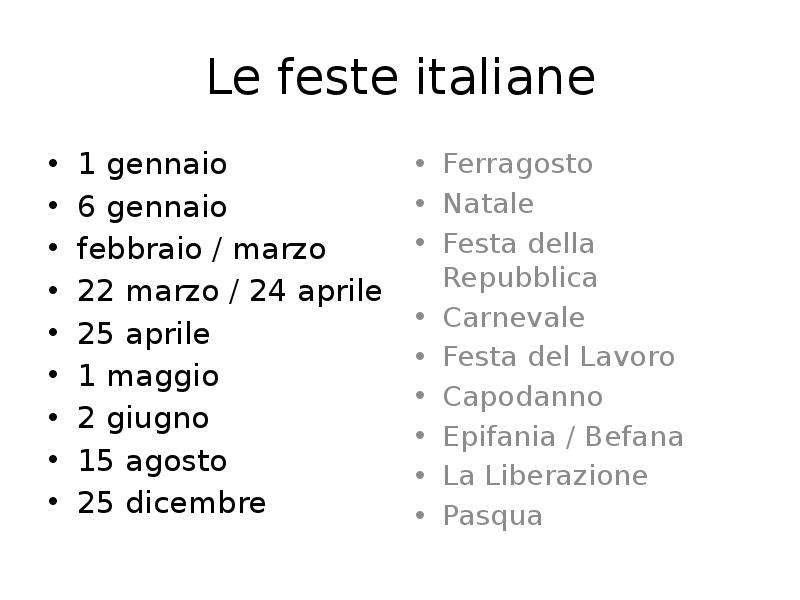
Описание слайда:
Le feste italiane
1 gennaio
6 gennaio
febbraio / marzo
22 marzo / 24 aprile
25 aprile
1 maggio
2 giugno
15 agosto
25 dicembre
Слайд 3
Слайд 4
Слайд 5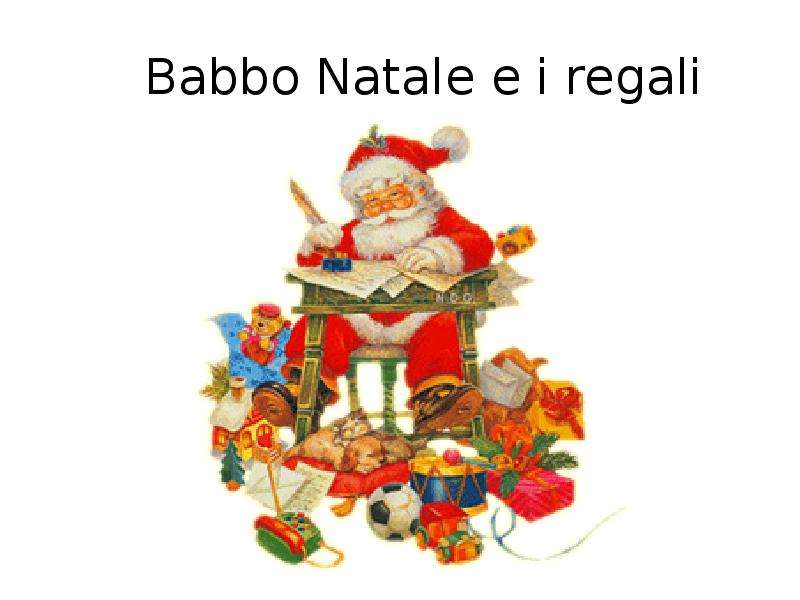
Описание слайда:
Babbo Natale e i regali
Слайд 6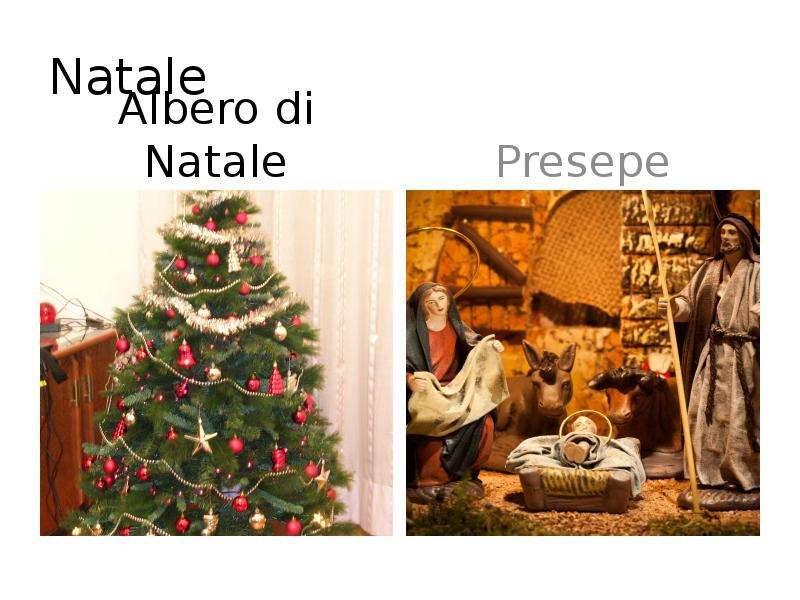
Описание слайда:
Natale
Albero di Natale
Слайд 7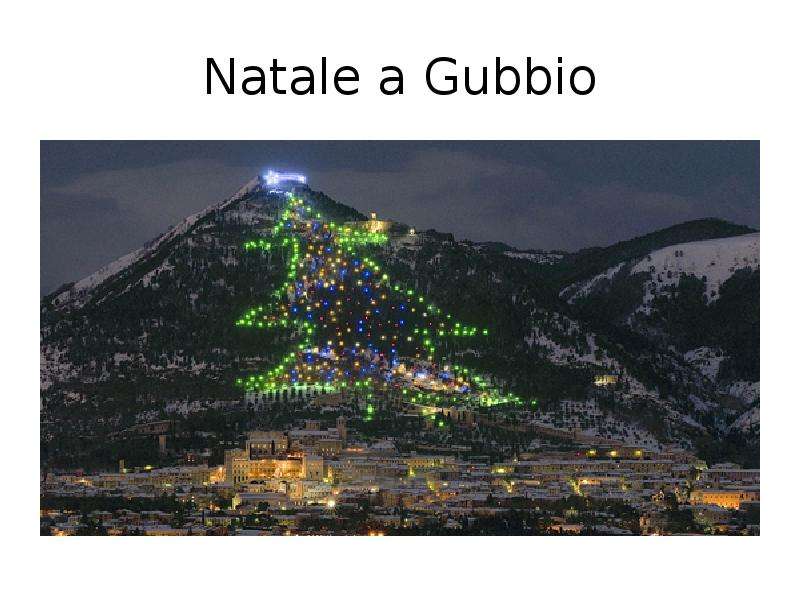
Описание слайда:
Natale a Gubbio
Слайд 8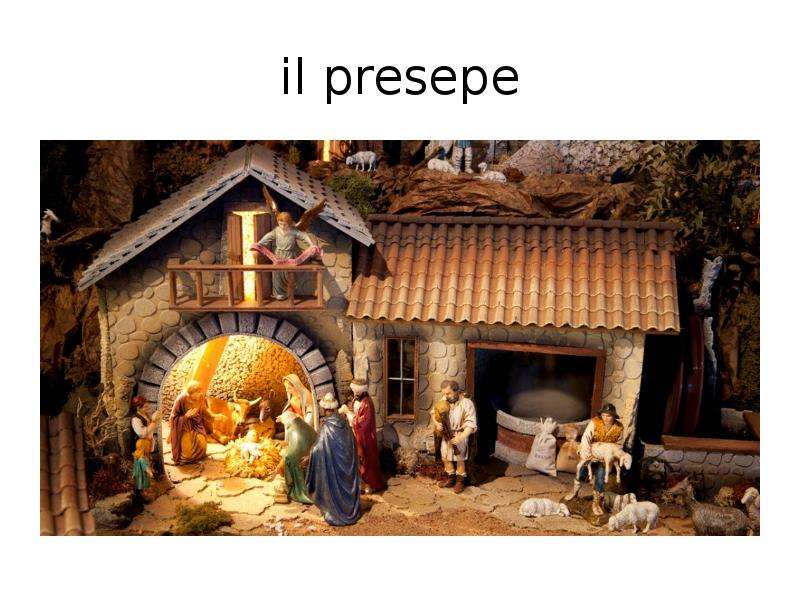
Описание слайда:
il presepe
Слайд 9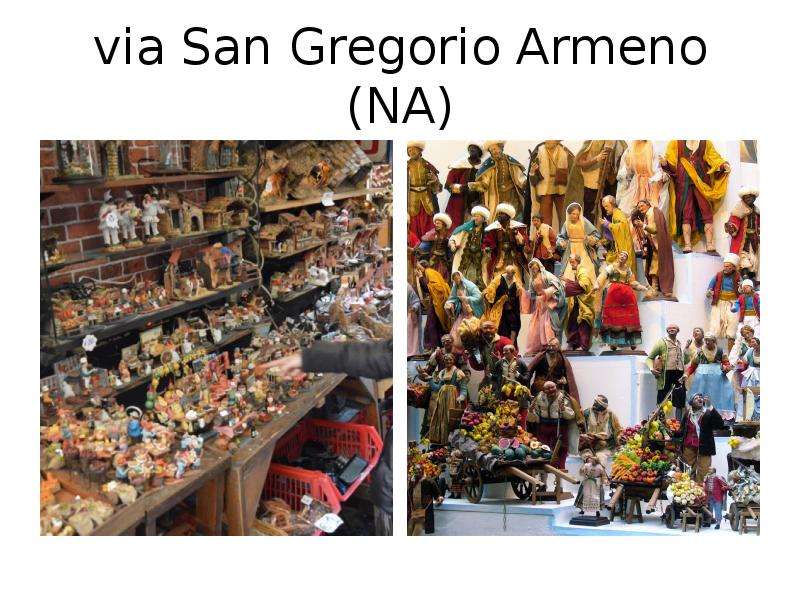
Описание слайда:
via San Gregorio Armeno (NA)
Слайд 10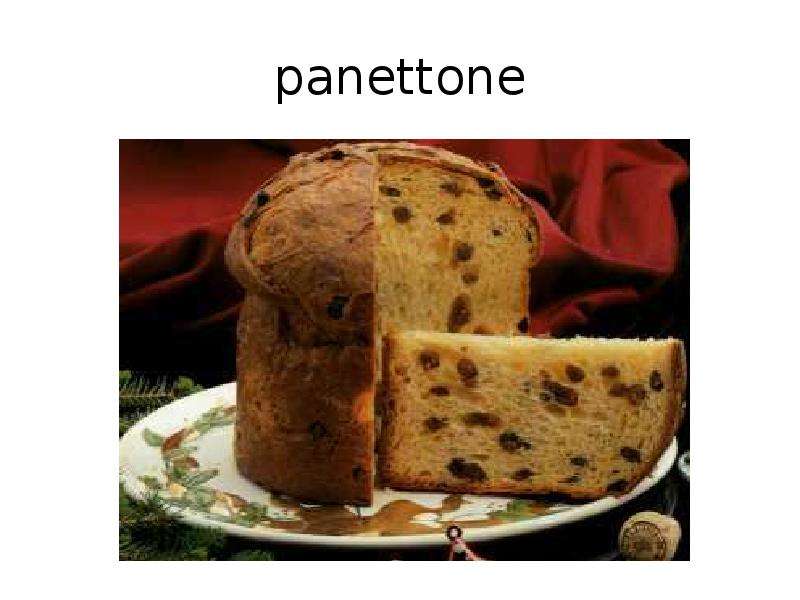
Описание слайда:
panettone
Слайд 11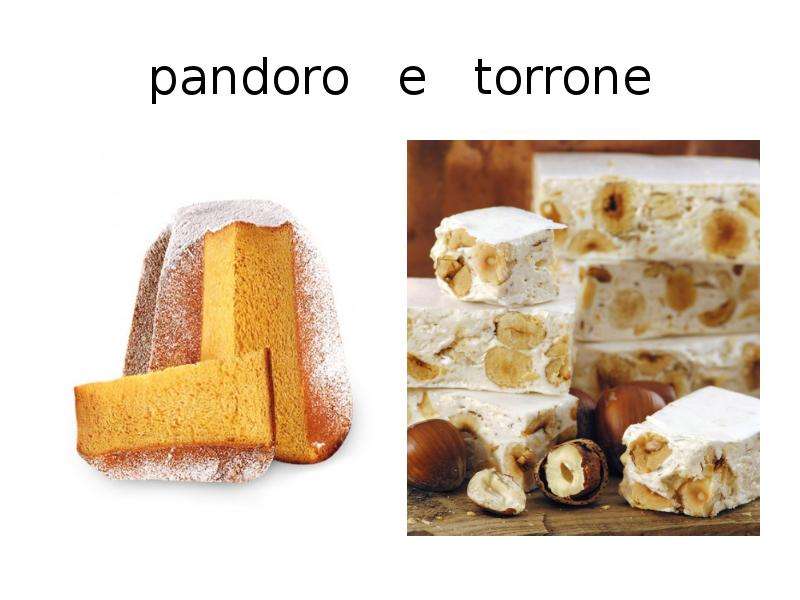
Описание слайда:
pandoro e torrone
Слайд 12
Слайд 13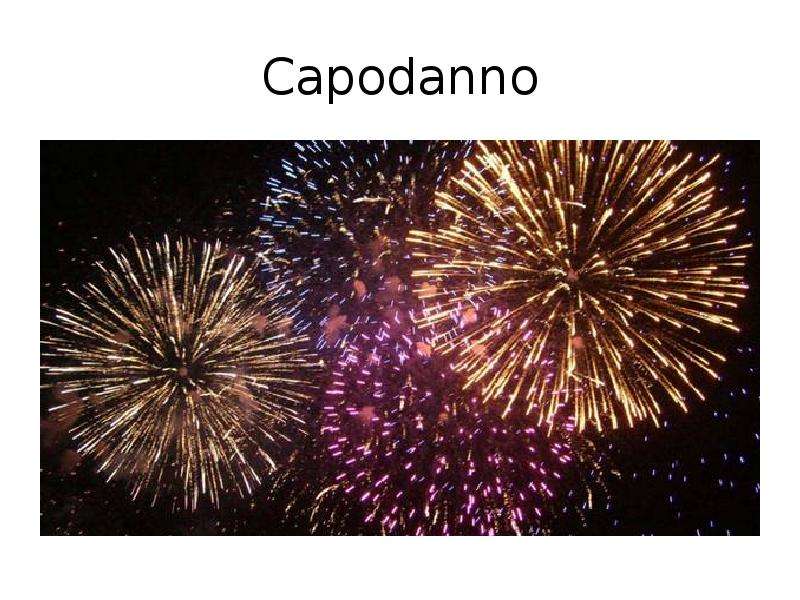
Описание слайда:
Capodanno
Слайд 14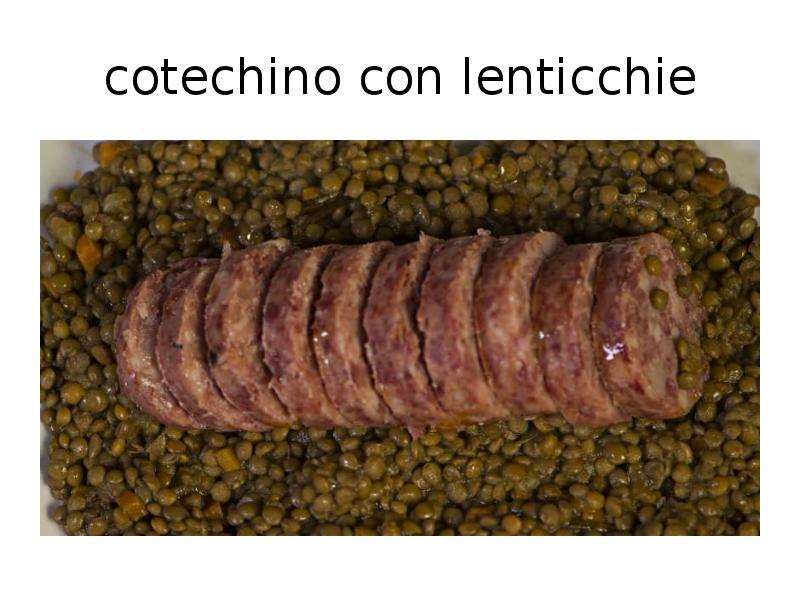
Описание слайда:
cotechino con lenticchie
Слайд 15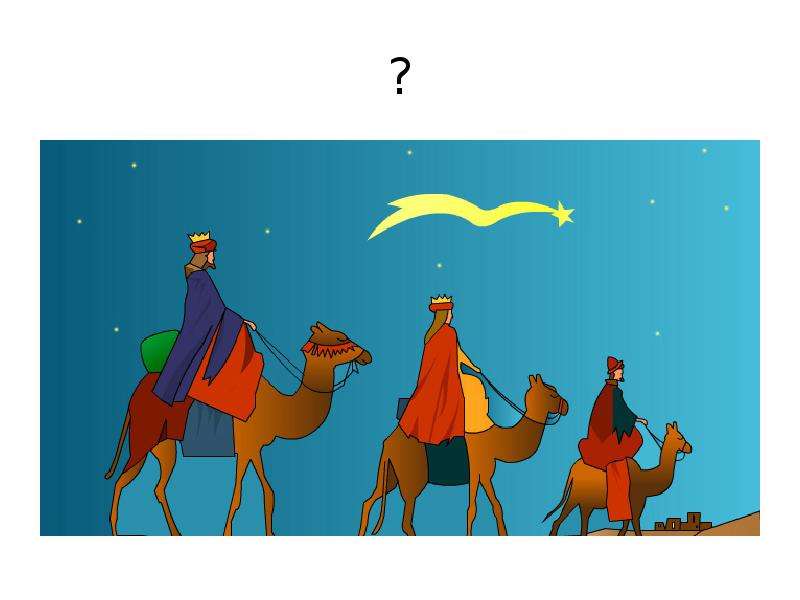
Слайд 16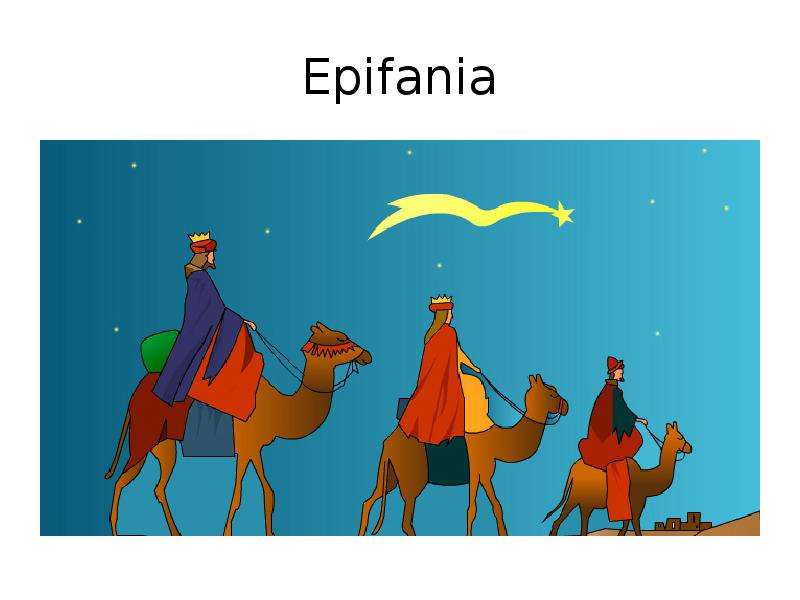
Описание слайда:
Epifania
Слайд 17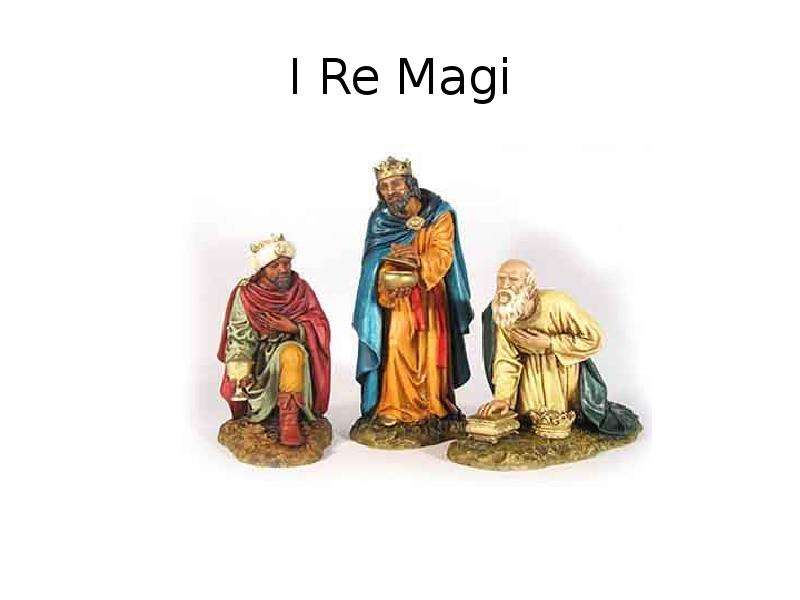
Описание слайда:
I Re Magi
Слайд 18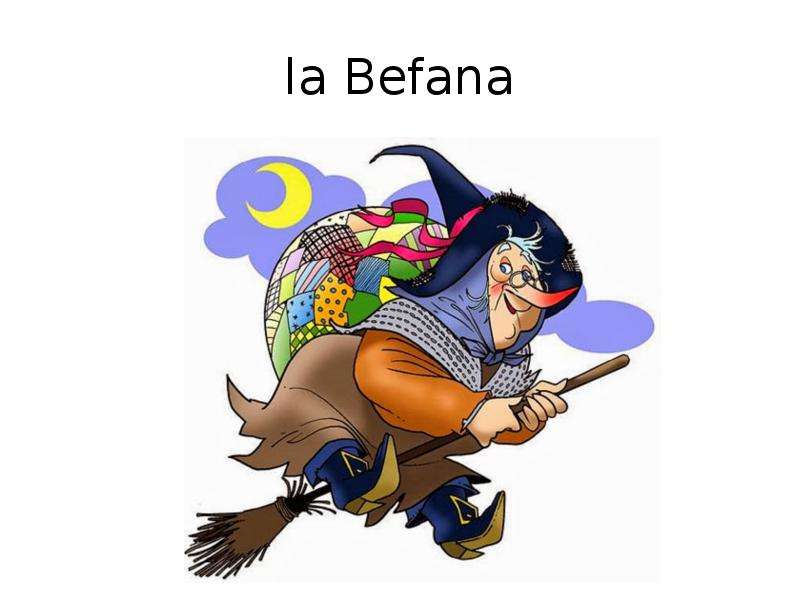
Описание слайда:
la Befana
Слайд 19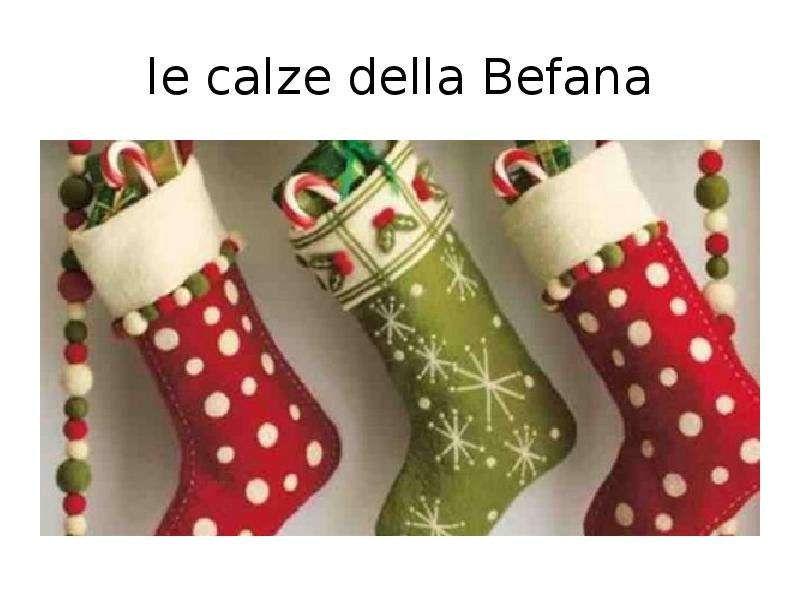
Описание слайда:
le calze della Befana
Слайд 20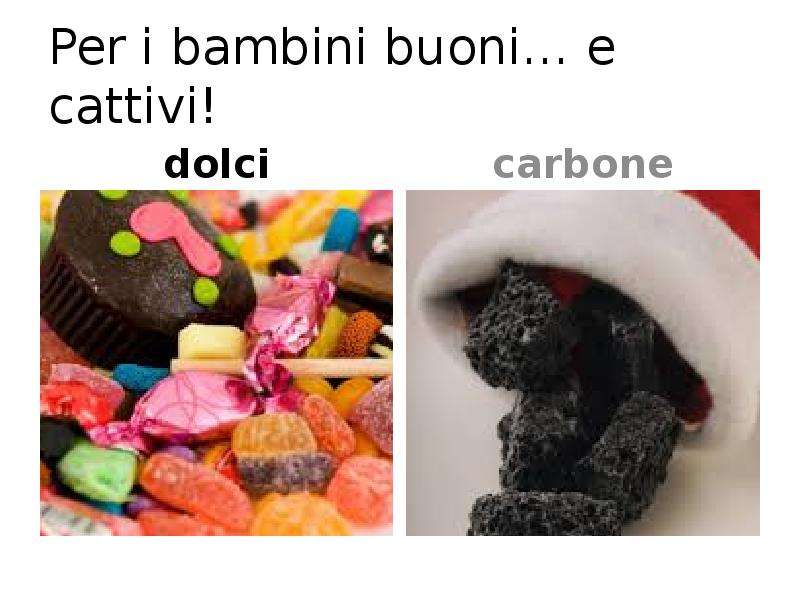
Описание слайда:
Per i bambini buoni… e cattivi!
dolci
Слайд 21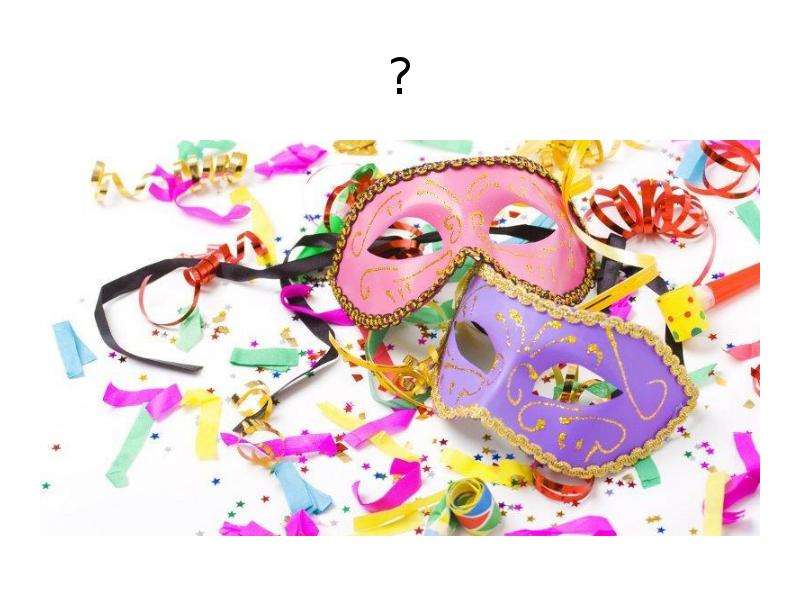
Слайд 22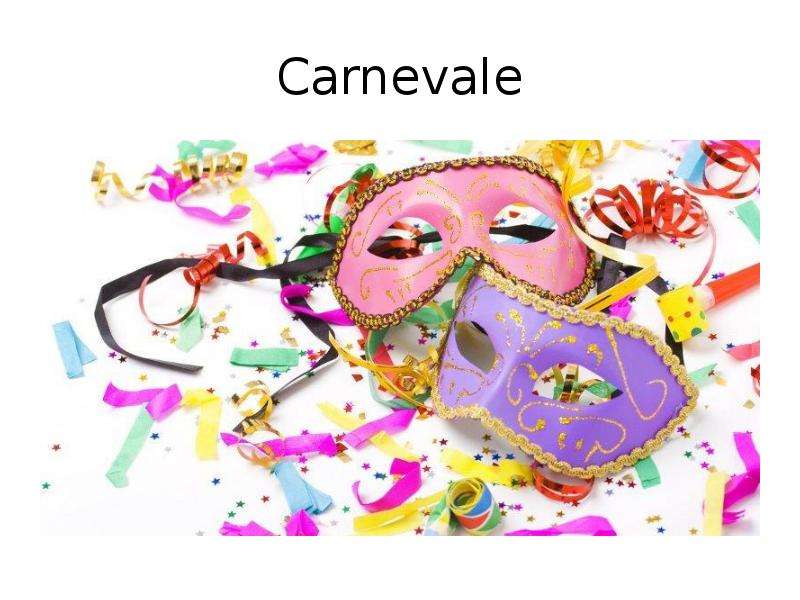
Описание слайда:
Carnevale
Слайд 23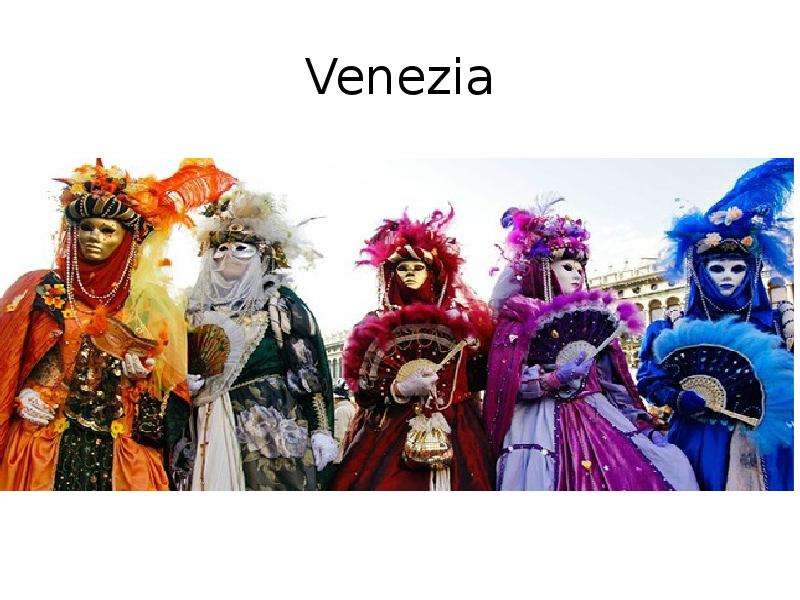
Слайд 24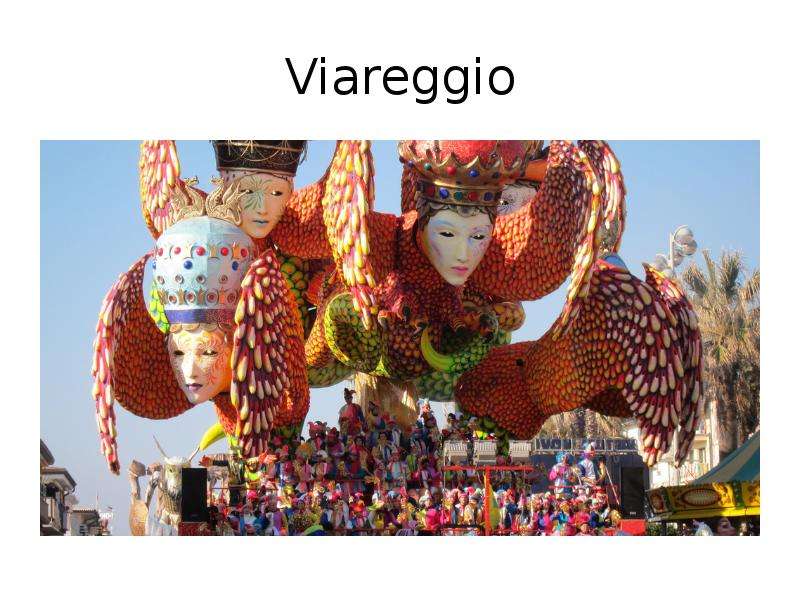
Описание слайда:
Viareggio
Слайд 25
Описание слайда:
coriandoli e stelle filanti
Слайд 26
Описание слайда:
le maschere italiane
Слайд 27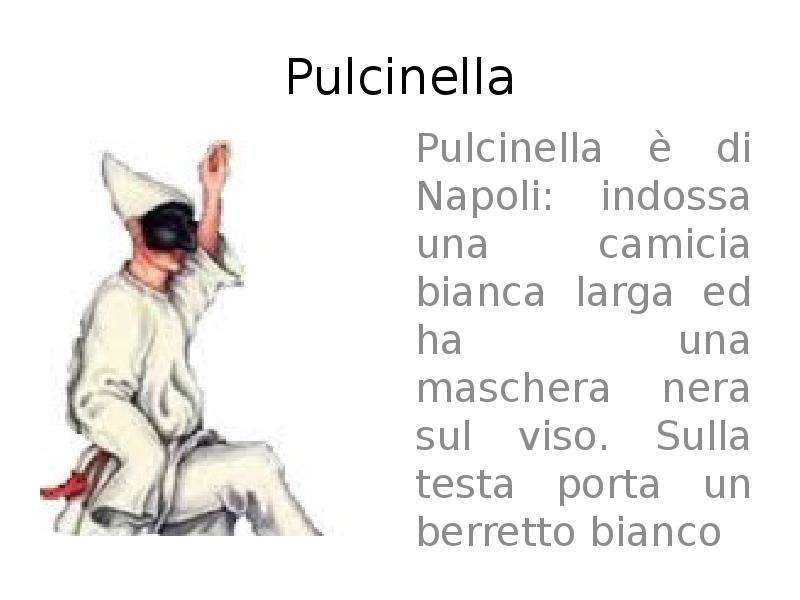
Описание слайда:
Pulcinella
Pulcinella è di Napoli: indossa una camicia bianca larga ed ha una maschera nera sul viso. Sulla testa porta un berretto bianco
Слайд 28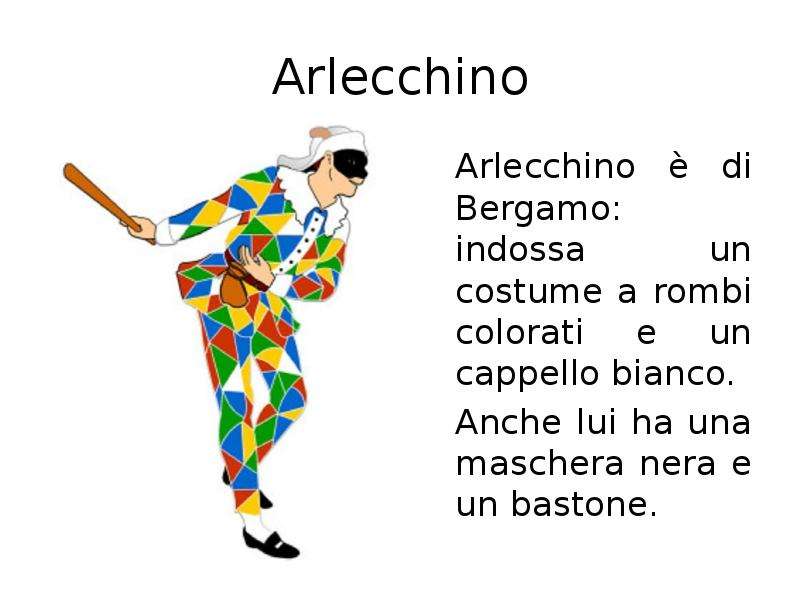
Описание слайда:
Arlecchino
Arlecchino è di Bergamo: indossa un costume a rombi colorati e un cappello bianco.
Anche lui ha una maschera nera e un bastone.
Слайд 29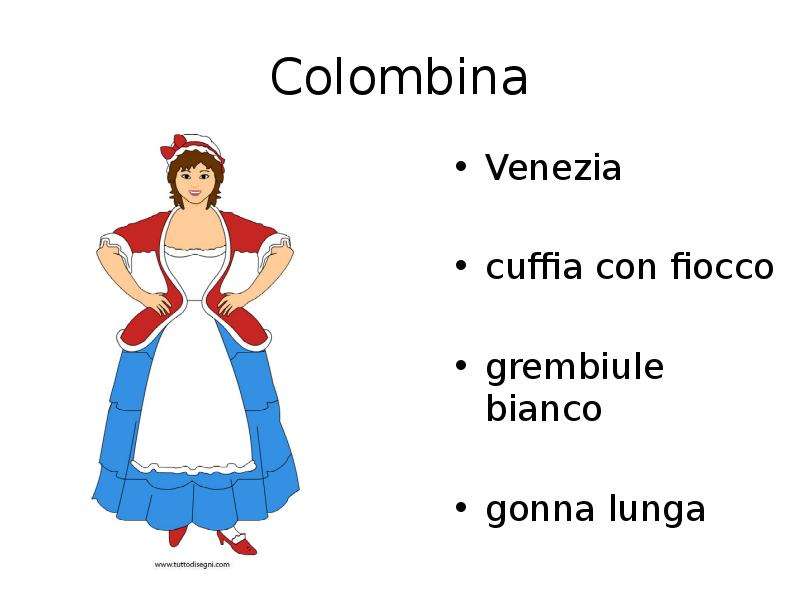
Описание слайда:
Colombina
Venezia
cuffia con fiocco
grembiule bianco
gonna lunga
Слайд 30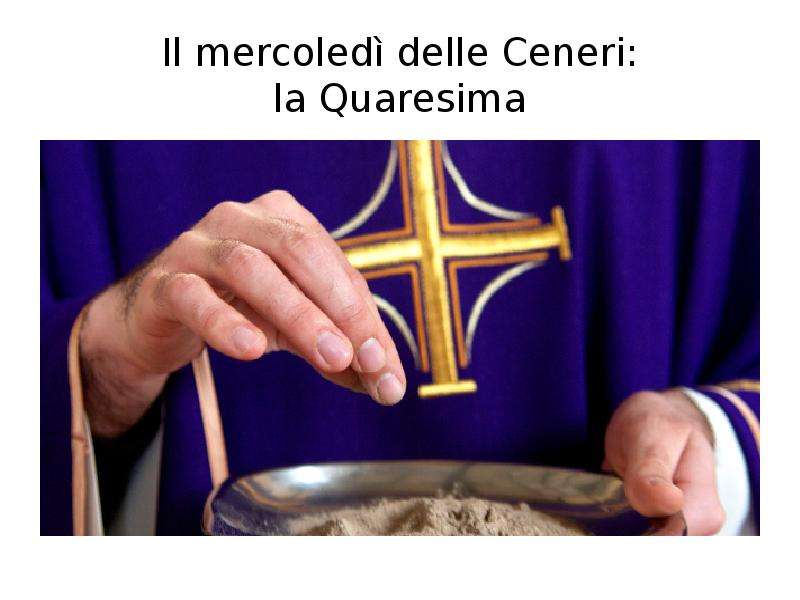
Описание слайда:
Il mercoledì delle Ceneri:
la Quaresima
Слайд 31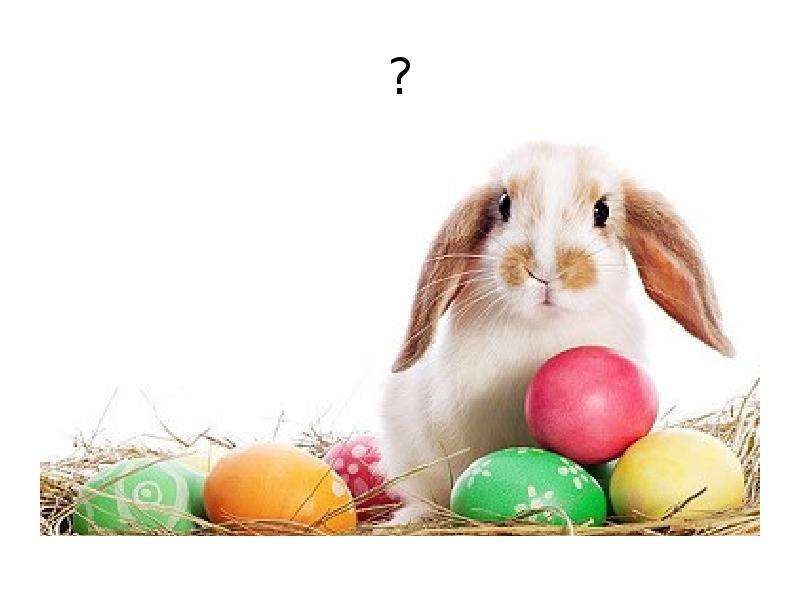
Слайд 32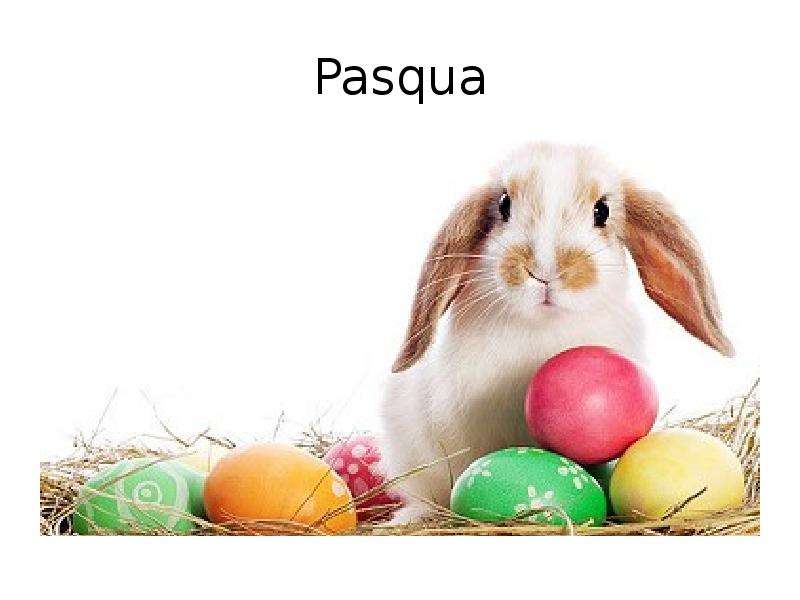
Слайд 33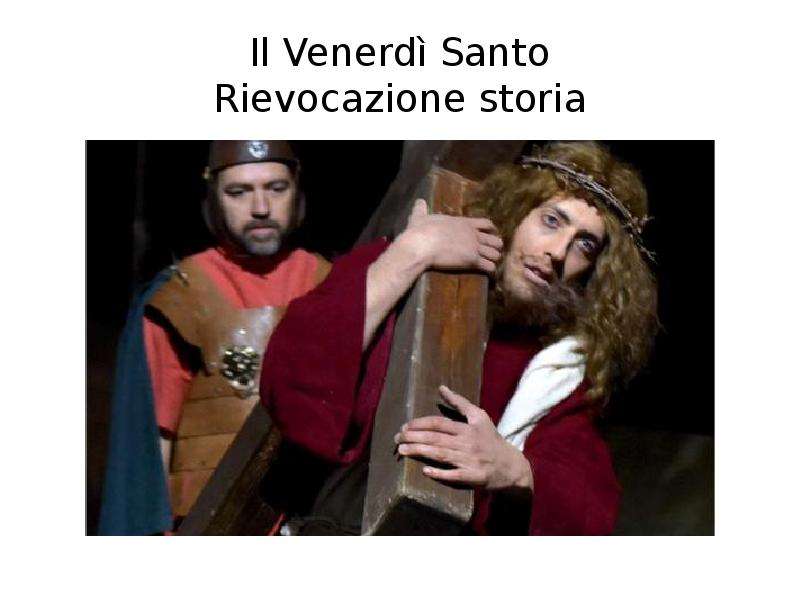
Описание слайда:
Il Venerdì Santo
Rievocazione storia
Слайд 34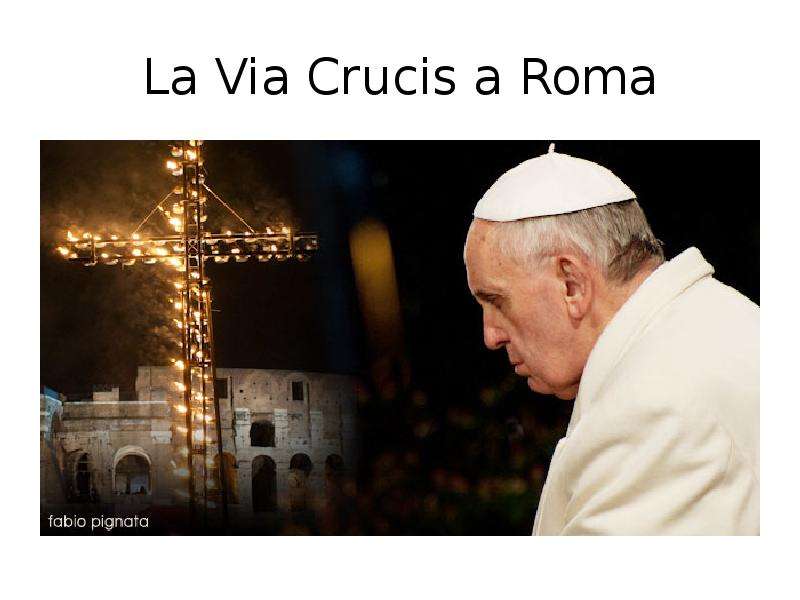
Описание слайда:
La Via Crucis a Roma
Слайд 35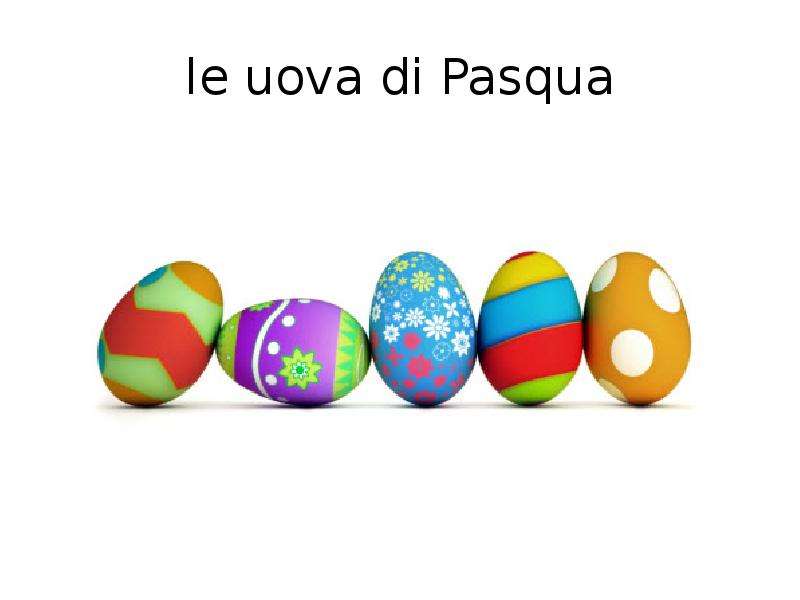
Описание слайда:
le uova di Pasqua
Слайд 36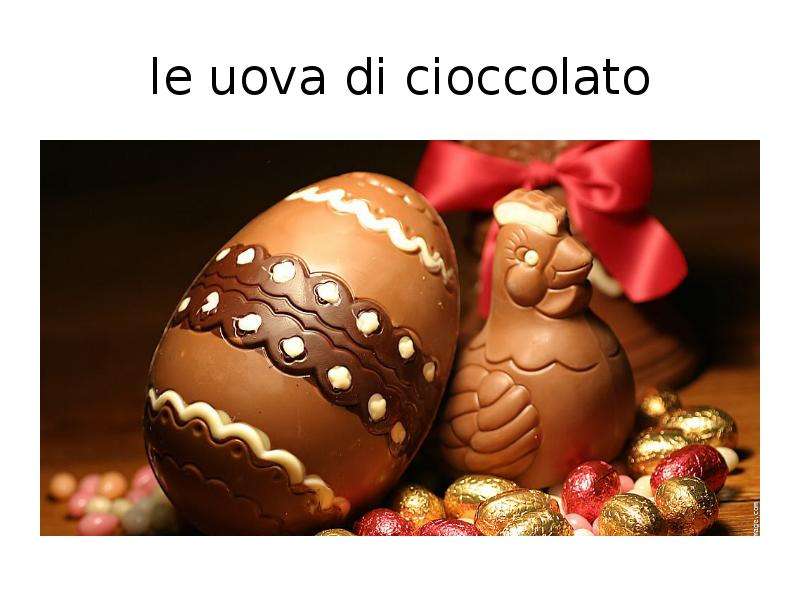
Описание слайда:
le uova di cioccolato
Слайд 37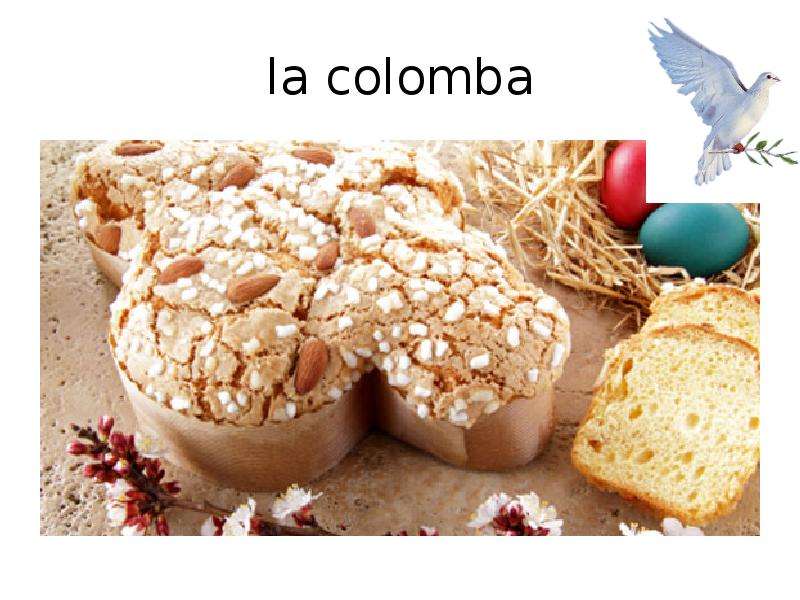
Описание слайда:
la colomba
Слайд 38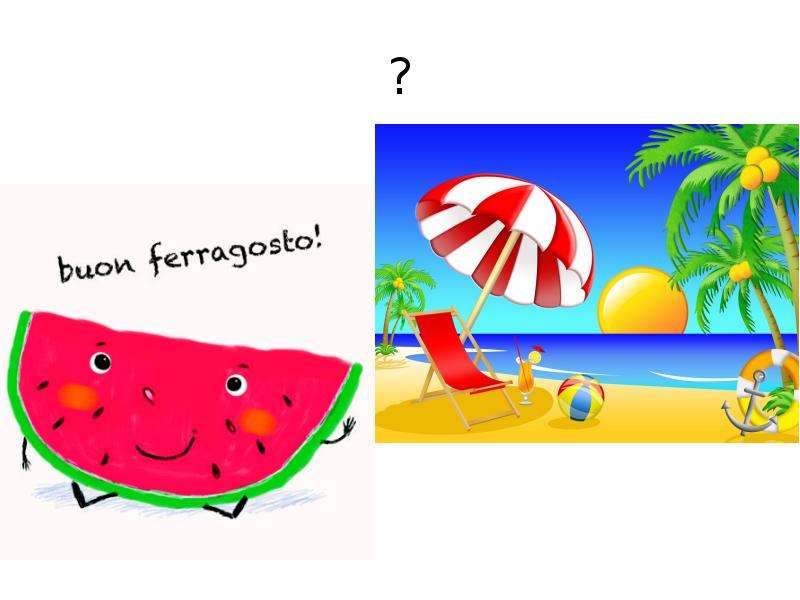
Слайд 39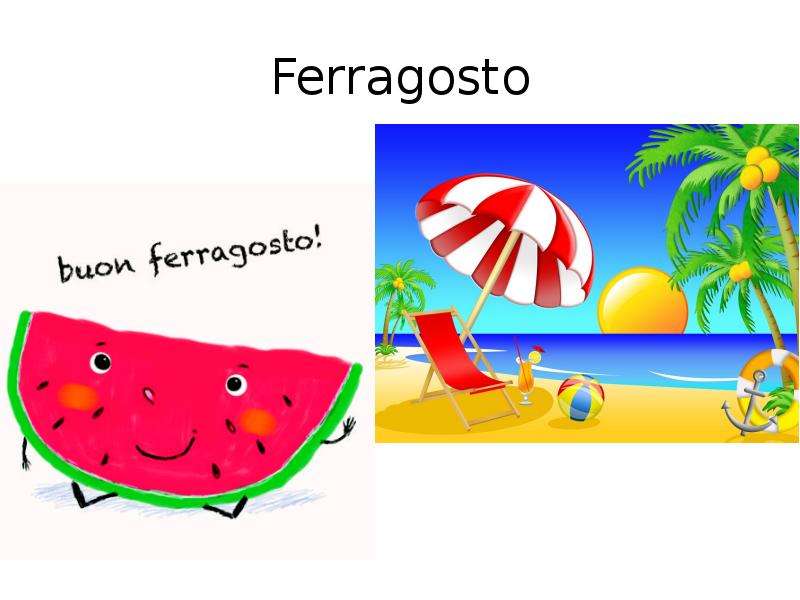
Описание слайда:
Ferragosto
Слайд 40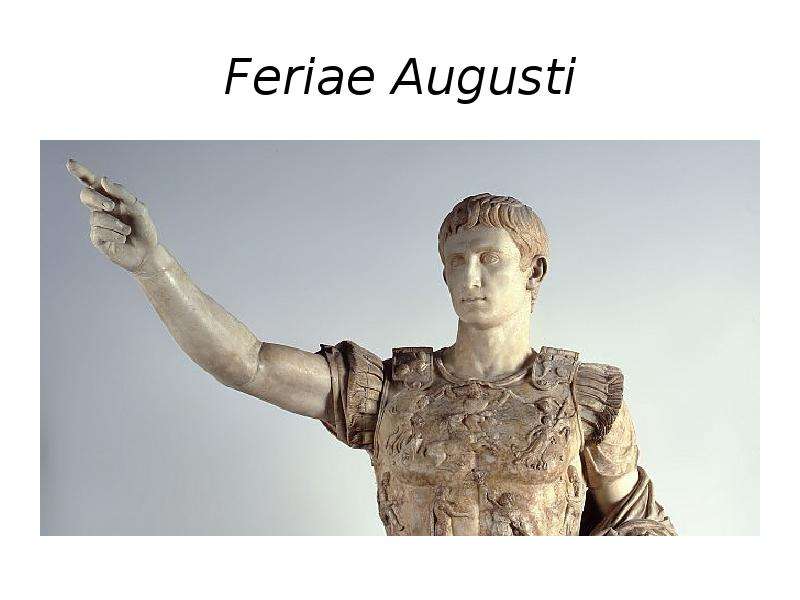
Описание слайда:
Feriae Augusti
Слайд 41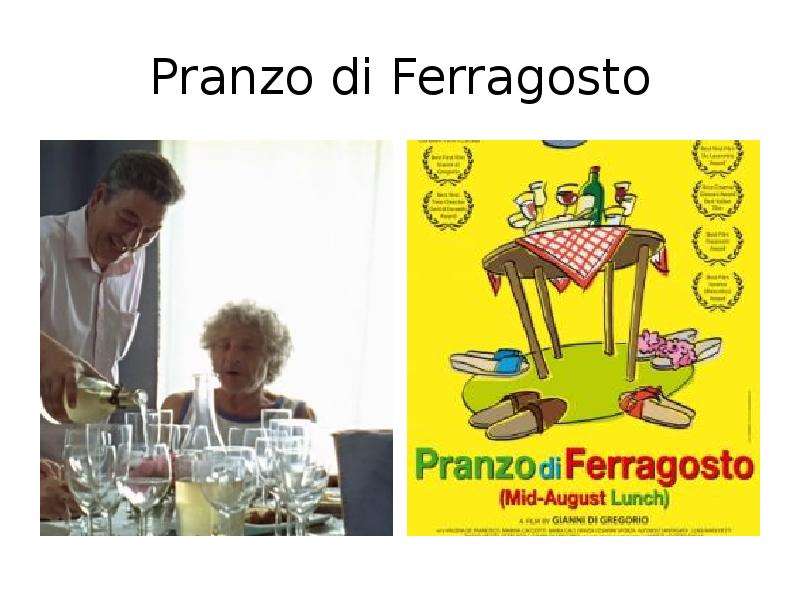
Описание слайда:
Pranzo di Ferragosto
Слайд 42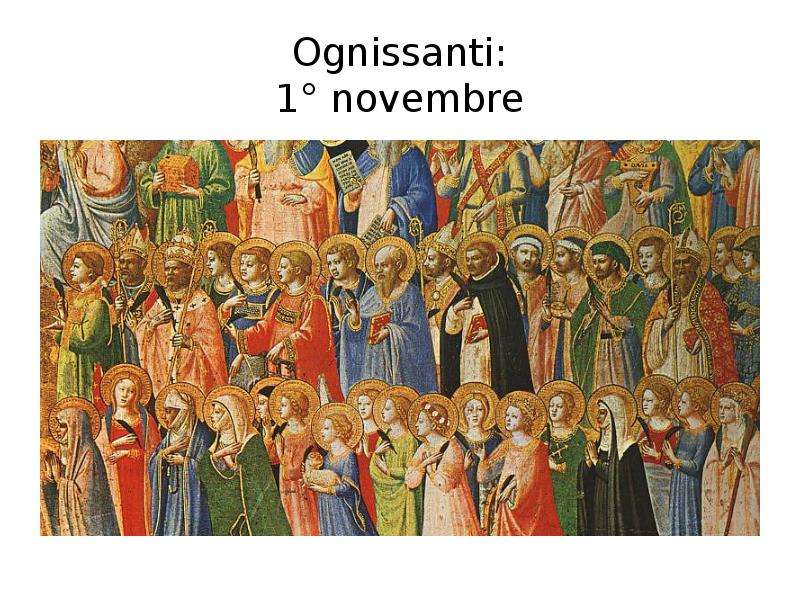
Описание слайда:
Ognissanti:
1° novembre
Слайд 43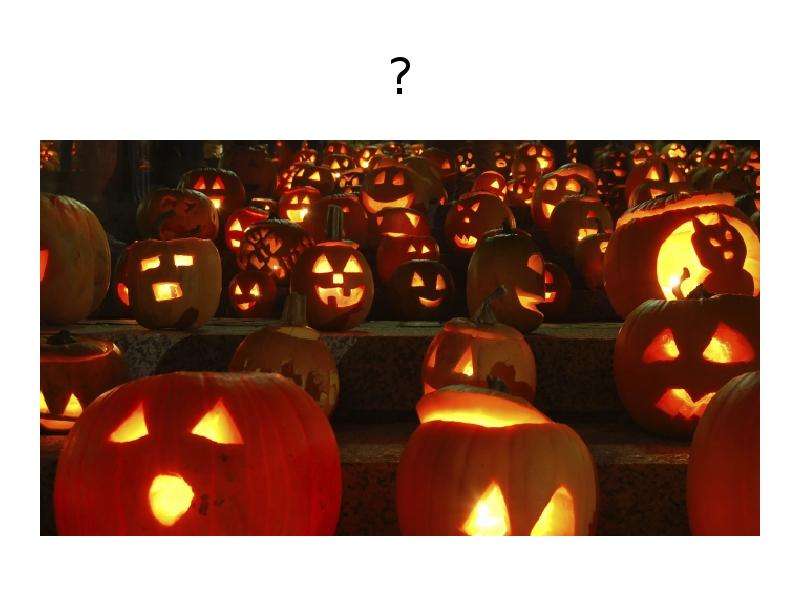
Слайд 44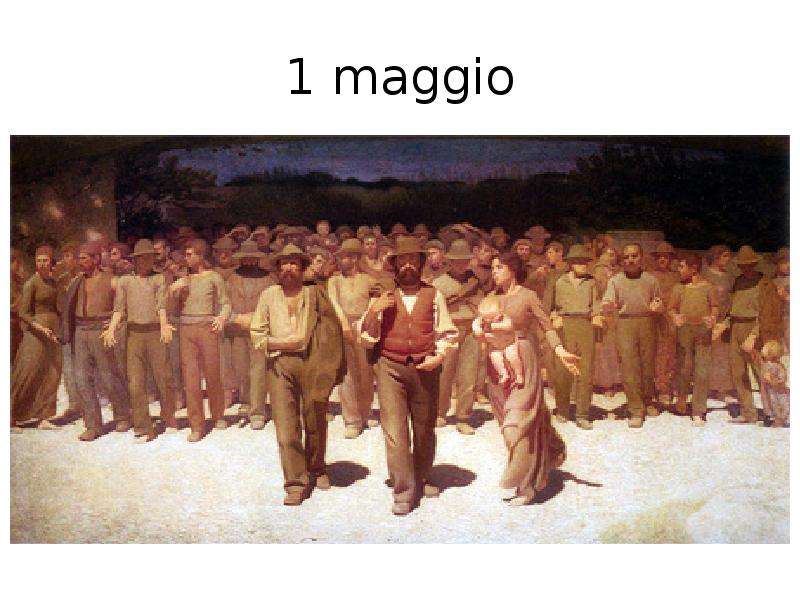
Описание слайда:
1 maggio
Слайд 45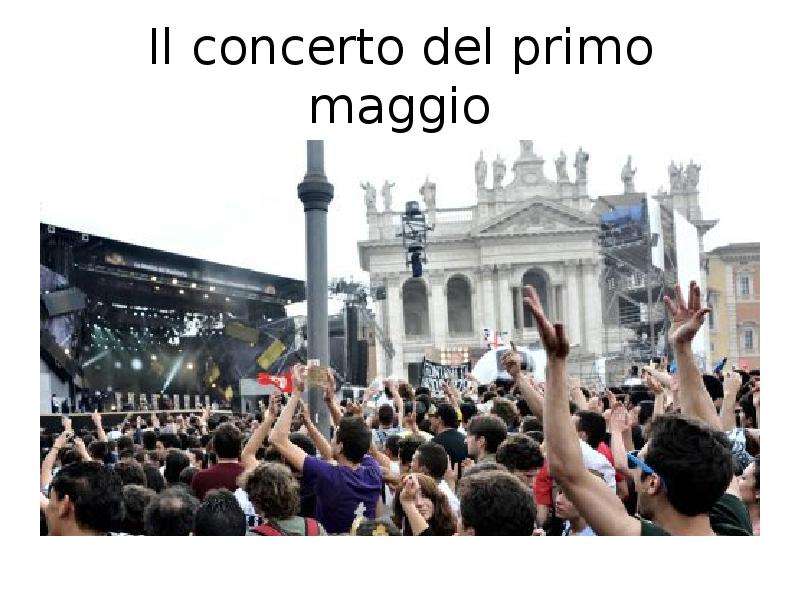
Описание слайда:
Il concerto del primo maggio
Слайд 46
Слайд 47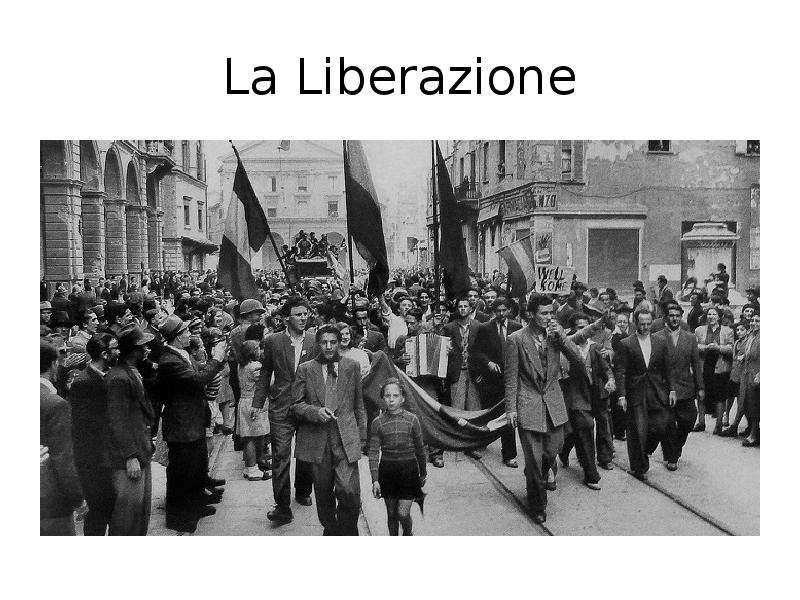
Описание слайда:
La Liberazione
Слайд 48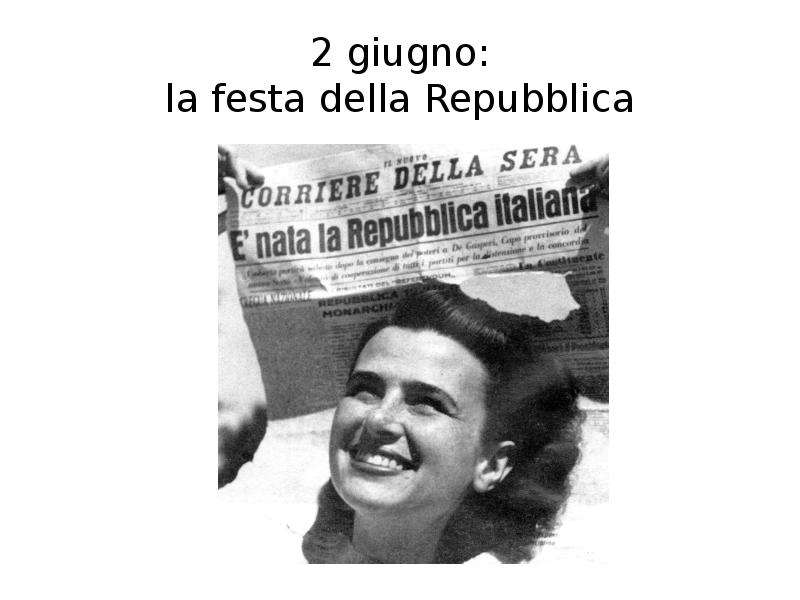
Описание слайда:
2 giugno:
la festa della Repubblica
Слайд 49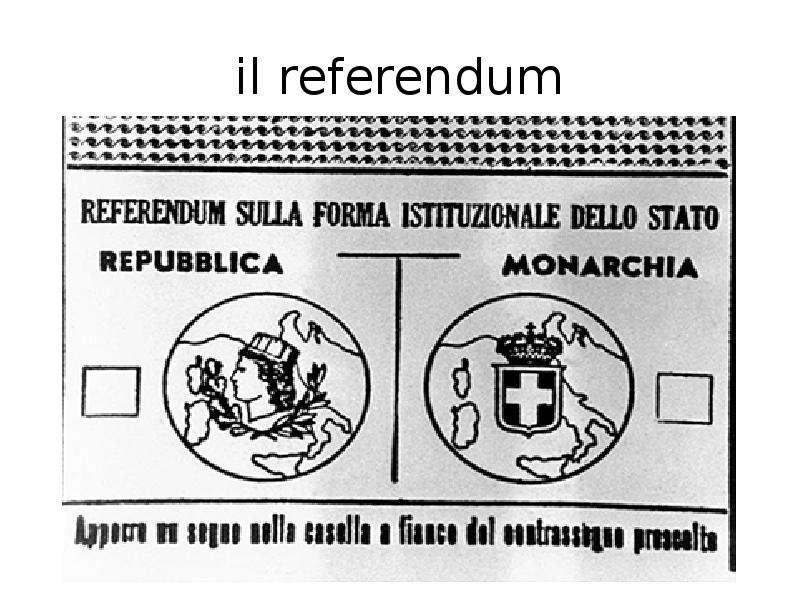
Описание слайда:
il referendum
Слайд 50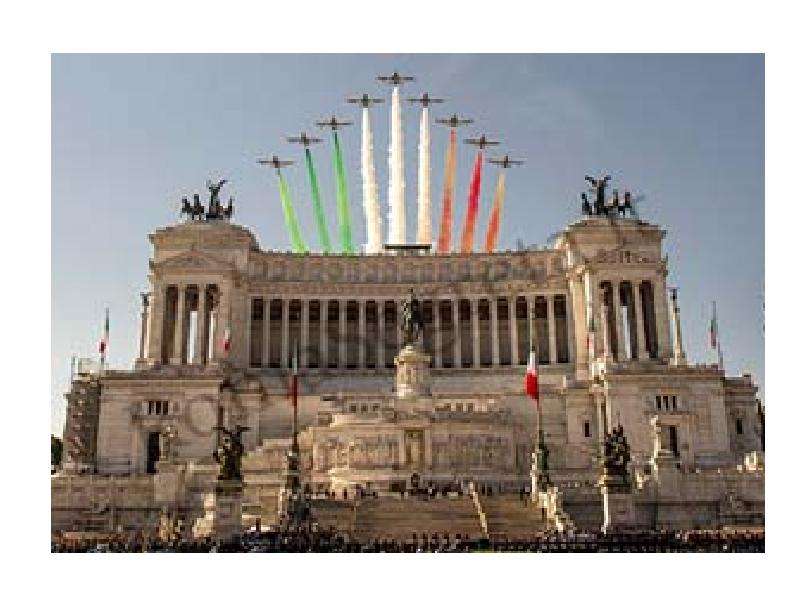
Информация об авторе
Нина Николаевна Кузакова
Я и моя команда, состоящая из преподавателей, учеников, педагогов, специалистов в области школьной программы, объединённые общей идей, нести знания в головы учеников нашей страны. На страницах нашего сайта собраны презентации не только нами, но и всеми теми, кто готов делится бесплатно своими работами! Присоединяйтесь, публикуйте материалы и делитесь информацией!
Отправить презентацию на почту
Презентация успешно отправлена!
Ошибка! Введите корректный Email!
Mypresentation.ru
Загрузить презентацию
Italy is a peninsula in southern Europe. It has approximately 61 million inhabitants, 96% of whom are Italians. The remaining 4% of residents include North Africans, Italo-Albanians, Albanians, Germans, Austrians and other European groups. The Italian culture is commonly associated with art, music and food. It is the homeland of the Roman Empire, the Roman Catholic Church and the main center of the Renaissance, which flourished through Europe for centuries.
Language
Italian is the official language of Italy and one of the Romance languages. Almost everybody in Italy speaks Italian, however, there are a number of dialects and other languages that are spoken by native Italians, such as Albanian, Catalan, Corsican, Croatian, Emiliano- Romagnolo, French, German and Greek.
Music, Art and Literature of Italian Culture
Art can be viewed in every corner of Italy, not only in the museums of Florence, Venice and Rome, but also in the churches and public buildings. The most famous piece of art is the ceiling of the Sistine Chapel of the Vatican, which was painted by Michelangelo between 1508 and 1512. Italy also produced other great artists like Leon Battista Alberti and Leonardo da Vinci.
When it comes to music, Italian culture is famous for its operas. Many of the world’s great musicians and composers like Giuseppe Verdi, Ruggero Leoncavallo and Luciano Pavarotti are Italian.
Italian literature includes great works like Dante’s La Divine Comida, which was written in the thirteenth century, and the writings of Pietro Bembo, Nicolo Machiavelli and Ludovico Ariosto in the sixteenth century. Machiavelli’s The Prince is considered the first work of political science.
In the fashion industry, Italy is home to a number of world-renowned fashion houses, including Armani, Gucci, Benetton, Versace and Prada.
Religion
Around 90% of Italians are Roman Catholic. Rome is home to Vatican City, which is the hub of Roman Catholicism and is where the Pope resides. The remaining 10% of Italians are Protestant, Jewish or Muslim.
Celebrations
Italians are full of life and they like to celebrate, so there are a lot of national Italian holidays. It is important to check the national holidays if you are planning to travel to Italy as museums, shops and restaurants will be closed in celebration, especially on January 1st, May 1st and December 25th. Each city or region celebrate its own holidays, such as the feast day of their patron saint, in addition to nationwide holidays. Italians celebrate most Christian holidays, such as Christmas and Easter, along with other holidays including The Liberation Day on April 25th, The Epiphany on January 6th, Valentine’s Day on February 14th, International Women’s Day on March 8th, Labor Day on May 1st and Festa della Repubblica on June 2nd.
Meals
Italian cuisine is very famous and admired around the world. Who has not fallen in love with pizza or pasta? For Italians, food is an art, which they master very well and their gatherings are centered around food. In central Italy, spaghetti and pizza are popular. However, in the north, the most common dishes are comprised of fish, potatoes, rice, sausage, pork, pasta, polenta and risotto. In the south, tomatoes are a staple, either served fresh or cooked into sauce with capers, peppers, olives and olive oil, garlic, artichokes, eggplant and ricotta cheese. Food is a means for maintaining ties between family and friends, and there is a special meal for every occasion.
Summary
To summarize, Italian culture and traditions are renowned around the world. From famous art and architecture to delicious food and wine. Italians are enthusiastic about celebrating and spending time with family and friends. They are truly known for enjoying the finer things in life.
В ниже следующих таблицах рассмотрены праздники в России, США и Великобритании. Каждый праздник написан на английском языке с переводом.
 Public holidays in Russia (Праздники в России)
 Public holidays in Russia (Праздники в России)
|
Date |
Official Name |
Перевод |
| January 1 | New Year’s Day | Новый год |
| January 1-8* | New Year Holiday Week | Новогодние каникулы |
| January 7 | Orthodox Christmas Day | Рождество Христово |
| February 23 | Defender of the Fatherland Day | День Защитника Отечества |
| March 8 | International Women’s Day | Международный женский день |
| May 1 | Spring and Labor Day | Праздник Весны и Труда |
| May 9 | Victory Day | День Победы |
| June 12 | Russia Day | День России |
| November 4 | Unity Day | День народного единства |
*даты актуальны на 2017 год
Popular holidays in Russia which are not public holidays (популярные праздники в России, которые не являются нерабочими днями)
- The Old New Year on January 14 – Старый Новый год
- Tatiana Day (student’s day) on January 25 – Татьянин день
- Valentine’s Day on February 14 – День святого Валентина
- Maslenitsa – Масленица
- Easter – Пасха
- Annunciation on April 7 – Благовещение
- Cosmonautics Day on April 12 – День Космонавтики
- Paratroopers Day on August 2 – День Воздушно-десантных войск
Public holidays in the USA (Праздники в США)
 Public holidays in the USA (Праздники в США)
В 2017 году 2 января в США – выходной день.
|
Date |
Official Name |
Дата |
Перевод |
|
| January 1 (Fixed) | New Year’s Day | 1 января | Новый год | |
| Third Monday in January | Birthday of Martin Luther King, Jr. | Третий понедельник января | День Мартина Лютера Кинга | |
| Third Monday in February (Presidents’ Day) | Washington’s Birthday | Третий понедельник февраля | Президентский день | |
| Last Monday in May | Memorial Day | Последний понедельник мая | День памяти | |
| July 4 (Fixed) | Independence Day | 4 июля | День независимости | |
| First Monday in September | Labor Day | Первый понедельник сентября | День Труда | |
| Second Monday in October | Columbus Day | Второй понедельник октября | День Колумба | |
| November 11 (Fixed) | Veterans Day | 11 ноября | День ветеранов | |
| Fourth Thursday in November | Thanksgiving Day | Четвёртый четверг ноября | День благодарения | |
| December 25 (Fixed) | Christmas | 25 декабря | Рождество |
Public holidays in the United Kingdom (Праздники в Великобритании)*
 Public holidays in the United Kingdom (Праздники в Великобритании)*
*даты праздников актуальны на 2017 год
Так как в 2017 году 1 января выпадает на воскресенье, поэтому в Англии, Уэльсе и Северной Ирландии 2 января – выходной день. В Шотландии выходной день – 3 января.
England and Wales (Англия и Уэльс)
|
Date |
Official Name |
Перевод |
| 1 January | New Year’s Day | Новый год |
| 14 April | Good Friday | Великая пятница |
| 17 April | Easter Monday | Светлый понедельник |
| 1 May | Early May bank holiday | Первое мая |
| 29 May | Spring bank holiday | Весенний день отдыха (выходной день – последний понедельник мая) |
| 28 August | Summer bank holiday | Летний день отдыха (последний понедельник августа) |
| 25 December | Christmas Day | Рождество |
| 26 December | Boxing Day | День подарков |
Scotland (Шотландия)
|
Date |
Official Name |
Перевод |
| 1 January | New Year’s Day | Новый год |
| 2 January | New Year’s Day (2nd January) | Новый год |
| 14 April | Good Friday | Великая пятница |
| 1 May | Early May bank holiday | Первое мая |
| 29 May | Spring bank holiday | Весенний день отдыха (выходной день – последний понедельник мая) |
| 7 August | Summer bank holiday | Летний день отдыха (последний понедельник августа) |
| 30 November | St Andrew’s Day | Андреев день |
| 25 December | Christmas Day | Рождество |
| 26 December | Boxing Day | День подарков |
Northern Ireland (Северная Ирландия)
|
Date |
Official Name |
Перевод |
| 1 January | New Year’s Day | Новый год |
| 17 March | St Patrick’s Day | День святого Патрика |
| 14 April | Good Friday | Великая пятница |
| 17 April | Easter Monday | Светлый понедельник |
| 1 May | Early May bank holiday | Первое мая |
| 29 May | Spring bank holiday | Весенний день отдыха (выходной день – последний понедельник мая) |
| 12 July | Battle of the Boyne (Orangemen’s Day) | Годовщина битвы на р. Бойн |
| 28 August | Summer bank holiday | Летний день отдыха (последний понедельник августа) |
| 25 December | Christmas Day | Рождество |
| 26 December | Boxing Day | День подарков |
Итальянские праздники
- /
- /
- /
Праздники — это всегда радость, а праздники в Италии — радость вдвойне! Давайте посмотрим, какие события празднуют итальянцы и какие праздники считают самыми важными в году. Для удобства разобьем их по месяцам.
Январь
1 января: Новый год (il Capodanno)
Куда же без него! Празднуют итальянцы Новый год масштабно, с тостами и салютами, устраивая вечеринки, накрывая пышные столы и загадывая желания.
6 января: Крещение (l’Epifania)
Крещение «закрывает» сезон новогодних праздников. А еще в этот день маленькие итальянцы получают наполненные сладостями сапоги от Бефаны (la Befana) — доброй колдуньи с горбом на спине.
Февраль
14 февраля: день св. Валентина (la Festa di San Valentino)
Праздник любви, который отмечают и в Италии (хотя он и не является официальным выходным). По традиции (и по желанию) в этот день влюбленные дарят своим девушкам/невестам красное нижнее белье.

Март
8 марта: (la Festa della Donna)
Этот праздник в Италии отмечается не очень активно и не является официальным выходным, но существует традиция дарить женщинам мимозу.
Помимо этого, февраль и март — месяцы карнавалов (il periodo dei carnevali). Самый известный карнавал проходит в Венеции, а второй по значимости — в городе Вьяреджо (Тоскана).
Март / апрель
Пасха (la Pasqua)
Пасха в Италии — самый важный религиозный праздник в году. В этот день итальянские семьи собираются вместе, едят традиционную пасхальную выпечку (la Colomba — «голубку»), а дети получают огромные шоколадные яйца с сюрпризом внутри. Также существует традиция выезжать на пикники.
25 апреля: День освобождения от фашизма (la Festa della Liberazione)
Национальный праздник, чествующий день начала всеобщего освободительного восстания во времена Второй мировой войны. 25 апреля в итальянских городах проходят различные памятные мероприятия.
Май
1 мая: День труда (la Festa dei Lavoratori)
Официальный выходной, в который проводятся парады и митинги, а на городских площадях устраиваются концерты.

Июнь
2 июня: День провозглашения Республики (La Festa della Repubblica)
Государственный праздник и официальный выходной во всей стране. В этот день во многих городах проводятся военные парады, а над центральной частью Рима пролетают девять истребителей, распыляя в воздухе цвета национального итальянского флага — зеленый, белый и красный.
Август
15 августа: Успение (l’Assunzione/il Ferragosto)
«Феррагосто» знаменует начало отпусков. Основная традиция в этот день — праздное ничегонеделание, а именно поездки к морю, пикники на природе, праздничные обеды, барбекю, походы на концерты и тд. Правда, туристам в этот день бывает тяжко: ни открытой пиццерии, ни зазывающих витринами магазинов… Сплошь пустынные улицы (хотя в последние годы в особо популярных курортах и крупных городах многие заведения остаются открытыми).
Кстати, если вы приглашены на какой-нибудь итальянский праздник, но не знаете, что подарить итальянцу, наш друг Винченцо как раз рассказывает об этом в видео. Смотрите и запоминайте 
Подпишитесь, чтобы первыми получать новые видео
Ноябрь
1 ноября: День всех святых (Ognissanti или Tutti i Santi)
Хотя этот день и выходной, но праздником его не назовешь. Это скорее день скорби и почитания тех, кто ушел. 1 ноября итальянцы отправляются на кладбища, относя туда цветы и зажигая поминальные свечи.
Декабрь
8 декабря: Непорочное зачатие (l’Immacolata)
Важный католический праздник и официальный выходной. Еще 8 декабря — предвестник Рождества, когда большинство итальянцев наряжают елки, а на римской площади Навона (piazza Navona) открывают главную рождественскую ярмарку.
25 декабря: Рождество (Natale)
Рождество итальянцы отмечают с размахом: устраивают праздничный ужин в рождественский сочельник (24 декабря), обмениваются подарками (на Новый год в Италии дарить подарки не принято), устанавливают ясли со Святым семейством и волхвами, покупают или самостоятельно выпекают традиционные рождественские итальянские пироги panettone и pandoro.
26 декабря: День Святого Стефана (Santo Stefano)
Национальный праздник, в который у итальянцев принято навещать родственников и друзей и ходить в церкви, чтобы посмотреть на рождественские инсталляции.
А вот что ещё можно почитать: