
Нефтяник — особая для России профессия. Хоть большинство жителей страны в глаза не видели ни йоты барреля черного золота, зато все следят за котировками на бирже и последними новостями в этой индустрии. Эта отрасль промышленности у нас на особом счету, в ней заняты сотни тысяч человек. Не только инженеры и настройщики оборудования, которые работают непосредственно на скважинах. Множество персонала задействовано в транспортировке, продаже, переработке нефти. Так что это ископаемое кормит не только бюджет страны, но и множество семей.
«Комсомольская правда» рассказывает о празднике День нефтяника: какие существуют традиции и как его будут отмечать в 2023 году.
Когда отмечается День нефтяника
Полное название праздника гораздо длиннее — День работников нефтяной и газовой промышленности. Он не имеет четко установленной даты, отмечать принято ежегодно в первое воскресенье сентября. В 2023 году День нефтяника выпадает на 3 сентября.
История праздника
Первую нефть начали добывать еще в Российской империи, но праздник у нефтяников появился только в СССР. Многие спорят, к какому событию приурочена дата. Одни называют 1 октября 1980 года, дескать тогда был учрежден праздник. Другие говорят, что он отсылает нас к концу августа 1965 года. «Комсомольская правда» изучила научные публикации на этот счет и верным оказался все же второй вариант.
Советские нефтяники были одними из последних специалистов, которые получили свой день на всесоюзном уровне. До этого советская власть уважила шахтеров, железнодорожников, строителей и металлургов. А разработчики недр оставались не у дел.
Что же случилось в 1965 году, что на нефтяников обратили пристальное внимание? Ведь XX век уже был в разгаре, опыт двух мировых войн должен был показать стратегическую важность ресурса. Оказывается, в тот год с лекцией выступили два важных для отрасли человека. Николай Байбаков — главный чиновник по добыче нефти в Союзе и Юрий Эрвье — глава геологического управления Тюмени. Они рассказали, какие богатства скрывают западносибирские недра. Лекция называлась «Большая нефть Тюмени» и вызвала бурное обсуждение среди причастных к проблеме. Вроде бы есть колоссальные запасы, трудятся много людей, а своего праздника у них нет.
28 августа 1965 года глава Верховного Совета Анастас Микоян подписал указ об установлении Всесоюзного дня работников нефтяной и газовой промышленности. В тексте документа было сказано, что отмечать торжество полагается в первое воскресенье сентября.
Кстати, что же случилось в 1980-м, что этот год иногда ошибочно принимают за дату отсчета истории праздника? В нем вышел указ «О праздничных и памятных днях», который перечислил все торжества советских людей, среди которых и был День нефтяника. Хотя, как мы уже отмечали выше, учредили праздник на 15 лет раньше.
Традиции Дня нефтяника в России
Прежде всего, это поздравления в коллективах, задействованных в нефтяной промышленности. Проводят торжественные собрания, вручают награды лучшим сотрудникам. Но все подобные внутренние торжества проводят накануне выходных, ведь сам праздник всегда приходится на воскресенье.

Многолетние традиции праздника существуют прежде всего в «нефтяных» городах. Там, где добывающая промышленность широко развита. Для жителей компаний, которые организуют добычу, устраивают городские праздники. Даже приглашают выступать больших звезд, не говоря уже о концертах местных коллективов.
Интересные факты о нефтяниках и их работе
- Первое упоминание нефти на территории современной России встречается в византийском трактате X века. Черное золото было обнаружено на Таманском полуострове и в низовьях реки Кубань.
- В Древней Руси нефть собирали с поверхности воды — в некоторых местах она выступала из скважин и образовывала пленку. Из нее делали краски, использовали как смазку для телег, а еще в качестве мази от кожных болезней.
- Первым нефтяником в России считают Федора Прядунова. В 1745 году он снарядил экспедицию к реке Ухта — современная Республика Коми. Нефть поставляли в Москву и Санкт-Петербург. Но широкого применения тяжелое неочищенное ископаемое пока не находило.
- Наверняка вы слышали про могущественный клан Ротшильдов. В Баку, которое тогда было частью Российской империи, в XIX веке начали разрабатывать первые крупные месторождения. Ротшильды спонсировали это начинание и продавали топливо в Европу. Инвестировали в российскую нефть и братья Нобель.
- В Советские годы промышленность переживала новые взлеты, которые периодически сменялись кулуарными падениями. Дело в том, что растущая промышленность очень быстро выкачала все запасы с поверхностей и пришлось вкладываться в глубокое бурение и поиск новых месторождений.
- Сегодня в России с каждым годом добывают все больше и больше ресурса. Уровень добычи давно превысил полмиллиона тонн в год и уверенно подбирается к цифре в 600 млн тонн. Правда ресурсы не безграничны, хоть и существует мнение, что нефть в земных недрах восстанавливается быстрее, чем мы считали раньше. Перспектива — месторождения Арктики и в Мировом океане.
- Россия входит в тройку лидеров по добыче нефти, однако по запасам — только в десятку. При этом существенная часть экономики страны формируется за счет экспорта черного золота — тот самый штамп про нефтяную иглу.
День нефтяника: история, традиции, мероприятия
- История праздника
- Когда празднуется День нефтяника
- Традиционная программа мероприятий
- В каких странах отмечают День нефтяника
В нефтяной и газовой промышленности работает 336 компаний в 34 регионах России. 76 из них добывают более 1 млн тонн «черного золота» ежегодно, в том числе ПАО «Газпром», НК «Роснефть», ПАО «Лукойл», ПАО «Транснефть». На нефтедобывающих предприятиях трудится около 2 млн россиян. Поэтому неудивительно, что у работников этой отрасли есть собственный профессиональный праздник – День нефтяника. Подробнее о том, когда и как его отмечают, – в материале 24СМИ.
История праздника
Ученые утверждают, что первое упоминание в истории о «нефтедобыче» на территории России относится к византийскому трактату X века. Автор писал, что славяне собирают нефтяную пленку с поверхности воды и используют в медицинских целях. Черной маслянистой пленкой лечили кожные болезни у домашних животных.
Лидером мировой нефтедобычи Россия стала в ХХ веке. Однако в 20-е годы в отрасли наблюдался спад. Запасы Кавказа истощались. Месторождения на территории Западной Украины не удовлетворяли запросы развивающейся промышленности. Поэтому геологи работали над поиском новых месторождений.
В 1940-х нефть нашли в Поволжье, Казахстане, на Урале и в Башкирии. Тогда же создали Волго-Уральскую нефтедобывающую базу, которая обеспечивала добычу 70% нефтяных запасов в СССР. В послевоенные годы благодаря внедрению новых методов производства удалось нарастить объемы добычи «черного золота». К этому времени собственные профессиональные праздники появились у шахтеров, летчиков. Но у нефтяников такого праздника не было.
Учредили День нефтяника в 1965 году, возможно, к столетию с даты начала официальной нефтедобычи. Не всем известно, что первые русские нефтяные скважины появились в 1864 году. Войсковое правление Кубанского казачьего войска выписало оборудование и бригаду нефтяников из США, чтобы начать разработку нефтяного месторождения вблизи города Крымска. Однако американское оборудование было приспособлено для работы в других геологических условиях, поэтому быстро сломалось. На доработку техники ушло время. Первый нефтяной фонтан в Крымске ударил только 3 февраля 1866 года.
День нефтяника появился в календаре профессиональных праздников по указу Анастаса Микояна, подписанному 28.08.1965. Глава Верховного совета СССР решил, что празднование будет ежегодно происходить в первое сентябрьское воскресенье. Официальное название празднества – «Всесоюзный день работников нефтяной и газовой промышленности». А потому его нередко именуют также Днем газовика.
Считается, что к изданию указа Микояна подтолкнула лекция Байбакова и Эрвье на тему «Большая нефть Тюмени». Николай Байбаков в то время отвечал за организацию нефтедобычи в СССР. Юрий Эрвье был главой геологического управления Сибири. А вопрос, который инициировал появление нового праздника, задал неизвестный мужчина в ходе обсуждения прозвучавшего доклада.
Когда празднуется День нефтяника
Дата праздника плавает между 1 и 7 сентября, на которые может приходиться первое воскресенье месяца. В 2021 году праздничным числом стало 5 сентября. Интересно, что в далеком 1965-м День нефтяника тоже попал на 5 сентября.
В первые дни осени в стране чествуют сотрудников отрасли, в том числе инженеров, бурильщиков, геологов, сотрудников по обслуживанию трубопроводов, геофизиков. Но это лишь часть профессий. Стоит помнить, что еще есть и другие причастные к добыче «черного золота»: бухгалтеры, операторы, водители, строители. Поздравления звучат и в адрес студентов вузов, тех, только планирует строить карьеру в нефтегазовой отрасли.
Традиционная программа мероприятий
О современных корпоративах работников нефтегазовой отрасли ходят легенды. Говорят, что каждая нефтяная компания отправляет сотрудников на крупнейшие курорты мира, приглашает дорогущих звезд российской эстрады и мировых звезд, чтобы продемонстрировать возможности и пышно отметить торжество.
Возможно, это отчасти правдиво, но не для большинства работников отрасли. Их ждут привычные торжественные мероприятия: поздравления в коллективах, вручение наград, отраслевых грамот, премий. Торжества стараются проводить накануне выходных, чтобы люди праздновали в кругу семьи и близких друзей.
Крупные нефтяные компании финансируют праздничные мероприятия в масштабах страны. Так, «Роснефть» ежегодно инициирует фестивали на сцене концертного зала «Россия». В них участвуют творческие коллективы предприятий отрасли и звезды эстрады. Попасть на главную сцену страны непросто. Участники проходят серьезный отбор.
«Роснефть» ежегодно премирует сотрудников ко Дню нефтяника 5 сентября. Размер выплат зависит от выполнения плановых показателей компании и рассчитывается пропорционально отработанному времени. Максимальный размер премии рабочих составляет 40% от месячной зарплаты и 20% для руководителей, служащих и специалистов.
В городах проходят флешмобы, праздничные забеги и спортивные соревнования. Ожидаемый элемент праздника – праздничный салют. И конечно, в начале сентября в России стоит теплая и сухая погода. Поэтому к городским праздничным мероприятиям добавляются семейные выезды на природу. В кафе и ресторанах проходят корпоративные и частные вечеринки.
В 2021 году Сургут не планировал проведение массовых гуляний из-за коронавирусных ограничений, как и в 2020 году. Но награждение лучших работников «Сургутнефтегаза» состоялось. Награды вручены 3579 сотрудникам подразделений компании. 5 сентября проведена праздничная телетрансляция, где прозвучали поздравления от руководства «Сургутнефтегаза» и запись концертных номеров творческого коллектива дворца искусств «Нефтяник».
В нефтяной столице Татарстана, Альметьевске, провели массовые гуляния. Там 4 сентября в городском парке состоялся концерт участников художественной самодеятельности. Праздничные концерты и творческие мастер-классы прошли в сквере «Каракуз» и на Площади нефтяников возле ДК «Нефтьче». Вечером программу завершил праздничный салют. Награждение сотрудников «Татнефти» было запланировано на Площади нефтяников одновременно с концертом.
В Азнакаево в 2021 году, кроме Дня нефтяника, празднуют 65-летие образования НГДУ «Азнакаевскнефть». С чествованием ветеранов и сотрудников предприятия. Дополнило торжественную часть выступление народного вокального ансамбля «Сударушка».
В Омске торжественная часть началась в полдень 3 сентября в Советском парке. Специально к этому дню парк превратили в мини-город с необычной архитектурой и кинотеатром под открытым небом. Гостей ждал поэтический марафон, выступление уличного экспериментального театра, выставка уникальных фотографий Омска.
Читайте такжеДень шахтера: история и традиционные мероприятия
В каких странах отмечают День нефтяника
Среди стран бывшего СССР традиция праздновать День нефтяника сохранилась там, где продолжает развиваться нефтедобывающая промышленность. Отмечается профессиональный праздник в России и Беларуси, в Армении, Казахстане и Киргизии. Дата празднования и способ ее определения остались прежними. Сценарий включает поздравления от губернаторов, награждение сотрудников и концерты.
На территории Украины День нефтяника перенесли и празднуют во второе воскресенье сентября. Новая дата установлена указом президента Леонида Кравчука 12 августа 1993 года. Программа включает чествование лучших работников отрасли, вручение наград и премий, проведение круглых столов и конференций, связанных с вопросами добычи нефти и газа.
Азербайджан отмечает День нефтяника 20 сентября. Дата установлена президентом Гейдаром Алиевым в 2001 году. Дата нового празднования связана с соглашением о разделе добычи нефти, подписанным между Азербайджаном и иностранными нефтяными компаниями. Правительство страны считает, что подписанная сделка дает толчок к развитию отрасли и процветанию граждан Азербайджана.
18 марта мексиканцы празднуют Día de la Expropiación Petrolera – День национализации нефтяных месторождений страны. Событие состоялось 18 марта 1938 года. Президент Мексики Ласаро Карденас национализировал все нефтяные месторождения, сделав их народной собственностью. Вскоре после этого создали управляющую государственную компанию Petróleos Mexicanos (PEMEX). Праздник считается национальным, но не является выходным днем.
27 августа в США празднуют National Petroleum Day – Национальный день нефти. Дата выбрана неслучайно. 27 августа 1858 года в штате Пенсильвания обнаружили нефть в Титусвилле. Нефтедобыча сделала регион процветающим и, казалось бы, в Титусвилле должны праздновать не менее пышно, чем в Тюмени. Однако под влиянием экологических движений вместо поздравлений нефтяникам звучат доклады в стиле «Нефть – это плохо для экологии. Мы используем нефть, но должны найти более правильные заменители».
Коллеги и губернаторы не единственные, кто поздравляет нефтяников с профессиональным праздником. День нефтяника – это и семейное торжество. А лучший подарок от семьи и близких людей для нефтяников – отнестись с пониманием к производственным трудностям, ведь их работа не самая легкая.
На долю «Роснефти» приходится 35% прироста добычи в России
Москва, 29 сентября, ФедералПресс. Компании удалось достичь впечатляющих результатов и закрепиться в роли одного из крупнейших мировых игроков на нефтяном рынке.
Сегодня нефтедобывающая компания «Роснефть» отмечает 25-летие со дня преобразования из государственного предприятия в открытое акционерное общество. За это время «Роснефти» удалось сформировать прозрачную и сбалансированную структуру акционерного капитала.
В данный момент крупнейшим акционером «Роснефти» является государство, также двумя долями в капитале владеют British Petroleum, на которую приходится 19,75%, а также Суверенный фонд Катара ‒ 18,93%.Порядка 11% акций находится в свободном обращении и торгуются на Лондонской и Московской фондовых биржах. Более 90% из «свободных» акций принадлежат крупным иностранным институционным инвесторам.
Продажа акций «Роснефти» в 2006 г. на Московской и Лондонской биржах на общую сумму 10,7 млрд долларов стала крупнейшим IPO в истории России и одним из пяти крупнейших размещений акций за всю историю мирового фондового рынка. Тогда покупателями акций стали такие глобальные энергетические игроки как BP и SINOPEC, также акционерами «Роснефти» стали порядка 150 тыс. российских граждан. Уже в 2013 г. «Роснефть» приобрела ТНК-ВР, что стало одной из крупнейших интеграционных сделок в истории нефтегазовой отрасли. В итоге «Роснефть» является ведущей публичной нефтегазовой корпорацией мира, в свою очередь BP нарастила долю в компании до 19,75%, став долговременным стратегическим партнером.
В 2016 г. компания приватизировала 19,5% пакета своих акций и стала обладателем контрольного пакета акций «Башнефти». Данная сделка стала крупнейшим вложением иностранных инвесторов в Россию ‒ общий эффект для государства оценивается в 1,04 трлн рублей. Нефтетрейдер Glencore и Катарский суверенный фонд стали новыми акционерами нефтедобывающей компании, при этом последний в 2018 г. увеличил прямую долю владения в капитале «Роснефти» до 18,93%, таким образом став вторым после Bp стратегическим акционером предприятия.
За прошедшие 25 лет «Роснефть» обеспечила порядка 80% всех приватизационных доходов государства со стороны нефтегазовой отрасли ‒ это более 30 млрд долларов. Предприятию удалось преобразиться в глобальную энергетическую компанию с диверсифицированным портфелем международных активов, которая ведет деятельность в 23 странах мира, а ее выручка выросла более чем в 115 раз, при этом мультипликационный эффект от инвестиционных программ «Роснефти» превысил 114 трлн рублей. Для сравнения в 1999 г. дивидендные выплаты нефтегазовой компании составляли всего 200 млн рублей, в то время как в 2019 г. данное значение увеличилось до 354 млрд рублей.
На текущий момент «Роснефть» является крупнейшим налогоплательщиком страны, обеспечивая поступления в бюджет в размере 3,6 трлн рублей в год, в то время как в конце 90-ых данная сумма составляла всего 8 млрд рублей. Несмотря на санкции, компании удалось привлечь в страну 24 млрд долларов прямых инвестиций, что составило 1⁄4 от всего объема.
За 20 лет показатель объемов добычи нефти «Роснефти» увеличился почти в двадцать раз ‒ с 4,1% до 40% или 230 млн. тонн, что составляет 6% мировой добычи. На долю нефтедобывающей компании приходится 35% прироста добычи в России, а в Восточной Сибири данное значение превысило 75%. Специалистами компании введено в разработку 17 новых крупных нефтяных месторождений. «Роснефти» на протяжении многих лет удается сохранить самый низкий уровень удельных затрат на добычу среди нефтегазовых корпораций мира, акции которых торгуются на основных международных биржах ‒ менее 3 долларов на баррель нефтяного эквивалента.
«Роснефть» является лидером российской нефтепереработки ‒ на ее предприятиях ежегодно перерабатывается более 100 млн тонн нефти, при этом компания реализует масштабную программу модернизации нефтеперерабатывающих мощностей.
Фото:ФедералПресс / Евгений Поторочин
День работников нефтяной и газовой промышленности (День нефтяника) – профессиональный праздник работников газовой и нефтяной отрасли. В торжестве принимают участие сотрудники лабораторий качества, буровых установок, распределительных станций, трубопроводных коммуникаций, инженеры, проектировщики, вспомогательный персонал, их коллеги, друзья и родственники. К празднованию присоединяются студенты, выпускники и преподаватели профильных учебных заведений, а также жители населенных пунктов, для которых добыча полезных ископаемых является градообразующей.
День работников газовой и нефтяной промышленности ежегодно отмечается в первое воскресенье сентября и является официальным праздником. В 2023 году День нефтяника приходится на 3 сентября и отмечается 43 раз.
Суть праздника – выразить благодарность работником газовой и нефтяной промышленности за их труд и показать важность этих отраслей в экономике страны.
В День нефтяника проходят праздничные концерты и тематические мероприятия. Первые лица страны и местные органы власти поздравляют работников газовой и нефтяной промышленности с профессиональным праздником. Те, кто имеет отношение к торжеству, собираются за праздничными застольями.
Содержание статьи
- История праздника
- Традиции праздника
- Задание на день
- Интересные факты
- Тосты
- Подарки
- Конкурсы
- О профессии
- Этот праздник в других странах
- Похожие праздники в РФ
История праздника
Торжества берут начало с советских времен. Событие было внесено в перечень памятных дат 1 октября 1980 года Президиумом Верховного Совета СССР. Принятое решение о чествованиях Дня газовика на официальном уровне стало проявлением уважения и признания заслуг представителей данной профессии. После распада СССР традиция празднования сохранилась в России.
Традиции праздника
В День работников нефтяной и газовой промышленности 2023 коллеги организовывают застолья. Произносятся поздравления, звучат пожелания здоровья и успеха в ответственной работе, слышен звон бокалов. К мероприятию присоединяются друзья, родственники, знакомые, близкие люди. Событие отмечается не только занятыми в отрасли, но и большинством жителей посёлков, где ведётся разработка месторождений.
Органы власти и местного самоуправления, при поддержке добывающих компаний, проводят народные гуляния. На площадях городов устраиваются концерты творческих коллективов, приглашаются звёзды. Чествования завершаются фейерверками.
Телевизионные каналы и радиостанции транслируют передачи, посвящённые профессии. Главные герои рассказывают истории из своей жизни и трудовых будней. Первые лица Российской Федерации выступают с речами в честь Дня работников нефтяной и газовой промышленности. В них подчёркивается важность отрасли, говорится о её успехах и трудностях. Лучших сотрудников награждают почётными грамотами, медалями, ценными подарками.
В учреждениях культуры проходят выставки и тематические мероприятия. Студенты ВУЗов и техникумов собираются в кафе, ресторанах или выезжают на природу. Чествования совмещаются с активным отдыхом: рыбалкой, приготовлением блюд на огне. Обсуждаются новости, собравшиеся делятся планами на будущее, обмениваются подарками. Среди них футболки, чашки, брелки, сладости.
Задание на день
Найдите и посмотрите художественный или документальный фильм о работе нефтяников.
Интересные факты
- Нефть используется человеком уже более 6000 лет. Об этом полезном ископаемом знали в Вавилоне и использовали его для строительства зданий и герметизации морских судов. Древние египтяне и греки использовали для освещения помещений лампы, топливом для которых служила нефть. Во времена Византийской империи самым грозным оружием был «греческий огонь». Его невозможно было потушить водой, так как это усиливало горение. Состав этого вещества утерян, однако ученые предполагают, что он изготавливался на основе нефтяных продуктов.
- Чаще всего нефть имеет черный цвет, однако изредка встречается нефть изумрудного цвета или бесцветная.
- Странами-лидерами в мировой нефтеперерабатывающей промышленности являются Россия, Саудовская Аравия и США. А самые крупнейшие запасы нефти находятся в Канаде, Венесуэле и Саудовской Аравии.
- Общая протяженность российских газопроводов составляет более 872 тысяч километров. Это расстояние в два раза больше, чем расстояние от Земли до Луны и в 20 раз превышает протяженность экватора.
- В южных штатах США в газ, идущий по газопроводам, подмешивают реагент, который имитирует запах тухлого мяса. На вонь слетаются грифы-падальщики. По кружащимся над газопроводом птицам работники легко находят утечку.
- В мировой экономике рост цен на нефть приводит к росту цен на все товары. Это связано с тем, что нефть используется для изготовления и транспортировки всех потребительских товаров.
Тосты
«Поднимем бокал за работников нефтяной и газовой промышленности. Желаю жить, как богатый нефтяник, желаю уверенно давить на газ, желаю неиссякаемого источника топлива — энергии и сил. Удачи в работе и верных решений, интересных событий и добрых улыбок в каждом дне».
«Дорогие работники нефтегазовой промышленности, примите искренние слова благодарности за ваш такой важный труд. Именно от вас зависит работа многих сфер экономики, именно вы обеспечиваете страну чёрным золотом и синим пламенем. Поздравляем вас с профессиональным праздником и желаем всего самого наилучшего. Пусть все мечты ваши станут действительностью, пусть удача всегда открывает перед вами двери, пусть работа вам приносит наслажденье. Всех благ вам, счастья и добра».
«Поднимем бокал за героев нашей страны – нефтяников, газовиков, за их труд, за тепло в домах, за движение транспорта и многие другие земные привилегии. Пусть коллектив рабочий будет дружным, в семье царит покой и мир, пусть каждый раз, спускаясь в недра Земли, вы возвращались оттуда невредимыми и здоровыми».
Подарки
Памятная награда. Любителю розыгрышей и шуточных подарком можно преподнести памятную награду в виде грамоты, кубка, медали или статуэтки «Оскар» за вклад в развитие нефтяной или газовой промышленности.
Сувенир. Брелок, статуэтка, чашка, оформленные в тематике праздника, послужат вариантом недорогого и памятного подарка. На такой предмет можно нанести гравировку с поздравлением.
Подарок по интересам. Неожиданным и практичным презентом станет вещь, которая связана с увлечением. Тому, кто любит охоту, рыбалку или активный отдых, придется по душе новое качественное снаряжение.
Конкурсы
Газопровод
Для проведения конкурса необходимо подготовить коктейльные трубочки и скотч. Участникам конкурса выдается реквизит и за ограниченное время предлагают смастерить импровизированный газопровод. Побеждает тот участник, чей газопровод окажется наиболее длинным.
Коктейли для сотрудников
Перед участниками конкурса ставятся бокалы и бутылки с алкогольными и безалкогольными напитками. Участникам завязывают глаза и предлагают вслепую создать авторские коктейли. Во время приготовления разрешается нюхать и пробовать напитки. Для определения победителя создается жюри, которое путем голосования выбирает лучший напиток.
Песенный конкурс
Для конкурса отбирается две команды с произвольным количеством участников. Каждой команде дается тема: любовь, дружба, отпуск, времена года и т.д. По очереди участники команд должны спеть отрывки песен на представленную тему. Побеждает та команда, которая исполнит большее количество композиций.
О профессии
Специалисты проводят работы по добыче залежей нефти и газа, обеспечивают функционирование инфраструктуры, снабжают необходимыми материалами и оборудованием. К ним принято относить персонал, занятый в переработке сырья, из которого производится готовая продукция.
Путь в профессию начинается с обучения в профильном учебном заведении. Для занятия руководящих должностей необходимо быть выпускником ВУЗа. В РФ разработка многих месторождений проходит в суровых климатических условиях Урала, Сибири, Заполярья, морских шельфах. В связи с этим труд оплачивается выше, чем в других сферах. Он относится к категории опасного для здоровья.
Этот праздник в других странах
В Казахстане, как и в России, этот праздник приходится на первое воскресенье сентября и называется День работников нефтегазового комплекса.
В Украине День работников нефтяной, газовой и нефтеперерабатывающей промышленности отмечают во второе воскресенье сентября.
В Азербайджане День нефтяника празднуют 20 сентября.
Похожие праздники в РФ
- В последнее воскресенье августа в России отмечают День шахтера.
- В первое воскресенье апреля празднуют День геолога.
Читать ~8 мин.
06 сентября 2020, 17:24
Бизнес
Сечин поздравил работников отрасли с Днем нефтяника
Глава «Роснефти» Игорь Сечин поздравил в воскресенье работников отрасли и крупнейшей нефтяной компании с Днем нефтяника.
«Благодаря самоотверженному и нелёгкому труду сотрудников «Роснефть» занимает лидирующие позиции среди нефтедобывающих компаний в России и в мире, а миллионы людей и тысячи предприятий нашей страны надёжно обеспечены топливом и энергией, — отметил Сечин. — Каждый год экономика и нефтегазовая отрасль сталкиваются с новыми вызовами, и то, что Компания успешно справляется с ними, – наша общая заслуга. Мы внедряем новейшие системы, переходим на новую цифровую платформу во всех сегментах бизнеса, в том числе в переработке и добыче.
Передовые технологии, опыт и высокая квалификация сотрудников Компании позволяют осуществлять проекты, которые ещё совсем недавно были недоступны для реализации, подчеркнул глава НК.
Сечин напомнил, что «Роснефть» приступила к освоению шельфа Карского моря.
«В настоящее время в районе Новой Земли Компания ведёт бурение поисково-оценочных скважин. Отдельная благодарность – специалистам корпоративного научно-проектного комплекса «Роснефти», которые нашли оптимальное решение для работы в сложнейших климатических условиях. Ничего подобного на российском шельфе раньше не делали», — констатировал он.
«Полным ходом идет развитие проекта «Восток Ойл». На 31-й скважине Западно-Иркинского месторождения добыта нефть с премиальными характеристиками – лучше ближневосточной. И это наше большое достижение, это сделано нашими руками!» — отметил Сечин.
«Роснефть» успешно работает, несмотря на связанные с пандемией ограничения и временное сокращение добычи нефти в рамках соглашения ОПЕК+, которое мы выполняем в соответствии с директивами государства, — подчеркнул глава НК. — При этом мы делаем всё возможное, чтобы минимизировать негативные социально-экономические последствия этих мер сокращаем добычу, в первую очередь, на низкоэффективных выработанных месторождениях».
«Главным приоритетом Компании всегда была и остаётся забота о наших сотрудниках, сохранении их жизни и здоровья. В кратчайшие сроки мы разработали и внедрили меры по предотвращению распространения COVID-19, которые учитывают лучшие мировые практики, выстроена система оперативного реагирования. Ситуация на всех предприятиях находится под постоянным ежедневным контролем, проведено более 245 тысяч тестов на коронавирус, максимально возможное количество сотрудников работают удалённо», — заметил глава «Роснефти».
«Помимо основной деятельности «Роснефть» руководит проектом строительства современной высокотехнологичной судоверфи, которая создается на Дальнем Востоке по поручению Президента Российской Федерации. На ССК «Звезда» построен и спущен на воду первый российский танкер типа «Афрамакс» ледового класса, готовятся покинуть стапель десятки новых судов, строительство которых раньше в нашей стране не осуществлялось. Передовое оснащение и технологии ССК «Звезда» были по достоинству оценены государством, и именно эта судоверфь была выбрана для строительства крупнейшего в мире атомного ледокола «Лидер», — напомнил Сечин.
В минувшем году «Роснефть» подтвердила звание крупнейшего российского налогоплательщика и системообразующей компании для государственного бюджета страны. По итогам года в бюджетную систему было перечислено около 3,6 трлн руб.
В рамках реализации цифровой стратегии «Роснефть» создала первый в Евразии промышленный симулятор гидравлического разрыва пласта (ГРП) «РН-ГРИД». Импортозамещающая разработка обеспечивает технологическую независимость Компании в области компьютерного моделирования, обязательного для применения технологии ГРП.
Одна из главных задач инновационного развития нефтепереработки «Роснефти» — исключение зависимости от импортных поставщиков катализаторов. Ещё несколько лет назад зависимость от импортных катализаторов в России составляла до 100%. Сейчас этот показатель значительно меньше. «Роснефть» по всем основным процессам переходит на отечественные катализаторы, в том числе и собственного производства. У Компании работают два катализаторных предприятия — Ангарский и Новокуйбышевский заводы.
Одна из ключевых целей стратегии «Роснефть-2022» — импортозамещение технологий по всем направлениям бизнеса, развитие российского технологического суверенитета по всей цепочке производственной деятельности. Компания не только закупает оборудование у российских производителей, но и сама прилагает усилия по импортозамещению. В настоящее время практически 90% всего закупаемого Компанией оборудования – российского производства. Это, в частности трубная продукция – 90%, буровое и нефтепромысловое оборудование и материалы, электротехнические материалы и оборудование – более 90%, строительные материалы и кабельная продукция – более 95%.
Сегодня «Роснефть» – это 41% всей нефти, добываемой в России и 6% мировой нефтедобычи. На долю «Роснефти» приходится 35% прироста добычи в России. С 1999 года компания обеспечила ввод в разработку 17 новых крупных месторождений с общим объемом запасов около 3 млрд тонн нефтяного эквивалента, инвестировав свыше 1,5 трлн рублей.
В период до 2022 года «Роснефть» ставит цели по вводу в эксплуатацию ряда месторождений Эргинского кластера, а также Северо-Комсомольского, Лодочного и Северо-Даниловского месторождений. При последовательном запуске и выводе на полку добычи всех новых месторождений, включая месторождения-спутники, находящиеся в настоящее время на этапе геологоразведки, в 2022 году добыча по этим проектам достигнет порядка 20% от общей добычи жидких углеводородов Компании с потенциалом дальнейшего роста по результатам геологоразведочных работ.
Not to be confused with Russneft.
 |
|
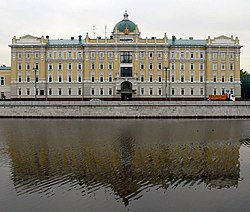
Rosneft Headquarters, Sofiyskaya Embankment, Moscow, September 2005 |
|
|
Native name |
ПAO «Росне́фть» |
|---|---|
| Type | Public (PJSC) |
|
Traded as |
MCX: ROSN LSE: ROSN |
| Industry | Petroleum |
| Predecessor | Ministry of Oil and Gas (Soviet Union) |
| Founded | 1993; 30 years ago |
| Headquarters |
Moscow , Russia |
|
Area served |
Russia |
|
Key people |
Taieb Belmahdi (Chairman) Igor Sechin (CEO) |
| Products | Petroleum Natural gas Motor fuels Petrochemicals |
| Revenue | $119 billion[1] (2021) |
|
Operating income |
$20.4 billion[1] (2021) |
|
Net income |
$13.7 billion[1] (2021) |
| Total assets | $223 billion[1] (2021) |
| Total equity | $88.1 billion[1] (2021) |
| Owner |
(2021[2]) |
|
Number of employees |
334,600 (2019)  |
| Website | rosneft.com |
PJSC Rosneft Oil Company (Russian: Росне́фть, tr. Rosnéft’, IPA: [ˌrosˈnʲeftʲ] stylized as ROSNEFT) is a Russian integrated energy company headquartered in Moscow. Rosneft specializes in the exploration, extraction, production, refining, transport, and sale of petroleum, natural gas, and petroleum products. The company is controlled by the Russian government through the Rosneftegaz holding company. Its name is a portmanteau of the Russian words Rossiyskaya neft (Russian: Российская нефть, lit. ‘Russian oil’).[3][4]
Rosneft was founded in 1993 as a state enterprise and then incorporated in 1995, acquiring a number of state-controlled gas and oil assets. It became Russia’s leading oil company after purchasing assets of the former oil company Yukos at state-run auctions. After acquiring OJSC TNK-BP in 2013, then one of the largest oil companies of Russia, Rosneft became the world’s largest publicly traded petroleum company.[4][5]
Rosneft is the third largest Russian company and the second-largest state-controlled company (after Gazprom) in Russia in terms of revenue (₽4,134 billion).[6] Internationally, it is one of the largest oil companies, ranking 24 in terms of revenue. In the 2020 Forbes Global 2000, Rosneft was ranked as the 53rd-largest public company in the world.[7] The company operates in more than twenty countries around the world.[3][4]
History[edit]
Origins[edit]
Rosneft has played a major role in the history of Russia’s oil industry. The first use of the name Rosneft dates back to the late 19th century, when exploration of oil fields in Sakhalin began in 1889. Most of Rosneft’s current assets were established during the Soviet era.[4]
1990s[edit]
Rosneft was established in 1993 as a unitary enterprise with assets previously held by Rosneftegaz, the successor to the Soviet Union’s Ministry of Oil Industry. During the early 1990s, almost all Russian oil companies and refineries were extracted from Rosneft to form ten integrated companies. Later their number was halved as a result of acquisitions. On 29 September 1995, an Order of the Government of Russia No. 971 transformed Rosneft into an open joint stock company.[8]
In March 1996, Rosneft founded the Russian Regional Development Bank.[9][10]
Rosneft struggled financially and operationally during the 1998 Russian financial crisis with decreased production due to poor assets and decreased retail sales with an underused refining capacity. In July 1998 the Russian government tried to sell Rosneft, but it failed.[11]
In October 1998, the Russian government appointed Sergey Bogdanchikov as president.[12] The company owned two obsolete refineries and several low-productive and poorly managed oil-producing assets. In the late 1990s, plans for Rosneft’s privatization in Russia were made, but due to competition with equally influential pretenders, they were not carried out.[4]
2000s[edit]
From 2002 to 2004, the main objectives of the company were to strengthen control over its assets, reduce the debt burden, and to obtain licenses in Eastern Siberia. The determining factor in enhancing the role of Rosneft in the Russian oil industry has been the support of the country’s top leadership. The company, during this time, managed to restore its status after its rough start in the 1990s with the acquisition of Krasnodar Oil and Gas Company in 2002 and Northern Oil Company in early 2003. In addition, in 2002, the company received a license for the development of the Sakhalin-IV and Sakhalin-V project,[13] and in 2003 a license for the development of the Sakhalin-III project.[citation needed]
In 2005, Rosneft acquired a 25.94% stake in the company Verkhnechonskneftegaz[14] and became the leading oil company of Russia in terms of production.[4][15]
In 2007, the company for the first time entered the annual list of one hundred most respected firms and companies in the world according to the weekly Barron’s, in 99th place.[16] By the same year, Rosneft produced 100 million barrels of oil, 20% of Russia’s output at the time.[4] In March 2007, Rosneft had announced it hoped to increase production from 80 million tonnes to 103 million tonnes from 2006 to the end of 2007, extract 140 million tonnes of oil by 2012, and become a global top three energy company.[17]
When the Great Recession struck Russia in late 2008, Rosneft was able to endure the economic pains by improving and strengthening business lines, management, and transparency, and as a result, became a leading oil company domestically and internationally.[4]
In February 2009, a number of agreements were negotiated between Russia and China that provided a 20-year contract for an annual supply of 15 million tons of oil between the Chinese National Petroleum Corporation (CNPC) and Rosneft, cooperation between CNPC and Transneft to construct and operate a branch of the Eastern Siberia–Pacific Ocean (ESPO) oil pipeline to China, and the provision of loans for US$25 billion—US$15 billion from Rosneft and US$10 billion from Transneft—by the China Development Bank on the security of supplies.[18][19][20]
Acquisition of assets of Yukos[edit]
Starting in 2004, the Russian government organized a series of auctions to sell the assets of Yukos Oil Company, of which Rosneft won the majority. On 22 December 2004, Rosneft had purchased Baikal Finance Group which bought Yuganskneftegaz (Yugansk), a main asset of Yukos, three days earlier at a state-run auction for US$9.35 billion to satisfy tax debts.[21] According to some estimates,[who?] this operation was directed by Russian authorities in order to nationalize Russia’s oil and gas industry. In response to the deal, Andrei Illarionov, then a senior Putin economic advisor, denounced it as «fraud of the year».[22]
In 2005, Mikhail Khodorkovsky (former chairman of Menatep) and Platon Lebedev (business partner of Khodorkovsky) were sentenced to nine years in prison for fraud and tax evasion. In February 2007, they were charged again and accused of stealing $25 billion worth of oil from Yukos subsidiaries. They were convicted, but in 2013 Putin pardoned Khodorkovsky and 2014 the Russian supreme court announced that Lebedev should also be freed early.[21]
The purchase of Yugansk in 2005[23] greatly increase the number of assets and production for Rosneft. Subsequently, Rosneft filed a lawsuit against Yukos in connection with the use of the understated transfer prices for the purchase of oil from Yuganskneftegaz prior to its breakup. At the same time, Rosneft itself also purchases oil and gas from its subsidiary, Yuganskneftegaz, at transfer prices.[citation needed]

Major existing and planned natural oil and gas pipelines supplying Russian oil and gas to Europe
In May 2007, Rosneft won a number of auctions for the sale of Yukos’ assets, including five refineries and oil companies Tomsk Oil Company and Samara Oil and Gas Company, making it the largest oil company in Russia. According to experts on the Russian newspaper Vedomosti, the assets of Yukos, bought by Rosneft at auction organized by the state, went to the company at a discount of 43.4% of the market price of this property. In 2007, the former assets of Yukos provided 72.6% of oil and gas condensate production and 74.2% of Rosneft’s primary refining.[24] In June, Rosneft paid $731 million for the transportation assets of Yukos, which had declared bankrupt in August 2006 after three years of litigation over tax arrears.[25] In August, Bogdanchikov said that although the Yukos acquisitions had increased Rosnefts debt to $US 26 billion, he planned to reduce debt to 30% of total assets by 2010 by tripling refining capacity and expand into China.[26]
Initial public offering of 2006[edit]
In July 2006, Rosneft placed 15% of its shares traded with a total value of US$10.7 billion in an initial public offering (IPO) at the London Stock Exchange, the Russian Trading System, and the Moscow Interbank Currency Exchange. Part of the shares were distributed among the Russian population through banks such as Sberbank and Gazprombank.[4][27][28]
The Federal Service for Financial Markets authorized the placement and circulation outside the country of a 22.5% stake in Rosneft.[29]
Rosneft announced a placement value of US$5.85–7.85 per share and global depository receipt (GDR), based on the company’s capitalization after consolidation of US$60–80 billion. It was planned to place shares for at least US$8.5 billion in order to repay loans to Western banks, including interest and taxes.[30]
On 14 July, the official results of the placement value were announced. Shares were priced at US$7.55, almost at the upper end of the price band, resulting in Rosneft’s capitalization—taking into account the upcoming consolidation of its subsidiaries—at a value of US$79.8 billion, making Rosneft surpass Lukoil as the largest oil company in Russia. Investors bought 1.38 billion shares for US$10.4 billion: 21% of the shares were bought by strategic investors, 36% from international investors from North America, Europe, and Asia, 39% from Russian investors, and 4% from Russian retail investors. 49.4% of the total IPO volume accounted for four investors, including BP for US$1 billion, Petronas for US$1.5 billion, and the CNPC for $0.5 billion. Individuals submitted applications for the purchase of 99,431,775 shares of the oil company, and as a result, most of the new shareholders were individuals; partly because of this IPO was given the unofficial name of «people’s.»[31][32]
Rosneft’s IPO became the largest in the history of Russia and the fifth in the world in terms of the amount of money raised at the time. The announced amount could increase by another US$400 million if the global placement coordinators realize the option of buying another 53 million GDRs of Rosneft at the price of placement within 30 days.[4]
On Abkhazia[edit]
On 26 May 2009, a five-year cooperation agreement was negotiated between Rosneft and the Abkhazia’s Ministry of Economy. The parties stated their intention to develop mutually beneficial cooperation in areas as geological prospecting, development of oil and gas fields, production of hydrocarbons, and sale of oil, natural gas and oil products. Rosneft undertook exploration on the shelf in the Ochamchira area, discovering preliminary reserves estimated at 200 million to 500 million tons of oil equivalent. In addition to drilling and creating its own sales network, Rosneft also planned the construction of mini-refineries in Abkhazia.[33][34]
According to Rosneft, the company provides more than half of the retail sales of oil products in Abkhazia. In 2014, Rosneft exported 47 thousand tons of oil products to Abkhazia. Since 2015, Rosneft started supplying aviation fuel for Sukhumi Babushara Airport.[35]
As part of the project to develop the Gudauta area on the Black Sea shelf, Rosneft will carry out a full range of geophysical and geochemical research, conduct 2D and 3D seismic surveys, and start preparations for exploratory drilling.[35] In June 2014, Rosneft extended the shelf study period to five years.
In July 2015, however, the new President of Abkhazia, Raul Khajimba, who replaced Alexander Ankvab after his resignation, spoke out against the exploration and production of oil on the offshore shelf of Abkhazia and asked the People’s Assembly to consider the possibility of establishing a «commission for the comprehensive study of issues related to the conclusion of contracts for exploration and production hydrocarbons by the previous Abkhaz leadership.»[36]
A group of deputies of the People’s Assembly drafted a bill banning the development of hydrocarbons in Abkhazia. Supporters of the bill demanded the prohibition of the development of the offshore shelf in Abkhazia for 30 years.[36]
2010s[edit]
In September 2010, Eduard Khudainatov replaced Sergei Bogdanchikov as CEO of the company.[37]
On 15 October 2010, Russian President Dmitry Medvedev signed an agreement with President of Venezuela Hugo Chávez for the PDVSA to sell 50% of the shares of German company Ruhr Oel to Rosneft, giving Rosneft oil refining assets in Germany.«Stake in Ruhr Oel GmbH». Rosneft.
Since 23 May 2012, former Deputy Prime Minister Igor Sechin became the company’s CEO, succeeding Khudaninatov, who received the post of vice-president.[38]
In the summer of 2012, Rosneft purchased a fuel oil terminal from the United Shipbuilding Corporation (USC) located on the territory of the Murmansk Ship Repair Plant No. 35. The transaction value is estimated at US$28 million. According to Kommersant, the Murmansk terminal can be used as a platform for Rosneft’s activities in the Arctic.[39]
In October 2016, Rosneft bought a 49% stake in Essar Oil of India, along with Russian investment fund United Capital, in a deal worth $13 billion.[40]
On 7 December 2016, Rosneft signed a deal to sell 19.5% of the outstanding shares, or roughly US$11 billion, to the Anglo-Swiss multinational commodity trader Glencore and the Qatar Investment Authority.[41] Officially, the stake was split 50/50 between Glencore and Qatar, but Glencore contributed only €300 million and claims only a 0.54% stake. The ownership structure includes a Cayman Islands company, QHG Cayman Limited, whose ownership can not be traced.[42] After the transaction, Rosneft’s holding company Rosneftegaz retained 50% + 1 share of the company.[43]
On 2 October 2017, the PLA-linked CEFC China Energy[44] bought a $9 billion stake in Rosneft.[45]
On 26 September 2017, the Russian government controversially approved the former German chancellor Gerhard Schröder as chairman of Rosneft.[46]
In May 2018, it was announced that the Qatar-Glencore consortium is cancelling the plan to sell a $9.1 billion (14%) stake of Rosneft to CEFC China Energy. With the dissolution of the consortium, the Qatar Investment Authority purchased the shares instead, thereby solidifying its position as one of the biggest shareholders (19%) of Rosneft.[47]
In the 2010s, the extensive contact between Rosneft and ExxonMobil were further deepened, with Igor Sechin and Rex Tillerson getting to know each other personally.[48]
Arctic shelf deals with BP and ExxonMobil[edit]

Location of the EPNZ-1, EPNZ-2 and EPNZ-3 oil and gas areas in the Kara Sea
On 15 January 2011, Rosneft and British Petroleum (BP) announced a deal to develop the East-Prinovozemelsky field on the Russian arctic shelf between the Yamal Peninsula and Novaya Zemlya island.[49][48] As part of the deal Rosneft was to receive 5% of BP’s shares, worth approximately $7.8 billion, as of January 2011 and BP would get approximately 9.5% of Rosneft’s shares in exchange.[50][48] According to the deal, the two companies would create an Arctic technology centre in Russia to develop technologies and engineering practices for safe arctic hydrocarbons extraction.[51] AAR, which represents four billionaires of Russian origin and is BP’s Russian partner in the TNK-BP joint venture, blocked the BP–Rosneft deal in international courts, arguing it breached earlier contracts between BP and AAR.[52] The TNK-BP partners had previously signed a shareholding agreement which stipulated that their Russian joint venture would be the primary corporate vehicle for BP’s oil and gas operations in Russia.[53] On 30 August 2011, Rosneft announced that instead of BP the partner for EPNZ-1, EPNZ-2 and EPNZ-3 in the Kara Sea will be ExxonMobil. In exchange, subject to approval by U.S. regulators, in addition to a share in oil production in Russian fields, Rosneft was granted participation in U.S. fields in Texas and the Gulf of Mexico.[54][55]
Black Sea shelf deal with ExxonMobil[edit]
On 27 January 2011, Rosneft and the American company ExxonMobil signed a deal to establish a joint venture for the purpose of prospecting and extracting oil from the Tuapse field deepwater area on the Black Sea shelf, near the coast of the Krasnodar Krai.[48] The value of the deal is unknown, but ExxonMobil is expected to invest $1 billion in the project.[48] The venture will be shared 50–50 between the companies during prospecting phase, and two-thirds to one-third in Rosneft’s favour during the extraction phase. The Tuapse Trough is estimated to contain 7.2 billion barrels of oil equivalent. The first well could be drilled in 2012.[56] The deal also contains options for additional cooperation, such as extended exploration and production, deliveries to Rosneft’s oil refinery in Tuapse, development of transport infrastructure and research on offshore oil production technologies.[57] According to analysts, offshore areas are central to Rosneft’s expansionist plans, and the company is looking for foreign cooperation to bring in new technology and share risks.[56]
In April 2017, the Trump administration denied ExxonMobil permission to continue a deal with Rosneft to drill for oil in Russia.[58]
TNK-BP acquisition[edit]
On 22 October 2012, it was announced that Rosneft will take over TNK-BP International, a parent company of TNK-BP Holding, which is the third largest oil company in Russia.[59] BP will receive in exchange of its stake $12.3 billion of cash and 18.5% of Rosneft’s share, while ARR will receive $28 billion in cash.[60] According to Rosneft’s CEO Igor Sechin, no discussion had been held on a buyout of minority shareholders in TNK-BP Holding.[61] The deal was completed on 20 March 2013.[62]
United States sanctions[edit]
On 16 July 2014, the Obama administration imposed sanctions through the US Department of Treasury’s Office of Foreign Assets Control (OFAC) by adding Rosneft and other entities to the Sectoral Sanctions List (SSL) in retaliation for the annexation of the Crimean Peninsula by the Kremlin and the ongoing Russian interference in Ukraine.[63]
The Trump administration expanded further sanctions on its Swiss-incorporated company (Rosneft Trading S.A.) and its president Didier Casimiro on 18 February 2020, for supporting Venezuela’s Nicolás Maduro regime by operating in the oil sector of the Venezuelan economy.[64][65]
2020s[edit]
On 27 February 2022, BP announced that it would divest its 19.75% stake in Rosneft in response to the Russian invasion of Ukraine that took place in February 2022.[66]
The week beginning 19 April 2022, Rosneft attempted to sell millions of barrels of Urals, one of three main export-grade crude oils sold by Russia. The offer failed to attract any customers.[67]
Following the 2022 Russian invasion of Ukraine more than half of Rosneft’s 11-member board have quit, forcing the company into a major reshuffle at its annual general meeting on 30 June 2022. Taieb Belmahdi, a former executive at Qatar’s state-owned QE, has been elected chairman of the board to replace ex-German chancellor Gerhard Schröder who stepped down in May.[68]
Operations[edit]

Rosneft’s daily average crude oil production in 2010 increased by 6.4%, to 2.3 million barrels (370 thousand cubic metres). Total crude oil output reached 847.4 million barrels (134.73 million cubic metres) of oil and gas condensate. Rosneft is also among the largest natural gas producers in Russia, with a total gas production of 12.3 billion cubic metres (1.23×10¹⁰ cubic metres) in 2010. Rosneft is engaged in exploration and production across all key oil and gas regions of Russia: Western Siberia, Southern and Central Russia, Timan-Pechora, Eastern Siberia, the Far East, and the shelf of Russia’s Arctic Ocean. As of year-end 2010, Rosneft’s total proved oil and gas reserves under PRMS classification were 22.8 billion barrels (3.62 billion cubic metres) of oil equivalent, among the highest for a publicly traded petroleum company worldwide. Rosneft is also second-to-none in terms of total proved liquid hydrocarbon reserves.[69][70]
In 2016, based on geological prospecting, 13 oil fields and 127 new deposits[15] with the reserves totaling 207 million tons of oil equivalent were discovered. The replacement of hydrocarbon reserves of industrial categories ABC1 amounted to 354 million TOE or 126% of the production in Russia. The replacement factor for new reserves has been significantly above 100% for over ten years.[71][third-party source needed]
According to Rosneft, the reserves increment in Western Siberia amounted to 133 million tons of oil and condensate and 87 billion cubic metres (8.7×10¹⁰ cubic metres) of natural gas. 37 prospecting and exploration wells tests were completed with a success rate of 89%. 45 new deposits with the total reserve of 59 million tons of AB1С1 + В2С2 were discovered. In Eastern Siberia and the Far East, the total increase in reserves amounted to 21.2 million tons of oil and condensate and 29 billion cubic metres (2.9×10¹⁰ cubic metres) of gas. 11 exploration well tests were completed with a success rate of 55%. Five new deposits with reserves of 39 million tons of oil equivalent were discovered. In 2016, the total incremental 4.8 billion cubic metres (4.8×10⁹ cubic metres) of gas. 37 well tests were completed with a success rate of 76%.[71][third-party source needed]
Rosneft owns and operates seven large refineries in Russia with an aggregate annual capacity of 372 million barrels (59.1 million cubic metres) and four mini-refineries. The refineries are able to process about 45% of crude oil produced by Rosneft as a whole. Rosneft owns as well a 50% stake in Ruhr Oel GmbH,[70] the owner of stakes in four refineries in Germany with overall capacity of 23.2 million tonnes.[72] Rosneft is the second largest national oil company by retail network, which covers 41 regions of Russia and includes 1,800 filling stations.[69][73] In March 2020, the company stopped its operations in Venezuela and sold all of its assets in the country to another unnamed company that is owned by the Russian government.[74]
Corporate affairs[edit]
Shareholders[edit]
Prior to the initial public offering (IPO) in 2006, all of Rosneft’s shares were owned by the Russian government through its holding company JSC Rosneftegaz. After the placement of the company’s shares on the stock exchange and the consolidation of shares of 12 subsidiaries (including Yuganskneftegaz) of Rosneft, the share of Rosneftegaz decreased to 75.16%. As of September 2012, Rosneft had over 160,000 shareholders. By December 2016, the number of individual shareholders was 138,000, with Rosneftegaz owning only 50% of the shares, BP owning 19.75%, and 30.25% owned by other shareholders.[75][76] In August 2021 Igor Sechin increased his own share at Rosneft from 0.1273% up to 0.1288%.[77]
Management[edit]

Board of directors[edit]
Members of the board of directors (as of June 2022):[78]
- Taieb Belmahdi – Chairman[79]
- Igor Sechin – CEO, Deputy Chairman
- Aleksander Nekipelov – Deputy Chairman, Independent director
- Andrey Akimov
- Hamad Rashid Al-Mohannadi
- Faisal Alsuwaidi
- Pedro А. Aquino, Jr.
- Vladimir Litvinenko
- Alexander Novak
- Maxim Oreshkin
- Aleksandr Uss
Management board[edit]
Members of the management board:[80]
- Igor Sechin – CEO, Chairman
- Yuri Kalinin – Deputy Chairman, Vice President
- Eric M. Liron – First Vice President
- Gennady Bukaev – Vice President, Head of Internal Audit
- Didier Casimiro – Vice President for Refining, Petrochemical, Commerce, and Logistics
- Peter Lazarev – Financial director
- Yury Narushevich – Vice President for Internal Services
- Zeljko Runje – Vice President for Offshore Projects
- Yuri Kurilin – Vice President, Chief of Staff
- Andrey Shishkin – Vice President for Energy, Localization, and Innovation
- Vlada Rusakova – Vice President
[edit]
In 2011, according to Rosneft, the company had donated $422 million to charity, 4 times than the previous year, becoming the leading Russian company devoted to philanthropy that year. At the same time, the composition of the beneficiaries were not disclosed as it was known that the oil company had previously committed to pay $180 million for the right to be the general sponsor of the 2014 Winter Olympics in Sochi.[81]
Since 2012, Rosneft, along with Gazprom, is the title sponsor of the association football team FC Tom Tomsk based in Tomsk.[82]
Rosneft has been ranked as among the 13th best of 92 oil, gas, and mining companies on indigenous rights and resource extraction in the Arctic.[83]
Controversies[edit]
Violations of anti-monopoly legislation[edit]
In October 2009, the Federal Antimonopoly Service (FAS) imposed on Rosneft a record fine of ₽5.3 billion ($175M) for violating anti-monopoly legislation. The fine was imposed for the abuse of power in the petroleum market recorded in the first half of 2009, which was expressed in the «seizure of goods from circulation, which led to higher prices in the wholesale segment of the oil products market, creating discriminatory conditions for the sale of oil products to individual counter-parties.» As FAS has calculated, these actions led to an increase in prices in the wholesale markets of motor gasoline, diesel fuel, and aviation kerosene in the first half of 2009.[84]
Western claims from Yukos Capital[edit]
On August 9 2010, a former subsidiary of Yukos, Yukos Capital Sarl of Luxembourg, was seeking to have Rosneft repay the debts of companies that previously belonged to Yukos. After the seizure of Rosneft’s assets in the United Kingdom and the denial of an appeal by the Supreme Court of the Netherlands, Rosneft said that Yukos Capital paid Yuganskneftegaz its debt of ₽12.9 billion ($426M).[85]
On 16 August 2010, Yukos Capital appealed to the Federal Arbitration Court of the West Siberian District with a cassation appeal against the decision of the Arbitration Court of Tomsk Oblast to refuse reclaiming from Tomskneft, a Rosneft subsidiary, more than ₽7 billion ($231M) under loan agreements. Previously, Yukos Capital applied to international arbitration under the International Chamber of Commerce, and it obliged Tomskneft to pay ₽7,254.2 million ($239M), $275,200, and £52,960, with an interest rate of 9% per annum for the amount of ₽4,350 million ($144M), starting from 12 February 2009 until the day of payment of the debt. The Russian court had to bring the court’s decision to Russian territory. However, the Arbitration Court of Tomsk Oblast, having considered the claim, ruled to refuse Yukos Capital in debt collection.[86]
Ulyukayev lawsuit[edit]
On December 15 2017, a Moscow court sentenced Alexei Ulyukayev, a former Russian economy minister to paying ₽130M ($2.2M) and eight years in a penal colony for bribery and corruption.[87] The case was widely seen as Rosneft CEO Sechin’s revenge for Ulyukayev opposing Rosneft’s takeover of Bashneft, another oil company.[88] The 61-year-old claimed that Sechin had lured him to Rosneft’s offices, where he was subsequently caught red-handed by the authorities with a bag of bribe money.[89] According to investigators, Ulyukayev, who was still economy minister at the time of his arrest, had taken the $2M bribe in exchange for permitting Rosneft’s acquisition of a stake in Bashneft. Ulyukayev retorted that the «fabricated» accusations of bribery were «based solely on Sechin’s claims,» and that the whole exchange had been engineered by the Russian Federal Security Service, the successor of the KGB.
Ulyukayev was seen as an economic liberal, Igor Sechin is viewed as a hawk, who supports greater state control over the economy. Ulyukayev, while influential, was not part of President Putin’s inner circle.[87]
Oil spills[edit]
The Russian branch of Greenpeace called Rosneft the dirtiest oil company in the world. In 2011, according to a survey conducted by the Federal Service for Supervision in the Sphere of Nature Management (Rosprirodnadzor) in Khanty-Mansi Autonomous Okrug, Rosneft allowed 2,727 oil spills, which is 75% of the total number of spills that occurs under the company.[90] According to environmentalists, it is Rosneft’s fault that more than 10,000 oil spills occur each year.[91][92] The Hydrometeorological Centre of Russia has estimated that 4.5m tonnes of oil are spilled on the Russian mainland every year, that’s seven times the BP Deepwater Horizon spill in the Gulf of Mexico in 2010.[93] Often blamed is Rosneft’s ageing infrastructure, so is the lack of government oversight.[92][93] As a result of the environmental contamination, people have observed black water coming out of their taps, cattle has been stricken with tuberculosis, and fish have been found deformed.
Fracking[edit]
In the first half of the 2000s, Sergei Bogdanchikov, then president of Rosneft, along with some journalists and experts, criticized Yukos and Sibneft for their use of hydraulic fracturing.[94] However, in early November 2006, a number of journalists pointed out that the Priobskoye oil field of which it is owned by RN-Yuganskneftegaz, a subsidiary of Rosneft acquired from Yukos, produced the largest oil fracture in Russia with specialists of Newco Well Service. The operation was conducted for seven hours and was broadcast live via the Internet to the office of Yuganskneftegaz.[95] In 2007, the company planned to perform hydraulic fracturing of the formation at 440 wells. From 2009 to 2010, Rosneft remains one of the largest customers of the oilfield services company Schlumberger, which specializes in hydraulic fracturing.[96]
Sanctions[edit]
On 20 March 2014, the United States government sanctioned Rosneft CEO Igor Sechin in response to the Russian government’s role in the ongoing unrest in Ukraine. The sanctions include a travel ban to the United States, freezing of all assets of Sechin in the United States and a ban on business transactions between American citizens and corporations and Sechin and businesses he owns.[97][98] On February 24 2022, his son Ivan Sechin was also sanctioned by the U.S.[99] On February 28 2022, Igor Sechin was subjected to travel restrictions and had his assets frozen by the EU.[100]
Rosneft and many of its subsidiaries have been sanctioned in the past and appear on the Sectoral Sanctions Identification (SSI) List.[101] Rosneft was added to the SSI on July 16 2014,[102] and was sanctioned by the EU on September 8 2014.[103]
On February 18, 2020, the US Department of the Treasury’s Office of Foreign Assets Control (“OFAC”) added Rosneft Trading S.A., a Swiss subsidiary of Rosneft, and its president Didier Casimiro to the Specially Designated Nationals (“SDN”) list.[104]
Transparency[edit]
As of 1 May 2014, the heads of Russian state corporations would provide information about their incomes and property to the Russian government to correspond to the presidential decree Anti-Corruption Issues, which was published on 8 July 2013. According to the ruling, websites of the companies should show the personal information of their top managers such as income, property, spouses, and children. However, Rosneft refused to publish its information of top managers, citing that it is only applicable to «state companies (corporations) and other organizations created by federal laws,» to which it does not believe itself to be. However, this did not prevent the company from providing information regarding the incomes and property of Rosneft’s top managers and their relatives to «competent authorities» in the prescribed «time and amount». According to the director of the Russian branch of Transparency International, Elena Panfilova, improvement of such legislation is necessary so that state corporations can unequivocally interpret the norm on the publication of personal information. In July, the Russian government announced that information of the income of top management of companies listed in Government Decree No. 613 July 22, 2013 which includes Rosneft, «are subject to placement in the information and telecommunications network ‘Internet’ on the official websites of these organizations.»[105]
See also[edit]
- List of countries by oil exports
- List of countries by oil production
- List of countries by natural gas exports
- List of companies of Russia
- List of oil exploration and production companies
- Petroleum industry in Russia
References[edit]
- ^ a b c d e «2021 Full Year IFRS» (PDF). Rosneft. 11 February 2022. p. 90. Retrieved 11 February 2022.
- ^ «Shareholder structure». Archived from the original on 22 August 2021.
- ^ a b «Rosneft at a glance». Rosneft. Retrieved 2 March 2018.
- ^ a b c d e f g h i j «History of Rosneft». Rosneft. Retrieved 2 March 2018.
- ^ «РБК узнал о задержании замначальника таможни Дагестана» [RBC learned about the detention of the deputy head of the customs of Dagestan]. Vedomosti (in Russian). 2 March 2018. Retrieved 2 March 2018.
- ^ «Эксперт 400 — рейтинг крупнейших российских компаний» [Expert 400 — rating of the largest Russian companies] (in Russian). Expert. Archived from the original on 4 July 2018. Retrieved 2 March 2018.
- ^ «Forbes Global 2000». Forbes. Retrieved 31 October 2020.
- ^ Henderson, James (January 2012). «On the Road to Global NOC Status?» (PDF). Oxford Institute for Energy Studies. University of Oxford. Retrieved 5 May 2020.
- ^ «Russian Regional Development Bank OAO». Bloomberg. Retrieved 16 June 2020.
- ^ «Sale of top Russian business newspaper ‘Vedomosti’ complete». Meduza. 29 May 2020.
- ^ «Comparing the 1998 and 2014 Ruble Crises». Ponars Eurasia. July 2015. Retrieved 5 May 2020.
- ^ Salpukas, Agis (25 October 1998). «Russian Oil: So Much, Yet So Little». The New York Times. Retrieved 5 May 2020.
- ^ Poussenkova, Nina (June 2006). «Rosneft as a Mirror of Russia’s Evolution» (PDF). Pro et Contra. Institute of World Economy and International Relations, Russian Academy of Sciences. 10 (2). Retrieved 5 May 2020 – via Carnegie Endowment for International Peace.
- ^ Russia Oil and Gas Exploration Laws and Regulation Handbook (Vol.1). International Business Publications USA. 2013. p. 67. ISBN 978-1-4330-7894-1. Retrieved 19 May 2020.
- ^ a b «SOCAR to export Russian oil products». AzerNews. 29 January 2018. Retrieved 11 May 2020.
- ^ Kirillov, Roman (9 September 2012). Авторитеты из России [Authorities from Russia]. RBK Daily (in Russian). Archived from the original on 9 September 2012. Retrieved 21 March 2018.
- ^ «Russia’s Rosneft Aiming to Become Top Global Oil Company». Petroleumworld. Elio Ohep Fitzgerald. AFP. 9 March 2007. Archived from the original on 10 May 2015.
- ^ Tulder, Rob van; Verbeke, Alain; Carneiro, Jorge; Gonzalez-Perez, Maria Alejandra (2017). The Challenge of BRIC Multinationals. Emerald Group Publishing Limited. p. 461. ISBN 978-1-78635-349-8. Retrieved 14 May 2020.
- ^ «Russia’s Rosneft, China’s CNPC in talks on upstream pact, deals possible by May: reports». S&P Global Platts. 7 February 2014. Retrieved 14 May 2020.
- ^ McKay, Huw; Song, Ligang (2012). Rebalancing and Sustaining Growth in China. The Australian National University. p. 342. ISBN 978-1-921862-80-9. Retrieved 14 May 2020.
- ^ a b «Timeline: The rise and fall of Yukos». Financial Times. 28 July 2014. Retrieved 11 May 2020.
- ^ «Putin’s Advisor Calls Yuganskneftegaz Sale «Fraud of the Year»«. MosNews. 29 December 2004. Archived from the original on 29 December 2004. Retrieved 21 March 2018.
- ^ «Managers’ row hits Russian merger». BBC News. 3 March 2005. Retrieved 11 May 2020.
- ^ Reznik, Irina (25 September 2007). Прокурорский дисконт [Prosecutor’s discount]. Vedomosti (in Russian).
- ^ «Rosneft Gets More of Yukos». Oil & Gas Eurasia. June 2007. Archived from the original on 8 February 2012. Retrieved 27 August 2007.
- ^ «Rosneft Goes on Absorbing Yukos». Russia Today. 7 August 2007. Archived from the original on 28 February 2008. Retrieved 27 August 2007.
- ^ Sakwa, Richard (2009). Power and Policy in Putins´s Russia. Routledge. ISBN 978-1-317-98994-3. Retrieved 14 May 2020.
- ^ Depamphilis, Donald (2012). Mergers, Acquisitions, and Other Restructuring Activities. Academic Press. p. 574. ISBN 978-0-12-801610-7. Retrieved 14 May 2020.
- ^ «Consolidated financial statements 2017». London Stock Exchange. 31 December 2017. Retrieved 19 May 2020.
- ^ «Investors eagerly await Rosneft IPO, Petronas among bidders». TheStar. 14 July 2006. Retrieved 19 May 2020.
- ^ «Роснефть»: «народное IPO» обернулось скандалом [Rosneft: «people’s IPO» turned into a scandal]. ipocongress.ru (in Russian). 9 June 2010. Archived from the original on 2 February 2012. Retrieved 22 March 2018.
- ^ «ОАО НК Роснефть» [OJSC NK Rosneft]. Kommersant. 9 June 2010. p. 9. Retrieved 21 March 2018.
- ^ НК «Роснефть» и Минэкономики Абхазии договорились о сотрудничестве [NK «Rosneft» and the Ministry of Economy of Abkhazia agreed on cooperation] (Press release) (in Russian). Rosneft. 26 May 2009. Archived from the original on 27 November 2010. Retrieved 22 March 2018.
- ^ ««Роснефть» признала Абхазию» [Rosneft recognized Abkhazia]. Expert Online 2.0. 31 August 2009. Archived from the original on 31 August 2009. Retrieved 22 March 2018.
{{cite web}}: CS1 maint: bot: original URL status unknown (link) - ^ a b Позиция «НК «Роснефть» по вопросу о сотрудничестве с республикой Абхазия [Position of «NK» Rosneft «on the issue of cooperation with the Republic of Abkhazia] (Press release) (in Russian). Rosneft. 31 July 2015. Archived from the original on 3 August 2015. Retrieved 22 March 2018.
- ^ a b Власти Абхазии вытесняют «Роснефть» из страны [Abkhazian authorities oust Rosneft from the country]. Vesti Finance (in Russian). Retrieved 22 March 2018.
- ^ Решением Совета директоров Президентом ОАО «НК «Роснефть» назначен Эдуард Худайнатов [By the decision of the Board of Directors, Eduard Khudainatov was appointed President of Rosneft]. Rosneft (in Russian). 9 June 2010. Retrieved 22 March 2018.
- ^ Совет директоров назначил Сечина президентом «Роснефти», Худайнатов стал его замом [The board of directors appointed Sechin president of Rosneft, Khudainatov became his deputy]. Gazeta.Ru (in Russian). Retrieved 22 March 2018.
- ^ «Роснефть» вышла на причал в Мурманске [Rosneft went to the pier in Murmansk]. Kommersant (in Russian). 17 July 2012. p. 9. Retrieved 22 March 2018.
- ^ «Rosneft, partners buy Essar Oil for $13 billion in largest FDI deal». The Indian Express. 15 October 2016.
- ^ Bertrand, Natasha (27 January 2017). «Memos: CEO of Russia’s state oil company offered Trump adviser, allies a cut of huge deal if sanctions were lifted». Business Insider.
- ^ «How Russia sold its oil jewel: without saying who bought it». Reuters. 25 January 2017.
- ^ Ведомости (8 December 2016). «Glencore: цена покупки пакета «Роснефти» – 10,2 млрд евро» [Glencore: purchase price of Rosneft stake – 10.2 billion euros]. Retrieved 22 March 2018.
- ^ «Opaque Chinese oil group makes clear gains in former Soviet bloc». Financial Times. 13 September 2017.
- ^ «Why an Enigmatic Chinese Company Just Spent $9 Billion on a Stake in Rosneft». Bloomberg. 2 October 2017.
- ^ Власти утвердили Шредера кандидатом на пост главы «Роснефти» [The authorities approved Schroeder as a candidate for the post of head of Rosneft]. runews24.ru (in Russian). Retrieved 22 March 2018.
- ^ Hume, N.; Sheppard, D. (4 May 2018). «Qatar and Glencore scrap plan to sell $9bn Rosneft stake to CEFC». Financial Times. Retrieved 1 June 2018.
- ^ a b c d e Overland, Indra; Godzimirski, Jakub; Lunden, Lars; Fjaertoft, Daniel (2013). «Rosneft’s offshore partnerships: The re-opening of the Russian petroleum frontier?». Polar Record. 49 (249): 140–153. doi:10.1017/S0032247412000137.
- ^ «Rosneft Strategic Alliance with BP» (PDF). Rosneft. January 2011. Archived from the original (PDF) on 30 October 2012. Retrieved 30 January 2011.
- ^ «BP and Russia in Arctic oil deal». BBC News. 14 January 2011. Archived from the original on 2 November 2011.
- ^ «Rosneft and BP Form Global and Arctic Strategic Alliance». Rosneft. 14 January 2011. Archived from the original on 28 May 2012.
- ^ Yenikeyeff, Shamil (23 November 2011). «BP, Russian Billionaires, and the Kremlin: A Power Triangle That Never Was» (PDF). Oxford Energy Comment. The Oxford Institute of Energy Studies: 18. Retrieved 24 November 2011.
- ^ Flynn, Alexis; Gronholt-Pedersen, Jacob (18 May 2011). «BP, Rosneft Still in Talks». The Wall Street Journal. (subscription required). Archived from the original on 17 May 2013. Retrieved 22 May 2011.
- ^ «ExxonMobil in $3.2bn Rosneft Arctic pact». Upstream Online. NHST Media Group. 30 August 2011. Archived from the original on 7 October 2012. Retrieved 31 August 2011.
- ^ Vasilyeva, Nataliya (30 August 2011). «Rosneft Teams Up with Exxon Mobil in Arctic Deal». Bloomberg Businessweek. Associated Press. Archived from the original on 2 November 2012. Retrieved 24 October 2012.
- ^ a b Oliphant, Roland (28 January 2011). «Exxon, Rosneft Sink $1Bln in Black Sea». The Moscow Times. Archived from the original on 20 March 2014.
- ^ «Rosneft and ExxonMobil to Develop Black Sea Resources». Rosneft. 27 January 2011. Archived from the original on 28 May 2012.
- ^ «U.S. will not give Exxon permission to drill in Russia». Reuters. 21 April 2017.
- ^ «Taking a stake in Rosneft is a big gamble for BP». The Guardian. 22 October 2012. Archived from the original on 17 May 2013.
- ^ Korsunskaya, Darya; Callus, Andrew (22 October 2012). «Rosneft beefs up with TNK-BP purchase». Reuters. Archived from the original on 22 February 2014. Retrieved 22 October 2012.
- ^ Lehane, Bill (23 October 2012). «Sechin points to multi-billion TNK-BP synergies». Upstream Online. NHST Media Group. Archived from the original on 1 March 2014. Retrieved 24 October 2012.
- ^ Soldatkin, Vladimir; Callus, Andrew (22 March 2013). «Rosneft pays out in historic TNK-BP deal completion». Reuters. Archived from the original on 14 February 2014. Retrieved 25 March 2013.
- ^ «Announcement of Treasury Sanctions on Entities Within the Financial Services and Energy Sectors of Russia, Against Arms or Related Materiel Entities, and those Undermining Ukraine’s Sovereignty». treasury.gov. 16 July 2014.
- ^ «Treasury Targets Russian Oil Brokerage Firm for Supporting Illegitimate Maduro Regime». United States Department of the Treasury. 18 February 2020. Retrieved 19 February 2020.
- ^ Jakes, Lara (18 February 2020). «U.S. Imposes Sanctions on Russian Oil Company Supporting Venezuela’s Leader». The New York Times. ISSN 0362-4331. Retrieved 25 February 2020.
- ^ «BP to offload stake in Rosneft amid Ukraine conflict». BBC News. 27 February 2022. Retrieved 27 February 2022.
- ^ Cheong, Serene; Cho, Sharon; Chakraborty, Debjit (25 April 2022). «Asian Buyers Trying to Back Out of Purchases of Russian Oil Grade». Bloomberg Business News. Retrieved 26 April 2022.
- ^ «Rosneft replaces departed western board members». Argus media. 1 July 2022. Retrieved 11 January 2023.
- ^ a b «Business» (in Russian). Rosneft. Retrieved 7 March 2018.
- ^ a b «The leading Russian Petroleum Company». 2B1st Consulting. 17 October 2012. Retrieved 11 May 2020.
- ^ a b «Geological prospecting» (in Russian). Rosneft. Retrieved 7 March 2018.
- ^ «Germany: Rosneft Acquires 50% Of Ruhr Oel GmbH». Eurasia Review. 5 May 2011. Retrieved 19 May 2020.
- ^ «Rosneft Oil Company». Rustocks. Retrieved 19 May 2020.
- ^ «Rosneft sells Venezuelan assets to Russia after U.S. sanctions ramp up». Reuters. 28 March 2020. Retrieved 29 March 2020.
- ^ ФСФР поддержала А.Навального в борьбе с «Роснефтью» [FSFM supported A. Navalny in the fight against Rosneft]. RBK (in Russian). 25 September 2012. Retrieved 7 March 2018.
- ^ Сечин воспользовался кредитом для покупки акций «Роснефти» [Sechin used the loan to buy shares of Rosneft]. RIA Novosti (in Russian). 29 August 2013. Retrieved 7 March 2018.
- ^ Сечин увеличил долю в уставном капитале Роснефти до 0,1288% [Sechin increased his stake in Rosneft’s authorized capital to 0.1288%] (in Russian). TASS. 1 September 2021.
- ^ «Board of directors». rosneft.com. Rosneft. Retrieved 11 January 2023.
- ^ «Board of Directors». rosneft.com. Rosneft. Retrieved 11 January 2023.
- ^ «Management board». Rosneft. Retrieved 7 March 2018.
- ^ «Роснефть» проявила неожиданную и невиданную благотворительность [Rosneft has shown unexpected and unprecedented charity]. Vedomosti (in Russian). 6 February 2012. Retrieved 7 March 2018.
- ^ «Томь» подписала спонсорские соглашения с «Газпром нефтью» и «Роснефтью» [Tom signed sponsorship agreements with Gazprom Neft and Rosneft]. Gazeta.Ru (in Russian). Retrieved 7 March 2018.
- ^ Overland, Indra (2016). «Ranking Oil, Gas and Mining Companies on Indigenous Rights in the Arctic». ResearchGate. Arran. Retrieved 2 August 2018.
- ^ «Роснефть» поставила штрафной рекорд [Rosneft has set a penalty record]. Gazeta.Ru (in Russian). Retrieved 21 March 2018.
- ^ «Роснефть» выплатила Yukos Capital 13 млрд рублей [Rosneft paid out 13 billion rubles to Yukos Capital]. RIA Novosti (in Russian). 9 August 2010. Retrieved 21 March 2018.
- ^ «Yukos Capital развивает успех» [Yukos Capital builds on success]. Gazeta.Ru (in Russian). Retrieved 21 March 2018.
- ^ a b «Russian ex-minister Ulyukayev gets eight years for bribery». BBC News. 15 December 2017. Retrieved 27 February 2022.
- ^ «Ex-minister’s harsh jail sentence sends shockwaves through Russian elite». the Guardian. 15 December 2017. Retrieved 27 February 2022.
- ^ Welle (www.dw.com), Deutsche. «Ex-Russian minister Ulyukayev faces bribery charges, pins blame on Rosneft head and Putin ally | DW | 16.08.2017». DW.COM. Retrieved 27 February 2022.
- ^ Как самая грязная нефтяная компания России будет сохранять чистоту Арктики? [How will Russia’s dirtiest oil company keep the Arctic clean?]. Greenpeace Russia (in Russian). Retrieved 21 March 2018.
- ^ Белый медведь доплыл на льдине до Кремля [A polar bear swam on an ice floe to the Kremlin]. Greenpeace Russia (in Russian). Retrieved 21 March 2018.
- ^ a b Welle (www.dw.com), Deutsche. «Why Russia has so many oil leaks | DW | 29.03.2021». DW.COM. Retrieved 28 February 2022.
- ^ a b «Russia’s Rosneft charged over pipeline leak that caused oil to come out of taps». the Guardian. 30 June 2015. Retrieved 28 February 2022.
- ^ Shevelkova, Oksana; Govorun, Yulia (13 August 2007). «Продано даже имя» [Even the name sold]. Vedomosti (in Russian). Archived from the original on 4 November 2011. Retrieved 21 March 2018.
- ^ На месторождении «Роснефти» в Югре произведён крупнейший в России гидроразрыв пласта [Russia’s largest hydraulic fracturing was performed at the Rosneft field in Ugra]. Nakanune (in Russian). Retrieved 21 March 2018.
- ^ Выступление президента нефтесервисной компании «Шлюбмерже» в Ханты-Мансийске [Speech by the President of Shlyubmerzhe Oilfield Services Company in Khanty-Mansiysk]. Advis.ru (in Russian). Retrieved 21 March 2018.
- ^ «Announcement Of Additional Treasury Sanctions On Russian Government Officials And Entities». US Department of the treasury.
- ^ «Executive Order — Blocking Property of Additional Persons Contributing to the Situation in Ukraine». The White House — Office of the Press Secretary. 20 March 2014.
- ^ «U.S. Treasury Announces Unprecedented & Expansive Sanctions Against Russia, Imposing Swift and Severe Economic Costs». U.S. Department of the Treasury. Retrieved 27 February 2022.
- ^ «EU Sanctions Map». www.sanctionsmap.eu. Retrieved 4 March 2022.
- ^ «Russia Sanctions List». Risk Advisory. Retrieved 4 March 2022.
- ^ «Announcement of Treasury Sanctions on Entities Within the Financial Services and Energy Sectors of Russia, Against Arms or Related Materiel Entities, and those Undermining Ukraine’s Sovereignty». www.treasury.gov. Retrieved 4 March 2022.
- ^ «EU Sanctions Map». www.sanctionsmap.eu. Retrieved 4 March 2022.
- ^ «Treasury Targets Russian Oil Brokerage Firm for Supporting Illegitimate Maduro Regime». U.S. Department of the Treasury. Retrieved 4 March 2022.
- ^ Правительство подтвердило обязанность Сечина публиковать декларацию о доходах [Government confirmed Sechin’s obligation to publish income tax return]. Slon (in Russian). Retrieved 21 March 2018.
Further reading[edit]
- Stuart D. Goldman (2006) CRS Report for Congress
- Bernard A. Gelb (2006) Russian Oil and Gas Challenges
- Energy Information Administration (EIA). Russia Country Analysis Brief,
- TNK-BP. Kovykta Project Viewed 28 December 2005
- Mevlut Katik (2003)Blue Stream’s Pipeline’s Future in Doubt Amid Russian Turkish Pricing Dispute
- Yukos Receives Bill for Nearly $1 billion in Back Taxes October 2004
- Gazprom to acquire Yuganskneftegaz buyer December 2004
- Rosnef Magazine 2006
- Shamil Yenikeyeff (2011) «BP, Russian billionaires, and the Kremlin: a Power Triangle that never was»
External links[edit]

Wikimedia Commons has media related to Rosneft.
- Official website
 (in Russian and English)
 - Rosneft Oil production, refining, reserves and capex by division, segment and period (Grmike, wikinvest) Archived 1 October 2017 at the Wayback Machine
- Yahoo! – OAO Rosneft Oil Company Company Profile (in English)
- Rosneft Oil analytics information (in Russian)
- Rosneft ecosystem in Russia (2013)
Not to be confused with Russneft.
|
|
|
Rosneft Headquarters, Sofiyskaya Embankment, Moscow, September 2005 |
|
|
Native name |
ПAO «Росне́фть» |
|---|---|
| Type | Public (PJSC) |
|
Traded as |
MCX: ROSN LSE: ROSN |
| Industry | Petroleum |
| Predecessor | Ministry of Oil and Gas (Soviet Union) |
| Founded | 1993; 30 years ago |
| Headquarters |
Moscow , Russia |
|
Area served |
Russia |
|
Key people |
Taieb Belmahdi (Chairman) Igor Sechin (CEO) |
| Products | Petroleum Natural gas Motor fuels Petrochemicals |
| Revenue | $119 billion[1] (2021) |
|
Operating income |
$20.4 billion[1] (2021) |
|
Net income |
$13.7 billion[1] (2021) |
| Total assets | $223 billion[1] (2021) |
| Total equity | $88.1 billion[1] (2021) |
| Owner |
(2021[2]) |
|
Number of employees |
334,600 (2019) |
| Website | rosneft.com |
PJSC Rosneft Oil Company (Russian: Росне́фть, tr. Rosnéft’, IPA: [ˌrosˈnʲeftʲ] stylized as ROSNEFT) is a Russian integrated energy company headquartered in Moscow. Rosneft specializes in the exploration, extraction, production, refining, transport, and sale of petroleum, natural gas, and petroleum products. The company is controlled by the Russian government through the Rosneftegaz holding company. Its name is a portmanteau of the Russian words Rossiyskaya neft (Russian: Российская нефть, lit. ‘Russian oil’).[3][4]
Rosneft was founded in 1993 as a state enterprise and then incorporated in 1995, acquiring a number of state-controlled gas and oil assets. It became Russia’s leading oil company after purchasing assets of the former oil company Yukos at state-run auctions. After acquiring OJSC TNK-BP in 2013, then one of the largest oil companies of Russia, Rosneft became the world’s largest publicly traded petroleum company.[4][5]
Rosneft is the third largest Russian company and the second-largest state-controlled company (after Gazprom) in Russia in terms of revenue (₽4,134 billion).[6] Internationally, it is one of the largest oil companies, ranking 24 in terms of revenue. In the 2020 Forbes Global 2000, Rosneft was ranked as the 53rd-largest public company in the world.[7] The company operates in more than twenty countries around the world.[3][4]
History[edit]
Origins[edit]
Rosneft has played a major role in the history of Russia’s oil industry. The first use of the name Rosneft dates back to the late 19th century, when exploration of oil fields in Sakhalin began in 1889. Most of Rosneft’s current assets were established during the Soviet era.[4]
1990s[edit]
Rosneft was established in 1993 as a unitary enterprise with assets previously held by Rosneftegaz, the successor to the Soviet Union’s Ministry of Oil Industry. During the early 1990s, almost all Russian oil companies and refineries were extracted from Rosneft to form ten integrated companies. Later their number was halved as a result of acquisitions. On 29 September 1995, an Order of the Government of Russia No. 971 transformed Rosneft into an open joint stock company.[8]
In March 1996, Rosneft founded the Russian Regional Development Bank.[9][10]
Rosneft struggled financially and operationally during the 1998 Russian financial crisis with decreased production due to poor assets and decreased retail sales with an underused refining capacity. In July 1998 the Russian government tried to sell Rosneft, but it failed.[11]
In October 1998, the Russian government appointed Sergey Bogdanchikov as president.[12] The company owned two obsolete refineries and several low-productive and poorly managed oil-producing assets. In the late 1990s, plans for Rosneft’s privatization in Russia were made, but due to competition with equally influential pretenders, they were not carried out.[4]
2000s[edit]
From 2002 to 2004, the main objectives of the company were to strengthen control over its assets, reduce the debt burden, and to obtain licenses in Eastern Siberia. The determining factor in enhancing the role of Rosneft in the Russian oil industry has been the support of the country’s top leadership. The company, during this time, managed to restore its status after its rough start in the 1990s with the acquisition of Krasnodar Oil and Gas Company in 2002 and Northern Oil Company in early 2003. In addition, in 2002, the company received a license for the development of the Sakhalin-IV and Sakhalin-V project,[13] and in 2003 a license for the development of the Sakhalin-III project.[citation needed]
In 2005, Rosneft acquired a 25.94% stake in the company Verkhnechonskneftegaz[14] and became the leading oil company of Russia in terms of production.[4][15]
In 2007, the company for the first time entered the annual list of one hundred most respected firms and companies in the world according to the weekly Barron’s, in 99th place.[16] By the same year, Rosneft produced 100 million barrels of oil, 20% of Russia’s output at the time.[4] In March 2007, Rosneft had announced it hoped to increase production from 80 million tonnes to 103 million tonnes from 2006 to the end of 2007, extract 140 million tonnes of oil by 2012, and become a global top three energy company.[17]
When the Great Recession struck Russia in late 2008, Rosneft was able to endure the economic pains by improving and strengthening business lines, management, and transparency, and as a result, became a leading oil company domestically and internationally.[4]
In February 2009, a number of agreements were negotiated between Russia and China that provided a 20-year contract for an annual supply of 15 million tons of oil between the Chinese National Petroleum Corporation (CNPC) and Rosneft, cooperation between CNPC and Transneft to construct and operate a branch of the Eastern Siberia–Pacific Ocean (ESPO) oil pipeline to China, and the provision of loans for US$25 billion—US$15 billion from Rosneft and US$10 billion from Transneft—by the China Development Bank on the security of supplies.[18][19][20]
Acquisition of assets of Yukos[edit]
Starting in 2004, the Russian government organized a series of auctions to sell the assets of Yukos Oil Company, of which Rosneft won the majority. On 22 December 2004, Rosneft had purchased Baikal Finance Group which bought Yuganskneftegaz (Yugansk), a main asset of Yukos, three days earlier at a state-run auction for US$9.35 billion to satisfy tax debts.[21] According to some estimates,[who?] this operation was directed by Russian authorities in order to nationalize Russia’s oil and gas industry. In response to the deal, Andrei Illarionov, then a senior Putin economic advisor, denounced it as «fraud of the year».[22]
In 2005, Mikhail Khodorkovsky (former chairman of Menatep) and Platon Lebedev (business partner of Khodorkovsky) were sentenced to nine years in prison for fraud and tax evasion. In February 2007, they were charged again and accused of stealing $25 billion worth of oil from Yukos subsidiaries. They were convicted, but in 2013 Putin pardoned Khodorkovsky and 2014 the Russian supreme court announced that Lebedev should also be freed early.[21]
The purchase of Yugansk in 2005[23] greatly increase the number of assets and production for Rosneft. Subsequently, Rosneft filed a lawsuit against Yukos in connection with the use of the understated transfer prices for the purchase of oil from Yuganskneftegaz prior to its breakup. At the same time, Rosneft itself also purchases oil and gas from its subsidiary, Yuganskneftegaz, at transfer prices.[citation needed]
Major existing and planned natural oil and gas pipelines supplying Russian oil and gas to Europe
In May 2007, Rosneft won a number of auctions for the sale of Yukos’ assets, including five refineries and oil companies Tomsk Oil Company and Samara Oil and Gas Company, making it the largest oil company in Russia. According to experts on the Russian newspaper Vedomosti, the assets of Yukos, bought by Rosneft at auction organized by the state, went to the company at a discount of 43.4% of the market price of this property. In 2007, the former assets of Yukos provided 72.6% of oil and gas condensate production and 74.2% of Rosneft’s primary refining.[24] In June, Rosneft paid $731 million for the transportation assets of Yukos, which had declared bankrupt in August 2006 after three years of litigation over tax arrears.[25] In August, Bogdanchikov said that although the Yukos acquisitions had increased Rosnefts debt to $US 26 billion, he planned to reduce debt to 30% of total assets by 2010 by tripling refining capacity and expand into China.[26]
Initial public offering of 2006[edit]
In July 2006, Rosneft placed 15% of its shares traded with a total value of US$10.7 billion in an initial public offering (IPO) at the London Stock Exchange, the Russian Trading System, and the Moscow Interbank Currency Exchange. Part of the shares were distributed among the Russian population through banks such as Sberbank and Gazprombank.[4][27][28]
The Federal Service for Financial Markets authorized the placement and circulation outside the country of a 22.5% stake in Rosneft.[29]
Rosneft announced a placement value of US$5.85–7.85 per share and global depository receipt (GDR), based on the company’s capitalization after consolidation of US$60–80 billion. It was planned to place shares for at least US$8.5 billion in order to repay loans to Western banks, including interest and taxes.[30]
On 14 July, the official results of the placement value were announced. Shares were priced at US$7.55, almost at the upper end of the price band, resulting in Rosneft’s capitalization—taking into account the upcoming consolidation of its subsidiaries—at a value of US$79.8 billion, making Rosneft surpass Lukoil as the largest oil company in Russia. Investors bought 1.38 billion shares for US$10.4 billion: 21% of the shares were bought by strategic investors, 36% from international investors from North America, Europe, and Asia, 39% from Russian investors, and 4% from Russian retail investors. 49.4% of the total IPO volume accounted for four investors, including BP for US$1 billion, Petronas for US$1.5 billion, and the CNPC for $0.5 billion. Individuals submitted applications for the purchase of 99,431,775 shares of the oil company, and as a result, most of the new shareholders were individuals; partly because of this IPO was given the unofficial name of «people’s.»[31][32]
Rosneft’s IPO became the largest in the history of Russia and the fifth in the world in terms of the amount of money raised at the time. The announced amount could increase by another US$400 million if the global placement coordinators realize the option of buying another 53 million GDRs of Rosneft at the price of placement within 30 days.[4]
On Abkhazia[edit]
On 26 May 2009, a five-year cooperation agreement was negotiated between Rosneft and the Abkhazia’s Ministry of Economy. The parties stated their intention to develop mutually beneficial cooperation in areas as geological prospecting, development of oil and gas fields, production of hydrocarbons, and sale of oil, natural gas and oil products. Rosneft undertook exploration on the shelf in the Ochamchira area, discovering preliminary reserves estimated at 200 million to 500 million tons of oil equivalent. In addition to drilling and creating its own sales network, Rosneft also planned the construction of mini-refineries in Abkhazia.[33][34]
According to Rosneft, the company provides more than half of the retail sales of oil products in Abkhazia. In 2014, Rosneft exported 47 thousand tons of oil products to Abkhazia. Since 2015, Rosneft started supplying aviation fuel for Sukhumi Babushara Airport.[35]
As part of the project to develop the Gudauta area on the Black Sea shelf, Rosneft will carry out a full range of geophysical and geochemical research, conduct 2D and 3D seismic surveys, and start preparations for exploratory drilling.[35] In June 2014, Rosneft extended the shelf study period to five years.
In July 2015, however, the new President of Abkhazia, Raul Khajimba, who replaced Alexander Ankvab after his resignation, spoke out against the exploration and production of oil on the offshore shelf of Abkhazia and asked the People’s Assembly to consider the possibility of establishing a «commission for the comprehensive study of issues related to the conclusion of contracts for exploration and production hydrocarbons by the previous Abkhaz leadership.»[36]
A group of deputies of the People’s Assembly drafted a bill banning the development of hydrocarbons in Abkhazia. Supporters of the bill demanded the prohibition of the development of the offshore shelf in Abkhazia for 30 years.[36]
2010s[edit]
In September 2010, Eduard Khudainatov replaced Sergei Bogdanchikov as CEO of the company.[37]
On 15 October 2010, Russian President Dmitry Medvedev signed an agreement with President of Venezuela Hugo Chávez for the PDVSA to sell 50% of the shares of German company Ruhr Oel to Rosneft, giving Rosneft oil refining assets in Germany.«Stake in Ruhr Oel GmbH». Rosneft.
Since 23 May 2012, former Deputy Prime Minister Igor Sechin became the company’s CEO, succeeding Khudaninatov, who received the post of vice-president.[38]
In the summer of 2012, Rosneft purchased a fuel oil terminal from the United Shipbuilding Corporation (USC) located on the territory of the Murmansk Ship Repair Plant No. 35. The transaction value is estimated at US$28 million. According to Kommersant, the Murmansk terminal can be used as a platform for Rosneft’s activities in the Arctic.[39]
In October 2016, Rosneft bought a 49% stake in Essar Oil of India, along with Russian investment fund United Capital, in a deal worth $13 billion.[40]
On 7 December 2016, Rosneft signed a deal to sell 19.5% of the outstanding shares, or roughly US$11 billion, to the Anglo-Swiss multinational commodity trader Glencore and the Qatar Investment Authority.[41] Officially, the stake was split 50/50 between Glencore and Qatar, but Glencore contributed only €300 million and claims only a 0.54% stake. The ownership structure includes a Cayman Islands company, QHG Cayman Limited, whose ownership can not be traced.[42] After the transaction, Rosneft’s holding company Rosneftegaz retained 50% + 1 share of the company.[43]
On 2 October 2017, the PLA-linked CEFC China Energy[44] bought a $9 billion stake in Rosneft.[45]
On 26 September 2017, the Russian government controversially approved the former German chancellor Gerhard Schröder as chairman of Rosneft.[46]
In May 2018, it was announced that the Qatar-Glencore consortium is cancelling the plan to sell a $9.1 billion (14%) stake of Rosneft to CEFC China Energy. With the dissolution of the consortium, the Qatar Investment Authority purchased the shares instead, thereby solidifying its position as one of the biggest shareholders (19%) of Rosneft.[47]
In the 2010s, the extensive contact between Rosneft and ExxonMobil were further deepened, with Igor Sechin and Rex Tillerson getting to know each other personally.[48]
Arctic shelf deals with BP and ExxonMobil[edit]
Location of the EPNZ-1, EPNZ-2 and EPNZ-3 oil and gas areas in the Kara Sea
On 15 January 2011, Rosneft and British Petroleum (BP) announced a deal to develop the East-Prinovozemelsky field on the Russian arctic shelf between the Yamal Peninsula and Novaya Zemlya island.[49][48] As part of the deal Rosneft was to receive 5% of BP’s shares, worth approximately $7.8 billion, as of January 2011 and BP would get approximately 9.5% of Rosneft’s shares in exchange.[50][48] According to the deal, the two companies would create an Arctic technology centre in Russia to develop technologies and engineering practices for safe arctic hydrocarbons extraction.[51] AAR, which represents four billionaires of Russian origin and is BP’s Russian partner in the TNK-BP joint venture, blocked the BP–Rosneft deal in international courts, arguing it breached earlier contracts between BP and AAR.[52] The TNK-BP partners had previously signed a shareholding agreement which stipulated that their Russian joint venture would be the primary corporate vehicle for BP’s oil and gas operations in Russia.[53] On 30 August 2011, Rosneft announced that instead of BP the partner for EPNZ-1, EPNZ-2 and EPNZ-3 in the Kara Sea will be ExxonMobil. In exchange, subject to approval by U.S. regulators, in addition to a share in oil production in Russian fields, Rosneft was granted participation in U.S. fields in Texas and the Gulf of Mexico.[54][55]
Black Sea shelf deal with ExxonMobil[edit]
On 27 January 2011, Rosneft and the American company ExxonMobil signed a deal to establish a joint venture for the purpose of prospecting and extracting oil from the Tuapse field deepwater area on the Black Sea shelf, near the coast of the Krasnodar Krai.[48] The value of the deal is unknown, but ExxonMobil is expected to invest $1 billion in the project.[48] The venture will be shared 50–50 between the companies during prospecting phase, and two-thirds to one-third in Rosneft’s favour during the extraction phase. The Tuapse Trough is estimated to contain 7.2 billion barrels of oil equivalent. The first well could be drilled in 2012.[56] The deal also contains options for additional cooperation, such as extended exploration and production, deliveries to Rosneft’s oil refinery in Tuapse, development of transport infrastructure and research on offshore oil production technologies.[57] According to analysts, offshore areas are central to Rosneft’s expansionist plans, and the company is looking for foreign cooperation to bring in new technology and share risks.[56]
In April 2017, the Trump administration denied ExxonMobil permission to continue a deal with Rosneft to drill for oil in Russia.[58]
TNK-BP acquisition[edit]
On 22 October 2012, it was announced that Rosneft will take over TNK-BP International, a parent company of TNK-BP Holding, which is the third largest oil company in Russia.[59] BP will receive in exchange of its stake $12.3 billion of cash and 18.5% of Rosneft’s share, while ARR will receive $28 billion in cash.[60] According to Rosneft’s CEO Igor Sechin, no discussion had been held on a buyout of minority shareholders in TNK-BP Holding.[61] The deal was completed on 20 March 2013.[62]
United States sanctions[edit]
On 16 July 2014, the Obama administration imposed sanctions through the US Department of Treasury’s Office of Foreign Assets Control (OFAC) by adding Rosneft and other entities to the Sectoral Sanctions List (SSL) in retaliation for the annexation of the Crimean Peninsula by the Kremlin and the ongoing Russian interference in Ukraine.[63]
The Trump administration expanded further sanctions on its Swiss-incorporated company (Rosneft Trading S.A.) and its president Didier Casimiro on 18 February 2020, for supporting Venezuela’s Nicolás Maduro regime by operating in the oil sector of the Venezuelan economy.[64][65]
2020s[edit]
On 27 February 2022, BP announced that it would divest its 19.75% stake in Rosneft in response to the Russian invasion of Ukraine that took place in February 2022.[66]
The week beginning 19 April 2022, Rosneft attempted to sell millions of barrels of Urals, one of three main export-grade crude oils sold by Russia. The offer failed to attract any customers.[67]
Following the 2022 Russian invasion of Ukraine more than half of Rosneft’s 11-member board have quit, forcing the company into a major reshuffle at its annual general meeting on 30 June 2022. Taieb Belmahdi, a former executive at Qatar’s state-owned QE, has been elected chairman of the board to replace ex-German chancellor Gerhard Schröder who stepped down in May.[68]
Operations[edit]
Rosneft’s daily average crude oil production in 2010 increased by 6.4%, to 2.3 million barrels (370 thousand cubic metres). Total crude oil output reached 847.4 million barrels (134.73 million cubic metres) of oil and gas condensate. Rosneft is also among the largest natural gas producers in Russia, with a total gas production of 12.3 billion cubic metres (1.23×10¹⁰ cubic metres) in 2010. Rosneft is engaged in exploration and production across all key oil and gas regions of Russia: Western Siberia, Southern and Central Russia, Timan-Pechora, Eastern Siberia, the Far East, and the shelf of Russia’s Arctic Ocean. As of year-end 2010, Rosneft’s total proved oil and gas reserves under PRMS classification were 22.8 billion barrels (3.62 billion cubic metres) of oil equivalent, among the highest for a publicly traded petroleum company worldwide. Rosneft is also second-to-none in terms of total proved liquid hydrocarbon reserves.[69][70]
In 2016, based on geological prospecting, 13 oil fields and 127 new deposits[15] with the reserves totaling 207 million tons of oil equivalent were discovered. The replacement of hydrocarbon reserves of industrial categories ABC1 amounted to 354 million TOE or 126% of the production in Russia. The replacement factor for new reserves has been significantly above 100% for over ten years.[71][third-party source needed]
According to Rosneft, the reserves increment in Western Siberia amounted to 133 million tons of oil and condensate and 87 billion cubic metres (8.7×10¹⁰ cubic metres) of natural gas. 37 prospecting and exploration wells tests were completed with a success rate of 89%. 45 new deposits with the total reserve of 59 million tons of AB1С1 + В2С2 were discovered. In Eastern Siberia and the Far East, the total increase in reserves amounted to 21.2 million tons of oil and condensate and 29 billion cubic metres (2.9×10¹⁰ cubic metres) of gas. 11 exploration well tests were completed with a success rate of 55%. Five new deposits with reserves of 39 million tons of oil equivalent were discovered. In 2016, the total incremental 4.8 billion cubic metres (4.8×10⁹ cubic metres) of gas. 37 well tests were completed with a success rate of 76%.[71][third-party source needed]
Rosneft owns and operates seven large refineries in Russia with an aggregate annual capacity of 372 million barrels (59.1 million cubic metres) and four mini-refineries. The refineries are able to process about 45% of crude oil produced by Rosneft as a whole. Rosneft owns as well a 50% stake in Ruhr Oel GmbH,[70] the owner of stakes in four refineries in Germany with overall capacity of 23.2 million tonnes.[72] Rosneft is the second largest national oil company by retail network, which covers 41 regions of Russia and includes 1,800 filling stations.[69][73] In March 2020, the company stopped its operations in Venezuela and sold all of its assets in the country to another unnamed company that is owned by the Russian government.[74]
Corporate affairs[edit]
Shareholders[edit]
Prior to the initial public offering (IPO) in 2006, all of Rosneft’s shares were owned by the Russian government through its holding company JSC Rosneftegaz. After the placement of the company’s shares on the stock exchange and the consolidation of shares of 12 subsidiaries (including Yuganskneftegaz) of Rosneft, the share of Rosneftegaz decreased to 75.16%. As of September 2012, Rosneft had over 160,000 shareholders. By December 2016, the number of individual shareholders was 138,000, with Rosneftegaz owning only 50% of the shares, BP owning 19.75%, and 30.25% owned by other shareholders.[75][76] In August 2021 Igor Sechin increased his own share at Rosneft from 0.1273% up to 0.1288%.[77]
Management[edit]
Board of directors[edit]
Members of the board of directors (as of June 2022):[78]
- Taieb Belmahdi – Chairman[79]
- Igor Sechin – CEO, Deputy Chairman
- Aleksander Nekipelov – Deputy Chairman, Independent director
- Andrey Akimov
- Hamad Rashid Al-Mohannadi
- Faisal Alsuwaidi
- Pedro А. Aquino, Jr.
- Vladimir Litvinenko
- Alexander Novak
- Maxim Oreshkin
- Aleksandr Uss
Management board[edit]
Members of the management board:[80]
- Igor Sechin – CEO, Chairman
- Yuri Kalinin – Deputy Chairman, Vice President
- Eric M. Liron – First Vice President
- Gennady Bukaev – Vice President, Head of Internal Audit
- Didier Casimiro – Vice President for Refining, Petrochemical, Commerce, and Logistics
- Peter Lazarev – Financial director
- Yury Narushevich – Vice President for Internal Services
- Zeljko Runje – Vice President for Offshore Projects
- Yuri Kurilin – Vice President, Chief of Staff
- Andrey Shishkin – Vice President for Energy, Localization, and Innovation
- Vlada Rusakova – Vice President
[edit]
In 2011, according to Rosneft, the company had donated $422 million to charity, 4 times than the previous year, becoming the leading Russian company devoted to philanthropy that year. At the same time, the composition of the beneficiaries were not disclosed as it was known that the oil company had previously committed to pay $180 million for the right to be the general sponsor of the 2014 Winter Olympics in Sochi.[81]
Since 2012, Rosneft, along with Gazprom, is the title sponsor of the association football team FC Tom Tomsk based in Tomsk.[82]
Rosneft has been ranked as among the 13th best of 92 oil, gas, and mining companies on indigenous rights and resource extraction in the Arctic.[83]
Controversies[edit]
Violations of anti-monopoly legislation[edit]
In October 2009, the Federal Antimonopoly Service (FAS) imposed on Rosneft a record fine of ₽5.3 billion ($175M) for violating anti-monopoly legislation. The fine was imposed for the abuse of power in the petroleum market recorded in the first half of 2009, which was expressed in the «seizure of goods from circulation, which led to higher prices in the wholesale segment of the oil products market, creating discriminatory conditions for the sale of oil products to individual counter-parties.» As FAS has calculated, these actions led to an increase in prices in the wholesale markets of motor gasoline, diesel fuel, and aviation kerosene in the first half of 2009.[84]
Western claims from Yukos Capital[edit]
On August 9 2010, a former subsidiary of Yukos, Yukos Capital Sarl of Luxembourg, was seeking to have Rosneft repay the debts of companies that previously belonged to Yukos. After the seizure of Rosneft’s assets in the United Kingdom and the denial of an appeal by the Supreme Court of the Netherlands, Rosneft said that Yukos Capital paid Yuganskneftegaz its debt of ₽12.9 billion ($426M).[85]
On 16 August 2010, Yukos Capital appealed to the Federal Arbitration Court of the West Siberian District with a cassation appeal against the decision of the Arbitration Court of Tomsk Oblast to refuse reclaiming from Tomskneft, a Rosneft subsidiary, more than ₽7 billion ($231M) under loan agreements. Previously, Yukos Capital applied to international arbitration under the International Chamber of Commerce, and it obliged Tomskneft to pay ₽7,254.2 million ($239M), $275,200, and £52,960, with an interest rate of 9% per annum for the amount of ₽4,350 million ($144M), starting from 12 February 2009 until the day of payment of the debt. The Russian court had to bring the court’s decision to Russian territory. However, the Arbitration Court of Tomsk Oblast, having considered the claim, ruled to refuse Yukos Capital in debt collection.[86]
Ulyukayev lawsuit[edit]
On December 15 2017, a Moscow court sentenced Alexei Ulyukayev, a former Russian economy minister to paying ₽130M ($2.2M) and eight years in a penal colony for bribery and corruption.[87] The case was widely seen as Rosneft CEO Sechin’s revenge for Ulyukayev opposing Rosneft’s takeover of Bashneft, another oil company.[88] The 61-year-old claimed that Sechin had lured him to Rosneft’s offices, where he was subsequently caught red-handed by the authorities with a bag of bribe money.[89] According to investigators, Ulyukayev, who was still economy minister at the time of his arrest, had taken the $2M bribe in exchange for permitting Rosneft’s acquisition of a stake in Bashneft. Ulyukayev retorted that the «fabricated» accusations of bribery were «based solely on Sechin’s claims,» and that the whole exchange had been engineered by the Russian Federal Security Service, the successor of the KGB.
Ulyukayev was seen as an economic liberal, Igor Sechin is viewed as a hawk, who supports greater state control over the economy. Ulyukayev, while influential, was not part of President Putin’s inner circle.[87]
Oil spills[edit]
The Russian branch of Greenpeace called Rosneft the dirtiest oil company in the world. In 2011, according to a survey conducted by the Federal Service for Supervision in the Sphere of Nature Management (Rosprirodnadzor) in Khanty-Mansi Autonomous Okrug, Rosneft allowed 2,727 oil spills, which is 75% of the total number of spills that occurs under the company.[90] According to environmentalists, it is Rosneft’s fault that more than 10,000 oil spills occur each year.[91][92] The Hydrometeorological Centre of Russia has estimated that 4.5m tonnes of oil are spilled on the Russian mainland every year, that’s seven times the BP Deepwater Horizon spill in the Gulf of Mexico in 2010.[93] Often blamed is Rosneft’s ageing infrastructure, so is the lack of government oversight.[92][93] As a result of the environmental contamination, people have observed black water coming out of their taps, cattle has been stricken with tuberculosis, and fish have been found deformed.
Fracking[edit]
In the first half of the 2000s, Sergei Bogdanchikov, then president of Rosneft, along with some journalists and experts, criticized Yukos and Sibneft for their use of hydraulic fracturing.[94] However, in early November 2006, a number of journalists pointed out that the Priobskoye oil field of which it is owned by RN-Yuganskneftegaz, a subsidiary of Rosneft acquired from Yukos, produced the largest oil fracture in Russia with specialists of Newco Well Service. The operation was conducted for seven hours and was broadcast live via the Internet to the office of Yuganskneftegaz.[95] In 2007, the company planned to perform hydraulic fracturing of the formation at 440 wells. From 2009 to 2010, Rosneft remains one of the largest customers of the oilfield services company Schlumberger, which specializes in hydraulic fracturing.[96]
Sanctions[edit]
On 20 March 2014, the United States government sanctioned Rosneft CEO Igor Sechin in response to the Russian government’s role in the ongoing unrest in Ukraine. The sanctions include a travel ban to the United States, freezing of all assets of Sechin in the United States and a ban on business transactions between American citizens and corporations and Sechin and businesses he owns.[97][98] On February 24 2022, his son Ivan Sechin was also sanctioned by the U.S.[99] On February 28 2022, Igor Sechin was subjected to travel restrictions and had his assets frozen by the EU.[100]
Rosneft and many of its subsidiaries have been sanctioned in the past and appear on the Sectoral Sanctions Identification (SSI) List.[101] Rosneft was added to the SSI on July 16 2014,[102] and was sanctioned by the EU on September 8 2014.[103]
On February 18, 2020, the US Department of the Treasury’s Office of Foreign Assets Control (“OFAC”) added Rosneft Trading S.A., a Swiss subsidiary of Rosneft, and its president Didier Casimiro to the Specially Designated Nationals (“SDN”) list.[104]
Transparency[edit]
As of 1 May 2014, the heads of Russian state corporations would provide information about their incomes and property to the Russian government to correspond to the presidential decree Anti-Corruption Issues, which was published on 8 July 2013. According to the ruling, websites of the companies should show the personal information of their top managers such as income, property, spouses, and children. However, Rosneft refused to publish its information of top managers, citing that it is only applicable to «state companies (corporations) and other organizations created by federal laws,» to which it does not believe itself to be. However, this did not prevent the company from providing information regarding the incomes and property of Rosneft’s top managers and their relatives to «competent authorities» in the prescribed «time and amount». According to the director of the Russian branch of Transparency International, Elena Panfilova, improvement of such legislation is necessary so that state corporations can unequivocally interpret the norm on the publication of personal information. In July, the Russian government announced that information of the income of top management of companies listed in Government Decree No. 613 July 22, 2013 which includes Rosneft, «are subject to placement in the information and telecommunications network ‘Internet’ on the official websites of these organizations.»[105]
See also[edit]
- List of countries by oil exports
- List of countries by oil production
- List of countries by natural gas exports
- List of companies of Russia
- List of oil exploration and production companies
- Petroleum industry in Russia
References[edit]
- ^ a b c d e «2021 Full Year IFRS» (PDF). Rosneft. 11 February 2022. p. 90. Retrieved 11 February 2022.
- ^ «Shareholder structure». Archived from the original on 22 August 2021.
- ^ a b «Rosneft at a glance». Rosneft. Retrieved 2 March 2018.
- ^ a b c d e f g h i j «History of Rosneft». Rosneft. Retrieved 2 March 2018.
- ^ «РБК узнал о задержании замначальника таможни Дагестана» [RBC learned about the detention of the deputy head of the customs of Dagestan]. Vedomosti (in Russian). 2 March 2018. Retrieved 2 March 2018.
- ^ «Эксперт 400 — рейтинг крупнейших российских компаний» [Expert 400 — rating of the largest Russian companies] (in Russian). Expert. Archived from the original on 4 July 2018. Retrieved 2 March 2018.
- ^ «Forbes Global 2000». Forbes. Retrieved 31 October 2020.
- ^ Henderson, James (January 2012). «On the Road to Global NOC Status?» (PDF). Oxford Institute for Energy Studies. University of Oxford. Retrieved 5 May 2020.
- ^ «Russian Regional Development Bank OAO». Bloomberg. Retrieved 16 June 2020.
- ^ «Sale of top Russian business newspaper ‘Vedomosti’ complete». Meduza. 29 May 2020.
- ^ «Comparing the 1998 and 2014 Ruble Crises». Ponars Eurasia. July 2015. Retrieved 5 May 2020.
- ^ Salpukas, Agis (25 October 1998). «Russian Oil: So Much, Yet So Little». The New York Times. Retrieved 5 May 2020.
- ^ Poussenkova, Nina (June 2006). «Rosneft as a Mirror of Russia’s Evolution» (PDF). Pro et Contra. Institute of World Economy and International Relations, Russian Academy of Sciences. 10 (2). Retrieved 5 May 2020 – via Carnegie Endowment for International Peace.
- ^ Russia Oil and Gas Exploration Laws and Regulation Handbook (Vol.1). International Business Publications USA. 2013. p. 67. ISBN 978-1-4330-7894-1. Retrieved 19 May 2020.
- ^ a b «SOCAR to export Russian oil products». AzerNews. 29 January 2018. Retrieved 11 May 2020.
- ^ Kirillov, Roman (9 September 2012). Авторитеты из России [Authorities from Russia]. RBK Daily (in Russian). Archived from the original on 9 September 2012. Retrieved 21 March 2018.
- ^ «Russia’s Rosneft Aiming to Become Top Global Oil Company». Petroleumworld. Elio Ohep Fitzgerald. AFP. 9 March 2007. Archived from the original on 10 May 2015.
- ^ Tulder, Rob van; Verbeke, Alain; Carneiro, Jorge; Gonzalez-Perez, Maria Alejandra (2017). The Challenge of BRIC Multinationals. Emerald Group Publishing Limited. p. 461. ISBN 978-1-78635-349-8. Retrieved 14 May 2020.
- ^ «Russia’s Rosneft, China’s CNPC in talks on upstream pact, deals possible by May: reports». S&P Global Platts. 7 February 2014. Retrieved 14 May 2020.
- ^ McKay, Huw; Song, Ligang (2012). Rebalancing and Sustaining Growth in China. The Australian National University. p. 342. ISBN 978-1-921862-80-9. Retrieved 14 May 2020.
- ^ a b «Timeline: The rise and fall of Yukos». Financial Times. 28 July 2014. Retrieved 11 May 2020.
- ^ «Putin’s Advisor Calls Yuganskneftegaz Sale «Fraud of the Year»«. MosNews. 29 December 2004. Archived from the original on 29 December 2004. Retrieved 21 March 2018.
- ^ «Managers’ row hits Russian merger». BBC News. 3 March 2005. Retrieved 11 May 2020.
- ^ Reznik, Irina (25 September 2007). Прокурорский дисконт [Prosecutor’s discount]. Vedomosti (in Russian).
- ^ «Rosneft Gets More of Yukos». Oil & Gas Eurasia. June 2007. Archived from the original on 8 February 2012. Retrieved 27 August 2007.
- ^ «Rosneft Goes on Absorbing Yukos». Russia Today. 7 August 2007. Archived from the original on 28 February 2008. Retrieved 27 August 2007.
- ^ Sakwa, Richard (2009). Power and Policy in Putins´s Russia. Routledge. ISBN 978-1-317-98994-3. Retrieved 14 May 2020.
- ^ Depamphilis, Donald (2012). Mergers, Acquisitions, and Other Restructuring Activities. Academic Press. p. 574. ISBN 978-0-12-801610-7. Retrieved 14 May 2020.
- ^ «Consolidated financial statements 2017». London Stock Exchange. 31 December 2017. Retrieved 19 May 2020.
- ^ «Investors eagerly await Rosneft IPO, Petronas among bidders». TheStar. 14 July 2006. Retrieved 19 May 2020.
- ^ «Роснефть»: «народное IPO» обернулось скандалом [Rosneft: «people’s IPO» turned into a scandal]. ipocongress.ru (in Russian). 9 June 2010. Archived from the original on 2 February 2012. Retrieved 22 March 2018.
- ^ «ОАО НК Роснефть» [OJSC NK Rosneft]. Kommersant. 9 June 2010. p. 9. Retrieved 21 March 2018.
- ^ НК «Роснефть» и Минэкономики Абхазии договорились о сотрудничестве [NK «Rosneft» and the Ministry of Economy of Abkhazia agreed on cooperation] (Press release) (in Russian). Rosneft. 26 May 2009. Archived from the original on 27 November 2010. Retrieved 22 March 2018.
- ^ ««Роснефть» признала Абхазию» [Rosneft recognized Abkhazia]. Expert Online 2.0. 31 August 2009. Archived from the original on 31 August 2009. Retrieved 22 March 2018.
{{cite web}}: CS1 maint: bot: original URL status unknown (link) - ^ a b Позиция «НК «Роснефть» по вопросу о сотрудничестве с республикой Абхазия [Position of «NK» Rosneft «on the issue of cooperation with the Republic of Abkhazia] (Press release) (in Russian). Rosneft. 31 July 2015. Archived from the original on 3 August 2015. Retrieved 22 March 2018.
- ^ a b Власти Абхазии вытесняют «Роснефть» из страны [Abkhazian authorities oust Rosneft from the country]. Vesti Finance (in Russian). Retrieved 22 March 2018.
- ^ Решением Совета директоров Президентом ОАО «НК «Роснефть» назначен Эдуард Худайнатов [By the decision of the Board of Directors, Eduard Khudainatov was appointed President of Rosneft]. Rosneft (in Russian). 9 June 2010. Retrieved 22 March 2018.
- ^ Совет директоров назначил Сечина президентом «Роснефти», Худайнатов стал его замом [The board of directors appointed Sechin president of Rosneft, Khudainatov became his deputy]. Gazeta.Ru (in Russian). Retrieved 22 March 2018.
- ^ «Роснефть» вышла на причал в Мурманске [Rosneft went to the pier in Murmansk]. Kommersant (in Russian). 17 July 2012. p. 9. Retrieved 22 March 2018.
- ^ «Rosneft, partners buy Essar Oil for $13 billion in largest FDI deal». The Indian Express. 15 October 2016.
- ^ Bertrand, Natasha (27 January 2017). «Memos: CEO of Russia’s state oil company offered Trump adviser, allies a cut of huge deal if sanctions were lifted». Business Insider.
- ^ «How Russia sold its oil jewel: without saying who bought it». Reuters. 25 January 2017.
- ^ Ведомости (8 December 2016). «Glencore: цена покупки пакета «Роснефти» – 10,2 млрд евро» [Glencore: purchase price of Rosneft stake – 10.2 billion euros]. Retrieved 22 March 2018.
- ^ «Opaque Chinese oil group makes clear gains in former Soviet bloc». Financial Times. 13 September 2017.
- ^ «Why an Enigmatic Chinese Company Just Spent $9 Billion on a Stake in Rosneft». Bloomberg. 2 October 2017.
- ^ Власти утвердили Шредера кандидатом на пост главы «Роснефти» [The authorities approved Schroeder as a candidate for the post of head of Rosneft]. runews24.ru (in Russian). Retrieved 22 March 2018.
- ^ Hume, N.; Sheppard, D. (4 May 2018). «Qatar and Glencore scrap plan to sell $9bn Rosneft stake to CEFC». Financial Times. Retrieved 1 June 2018.
- ^ a b c d e Overland, Indra; Godzimirski, Jakub; Lunden, Lars; Fjaertoft, Daniel (2013). «Rosneft’s offshore partnerships: The re-opening of the Russian petroleum frontier?». Polar Record. 49 (249): 140–153. doi:10.1017/S0032247412000137.
- ^ «Rosneft Strategic Alliance with BP» (PDF). Rosneft. January 2011. Archived from the original (PDF) on 30 October 2012. Retrieved 30 January 2011.
- ^ «BP and Russia in Arctic oil deal». BBC News. 14 January 2011. Archived from the original on 2 November 2011.
- ^ «Rosneft and BP Form Global and Arctic Strategic Alliance». Rosneft. 14 January 2011. Archived from the original on 28 May 2012.
- ^ Yenikeyeff, Shamil (23 November 2011). «BP, Russian Billionaires, and the Kremlin: A Power Triangle That Never Was» (PDF). Oxford Energy Comment. The Oxford Institute of Energy Studies: 18. Retrieved 24 November 2011.
- ^ Flynn, Alexis; Gronholt-Pedersen, Jacob (18 May 2011). «BP, Rosneft Still in Talks». The Wall Street Journal. (subscription required). Archived from the original on 17 May 2013. Retrieved 22 May 2011.
- ^ «ExxonMobil in $3.2bn Rosneft Arctic pact». Upstream Online. NHST Media Group. 30 August 2011. Archived from the original on 7 October 2012. Retrieved 31 August 2011.
- ^ Vasilyeva, Nataliya (30 August 2011). «Rosneft Teams Up with Exxon Mobil in Arctic Deal». Bloomberg Businessweek. Associated Press. Archived from the original on 2 November 2012. Retrieved 24 October 2012.
- ^ a b Oliphant, Roland (28 January 2011). «Exxon, Rosneft Sink $1Bln in Black Sea». The Moscow Times. Archived from the original on 20 March 2014.
- ^ «Rosneft and ExxonMobil to Develop Black Sea Resources». Rosneft. 27 January 2011. Archived from the original on 28 May 2012.
- ^ «U.S. will not give Exxon permission to drill in Russia». Reuters. 21 April 2017.
- ^ «Taking a stake in Rosneft is a big gamble for BP». The Guardian. 22 October 2012. Archived from the original on 17 May 2013.
- ^ Korsunskaya, Darya; Callus, Andrew (22 October 2012). «Rosneft beefs up with TNK-BP purchase». Reuters. Archived from the original on 22 February 2014. Retrieved 22 October 2012.
- ^ Lehane, Bill (23 October 2012). «Sechin points to multi-billion TNK-BP synergies». Upstream Online. NHST Media Group. Archived from the original on 1 March 2014. Retrieved 24 October 2012.
- ^ Soldatkin, Vladimir; Callus, Andrew (22 March 2013). «Rosneft pays out in historic TNK-BP deal completion». Reuters. Archived from the original on 14 February 2014. Retrieved 25 March 2013.
- ^ «Announcement of Treasury Sanctions on Entities Within the Financial Services and Energy Sectors of Russia, Against Arms or Related Materiel Entities, and those Undermining Ukraine’s Sovereignty». treasury.gov. 16 July 2014.
- ^ «Treasury Targets Russian Oil Brokerage Firm for Supporting Illegitimate Maduro Regime». United States Department of the Treasury. 18 February 2020. Retrieved 19 February 2020.
- ^ Jakes, Lara (18 February 2020). «U.S. Imposes Sanctions on Russian Oil Company Supporting Venezuela’s Leader». The New York Times. ISSN 0362-4331. Retrieved 25 February 2020.
- ^ «BP to offload stake in Rosneft amid Ukraine conflict». BBC News. 27 February 2022. Retrieved 27 February 2022.
- ^ Cheong, Serene; Cho, Sharon; Chakraborty, Debjit (25 April 2022). «Asian Buyers Trying to Back Out of Purchases of Russian Oil Grade». Bloomberg Business News. Retrieved 26 April 2022.
- ^ «Rosneft replaces departed western board members». Argus media. 1 July 2022. Retrieved 11 January 2023.
- ^ a b «Business» (in Russian). Rosneft. Retrieved 7 March 2018.
- ^ a b «The leading Russian Petroleum Company». 2B1st Consulting. 17 October 2012. Retrieved 11 May 2020.
- ^ a b «Geological prospecting» (in Russian). Rosneft. Retrieved 7 March 2018.
- ^ «Germany: Rosneft Acquires 50% Of Ruhr Oel GmbH». Eurasia Review. 5 May 2011. Retrieved 19 May 2020.
- ^ «Rosneft Oil Company». Rustocks. Retrieved 19 May 2020.
- ^ «Rosneft sells Venezuelan assets to Russia after U.S. sanctions ramp up». Reuters. 28 March 2020. Retrieved 29 March 2020.
- ^ ФСФР поддержала А.Навального в борьбе с «Роснефтью» [FSFM supported A. Navalny in the fight against Rosneft]. RBK (in Russian). 25 September 2012. Retrieved 7 March 2018.
- ^ Сечин воспользовался кредитом для покупки акций «Роснефти» [Sechin used the loan to buy shares of Rosneft]. RIA Novosti (in Russian). 29 August 2013. Retrieved 7 March 2018.
- ^ Сечин увеличил долю в уставном капитале Роснефти до 0,1288% [Sechin increased his stake in Rosneft’s authorized capital to 0.1288%] (in Russian). TASS. 1 September 2021.
- ^ «Board of directors». rosneft.com. Rosneft. Retrieved 11 January 2023.
- ^ «Board of Directors». rosneft.com. Rosneft. Retrieved 11 January 2023.
- ^ «Management board». Rosneft. Retrieved 7 March 2018.
- ^ «Роснефть» проявила неожиданную и невиданную благотворительность [Rosneft has shown unexpected and unprecedented charity]. Vedomosti (in Russian). 6 February 2012. Retrieved 7 March 2018.
- ^ «Томь» подписала спонсорские соглашения с «Газпром нефтью» и «Роснефтью» [Tom signed sponsorship agreements with Gazprom Neft and Rosneft]. Gazeta.Ru (in Russian). Retrieved 7 March 2018.
- ^ Overland, Indra (2016). «Ranking Oil, Gas and Mining Companies on Indigenous Rights in the Arctic». ResearchGate. Arran. Retrieved 2 August 2018.
- ^ «Роснефть» поставила штрафной рекорд [Rosneft has set a penalty record]. Gazeta.Ru (in Russian). Retrieved 21 March 2018.
- ^ «Роснефть» выплатила Yukos Capital 13 млрд рублей [Rosneft paid out 13 billion rubles to Yukos Capital]. RIA Novosti (in Russian). 9 August 2010. Retrieved 21 March 2018.
- ^ «Yukos Capital развивает успех» [Yukos Capital builds on success]. Gazeta.Ru (in Russian). Retrieved 21 March 2018.
- ^ a b «Russian ex-minister Ulyukayev gets eight years for bribery». BBC News. 15 December 2017. Retrieved 27 February 2022.
- ^ «Ex-minister’s harsh jail sentence sends shockwaves through Russian elite». the Guardian. 15 December 2017. Retrieved 27 February 2022.
- ^ Welle (www.dw.com), Deutsche. «Ex-Russian minister Ulyukayev faces bribery charges, pins blame on Rosneft head and Putin ally | DW | 16.08.2017». DW.COM. Retrieved 27 February 2022.
- ^ Как самая грязная нефтяная компания России будет сохранять чистоту Арктики? [How will Russia’s dirtiest oil company keep the Arctic clean?]. Greenpeace Russia (in Russian). Retrieved 21 March 2018.
- ^ Белый медведь доплыл на льдине до Кремля [A polar bear swam on an ice floe to the Kremlin]. Greenpeace Russia (in Russian). Retrieved 21 March 2018.
- ^ a b Welle (www.dw.com), Deutsche. «Why Russia has so many oil leaks | DW | 29.03.2021». DW.COM. Retrieved 28 February 2022.
- ^ a b «Russia’s Rosneft charged over pipeline leak that caused oil to come out of taps». the Guardian. 30 June 2015. Retrieved 28 February 2022.
- ^ Shevelkova, Oksana; Govorun, Yulia (13 August 2007). «Продано даже имя» [Even the name sold]. Vedomosti (in Russian). Archived from the original on 4 November 2011. Retrieved 21 March 2018.
- ^ На месторождении «Роснефти» в Югре произведён крупнейший в России гидроразрыв пласта [Russia’s largest hydraulic fracturing was performed at the Rosneft field in Ugra]. Nakanune (in Russian). Retrieved 21 March 2018.
- ^ Выступление президента нефтесервисной компании «Шлюбмерже» в Ханты-Мансийске [Speech by the President of Shlyubmerzhe Oilfield Services Company in Khanty-Mansiysk]. Advis.ru (in Russian). Retrieved 21 March 2018.
- ^ «Announcement Of Additional Treasury Sanctions On Russian Government Officials And Entities». US Department of the treasury.
- ^ «Executive Order — Blocking Property of Additional Persons Contributing to the Situation in Ukraine». The White House — Office of the Press Secretary. 20 March 2014.
- ^ «U.S. Treasury Announces Unprecedented & Expansive Sanctions Against Russia, Imposing Swift and Severe Economic Costs». U.S. Department of the Treasury. Retrieved 27 February 2022.
- ^ «EU Sanctions Map». www.sanctionsmap.eu. Retrieved 4 March 2022.
- ^ «Russia Sanctions List». Risk Advisory. Retrieved 4 March 2022.
- ^ «Announcement of Treasury Sanctions on Entities Within the Financial Services and Energy Sectors of Russia, Against Arms or Related Materiel Entities, and those Undermining Ukraine’s Sovereignty». www.treasury.gov. Retrieved 4 March 2022.
- ^ «EU Sanctions Map». www.sanctionsmap.eu. Retrieved 4 March 2022.
- ^ «Treasury Targets Russian Oil Brokerage Firm for Supporting Illegitimate Maduro Regime». U.S. Department of the Treasury. Retrieved 4 March 2022.
- ^ Правительство подтвердило обязанность Сечина публиковать декларацию о доходах [Government confirmed Sechin’s obligation to publish income tax return]. Slon (in Russian). Retrieved 21 March 2018.
Further reading[edit]
- Stuart D. Goldman (2006) CRS Report for Congress
- Bernard A. Gelb (2006) Russian Oil and Gas Challenges
- Energy Information Administration (EIA). Russia Country Analysis Brief,
- TNK-BP. Kovykta Project Viewed 28 December 2005
- Mevlut Katik (2003)Blue Stream’s Pipeline’s Future in Doubt Amid Russian Turkish Pricing Dispute
- Yukos Receives Bill for Nearly $1 billion in Back Taxes October 2004
- Gazprom to acquire Yuganskneftegaz buyer December 2004
- Rosnef Magazine 2006
- Shamil Yenikeyeff (2011) «BP, Russian billionaires, and the Kremlin: a Power Triangle that never was»
External links[edit]
Wikimedia Commons has media related to Rosneft.
- Official website (in Russian and English)
- Rosneft Oil production, refining, reserves and capex by division, segment and period (Grmike, wikinvest) Archived 1 October 2017 at the Wayback Machine
- Yahoo! – OAO Rosneft Oil Company Company Profile (in English)
- Rosneft Oil analytics information (in Russian)
- Rosneft ecosystem in Russia (2013)