
Лес – целый микромир, экосистема, где можно встретить разнообразные виды растений, животных и микроорганизмов. 80% сухопутных живых существ обитают именно в лесах. Они занимают около трети суши планеты (38 млн. км кв.). Одной из важных функций является выработка и очистка кислорода, а также снижение уровня пыли.
Сохранение леса – одна из актуальных задач на сегодняшний день, ведь объем вырубки часто в несколько раз превышает объем его естественного восстановления. Более 13 миллионов гектаров леса, вырубают ежегодно. Для решения этой проблемы в некоторых местах запрещают вырубку леса или создают искусственные лесопосадки.
Когда отмечается Международный день лесов
Международный день лесов отмечают ежегодно 21 марта.
История праздника
Организация Объединенных Наций занимается также и охраной окружающей среды. Проблемам экологии были посвящены Стокгольмская конференция 1972 года, конференции 1992 и 2012 годов в Рио-де-Жанейро. Были приняты Стокгольмская декларация, декларация Рио-де-Жанейро по окружающей среде и развитию, которые установили 26 принципов сохранения окружающей среды. Именно по решению ООН 21 декабря 2012 года был учрежден Международный день лесов.

Традиции праздника
Идея праздника – привлечь внимание к проблеме вырубки и создать платформу для обмена мнениями и совместной работе для сохранения и восстановления лесов. Поэтому Международный день лесов – время для проведения круглых столов, конференций и симпозиуомов по проблемам охраны и восстановления лесных угодий, экологических акций, кампаний по посадке деревьев. Каждый год имеет свою тему, например, в 2020 году она звучала как «Леса и биоразнообразие».
Связанные праздники
До появления Международного дня лесов существовало два родственных праздника: Всемирный день лесного хозяйства, учрежденный Продовольственной и сельскохозяйственной организацией ООН в 1971 году, и организованный Центром международных лесохозяйственных исследований День леса (2007-2012 годы).
В Италии 21 марта отмечают День дерева. Первый раз его отпраздновали в 1898 году, а с 1923 года он стал официальным.
В России, Белорусии, Украине и Киргизии в третье воскресенье сентября отмечают День работников леса – профессиональный праздник, учрежденный еще в 1966 году.
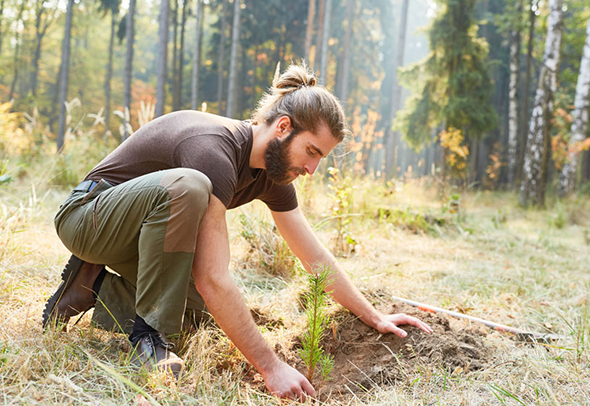
В 1972 году ООН учредила Всемирный день окружающей среды. Он приходится на 5 июня.
А в России с 2007 года 5 июня празднуют День эколога.
Кампания «Миллиард Деревьев»
Организацией объединенных наций была разработана программа по окружающей среде – ЮНЕП (United Nations Environment Programme, UNEP). В рамках ЮНЕП была организована всемирная кампания по посадке деревьев, получившая название «Миллиард Деревьев».
Большую роль в ее организации сыграла профессор Вангари Маатаи, лауреат Нобелевской премии мира 2004 года, основательница движения «Зеленый пояс», которое занимается восстановлением африканских лесов.

Целью кампании стала посадка миллиарда деревьев в течение 2007 года, и уже к маю средства на это были собраны.
Интересные факты о лесе
- Сейчас леса занимают около трети суши, а 200 лет назад их размеры были вдвое больше.
- Сибирская тайга – самый большой лес в мире.
- Около половины всех лесных угодий мира находится в тропиках.
- Человеком высажено около 7% всех лесов.
- Каждый год Земля теряет почти 100 миллионов деревьев.
- Чистая убыль лесов на планете составляет 3,3 млн га в год.
- Лесные зоны Малайзии истреблены почти полностью.
- Более 70% Финляндии покрыто лесами.
- Самой «бедной» лесами страной является Великобритания: лесные угодья в ней составляют всего 6% площади.
- 8,09 миллионов кв. км — именно столько занимают леса России.
- Береза Шмидта — одно из самых твердых в мире деревьев, его невозможно срубить с помощью топора.
- Самое высокое дерево – секвойя. Она растет в Калифорнии (США) и достигает 115 метров в высоту.
- Береза – самое распространённое лиственное дерево.
- Деревья растут всю свою жизнь.
- Самому старому дереву насчитывается около 2000 лет. Оно растет в литовском лесу.
- Пьяный лес — так называют лес с наклоненными и изогнутыми стволами деревьев. Чаще всего он встречается в зоне вечной мерзлоты и в основном представлен хвойными деревьями.
- На 37-м километре Куршской косы (Калининградская область) расположен удивительный Танцующий лес. Он входит в состав национального парка Куршская коса и привлекает туристов своими изогнутыми стволами.
- Из почвы леса впитывают только 10% питательных веществ, а остальное они получают из атмосферы.
- Деревья уменьшают парниковый эффект.
- Около миллиона человек в мире работают в древесной промышленности.
- Древесное топливо, преимущественно древесный уголь, вырабатывает примерно 40% всей энергии в мире.
- Для того, чтобы изготовить один лист формата А4, требуется 15-20 граммов древесины. А для книги среднего объема понадобится от 5 килограмм древесины.
- Экономить древесину помогает использование вторсырья. Из него изготавливают более половины бумажных изделий.
- Восьмидесяти килограммов переработанной макулатуры могут спасти от вырубки одно дерево.
- Гулять по лесу очень полезно. В лесу уменьшается частота пульса и становится ровнее дыхание.
- Более 2 миллиардов тонн углекислого газа из атмосферы каждый год впитывают леса.
- Четверть современных лекарств производится из лесных тропических растений.
День дерева издавна отмечается в Италии как праздник обновления и единения человека с природой.
История Праздника дерева уходит в далекое прошлое, когда люди жили в тесной связи с природой и отдавали ей должное уважение. В античной культуре был широко распространен обычай устраивать празднества по случаю посадки деревьев. Им была присвоена огромная важность, в связи с чем все деревья подразделяли на олимпийские, божественные, героические, зловещие, удачливые, несчастливые, а леса различались как священные, божественные и мирские.
Древние кельты и римляне охраняли и освящали леса, таким образом, следуя традиции поклонения божественной природе. В римскую эпоху проводилось настоящее торжество под названием «праздник Лукария», в течение которого, помимо традиционных обрядов почитания, чествовали лесные территории, засаженные в предыдущие месяцы.
В Италии первый Праздник дерева отметили в 1898 году по инициативе Министра образования Гвидо Бачелли. А в 1923 году было решено присвоить этой традиции официальный характер и закрепить в лесном законе.
Празднование проводилось регулярно в национальном масштабе до 1979 года, в дальнейшем ответственность за все приготовления перешла к областям, которые до сих пор продолжают с большей или меньшей отдачей организовывать знаменательные события.
Каждый год в Италии День дерева объединяет большое количество людей. Все вместе, взрослые и дети демонстрируют готовность и право жить в благоприятной окружающей среде. Добровольцы со всей страны встречаются для озеленения закоулков своего города, парков, площадей и садов, таким образом, проявляя любовь и уважение к природе.
 День дерева с давних пор празднуется 21 марта итальянцами как символ гармонии природы и человека.
Праздник дерева появился еще в древности, когда люди жили в гармоничной связи с окружающим миром. Деревья играли важную роль в их жизни. Каждое дерево наделялось определенными качествами, такими как божественность, героизм, удачливость или несчастье. Лесные массивы приобретали магические священные свойства, или же оставались мирскими.
В цивилизации Античности традиционно при посадке деревьев устраивались празднествами. В культуре древних кельтов и римлян существовала традиция поклонения божественности природы. Обычаи предписывали охранять священный лес. Во времена Древнего Рима чествовались молодые, недавно посаженные леса, что сопровождалось торжественными церемониями, называемые праздником Лукария.
В 1898 году Италия отметила первый Праздник дерева современности. Инициатором праздника выступил министр образования Гвидо Бачелли. С 1923 года праздник приобрел официальный статус и имел масштабный характер до 1979 года. Позднее праздник дерева стал отмечаться в отдельных областях страны.
Тем не менее, ежегодно в этот день объединяется множество итальянцев для того, чтобы выразить уважительное отношение к окружающей среде и украсить любимыми деревьями улицы, парки и площади своих городов.
Праздники по теме
Праздников в этой категории нет
| Arbor Day Arbour Day |
|
|---|---|
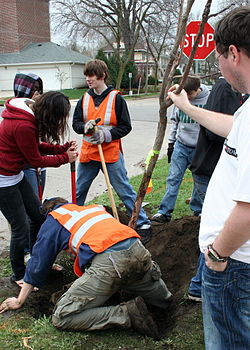
Volunteers planting a tree for Arbor Day (Rochester, Minnesota, 2009) |
|
| Observed by | Multiple countries |
| Type | Cultural |
| Significance | A holiday celebrating trees |
| Celebrations | Planting, caring for and climbing trees, educating about the importance of trees |
| Frequency | Annual |
| First time | Mondoñedo, Spain |
| Related to | Greenery Day (Japan) |
Arbor Day (or Arbour Day in some countries) is a secular day of observance in which individuals and groups are encouraged to plant trees.[1] Today, many countries observe such a holiday. Though usually observed in the spring, the date varies, depending on climate and suitable planting season.
Origins and history[edit]

First Arbor Day[edit]
The Spanish village of Mondoñedo held the first documented arbor plantation festival in the world organized by its mayor in 1594. The place remains as Alameda de los Remedios and it is still planted with lime and horse-chestnut trees. A humble granite marker and a bronze plate recall the event. Additionally, the small Spanish village of Villanueva de la Sierra held the first modern Arbor Day, an initiative launched in 1805 by the local priest with the enthusiastic support of the entire population.
While Napoleon was ravaging Europe with his ambition in this village in the Sierra de Gata lived a priest, don Juan Abern Samtrés, which, according to the chronicles, «convinced of the importance of trees for health, hygiene, decoration, nature, environment and customs, decides to plant trees and give a festive air. The festival began on Carnival Tuesday with the ringing of two bells of the church, and the Middle and the Big. After the Mass, and even coated with church ornaments, don Juan, accompanied by clergies, teachers and a large number of neighbours, planted the first tree, a poplar, in the place known as Valley of the Ejido. Tree plantations continued by Arroyada and Fuente de la Mora. Afterwards, there was a feast, and did not miss the dance. The party and plantations lasted three days. He drafted a manifesto in defence of the trees that was sent to surrounding towns to spread the love and respect for nature, and also he advised to make tree plantations in their localities.
First American Arbor Day[edit]

The first American Arbor Day was originated by J. Sterling Morton of Nebraska City, Nebraska, at an annual meeting of the Nebraska State board of agriculture held in Lincoln.[2] On April 10, 1872, an estimated one million trees were planted in Nebraska.[3]
Birdsey Northrop of Connecticut was responsible for globalizing the idea when he visited Japan in 1883 and delivered his Arbor Day and Village Improvement message. In that same year, the American Forestry Association made Northrop the Chairman of the committee to campaign for Arbor Day nationwide. He also brought his enthusiasm for Arbor Day to Australia, Canada, and Europe.[4]
McCreight and Theodore Roosevelt[edit]
Beginning in 1906, Pennsylvania conservationist Major Israel McCreight of DuBois, Pennsylvania, argued that President Theodore Roosevelt’s conservation speeches were limited to businessmen in the lumber industry and recommended a campaign of youth education and a national policy on conservation education.[5] McCreight urged Roosevelt to make a public statement to school children about trees and the destruction of American forests. Conservationist Gifford Pinchot, Chief of the United States Forest Service, embraced McCreight’s recommendations and asked the President to speak to the public school children of the United States about conservation. On April 15, 1907, Roosevelt issued an «Arbor Day Proclamation to the School Children of the United States»[6] about the importance of trees and that forestry deserves to be taught in U.S. schools. Pinchot wrote McCreight, «we shall all be indebted to you for having made the suggestion.»[7]
Around the world[edit]

Australia[edit]
Arbor Day has been observed in Australia since 20 June 1889. National Schools Tree Day is held on the last Friday of July for schools and National Tree Day the last Sunday in July throughout Australia. Many states have Arbor Day, although Victoria has an Arbor Week, which was suggested by Premier Rupert (Dick) Hamer in the 1980s.
Belgium[edit]
International Day of Treeplanting is celebrated in Flanders on or around 21 March as a theme-day/educational-day/observance, not as a public holiday. Tree planting is sometimes combined with awareness campaigns of the fight against cancer: Kom Op Tegen Kanker.
Brazil[edit]
The Arbor Day (Dia da Árvore) is celebrated on September 21. It is not a national holiday. However, schools nationwide celebrate this day with environment-related activities, namely tree planting.
British Virgin Islands[edit]
Arbour Day is celebrated on November 22. It is sponsored by the National Parks Trust of the Virgin Islands. Activities include an annual national Arbour Day Poetry Competition and tree planting ceremonies throughout the territory.
Cambodia[edit]
Cambodia celebrates Arbor Day on July 9 with a tree planting ceremony attended by the king.[8][9]
Canada[edit]
The day was founded by Sir George William Ross, later the premier of Ontario, when he was minister of education in Ontario (1883–1899). According to the Ontario Teachers’ Manuals «History of Education» (1915), Ross established both Arbour Day and Empire Day—»the former to give the school children an interest in making and keeping the school grounds attractive, and the latter to inspire the children with a spirit of patriotism» (p. 222). This predates the claimed founding of the day by Don Clark of Schomberg, Ontario for his wife Margret Clark in 1906. In Canada, National Forest Week is the last full week of September, and National Tree Day (Maple Leaf Day) falls on the Wednesday of that week.[10] Ontario celebrates Arbour Week from the last Friday in April to the first Sunday in May.[11] Prince Edward Island celebrates Arbour Day on the third Friday in May during Arbour Week. Arbour Day is the longest running civic greening project in Calgary and is celebrated on the first Thursday in May. On this day, each grade 1 student in Calgary’s schools receives a tree seedling to be taken home to be planted on private property.
Central African Republic[edit]
National Tree Planting Day is on July 22.[12][13]
Chile[edit]
«Dia del Arbol» was celebrated on June 28th 2022, as defined by Chile’s Environment Ministry
Greater China[edit]
Taiwan[edit]
Arbor Day (植樹節) was founded by the forester Ling Daoyang in 1915 and has been a traditional holiday in the Republic of China since 1916. The Beiyang government’s Ministry of Agriculture and Commerce first commemorated Arbor Day in 1915 at the suggestion of forester Ling Daoyang. In 1916, the government announced that all provinces of the Republic of China would celebrate the on the same day as the Qingming Festival, April 5, despite the differences in climate across China, which is on the first day of the fifth solar term of the traditional Chinese lunisolar calendar. From 1929, by decree of the Nationalist government, Arbor Day was changed to March 12 [zh], to commemorate the death of Sun Yat-sen, who had been a major advocate of afforestation in his life.[14][15][16] Following the retreat of the government of the Republic of China to Taiwan in 1949, the celebration of Arbor Day on March 12 was retained.[17][18][19]
Mainland China[edit]
In mainland China, during the fourth session of the Fifth National People’s Congress of the People’s Republic of China in 1979 adopted the Resolution on the Unfolding of a Nationwide Voluntary Tree-planting Campaign. This resolution established the Arbor Day (植树节)and stipulated that every able-bodied citizen between the ages of 11 and 60 should plant three to five trees per year or do the equivalent amount of work in seedling, cultivation, tree tending, or other services. Supporting documentation instructs all units to report population statistics to the local afforestation committees for workload allocation.[20] Many couples choose to marry the day before the annual celebration, and they plant the tree to mark beginning of their life together and the new life of the tree.
Republic of Congo[edit]
National Tree Planting Day is on November 6.[citation needed]
Costa Rica[edit]
«Día del Árbol» is on June 15.
Cuba[edit]
«Dia del Árbol» (Day of the Tree) was first observed on October 10, 1904 and is today observed in October of each year.[citation needed]
Czech Republic[edit]
Arbor Day in the Czech Republic is celebrated on October 20.
Egypt[edit]
Arbor Day is on January 15.[21]
Germany[edit]
Arbor Day («Tag des Baumes») is on April 25. Its first celebration was in 1952.
India[edit]
Van Mahotsav is an annual pan-Indian tree planting festival, occupying a week in the month of July. During this event millions of trees are planted. It was initiated in 1950 by K. M. Munshi, the then Union Minister for Agriculture and Food, to create an enthusiasm in the mind of the populace for the conservation of forests and planting of trees.
The name Van Mahotsava (the festival of trees) originated in July 1947 after a successful tree-planting drive was undertaken in Delhi, in which national leaders like Jawaharlal Nehru, Dr Rajendra Prasad and Abul Kalam Azad participated. Paryawaran Sachetak Samiti, a leading environmental organization conducts mass events and activities on this special day celebration each year. The week was simultaneously celebrated in a number of states in the country.
Iran[edit]
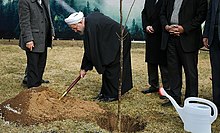
In Iran, it is known as «National Tree Planting Day». By the Solar Hijri calendar, it is on the fifteenth day of the month Esfand, which usually corresponds with March 5. This day is the first day of the «Natural Recyclable Resources Week» (March 5 to 12).
This is the time when the saplings of the all kinds in terms of different climates of different parts of Iran are shared among the people. They are also taught how to plant trees.[22]
Israel[edit]

The Jewish holiday Tu Bishvat, the new year for trees, is on the 15th day of the month of Shvat, which usually falls in January or February. Originally based on the date used to calculate the age of fruit trees for tithing as mandated in Leviticus 19:23–25, the holiday now is most often observed by planting trees or raising money to plant trees,[23] and by eating fruit, specifically grapes, figs, pomegranates, olives, and dates.[24] Tu Bishvat is a semi-official holiday in Israel; schools are open but Hebrew-speaking schools often go on tree-planting excursions.
Japan[edit]
Japan celebrates a similarly themed Greenery Day, held on May 4.
Kenya[edit]
National Tree Planting Day is on April 21. Often people plant palm trees and coconut trees along the Indian Ocean that borders the east coast of Kenya.They plant trees to remember Prof.Wangari Mathai who won a Nobel Peace for planting of trees and caring for them all over kenya
Korea[edit]
North Korea marks «Tree Planting Day» on March 2, when people across the country plant trees. This day is considered to combine traditional Asian cultural values with the country’s dominant Communist ideology.[25][26][27]
In South Korea, April 5, Singmogil or Sikmogil (식목일), the Arbor Day, was a public holiday until 2005. Even though Singmogil is no longer an official holiday, the day is still celebrated, with the South Korean public continuing to take part in tree-planting activities.[28][29]
Lesotho[edit]
National Tree Planting Day is usually on March 21 depending on the lunar cycle.[citation needed]
Luxembourg[edit]
National Tree Planting Day is on the second Saturday in November.[30]
Malawi[edit]
National Tree Planting Day is on the 2nd Monday of December.
Mexico[edit]
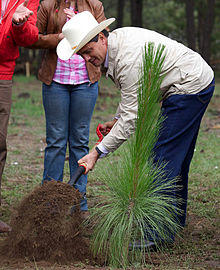
The Día del Árbol was established in Mexico in 1959 with President Adolfo López Mateos issuing a decree that it should be observed on the 2nd Thursday of July.[31]
Mongolia[edit]
National Tree Planting Day is on the 2nd Saturday of May and October. The first National Tree Planting Day was celebrated May 8, 2010.
Namibia[edit]
Namibia’s first Arbor Day was celebrated on October 8, 2004.[32] It takes place annually on the second Friday of October.[33]
Netherlands[edit]
Since conference and of the Food and Agriculture Organization’s publication World Festival of Trees, and a resolution of the United Nations in 1954: «The Conference, recognising the need of arousing mass consciousness of the aesthetic, physical and economic value of trees, recommends a World Festival of Trees to be celebrated annually in each member country on a date suited to local conditions»; it has been adopted by the Netherlands. In 1957, the National Committee Day of Planting Trees/Foundation of National Festival of Trees (Nationale Boomplantdag/Nationale Boomfeestdag) was created.
On the third Wednesday in March each year (near the spring equinox), three quarters of Dutch schoolchildren aged 10/11 and Dutch celebrities plant trees. Stichting Nationale Boomfeestdag organizes all the activities in the Netherlands for this day. Some municipalities however plant the trees around 21 September because of the planting season.[34]
In 2007, the 50th anniversary was celebrated with special golden jubilee activities.
New Zealand[edit]
New Zealand’s first Arbor Day planting was on 3 July 1890 at Greytown, in the Wairarapa.[35] The first official celebration was scheduled to take place in Wellington in August 2012, with the planting of pohutukawa and Norfolk pines along Thorndon Esplanade.[35]
Prominent New Zealand botanist Dr Leonard Cockayne worked extensively on native plants throughout New Zealand and wrote many notable botanical texts. As early as the 1920s he held a vision for school students of New Zealand to be involved in planting native trees and plants in their school grounds. This vision bore fruit and schools in New Zealand have long planted native trees on Arbor Day.
Since 1977, New Zealand has celebrated Arbor Day on 5 June, which is also World Environment Day. Prior to then, Arbor Day was celebrated on 4 August, which is rather late in the year for tree planting in New Zealand, hence the date change.
Many of the Department of Conservation’s Arbor Day activities focus on ecological restoration projects using native plants to restore habitats that have been damaged or destroyed by humans or invasive pests and weeds. There are great restoration projects underway around New Zealand and many organisations including community groups, landowners, conservation organisations, iwi, volunteers, schools, local businesses, nurseries and councils are involved in them. These projects are part of a vision to protect and restore the indigenous biodiversity.
Niger[edit]
Since 1975, Niger has celebrated Arbor Day as part of its Independence Day: 3 August. On this day, aiding the fight against desertification, each Nigerien plants a tree.[clarification needed]
North Macedonia[edit]
Having in mind the bad condition of the forest fund, and in particular the catastrophic wildfires which occurred in the summer of 2007, a citizens’ initiative for afforestation was started in North Macedonia. The campaign by the name ‘Tree Day-Plant Your Future’ was first organized on 12 March 2008, when an official non-working day was declared and more than 150,000 Macedonians planted 2 million trees in one day (symbolically, one for each citizen). Six million more were planted in November the same year, and another 12,5 million trees in 2009. This has been established as a tradition and takes place every year.
Pakistan[edit]
National tree plantation day of Pakistan (قومی شجر کاری دن) is celebrated on 18 August.[36]
Philippines[edit]
Since 1947, Arbor Day in the Philippines has been institutionalized to be observed throughout the nation by planting trees and ornamental plants and other forms of relevant activities. Its practice was instituted through Proclamation No. 30.[37] It was subsequently revised by Proclamation No. 41,[38] issued in the same year. In 1955, the commemoration was extended from a day to a week and moved to the last full week of July.[39] Over two decades later, its commemoration was moved to the second week of June.[40] In 2003, the commemorations were reduced from a week to a day and was moved to June 25 per Proclamation No. 396.[41] The same proclamation directed «the active participation of all government agencies, including government-owned and controlled corporations, private sector, schools, civil society groups and the citizenry in tree planting activity».[42] It was subsequently revised by Proclamation 643[43] in the succeeding year.
In 2012, Republic Act 10176 was passed, which revived tree planting events «as [a] yearly event for local government units»[44] and mandated the planting of at least one tree per year for able-bodied Filipino citizens aged 12 years old and above.[45] Since 2012, many local arbor day celebrations have been commemorated, as in the cases of Natividad[46] and Tayug[47] in Pangasinan and Santa Rita in Pampanga.[48]
Poland[edit]
In Poland, Arbor Day has been celebrated since 2002. Each October 10, many Polish people plant trees as well as participate in events organized by ecological foundations. Moreover, Polish Forest Inspectorates and schools give special lectures and lead ecological awareness campaigns.
Portugal[edit]
Arbor Day is celebrated on March 21. It is not a national holiday but instead schools nationwide celebrate this day with environment-related activities, namely tree planting.
Russia[edit]
All-Russian day of forest plantation was celebrated for the first time on 14 May 2011. Now it is held in April–May (it depends on the weather in different regions).
Samoa[edit]
Arbor Day in Samoa is celebrated on the first Friday in November.
Saudi Arabia[edit]
Arbor Day in Saudi Arabia is celebrated on April 29.
South Africa[edit]
Arbor Day was celebrated from 1945 until 2000 in South Africa. After that, the national government extended it to National Arbor Week, which lasts annually from 1–7 September. Two trees,[49] one common and one rare, are highlighted to increase public awareness of indigenous trees, while various «greening» activities are undertaken by schools, businesses and other organizations. For example, the social enterprise Greenpop, which focusses on sustainable urban greening, forest restoration and environmental awareness in Sub-Saharan Africa,[50] leverages Arbor Day each year to call for tree planting action. During Arbor Month 2019, responding to recent studies that underscore the importance of tree restoration, they launched their new goal of planting 500,000 by 2025.[51][52]
Spain[edit]

In 1896 Mariano Belmás Estrada promoted the first «Festival of Trees» in Madrid.[53]
In Spain there was an International Forest Day on 21 March, but a decree in 1915 also brought in an Arbor Day throughout Spain. Each municipality or collective decides the date for its Arbor Day, usually between February and May. In Villanueva de la Sierra (Extremadura), where the first Arbor Day in the world was held in 1805, it is celebrated, as on that occasion, on Tuesday Carnaval. It is a great day in the local festive calendar.[54]
As an example of commitment to nature, the small town of Pescueza, with only 180 inhabitants, organizes every spring a large plantation of holm oaks, which is called the «Festivalino», promoted by city council, several foundations, and citizen participation.[55]
Sri Lanka[edit]
National Tree Planting Day is on November 15.
Tanzania[edit]
National Tree Planting Day is on April 1.
Uganda[edit]
National Tree Planting Day is on March 24.
United Kingdom[edit]
First mounted in 1975, National Tree Week is a celebration of the start of the winter tree planting season, usually at the end of November. Around a million trees are planted each year by schools, community organizations and local authorities.
On 6 February 2020, Myerscough College in Lancashire, England, supported by the Arbor Day Foundation, celebrated the UK’s first Arbor Day.[56][57]
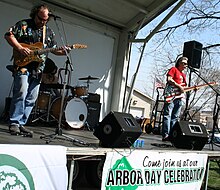
United States[edit]
Arbor Day was founded in 1872 by J. Sterling Morton in Nebraska City, Nebraska. By the 1920s, each state in the United States had passed public laws that stipulated a certain day to be Arbor Day or Arbor and Bird Day observance.
National Arbor Day is celebrated every year on the last Friday in April; it is a civic holiday in Nebraska. Other states have selected their own dates for Arbor Day.
The customary observance is to plant a tree. On the first Arbor Day, April 10, 1872, an estimated one million trees were planted.[3]
Venezuela[edit]
Venezuela recognizes Día del Arbol (Day of the Tree) on the last Sunday of May.
See also[edit]
- Arbor Day Foundation (US)
- Earth Day
- Greenery Day (Japan)
- International Day of Forests
- National Public Lands Day (US)
- Timeline of environmental events
- Tu BiShvat (Jewish holiday)
- World Water Day
References[edit]
- ^ Jones, David (2010). «‘Plant trees’: the foundations of Arbor Day in Australia». Studies in the History of Gardens & Designed Landscapes. 30 (1): 77–93. doi:10.1080/14601170903010200. S2CID 161904923.
- ^ N.H. Egleston (1896). Arbor Day:Its History and Observance. Washington, D.C.: Government Printing Office. p. 14.
- ^ a b «The History of Arbor Day» at the Arbor Day Foundation. Accessed on April 26, 2013.
- ^ Birdsey Grant Northrop (PDF), archived from the original (PDF) on 2009-07-11, retrieved 2009-04-25
- ^ M.I. McCreight, Theodore Roosevelt and Conservation Why: A Thirty-Four Year Moratorium on Unpublished Records (1940), Historical Society of Western Pennsylvania, at p.12, Hereinafter cited «Theodore Roosevelt and Conservation Why».
- ^ Agriculture, West Virginia State Board of (Jul 17, 1906). «Report». Retrieved Jul 17, 2020 – via Google Books.
- ^ «Theodore Roosevelt and Conservation Why»
- ^ «Cambodian King Attends the Celebration of Annual Arbor Day (July 9)». Agence Kampuchéa Presse. 9 July 2012. Archived from the original on 2017-06-13. Retrieved 11 October 2015.
- ^ «This week in SPARKS — When Rabbi Butman Met the King». July 9, 2012.[permanent dead link]
- ^ «The Canadian Forestry Association. Retrieved 8 April 2016». Archived from the original on 9 April 2016. Retrieved 8 April 2016.
- ^ «P & A Urban Forestry Consulting Ltd. Retrieved 8 April 2016». 30 April 2015.
- ^ «What is Arbor Day».
- ^ «Arbor Day: Raising Environmental Awareness». Archived from the original on 2019-11-04. Retrieved 2019-11-04.
- ^ Pitts, Larissa (2019). «Unity in the trees: Arbor Day and Republican China, 1915–1927». Journal of Modern Chinese History. 13 (2): 296–318. doi:10.1080/17535654.2019.1688958. S2CID 213502209.
- ^ Han Cheung (5 April 2020). «Taiwan in Time: The evolution of Tomb Sweeping Day». Taipei Times. Retrieved 5 April 2020.
- ^ Wang, Xi-qun (2018). «The Chronicle of LING Dao-yang: The Commemoration on the 130th Anniversary of Mr. LING Dao-yang’s Birthday». Journal of Beijing Forestry University. 17 (1). doi:10.13931/j.cnki.bjfuss.2017080.
- ^ «Chronology». Free China Review. April 1, 1953. Retrieved April 4, 2020.
- ^ «President Chen Attends the Tree-planting Ceremony to Mark March 12 Arbor Day». Office of the President of the Republic of China. 12 March 2003. Retrieved 4 April 2020.
- ^ Salmonsen, Renée (12 March 2018). «For the love of trees: Taiwan celebrates Arbor Day». Taiwan News. Retrieved 4 April 2020.
- ^ «Arbor Day». www.taishangeopark.com. Archived from the original on November 26, 2020. Retrieved Jul 17, 2020.
- ^ «Arbor Day in Jordan, Egypt and Malta / January 15, 2020». AnydayGuide. Retrieved Jul 17, 2020.
- ^ «Tree Planting Day». tebyan.net. Tebyan Cultural and Information Center. Retrieved 3 March 2014.
- ^ Judaism 101: Tu B’Shevat. Accessed August 20, 2007.
- ^ «Tu B’Shevat: What and How». Chabad.org.
- ^ «Tree-Planting Day in the DPR-Korea embodies Socialist and traditional Asian Cultural Values». Archived from the original on 2013-03-04. Retrieved 2016-10-13.
- ^ Tree-planting Day Marked in DPRK Archived April 3, 2013, at the Wayback Machine
- ^ North Korea Tree-planting Day on YouTube
- ^ «Community members plant trees in Anseong City». www.army.mil. Retrieved 2020-12-09.
- ^ «[Korea Encounters]Arbor Day and the reforestation of Korea». koreatimes. 2019-04-02. Retrieved 2020-12-09.
- ^ «National Tree Day in Luxembourg / November 14, 2020». AnydayGuide. Retrieved Jul 17, 2020.
- ^ «Hoy, Día del Árbol en México». Azteca Noticias. Archived from the original on 4 March 2016. Retrieved 6 October 2015.
- ^ «Arbor Day Around The World». Arbor day foundation. Archived from the original on 18 September 2008. Retrieved 2008-09-06.
- ^ «Arbor Day in Namibia / October 9, 2020». AnydayGuide. Retrieved Jul 17, 2020.
- ^ Boomfeestdag http://www.boomfeestdag.nl/ the organisations address is Spoorlaan 444 5038 CH TILBURG
- ^ a b «Arbor Day Planting | NZ Arb». www.nzarb.org.nz. Archived from the original on 2017-02-01. Retrieved 2017-01-19.
- ^ «18 August declared as NTPD». Retrieved Jul 17, 2020.[permanent dead link]
- ^ «Proclamation No. 30, s. 1947». Official Gazette of the Republic of the Philippines. 1947-07-30. Retrieved 2018-08-29.
… hereby proclaim the second Saturday of September of each year as Arbor Day, to be observed in schools and elsewhere …
- ^ «Proclamation No. 41, s. 1947». Official Gazette of the Republic of the Philippines. 1947-09-03. Retrieved 2018-08-29.
- ^ «Proclamation No. 129, s. 1955». Official Gazette of the Republic of the Philippines. 1955-03-05. Retrieved 2018-08-29.
… hereby proclaim the week ending with the last Saturday of July of each year as Arbor Week to be observed throughout the country …
- ^ «Proclamation No. 1547, s. 1976». Official Gazette of the Republic of the Philippines. 1976-05-18. Retrieved 2018-08-29.
… hereby proclaim the period from June 7 to 12, 1976, and every second week of June thereafter, as ARBOR WEEK, to be observed throughout the nation …
- ^ «Proclamation No. 396, s. 2003». Official Gazette of the Republic of the Philippines. 2003-06-02. Retrieved 2018-08-29.
… hereby declare Wednesday, June 25, 2003 as PHILIPPINES ARBOR DAY, to be observed throughout the nation …
- ^ «Proclamation No. 396, s. 2003». Official Gazette of the Republic of the Philippines. 2003-06-02. Retrieved 2018-08-29.
- ^ «Proclamation No. 643, s. 2004». Official Gazette of the Republic of the Philippines. 2004-06-09. Retrieved 2018-08-29.
… hereby amend Proclamation No. 396 dated 02 June 2003 by declaring every 25th of June as Philippines Arbor Day to be observed throughout the nation …
- ^ «Arbor Day in the Philippines». The Manila Times. 2015-06-29. Retrieved 2016-01-02.
- ^ «Republic Act No. 10176». Official Gazette of the Republic of the Philippines. 2012-09-12. Retrieved 2018-08-29.
- ^ «117th Philippines Independence Day and Arbor Day». Municipality of Natividad Official Website. 2015-07-13. Archived from the original on 2015-11-09. Retrieved 2016-01-02.
- ^ «ARBOR DAY CELEBRATION 2014». Municipality of Tayug. 2014-07-31. Retrieved 2016-01-02.
- ^ «ARBOR DAY in SANTA RITA, PAMPANGA». Official Website of Municipality of Santa Rita, Province of Pampanga. July 2014. Archived from the original on 2016-03-04. Retrieved 2016-01-02.
- ^ «PlantZAfrica.com Homepage».
- ^ Greenpop. «It’s a TREEvolution. Retrieved on 25 March 2020.
- ^ The Ecologist. «Arbor month in South Africa., 2 September 2019. Retrieved on 25 March 2020.
- ^ Greenpop. «Plant trees, save the world!, 22 August 2019. Retrieved on 25 March 2020.
- ^ Óscar da Roc ha Aranda (2018), Mariano Belmás Estrada (in Spanish), Real Academia de la Historia, archived from the original on 2019-08-22, retrieved 2019-08-22
- ^ The oldest environmentalist festival in the world was celebrated in Villanueva. Sierra de Gata News. February 26, 2014
- ^ Herrero Uceda, Miguel y Elisa: Mi Extremadura. 2011, pages 147-148
- ^ «Myerscough branches out with inaugural Arbor Day | Myerscough College». www.myerscough.ac.uk. Retrieved 2020-02-06.
- ^ «Myerscough’s inaugural Arbor Day is tree-mendous | Myerscough College». www.myerscough.ac.uk. Retrieved 2020-02-06.
External links[edit]

Wikimedia Commons has media related to Arbor Day.

Wikiquote has quotations related to Arbor Day.

Wikisource has original text related to this article:
- International Arbor Days
- Arbor Day lesson plans for the classroom
- National Arbor Day Foundation
- State Arbor Days and state trees
- Arbor Day Leaves – A Complete Programme For Arbor Day Observance, Including Readings, Recitations, Music, and General Information at Project Gutenberg
| Arbor Day Arbour Day |
|
|---|---|
|
Volunteers planting a tree for Arbor Day (Rochester, Minnesota, 2009) |
|
| Observed by | Multiple countries |
| Type | Cultural |
| Significance | A holiday celebrating trees |
| Celebrations | Planting, caring for and climbing trees, educating about the importance of trees |
| Frequency | Annual |
| First time | Mondoñedo, Spain |
| Related to | Greenery Day (Japan) |
Arbor Day (or Arbour Day in some countries) is a secular day of observance in which individuals and groups are encouraged to plant trees.[1] Today, many countries observe such a holiday. Though usually observed in the spring, the date varies, depending on climate and suitable planting season.
Origins and history[edit]
First Arbor Day[edit]
The Spanish village of Mondoñedo held the first documented arbor plantation festival in the world organized by its mayor in 1594. The place remains as Alameda de los Remedios and it is still planted with lime and horse-chestnut trees. A humble granite marker and a bronze plate recall the event. Additionally, the small Spanish village of Villanueva de la Sierra held the first modern Arbor Day, an initiative launched in 1805 by the local priest with the enthusiastic support of the entire population.
While Napoleon was ravaging Europe with his ambition in this village in the Sierra de Gata lived a priest, don Juan Abern Samtrés, which, according to the chronicles, «convinced of the importance of trees for health, hygiene, decoration, nature, environment and customs, decides to plant trees and give a festive air. The festival began on Carnival Tuesday with the ringing of two bells of the church, and the Middle and the Big. After the Mass, and even coated with church ornaments, don Juan, accompanied by clergies, teachers and a large number of neighbours, planted the first tree, a poplar, in the place known as Valley of the Ejido. Tree plantations continued by Arroyada and Fuente de la Mora. Afterwards, there was a feast, and did not miss the dance. The party and plantations lasted three days. He drafted a manifesto in defence of the trees that was sent to surrounding towns to spread the love and respect for nature, and also he advised to make tree plantations in their localities.
First American Arbor Day[edit]
The first American Arbor Day was originated by J. Sterling Morton of Nebraska City, Nebraska, at an annual meeting of the Nebraska State board of agriculture held in Lincoln.[2] On April 10, 1872, an estimated one million trees were planted in Nebraska.[3]
Birdsey Northrop of Connecticut was responsible for globalizing the idea when he visited Japan in 1883 and delivered his Arbor Day and Village Improvement message. In that same year, the American Forestry Association made Northrop the Chairman of the committee to campaign for Arbor Day nationwide. He also brought his enthusiasm for Arbor Day to Australia, Canada, and Europe.[4]
McCreight and Theodore Roosevelt[edit]
Beginning in 1906, Pennsylvania conservationist Major Israel McCreight of DuBois, Pennsylvania, argued that President Theodore Roosevelt’s conservation speeches were limited to businessmen in the lumber industry and recommended a campaign of youth education and a national policy on conservation education.[5] McCreight urged Roosevelt to make a public statement to school children about trees and the destruction of American forests. Conservationist Gifford Pinchot, Chief of the United States Forest Service, embraced McCreight’s recommendations and asked the President to speak to the public school children of the United States about conservation. On April 15, 1907, Roosevelt issued an «Arbor Day Proclamation to the School Children of the United States»[6] about the importance of trees and that forestry deserves to be taught in U.S. schools. Pinchot wrote McCreight, «we shall all be indebted to you for having made the suggestion.»[7]
Around the world[edit]
Australia[edit]
Arbor Day has been observed in Australia since 20 June 1889. National Schools Tree Day is held on the last Friday of July for schools and National Tree Day the last Sunday in July throughout Australia. Many states have Arbor Day, although Victoria has an Arbor Week, which was suggested by Premier Rupert (Dick) Hamer in the 1980s.
Belgium[edit]
International Day of Treeplanting is celebrated in Flanders on or around 21 March as a theme-day/educational-day/observance, not as a public holiday. Tree planting is sometimes combined with awareness campaigns of the fight against cancer: Kom Op Tegen Kanker.
Brazil[edit]
The Arbor Day (Dia da Árvore) is celebrated on September 21. It is not a national holiday. However, schools nationwide celebrate this day with environment-related activities, namely tree planting.
British Virgin Islands[edit]
Arbour Day is celebrated on November 22. It is sponsored by the National Parks Trust of the Virgin Islands. Activities include an annual national Arbour Day Poetry Competition and tree planting ceremonies throughout the territory.
Cambodia[edit]
Cambodia celebrates Arbor Day on July 9 with a tree planting ceremony attended by the king.[8][9]
Canada[edit]
The day was founded by Sir George William Ross, later the premier of Ontario, when he was minister of education in Ontario (1883–1899). According to the Ontario Teachers’ Manuals «History of Education» (1915), Ross established both Arbour Day and Empire Day—»the former to give the school children an interest in making and keeping the school grounds attractive, and the latter to inspire the children with a spirit of patriotism» (p. 222). This predates the claimed founding of the day by Don Clark of Schomberg, Ontario for his wife Margret Clark in 1906. In Canada, National Forest Week is the last full week of September, and National Tree Day (Maple Leaf Day) falls on the Wednesday of that week.[10] Ontario celebrates Arbour Week from the last Friday in April to the first Sunday in May.[11] Prince Edward Island celebrates Arbour Day on the third Friday in May during Arbour Week. Arbour Day is the longest running civic greening project in Calgary and is celebrated on the first Thursday in May. On this day, each grade 1 student in Calgary’s schools receives a tree seedling to be taken home to be planted on private property.
Central African Republic[edit]
National Tree Planting Day is on July 22.[12][13]
Chile[edit]
«Dia del Arbol» was celebrated on June 28th 2022, as defined by Chile’s Environment Ministry
Greater China[edit]
Taiwan[edit]
Arbor Day (植樹節) was founded by the forester Ling Daoyang in 1915 and has been a traditional holiday in the Republic of China since 1916. The Beiyang government’s Ministry of Agriculture and Commerce first commemorated Arbor Day in 1915 at the suggestion of forester Ling Daoyang. In 1916, the government announced that all provinces of the Republic of China would celebrate the on the same day as the Qingming Festival, April 5, despite the differences in climate across China, which is on the first day of the fifth solar term of the traditional Chinese lunisolar calendar. From 1929, by decree of the Nationalist government, Arbor Day was changed to March 12 [zh], to commemorate the death of Sun Yat-sen, who had been a major advocate of afforestation in his life.[14][15][16] Following the retreat of the government of the Republic of China to Taiwan in 1949, the celebration of Arbor Day on March 12 was retained.[17][18][19]
Mainland China[edit]
In mainland China, during the fourth session of the Fifth National People’s Congress of the People’s Republic of China in 1979 adopted the Resolution on the Unfolding of a Nationwide Voluntary Tree-planting Campaign. This resolution established the Arbor Day (植树节)and stipulated that every able-bodied citizen between the ages of 11 and 60 should plant three to five trees per year or do the equivalent amount of work in seedling, cultivation, tree tending, or other services. Supporting documentation instructs all units to report population statistics to the local afforestation committees for workload allocation.[20] Many couples choose to marry the day before the annual celebration, and they plant the tree to mark beginning of their life together and the new life of the tree.
Republic of Congo[edit]
National Tree Planting Day is on November 6.[citation needed]
Costa Rica[edit]
«Día del Árbol» is on June 15.
Cuba[edit]
«Dia del Árbol» (Day of the Tree) was first observed on October 10, 1904 and is today observed in October of each year.[citation needed]
Czech Republic[edit]
Arbor Day in the Czech Republic is celebrated on October 20.
Egypt[edit]
Arbor Day is on January 15.[21]
Germany[edit]
Arbor Day («Tag des Baumes») is on April 25. Its first celebration was in 1952.
India[edit]
Van Mahotsav is an annual pan-Indian tree planting festival, occupying a week in the month of July. During this event millions of trees are planted. It was initiated in 1950 by K. M. Munshi, the then Union Minister for Agriculture and Food, to create an enthusiasm in the mind of the populace for the conservation of forests and planting of trees.
The name Van Mahotsava (the festival of trees) originated in July 1947 after a successful tree-planting drive was undertaken in Delhi, in which national leaders like Jawaharlal Nehru, Dr Rajendra Prasad and Abul Kalam Azad participated. Paryawaran Sachetak Samiti, a leading environmental organization conducts mass events and activities on this special day celebration each year. The week was simultaneously celebrated in a number of states in the country.
Iran[edit]
In Iran, it is known as «National Tree Planting Day». By the Solar Hijri calendar, it is on the fifteenth day of the month Esfand, which usually corresponds with March 5. This day is the first day of the «Natural Recyclable Resources Week» (March 5 to 12).
This is the time when the saplings of the all kinds in terms of different climates of different parts of Iran are shared among the people. They are also taught how to plant trees.[22]
Israel[edit]
The Jewish holiday Tu Bishvat, the new year for trees, is on the 15th day of the month of Shvat, which usually falls in January or February. Originally based on the date used to calculate the age of fruit trees for tithing as mandated in Leviticus 19:23–25, the holiday now is most often observed by planting trees or raising money to plant trees,[23] and by eating fruit, specifically grapes, figs, pomegranates, olives, and dates.[24] Tu Bishvat is a semi-official holiday in Israel; schools are open but Hebrew-speaking schools often go on tree-planting excursions.
Japan[edit]
Japan celebrates a similarly themed Greenery Day, held on May 4.
Kenya[edit]
National Tree Planting Day is on April 21. Often people plant palm trees and coconut trees along the Indian Ocean that borders the east coast of Kenya.They plant trees to remember Prof.Wangari Mathai who won a Nobel Peace for planting of trees and caring for them all over kenya
Korea[edit]
North Korea marks «Tree Planting Day» on March 2, when people across the country plant trees. This day is considered to combine traditional Asian cultural values with the country’s dominant Communist ideology.[25][26][27]
In South Korea, April 5, Singmogil or Sikmogil (식목일), the Arbor Day, was a public holiday until 2005. Even though Singmogil is no longer an official holiday, the day is still celebrated, with the South Korean public continuing to take part in tree-planting activities.[28][29]
Lesotho[edit]
National Tree Planting Day is usually on March 21 depending on the lunar cycle.[citation needed]
Luxembourg[edit]
National Tree Planting Day is on the second Saturday in November.[30]
Malawi[edit]
National Tree Planting Day is on the 2nd Monday of December.
Mexico[edit]
The Día del Árbol was established in Mexico in 1959 with President Adolfo López Mateos issuing a decree that it should be observed on the 2nd Thursday of July.[31]
Mongolia[edit]
National Tree Planting Day is on the 2nd Saturday of May and October. The first National Tree Planting Day was celebrated May 8, 2010.
Namibia[edit]
Namibia’s first Arbor Day was celebrated on October 8, 2004.[32] It takes place annually on the second Friday of October.[33]
Netherlands[edit]
Since conference and of the Food and Agriculture Organization’s publication World Festival of Trees, and a resolution of the United Nations in 1954: «The Conference, recognising the need of arousing mass consciousness of the aesthetic, physical and economic value of trees, recommends a World Festival of Trees to be celebrated annually in each member country on a date suited to local conditions»; it has been adopted by the Netherlands. In 1957, the National Committee Day of Planting Trees/Foundation of National Festival of Trees (Nationale Boomplantdag/Nationale Boomfeestdag) was created.
On the third Wednesday in March each year (near the spring equinox), three quarters of Dutch schoolchildren aged 10/11 and Dutch celebrities plant trees. Stichting Nationale Boomfeestdag organizes all the activities in the Netherlands for this day. Some municipalities however plant the trees around 21 September because of the planting season.[34]
In 2007, the 50th anniversary was celebrated with special golden jubilee activities.
New Zealand[edit]
New Zealand’s first Arbor Day planting was on 3 July 1890 at Greytown, in the Wairarapa.[35] The first official celebration was scheduled to take place in Wellington in August 2012, with the planting of pohutukawa and Norfolk pines along Thorndon Esplanade.[35]
Prominent New Zealand botanist Dr Leonard Cockayne worked extensively on native plants throughout New Zealand and wrote many notable botanical texts. As early as the 1920s he held a vision for school students of New Zealand to be involved in planting native trees and plants in their school grounds. This vision bore fruit and schools in New Zealand have long planted native trees on Arbor Day.
Since 1977, New Zealand has celebrated Arbor Day on 5 June, which is also World Environment Day. Prior to then, Arbor Day was celebrated on 4 August, which is rather late in the year for tree planting in New Zealand, hence the date change.
Many of the Department of Conservation’s Arbor Day activities focus on ecological restoration projects using native plants to restore habitats that have been damaged or destroyed by humans or invasive pests and weeds. There are great restoration projects underway around New Zealand and many organisations including community groups, landowners, conservation organisations, iwi, volunteers, schools, local businesses, nurseries and councils are involved in them. These projects are part of a vision to protect and restore the indigenous biodiversity.
Niger[edit]
Since 1975, Niger has celebrated Arbor Day as part of its Independence Day: 3 August. On this day, aiding the fight against desertification, each Nigerien plants a tree.[clarification needed]
North Macedonia[edit]
Having in mind the bad condition of the forest fund, and in particular the catastrophic wildfires which occurred in the summer of 2007, a citizens’ initiative for afforestation was started in North Macedonia. The campaign by the name ‘Tree Day-Plant Your Future’ was first organized on 12 March 2008, when an official non-working day was declared and more than 150,000 Macedonians planted 2 million trees in one day (symbolically, one for each citizen). Six million more were planted in November the same year, and another 12,5 million trees in 2009. This has been established as a tradition and takes place every year.
Pakistan[edit]
National tree plantation day of Pakistan (قومی شجر کاری دن) is celebrated on 18 August.[36]
Philippines[edit]
Since 1947, Arbor Day in the Philippines has been institutionalized to be observed throughout the nation by planting trees and ornamental plants and other forms of relevant activities. Its practice was instituted through Proclamation No. 30.[37] It was subsequently revised by Proclamation No. 41,[38] issued in the same year. In 1955, the commemoration was extended from a day to a week and moved to the last full week of July.[39] Over two decades later, its commemoration was moved to the second week of June.[40] In 2003, the commemorations were reduced from a week to a day and was moved to June 25 per Proclamation No. 396.[41] The same proclamation directed «the active participation of all government agencies, including government-owned and controlled corporations, private sector, schools, civil society groups and the citizenry in tree planting activity».[42] It was subsequently revised by Proclamation 643[43] in the succeeding year.
In 2012, Republic Act 10176 was passed, which revived tree planting events «as [a] yearly event for local government units»[44] and mandated the planting of at least one tree per year for able-bodied Filipino citizens aged 12 years old and above.[45] Since 2012, many local arbor day celebrations have been commemorated, as in the cases of Natividad[46] and Tayug[47] in Pangasinan and Santa Rita in Pampanga.[48]
Poland[edit]
In Poland, Arbor Day has been celebrated since 2002. Each October 10, many Polish people plant trees as well as participate in events organized by ecological foundations. Moreover, Polish Forest Inspectorates and schools give special lectures and lead ecological awareness campaigns.
Portugal[edit]
Arbor Day is celebrated on March 21. It is not a national holiday but instead schools nationwide celebrate this day with environment-related activities, namely tree planting.
Russia[edit]
All-Russian day of forest plantation was celebrated for the first time on 14 May 2011. Now it is held in April–May (it depends on the weather in different regions).
Samoa[edit]
Arbor Day in Samoa is celebrated on the first Friday in November.
Saudi Arabia[edit]
Arbor Day in Saudi Arabia is celebrated on April 29.
South Africa[edit]
Arbor Day was celebrated from 1945 until 2000 in South Africa. After that, the national government extended it to National Arbor Week, which lasts annually from 1–7 September. Two trees,[49] one common and one rare, are highlighted to increase public awareness of indigenous trees, while various «greening» activities are undertaken by schools, businesses and other organizations. For example, the social enterprise Greenpop, which focusses on sustainable urban greening, forest restoration and environmental awareness in Sub-Saharan Africa,[50] leverages Arbor Day each year to call for tree planting action. During Arbor Month 2019, responding to recent studies that underscore the importance of tree restoration, they launched their new goal of planting 500,000 by 2025.[51][52]
Spain[edit]
In 1896 Mariano Belmás Estrada promoted the first «Festival of Trees» in Madrid.[53]
In Spain there was an International Forest Day on 21 March, but a decree in 1915 also brought in an Arbor Day throughout Spain. Each municipality or collective decides the date for its Arbor Day, usually between February and May. In Villanueva de la Sierra (Extremadura), where the first Arbor Day in the world was held in 1805, it is celebrated, as on that occasion, on Tuesday Carnaval. It is a great day in the local festive calendar.[54]
As an example of commitment to nature, the small town of Pescueza, with only 180 inhabitants, organizes every spring a large plantation of holm oaks, which is called the «Festivalino», promoted by city council, several foundations, and citizen participation.[55]
Sri Lanka[edit]
National Tree Planting Day is on November 15.
Tanzania[edit]
National Tree Planting Day is on April 1.
Uganda[edit]
National Tree Planting Day is on March 24.
United Kingdom[edit]
First mounted in 1975, National Tree Week is a celebration of the start of the winter tree planting season, usually at the end of November. Around a million trees are planted each year by schools, community organizations and local authorities.
On 6 February 2020, Myerscough College in Lancashire, England, supported by the Arbor Day Foundation, celebrated the UK’s first Arbor Day.[56][57]
United States[edit]
Arbor Day was founded in 1872 by J. Sterling Morton in Nebraska City, Nebraska. By the 1920s, each state in the United States had passed public laws that stipulated a certain day to be Arbor Day or Arbor and Bird Day observance.
National Arbor Day is celebrated every year on the last Friday in April; it is a civic holiday in Nebraska. Other states have selected their own dates for Arbor Day.
The customary observance is to plant a tree. On the first Arbor Day, April 10, 1872, an estimated one million trees were planted.[3]
Venezuela[edit]
Venezuela recognizes Día del Arbol (Day of the Tree) on the last Sunday of May.
See also[edit]
- Arbor Day Foundation (US)
- Earth Day
- Greenery Day (Japan)
- International Day of Forests
- National Public Lands Day (US)
- Timeline of environmental events
- Tu BiShvat (Jewish holiday)
- World Water Day
References[edit]
- ^ Jones, David (2010). «‘Plant trees’: the foundations of Arbor Day in Australia». Studies in the History of Gardens & Designed Landscapes. 30 (1): 77–93. doi:10.1080/14601170903010200. S2CID 161904923.
- ^ N.H. Egleston (1896). Arbor Day:Its History and Observance. Washington, D.C.: Government Printing Office. p. 14.
- ^ a b «The History of Arbor Day» at the Arbor Day Foundation. Accessed on April 26, 2013.
- ^ Birdsey Grant Northrop (PDF), archived from the original (PDF) on 2009-07-11, retrieved 2009-04-25
- ^ M.I. McCreight, Theodore Roosevelt and Conservation Why: A Thirty-Four Year Moratorium on Unpublished Records (1940), Historical Society of Western Pennsylvania, at p.12, Hereinafter cited «Theodore Roosevelt and Conservation Why».
- ^ Agriculture, West Virginia State Board of (Jul 17, 1906). «Report». Retrieved Jul 17, 2020 – via Google Books.
- ^ «Theodore Roosevelt and Conservation Why»
- ^ «Cambodian King Attends the Celebration of Annual Arbor Day (July 9)». Agence Kampuchéa Presse. 9 July 2012. Archived from the original on 2017-06-13. Retrieved 11 October 2015.
- ^ «This week in SPARKS — When Rabbi Butman Met the King». July 9, 2012.[permanent dead link]
- ^ «The Canadian Forestry Association. Retrieved 8 April 2016». Archived from the original on 9 April 2016. Retrieved 8 April 2016.
- ^ «P & A Urban Forestry Consulting Ltd. Retrieved 8 April 2016». 30 April 2015.
- ^ «What is Arbor Day».
- ^ «Arbor Day: Raising Environmental Awareness». Archived from the original on 2019-11-04. Retrieved 2019-11-04.
- ^ Pitts, Larissa (2019). «Unity in the trees: Arbor Day and Republican China, 1915–1927». Journal of Modern Chinese History. 13 (2): 296–318. doi:10.1080/17535654.2019.1688958. S2CID 213502209.
- ^ Han Cheung (5 April 2020). «Taiwan in Time: The evolution of Tomb Sweeping Day». Taipei Times. Retrieved 5 April 2020.
- ^ Wang, Xi-qun (2018). «The Chronicle of LING Dao-yang: The Commemoration on the 130th Anniversary of Mr. LING Dao-yang’s Birthday». Journal of Beijing Forestry University. 17 (1). doi:10.13931/j.cnki.bjfuss.2017080.
- ^ «Chronology». Free China Review. April 1, 1953. Retrieved April 4, 2020.
- ^ «President Chen Attends the Tree-planting Ceremony to Mark March 12 Arbor Day». Office of the President of the Republic of China. 12 March 2003. Retrieved 4 April 2020.
- ^ Salmonsen, Renée (12 March 2018). «For the love of trees: Taiwan celebrates Arbor Day». Taiwan News. Retrieved 4 April 2020.
- ^ «Arbor Day». www.taishangeopark.com. Archived from the original on November 26, 2020. Retrieved Jul 17, 2020.
- ^ «Arbor Day in Jordan, Egypt and Malta / January 15, 2020». AnydayGuide. Retrieved Jul 17, 2020.
- ^ «Tree Planting Day». tebyan.net. Tebyan Cultural and Information Center. Retrieved 3 March 2014.
- ^ Judaism 101: Tu B’Shevat. Accessed August 20, 2007.
- ^ «Tu B’Shevat: What and How». Chabad.org.
- ^ «Tree-Planting Day in the DPR-Korea embodies Socialist and traditional Asian Cultural Values». Archived from the original on 2013-03-04. Retrieved 2016-10-13.
- ^ Tree-planting Day Marked in DPRK Archived April 3, 2013, at the Wayback Machine
- ^ North Korea Tree-planting Day on YouTube
- ^ «Community members plant trees in Anseong City». www.army.mil. Retrieved 2020-12-09.
- ^ «[Korea Encounters]Arbor Day and the reforestation of Korea». koreatimes. 2019-04-02. Retrieved 2020-12-09.
- ^ «National Tree Day in Luxembourg / November 14, 2020». AnydayGuide. Retrieved Jul 17, 2020.
- ^ «Hoy, Día del Árbol en México». Azteca Noticias. Archived from the original on 4 March 2016. Retrieved 6 October 2015.
- ^ «Arbor Day Around The World». Arbor day foundation. Archived from the original on 18 September 2008. Retrieved 2008-09-06.
- ^ «Arbor Day in Namibia / October 9, 2020». AnydayGuide. Retrieved Jul 17, 2020.
- ^ Boomfeestdag http://www.boomfeestdag.nl/ the organisations address is Spoorlaan 444 5038 CH TILBURG
- ^ a b «Arbor Day Planting | NZ Arb». www.nzarb.org.nz. Archived from the original on 2017-02-01. Retrieved 2017-01-19.
- ^ «18 August declared as NTPD». Retrieved Jul 17, 2020.[permanent dead link]
- ^ «Proclamation No. 30, s. 1947». Official Gazette of the Republic of the Philippines. 1947-07-30. Retrieved 2018-08-29.
… hereby proclaim the second Saturday of September of each year as Arbor Day, to be observed in schools and elsewhere …
- ^ «Proclamation No. 41, s. 1947». Official Gazette of the Republic of the Philippines. 1947-09-03. Retrieved 2018-08-29.
- ^ «Proclamation No. 129, s. 1955». Official Gazette of the Republic of the Philippines. 1955-03-05. Retrieved 2018-08-29.
… hereby proclaim the week ending with the last Saturday of July of each year as Arbor Week to be observed throughout the country …
- ^ «Proclamation No. 1547, s. 1976». Official Gazette of the Republic of the Philippines. 1976-05-18. Retrieved 2018-08-29.
… hereby proclaim the period from June 7 to 12, 1976, and every second week of June thereafter, as ARBOR WEEK, to be observed throughout the nation …
- ^ «Proclamation No. 396, s. 2003». Official Gazette of the Republic of the Philippines. 2003-06-02. Retrieved 2018-08-29.
… hereby declare Wednesday, June 25, 2003 as PHILIPPINES ARBOR DAY, to be observed throughout the nation …
- ^ «Proclamation No. 396, s. 2003». Official Gazette of the Republic of the Philippines. 2003-06-02. Retrieved 2018-08-29.
- ^ «Proclamation No. 643, s. 2004». Official Gazette of the Republic of the Philippines. 2004-06-09. Retrieved 2018-08-29.
… hereby amend Proclamation No. 396 dated 02 June 2003 by declaring every 25th of June as Philippines Arbor Day to be observed throughout the nation …
- ^ «Arbor Day in the Philippines». The Manila Times. 2015-06-29. Retrieved 2016-01-02.
- ^ «Republic Act No. 10176». Official Gazette of the Republic of the Philippines. 2012-09-12. Retrieved 2018-08-29.
- ^ «117th Philippines Independence Day and Arbor Day». Municipality of Natividad Official Website. 2015-07-13. Archived from the original on 2015-11-09. Retrieved 2016-01-02.
- ^ «ARBOR DAY CELEBRATION 2014». Municipality of Tayug. 2014-07-31. Retrieved 2016-01-02.
- ^ «ARBOR DAY in SANTA RITA, PAMPANGA». Official Website of Municipality of Santa Rita, Province of Pampanga. July 2014. Archived from the original on 2016-03-04. Retrieved 2016-01-02.
- ^ «PlantZAfrica.com Homepage».
- ^ Greenpop. «It’s a TREEvolution. Retrieved on 25 March 2020.
- ^ The Ecologist. «Arbor month in South Africa., 2 September 2019. Retrieved on 25 March 2020.
- ^ Greenpop. «Plant trees, save the world!, 22 August 2019. Retrieved on 25 March 2020.
- ^ Óscar da Roc ha Aranda (2018), Mariano Belmás Estrada (in Spanish), Real Academia de la Historia, archived from the original on 2019-08-22, retrieved 2019-08-22
- ^ The oldest environmentalist festival in the world was celebrated in Villanueva. Sierra de Gata News. February 26, 2014
- ^ Herrero Uceda, Miguel y Elisa: Mi Extremadura. 2011, pages 147-148
- ^ «Myerscough branches out with inaugural Arbor Day | Myerscough College». www.myerscough.ac.uk. Retrieved 2020-02-06.
- ^ «Myerscough’s inaugural Arbor Day is tree-mendous | Myerscough College». www.myerscough.ac.uk. Retrieved 2020-02-06.
External links[edit]
Wikimedia Commons has media related to Arbor Day.
Wikiquote has quotations related to Arbor Day.
Wikisource has original text related to this article:
- International Arbor Days
- Arbor Day lesson plans for the classroom
- National Arbor Day Foundation
- State Arbor Days and state trees
- Arbor Day Leaves – A Complete Programme For Arbor Day Observance, Including Readings, Recitations, Music, and General Information at Project Gutenberg
«День посадки деревьев» («День лесопосадок», «День деревьев», «День дерева») — своеобразный праздник, который отмечается в ряде стран мира, и как видно из его названия, связан с посадкой деревьев, восстановлением утраченного леса или стремлением озеленить и окультурить городские и пригородные территории: парки, скверы и т. д.
День леса имеет более чем вековую истоpию. В СССР в свое вpемя он был одним из популяpных и массовых экологических пpаздников. В Россию идея посадки лесов пpи помощи школьников пpоникла в последнее десятилетие XIX века (особо пpопагандировал её лесовод М. К. Туpский).[1]

Содержание
- 1 История праздника
- 2 Дни посадки деревьев в разных странах[3]
- 2.1 Алжир
- 2.2 Бельгия, Италия, Лесото и Португалия
- 2.3 Бразилия
- 2.4 Венесуэла
- 2.5 Германия
- 2.6 Египет
- 2.7 Израиль
- 2.8 Иран
- 2.9 Камбоджа
- 2.10 Кения
- 2.11 КНР
- 2.12 Китайская Республика
- 2.13 Коста-Рика
- 2.14 Македония
- 2.15 Малави
- 2.16 Мексика
- 2.17 Намибия
- 2.18 Нигер
- 2.19 Польша
- 2.20 Центральноафриканская Республика
- 2.21 Филиппины
- 2.22 Шри-Ланка
- 2.23 Танзания
- 2.24 Уганда
- 2.25 Украина
- 2.26 Южная Корея
- 2.27 Япония
- 3 Примечания
- 4 См. также
- 5 Ссылки
История праздника
В 1872 году в штате Небраска (США) на заседании Управления сельского хозяйства штата, секретарь территории Дж. Мортон, предложил ежегодно проводить день посвященный озеленению территорий. Участники заседания поддержали Мортона, а жители штата приняли активное участие в данном мероприятии. Успех акции был ошеломляющим: во время проведения первого праздника, который назвали «День деревьев» (англ. Arbor Day) было высажено около миллиона деревьев. Спустя 10 лет, «День дерева» стал официальным праздником штата. Спустя век, в 1970 году, этот день стал национальным праздником и его переименовали в День Земли. В 1990 году, событие приобрело международный размах и теперь, 22 апреля отмечается, как Международный день Матери-Земли[2].
Однако, пока «День деревьев» претерпевал эти трансформации, по всей планете стали появляться свои подобные дни, некоторые из которых приобретали официальный статус, а некоторые по сей день проводятся силами энтузиастов и общественных организаций. В большинстве стран, где появились подобные праздники, отмечается также и «День Земли».
Дни посадки деревьев в разных странах[3]
Алжир
В Алжире «День посадки деревьев» отмечают ежегодно 27 октября.
Бельгия, Италия, Лесото и Португалия
«День дерева» в Республике Италия, Бельгии, Португалии, и Лесото отмечается 21 марта[4][5]
Бразилия
В Бразилии «День лесопосадок» (Dia da Árvore) отмечают 21 сентября.
Венесуэла
Венесуэла празднует этот день в последнее воскресенье мая.
Германия
В Германии «День посадки деревьев» (Tag des Baumes) празднуется 25 апреля. Впервые отмечался в 1952 году.
Египет
В Египте «День посадки деревьев» традиционно отмечают 15 января.
Израиль
«Новый год деревьев» — праздник, имеющий религиозное (в иудаизме), экологическое и социальное значение. Отмечается в 15 день месяца шват по еврейскому календарю (обычно приходится на январь — февраль).
Иран
В Иране праздник озеленения территорий отмечается 5 марта.
Камбоджа
В Королевстве Камбоджа «День посадки деревьев» проводится 1 июня.
Кения
«День лесопосадок» в Кении празднуется 21 апреля.
КНР
В КНР «День посадки деревьев» отмечают 12 марта.
Китайская Республика
На острове Тайвань, в Китайской Республике, «День лесопосадок» отмечают вместе с КНР.
Коста-Рика
В Коста-Рике «День лесопосадок» (Día del Árbol) отмечается 15 июня.
Македония
В Македонии мероприятия по массовым посадкам деревьев проводятся 12 марта, начиная с 2008 года.
Малави
В Малави «День посадки деревьев» традиционно отмечается во второй понедельник декабря месяца.
Мексика
Во второй четверг июля «День посадки деревьев» (National Tree Day) отмечается в Мексике.
Намибия
В Намибии «День лесопосадок» отмечают начиная с 2004 года, ежегодно, 8 октября.
Нигер
Посадка деревьев традиционный ритуал в Нигере на День независимости(Independence Day) празднуется 3 августа.
Польша
В Польше «день лесопосадок» проводится ежегодно, 10 октября.
Центральноафриканская Республика
Центральноафриканская Республика отмечает этот праздник 22 июля.
Филиппины
На Филиппинах «День посадки деревьев» празднуют 25 июня.
Шри-Ланка
Шри-Ланка празднует «день лесопосадок» 15 октября.
Танзания
В Танзании «День посадки деревьев» проводится 1 января.
Уганда
Уганда празднует эту дату 24 марта.
Украина
Аналогичный праздник в Украине носит название «День окружающей среды» и появился он в связи с проведением в этот день Всеукраинской акции «Дерево — Життя». проводится ежегодно, в третью субботу апреля.
Южная Корея
«День посадки деревьев» в Южной Корее был установлен в связи с проводившейся правительством Пак Чон Хи и было напрямую связано с широкомасштабной национальной кампанией по восстановлению лесов в этой азиатской республике. Корейцы с энтузиазмом взялись за дело, и вклад этой компании в оздоровление экологической обстановки в регионе сложно переоценить. Сам-же праздник и связанные с ним ритуалы лесопосадок «прижился» и стал традиционным национальным праздником. Отмечается он ежегодно, весной, 5 апреля[6].
Япония
В Японии этот праздник отмечают 4 мая и, дословно, называют «День зелени»
Примечания
- ↑ 20 сентября — День леса
- ↑ АМИ-ТАСС :: 22 апреля — Всемирный день Земли
- ↑ The Arbor Day Foundation
- ↑ День дерева в Италии — 21 марта. История и особенности праздника в проекте Календарь Праздников 2010
- ↑ en:Arbor Day#Algeria
- ↑ Каталог — Открытки@Mail.Ru
См. также
- День работников леса
- Праздник Древонасаждения
Ссылки
- International Arbor Days (англ).
- Day (англ).
- День посадки деревьев в Китае
- День посадки деревьев в Южной Корее
- Традиция лесопосадок в РФ
 Экология Экология |
|
|---|---|
| Общее |
Общая экология • Прикладная экология • Социальная экология • Интегральная экология • Промышленная экология • Медицинская экология • Охрана природы • Красная книга • Экологический след • История экологии • Геоэкология • Экология насекомых • Устойчивый транспорт • Защита природы (Энвайронментализм) |
| Глобальные проблемы |
Глобальное потепление • Глобальное затемнение • Проблема народонаселения • Выхлопные газы • Озоновые дыры • Опустынивание • Обезлесение • Выбросы • Экологические катастрофы |
| Организации и движения |
Всемирный фонд дикой природы • Международный союз охраны природы • Гринпис • Международный Зелёный Крест • Социальная экология (движение) • Earth First! • Движение за добровольное исчезновение человечества |
| Экологическое право |
Международное право охраны окружающей среды • Экологические преступления • Экологическая безопасность • Декларация Рио |
| Законы |
Биоклиматический закон Хопкинса • Закон оптимума • Закон толерантности Шелфорда • Закон ограничивающего фактора |
| Экологические акции |
Час Земли |
| Дни |
Международный день предотвращения эксплуатации окружающей среды во время войны и вооружённых конфликтов • Международный день действий против плотин • Международный день охраны озонового слоя • Международный день Матери-Земли • Всемирный день борьбы с опустыниванием и засухой • Всемирный день водно-болотных угодий • Всемирный день водных ресурсов • Всемирный день охраны мест обитаний • Всемирный день окружающей среды • Всемирный день защиты животных • Всемирный день защиты слонов в зоопарках • Всемирный день океанов • Всемирный день моря • Всемирный день китов • Всемирный день Хабитат • День Земли • День слона • День эколога • День Балтийского моря • Дни защиты от экологической опасности • День заповедников и национальных парков • День работников леса и лесоперерабатывающей промышленности • День посадки деревьев |
| Альтернативная энергетика |
Биотопливо • Возобновляемые ресурсы • Возобновляемая энергия • Геотермальная энергетика • Солнечная энергетика |
| Загрязнения |
Загрязнение атмосферы • Загрязнение пресных вод • Загрязнение океанов • Загрязнение почв • Химическое загрязнение • Световое загрязнение • Шумовое загрязнение • Электромагнитное загрязнение • Радиоактивное заражение • Загрязняющее вещество • Загрязнитель |
О важности лесов и способах их сохранения каждый год говорят в российские дни леса. Рассказываем, когда они пройдут в 2021 году
Когда российские дни леса в 2021-м
Российские дни леса – масштабный экологический праздник, который отмечают ежегодно с 15 по 17 сентября. Об этом сообщает портал calend.ru.
Традиции российских дней леса
Первый официальный праздник посадки леса в России прошел в Харькове. Его целью было научить детей любить природу, беречь древонасаждения, а также сохранять общественные и частные сады и парки.
К 15 сентября приурочены массовые лесопосадки и природоохранные акции в защиту леса. Это стало доброй традицией во многих российских регионах.
Деревья. Лес
Фото: pixabay.com
Интересные факты о лесах России
- 75% площади земных угодий России – это леса. Они занимают более 1,2 млрд гектаров земли. Об этом пишет портал vivareit.ru.
- Ученые называют тайгу «легкими планеты». Считается, что сибирская тайга выделяет более 10% кислорода на всем земном шаре.
- В нашей стране есть могущественные леса, которые выполняют роль фильтров. Благодаря им очищается загрязненный воздух и улучшается экология.
- Внешний вид сосен меняется в зависимости от места посадки. Например, в местах Братского и Усть-Илимского водохранилищ сосны очень высокие, даже огромные.
- Около половины всех хвойных деревьев мира растет в России.
На чтение 8 мин. Просмотров 1.3k. Опубликовано 23.06.2021
Международный день лесов — ежегодный праздник, посвященный теме сохранения лесов. Создан как глобальная платформа для людей, заинтересованных в сохранении леса и смягчении последствий глобального изменения климата, а также для обмена мнениями и кооперативной работы людей в этих направлениях.
Отмечается ежегодно 21 марта.
| Празднуется: | Во всем мире |
| Учрежден: | По решению Генеральной Ассамблеи Организации Объединенных Наций 21 декабря 2012 года. |
| Значение: | Привлечь внимание к проблеме вырубки и создать платформу для обмена мнениями и совместной работе для сохранения и восстановления лесов. |
| Традиции: | Конференции, лекции, семинары; послание Генерального секретаря ООН; акции, флешмобы; демонстрации, протесты; публикация докладов о проблемах лесов; трансляция документальных фильмов, передач о природе |
История происхождения

Инициатором учреждения данного Дня выступила Европейская конфедерация сельского хозяйства на 23-й Генеральной Ассамблее в 1971 году, идея была поддержана Всемирной Продовольственной и сельскохозяйственной организацией при ООН (ФАО).
Причем изначально было принято решение о праздновании этого дня именно в день осеннего равноденствия в Южном полушарии и весеннего равноденствия в Северном полушарии (последнее, по традиции, считается первым днем весны и является символом новой жизни и новых начинаний).
В 2012 году Генеральная Ассамблея ООН своей резолюцией № 67/200 от 21 декабря 2012 года утвердила отмечать ежегодно 21 марта Международный день лесов (International Day of Forests), как повод проинформировать общество о важности сохранения лесов и для повышения осведомленности об их значении.
До учреждения Международного дня лесов было два тесно связанные международные мероприятия, посвященные проблеме вырубки лесов: Всемирный день лесного хозяйства, основанный в 1971 году Продовольственной и сельскохозяйственной организацией ООН, и День леса, который ежегодно организовывался Центром международных лесохозяйственных исследований (англ.)русск. в 2007—2012 годах.
Предпосылки для создания праздника

Вырубка лесов — причина примерно 12-18 % мировых выбросов углерода, что почти равно сумме всех выбросов СО2 всем транспортом. Леса являются домом для 80 % сухопутных живых существ.
Каждый год вырубается более 13 миллионов гектаров леса, что примерно равно площади Англии. В связи с этим требовались мероприятия по уменьшению скорости вырубки лесов. Одним из таких мероприятий стал Международный день лесов.
Как отмечают? Традиции

В этот день проводятся конференции, просветительские лекции, семинары. Устраиваются слушания о сокращении вырубки лесов. Генеральный секретарь ООН выступает с посланием. В образовательных учреждениях говорят о мерах бережного обращения, сохранения и приумножения природных ресурсов.
Экологические организации проводят акции по посадке деревьев. Активисты устраивают флешмобы, демонстрации, протесты. Чествуются люди, которые внесли существенный вклад в защиту лесов.
В средствах массовой информации публикуются доклады о проблемах лесов, данные исследований. Транслируются документальные фильмы и передачи о природе.
Каждый год имеет свою тему, например, в 2020 году она звучала как «Леса и биоразнообразие».
В каких странах празднуется?
Праздник отмечают ежегодно во всех странах мира 21 марта.
Поздравления

Поздравлять работников леса можно как сегодня, так и 3 воскресенья сентября:
Хочу поздравить тебя с этим профессиональным праздником и выразить неподдельное и безграничное уважение к этой благородной и важной профессии. И пусть твоя работа не каждому заметна и видна, но она невероятно важна и благородна. Желаю здоровья крепкого, как ствол столетнего дуба. Мыслей ясных, как небо на опушке леса. Нескончаемого потока энергии и жизненных сил, подобно лесному ручью. И настроения прекрасного, как щебетание птиц в кронах деревьев. С праздником!
Поздравляем вас с профессиональным праздником, Днем работников леса! Желаем богатеть финансово и духовно, быть крепкими и здоровыми, как величавые дубы, стройными, как березы, красивыми, как кедры! Пускай зарплата позволяет вам не только богато жить, но и отдыхать, путешествуя по экзотическим странам! Будьте любимы и любите сами, а домашний уют и комфорт пусть улучшают ваше самочувствие! Счастья вам и благополучия!
Уважаемые работники лесной, лесозаготовительной и деревообрабатывающей промышленности! В этот замечательный день я искренне рад поздравить вас с профессиональным праздником и от души пожелать вам счастья, здоровья и хорошего настроения. Как известно, лес – это легкие природы, и все мы ими дышим; вы же посвятили свою жизнь заботе о лесе, и значит, мы можем дышать благодаря вам. Пускай же ваша работа приносит вам моральное и материальное удовлетворение, а нам – спокойствие и уверенность в том, что нам всегда будет хватать кислорода. С праздником!
Что подарить?

Что подарить работнику леса:
- Теплая одежда. Каждый, кто хоть раз был в лесу в холодное время года, знает, что там холодает гораздо раньше и сильнее, чем в городе. Уже в конце сентября, когда в городе еще довольно тепло, в лесу могут быть очень холодные ночи. Что уже говорить про зиму! Поэтому каждому сотруднику лесничества можно подарить что-нибудь из теплой одежды, которая согреет даже в самые холодные зимы….
- Термос. Во время обхода всегда может захотеться горячего чайку — в этом случае, выручит хороший термос. Также можно присмотреться к флягам, хорошо сохраняющим тепло и имеющим антибактериальное покрытие….
- Нож. Лесники часто совмещают лесничие и егерские функции, занимаясь контролем поголовья животных. Поэтому хороший охотничий нож будет отличным подарком. Если у вас есть знакомые кузнецы — можно заказать изготовление подарка им. Стоит отдавать особое предпочтение ножам с рукоятками из рога или кости, например, оленьих. Обратите внимание на лезвие — оно должно быть не только красивым, но и функциональным….
- Книга. Тем, кто дежурит в лесничествах, отрезанных от цивилизации, очень часто приходится сталкиваться с самой обычной скукой. Поэтому вы можете подарить леснику интересную книгу, а лучше и не одну — будет что почитать во время дежурства….
- Плеер. Плеер может стать еще одним полезным союзником в борьбе со скукой. Многие могут возразить, что эпоха плееров уже давно прошла — ведь каждый смартфон сейчас может вместить гораздо больше музыки….
- Рюкзак. Удобный рюкзак позволит взять с собой все необходимое на дежурство, защитит вещи от дождя и правильно распределит нагрузку на спину. Выбирайте специализированные рюкзаки, предназначенные для туристов и охотников….
- Алкоголь. В условиях леса алкоголь может быть такой же необходимостью, так теплая одежда. К тому же, многие любят проводит досуг за стаканчиком горячительного. Поэтому можно подарить леснику бутылку хорошей водки, виски, рома или коньяка.
Интересные факты

- Дендрология – наука, которая изучает деревья.
- Леса занимают третью часть площади суши.
- Леонардо да Винчи установил: сумма толщин всех ветвей дерева на определенной высоте равна диаметру ствола.
- В джунглях обитает две трети видов животных и растений планеты.
- Самое высокое дерево – секвойя в национальном парке «Редвуд» в штате Калифорния, США. Ее высота – 116 м.
- Самое старое дерево – ель в горах Швеции. Ее возраст – 9500 лет.
- Самое распространенное в мире лиственное дерево – береза.
- Такие животные как кролики, бизоны, мыши препятствуют восстановлению лесов. Они поедают семена и повреждают всходы.
- Чтобы произвести один лист бумаги формата А4, потребуется 15-20 г древесины.
- В Калининградской области на Куршской косе есть место под названием «Пьяный лес». В нем растут изогнутые и скрученные в петлю сосны.
- В среднем одно дерево вырабатывает 100 кубометров кислорода в год.
Похожие праздники в РФ
- 3 воскресенье сентября — День работников леса.
Фильмы
«Лесник (2011)»

Профессия лесника не столько связана с лесом и романтикой, как это можно подумать поначалу, сколько с постоянным надзором за вверенными территориями и пресечением преступной деятельности. Очень неспокойное это занятие быть лесником…
Бывший спецназовец Леонид Зубов устроился лесником. Он живет один в сторожке, жена его умерла. Зубов, несмотря на солидный возраст, поддерживает достойную физическую форму и владеет разными видами оружия, что ему не раз пригодилось в его неспокойной деятельности.
Скучать леснику не дают ни браконьеры, ни местные жители соседней деревни Ольховка со своими проблемами. В этой деревне есть врач Вера Большова, которая давно неравнодушна к Зубову, но он пока думает лишь о работе и свято хранит верность ушедшей в мир иной супруге.
«Бриклберри (2012)»

Группа рейнджеров-недотёп работает в национальном заповеднике «Бриклберри». Самоуверенный смотритель парка Стив, пожилой рейнджер Вуди, афроамериканец-рейнджер Дензел и женщина-рейнджер Конни – все они любым способом пытаются преобразить и сохранить свой заповедник, но зачастую их действия приводят к обратному результату. Вскоре они узнают, что заповедник «Бриклберри» собираются закрывать.
Эта новость очень расстраивает рейнджеров, но, к счастью, вскоре в заповедник прибывает обаятельная новая рейнджер Этель, которая уволилась из национального парка Йеллоустон, чтобы помочь смотрителям «Бриклберри» сохранить свой заповедник. Впереди команду рейнджеров ждет немало курьезных ситуаций.
«Так не бывает (2007)»

Все мы любим сказки не только за то, что они позволяют поверить в чудеса, но и за их удивительную реалистичность. Сказки создавались давным-давно и все основаны на реальных событиях, переосмысленных и приукрашенных. Но если смахнуть флер наслоений, то истинный глубокий смысл сказочных произведений не утратил актуальности даже в нашем XXI веке.
Итак, перечитаем сказку братьев Гримм о Короле-Дроздобороде, нашедшую воплощение в современной Украине. Местная бизнес-леди с крутым и независимым характером Дарья Кравец намерена всю жизнь прожить только для себя, не обременяясь серьезными отношениями и детьми. Хорошие деньги позволяют ей пока жить в свое удовольствие.
Но когда судьба заносит ее в глухой лес, могла ли она подумать, что именно там в суровом и совсем не привлекательном леснике найдет того самого единственного? Но и лесник не так прост, он до конца будет хранить свой тайны, так что Дарью постоянно будут мучать сомнения, а лесник ли он на самом деле?
Праздник, во время которого отдельным лицам и группам рекомендуется сажать деревья и ухаживать за ними
| День посадки деревьев. День посадки деревьев | |
|---|---|
| Добровольцы сажают дерево на День Арбора (Рочестер, Миннесота, 2009 г.) |
|
| Наблюдают | из нескольких стран |
| Тип | Культурное |
| Значение | Праздник, посвященный деревьям |
| Торжества | Посадка, уход и лазание по деревьям, информирование о важности деревьев |
| Частота | Ежегодно |
| Первый раз | Мондоньедо, Испания |
| Связанный с | День зелени (Япония ) |
День посадки деревьев (или День посадки деревьев в некоторых странах) — это праздник, в котором отдельным лицам и группам рекомендуется сажать деревья. Сегодня во многих странах отмечается такой праздник. Хотя обычно его отмечают весной, дата меняется в зависимости от климата и подходит посевной сезон.
Содержание
- 1 Происхождение и история
- 1.1 Первый день посадки деревьев в мире
- 1. 2 First American Arbor Day
- 1.3 МакКрайт и Теодор Рузвельт
- 2 По всему миру
- 2.1 Австралия
- 2.2 Бельгия
- 2.3 Бразилия
- 2.4 Британские Виргинские острова
- 2.5 Камбоджа
- 2,6 Канада
- 2,7 Центральноафриканская Республика
- 2,8 Китай
- 2,9 Республика Конго
- 2,10 Коста-Рика
- 2,11 Чехия
- 2,12 Египет
- 2,13 Германия
- 2,14 Индия
- 2,15 Иран
- 2,16 Израиль
- 2,17 Япония
- 2,18 Кения
- 2,19 Корея
- 2,20 Лесото
- 2,21 Люксембург
- 2,22 Малави
- 2,23 Мексика
- 2,24 Монголия
- 2,25 Намибия
- 2,26 Нидерланды
- 2,27 Новая Зеландия
- 2,28 Нигер
- 2,29 Северная Македония
- 2,30 Пакистан
- 2,31 Филиппины
- 2,32 Польша
- 2,33 Португалия
- 2,34 Россия
- 2,35 Самоа
- 2,36 Южная Африка
- 2,37 Испания
- 2,38 Шри-Ланка
- 2,39 Тайвань
- 2,40 Танзания
- 2,41 Уганда
- 2,42 Соединенное Королевство
- 2,43 Соединенные Штаты Америки Америка
- 2.44 Венесуэла
- 3 См. Также
- 4 Ссылки
- 5 Внешние ссылки
Истоки и история
натуралист Мигель Эрреро Уседа у памятника первому в мире Дню арбора, Вильянуэва-де-ла-Сьерра (Испания ) 1805
Первый День Арбора в мир
Испанская деревня Мондоньедо провела первый в мире документально подтвержденный фестиваль лесных плантаций, организованный ее мэром в 1594 году. Место остается как Аламеда-де-лос-Ремедиос и до сих пор засажено известью и конский каштан деревья. Скромный гранитный маркер и бронзовая пластина напоминают об этом событии. Кроме того, небольшая испанская деревня Вильянуэва-де-ла-Сьерра провела первый современный День Арбора — инициативу, начатую в 1805 году местным священником при активной поддержке всего населения.
В то время как Наполеон своими амбициями опустошал Европу, в этой деревнев Сьерра-де-Гата жил священник, дон Хуан Аберн Самтрес, который, согласно хроникам, убеждал в важности деревьев для здоровья, гигиены, украшения и природы., окружающая среда и обычаи, решает посадить деревья и придать праздничный вид. Фестиваль начался в карнавальный вторник со звона двух церковных колоколов, Среднего и Большого. После мессы и даже покрытых церковными украшениями, наденьте Хуан в сопровождении священнослужителей, учителей и большого соседей посадил первое дерево числа, тополь, в месте, известном как Долина Эхидо. Посадки деревьев продолжили Арройада и Фуэнте-де-ла-Мора. После этого был устроен пир. и не пропустил танец. Вечеринка и плантации длились три дня. Он разработал манифест в защиту деревьев, который был разослан в близлежащих городах, чтобы распространять любовь и уважение к природе, а также посоветовал посадить деревья в их окрестностях.
— Мигель Эрреро Учеда, День Арбора
Первый День Арбора в Америке
Бердси Нортроп
Был основан вНебраска-Сити, Небраска от Дж. Стерлинг Мортон. 10 апреля 1872 года около миллиона деревьев было посажено в Небраске..
Бердси Нортроп в Коннектикуте отвечал за глобализацию идей, когда он посетил Японию в 1883 году и передал послание Дня беседки и улучшения деревни. В том же году Американская лесная ассоциация назначила Нортропа председателем комитета по проведению общенациональной кампании Дня посадки деревьев. Он также принес свой энтузиазм по поводу Дня Арбора в Австралию, Канаду и Европу.
МакКрайт и Теодор Рузвельт
с 1906 года, защитник природы из Дюбуа, штат Пенсильвания, утверждал, что речи президента Теодора Рузвельта по сохранению окружающей среды были ограничены бизнесменами, занятыми в лесной промышленности, и рекомендовали кампанию по просвещению молодежи и национальную политику. по экологическому образованию. МакКрайтал Рузвельта публичное заявление школьникам о деревьях и уничтожении американской лесов. Защитник природы Гиффорд Пинчот, начальник лесного хозяйства Соединенных Штатов в сознании населения выступает за сохранение лесов и посадку деревьев.
Название Ван Махотсава (праздник деревьев) возникло в июле 1947 года после успешной кампании по посадке деревьев в Дели, в которой национальные лидеры, такие как Джавахарлал Неру, Доктор Раджендра Прасад и Абул Калам Азад участвовали. Paryawaran Sachetak Samiti, ведущая экологическая организация, ежегодно проводит массовые мероприятия и мероприятия в этот особый день. Неделя одновременно отмечалась в нескольких штатах страны.
Иран
Президент Ирана, Хасан Рухани, сажает дерево в День посадки деревьев в 2016 году
В Иране он известен как «Национальный день посадки деревьев». По Sol по календарю хиджры, это пятнадцатый день месяца Эсфанд,что обычно соответствует 5 марта. Этот день является первым днем «Недели природных повторно используемых ресурсов» (с 5 марта по 12 ).
Это время, когда саженцы всех видов в условиях разного климата в разных частях Ирана делятся между людьми. Их также учат сажать деревья.
Израиль
Ту Бишват, Израиль
Еврейский праздник Ту бишват, новый год для деревьев, приходится на 15-й день месяца. месяц шват, который обычно приходится на январь или февраль. Первоначально на основе даты, используемой для расчета возраста фруктовых деревьев для десятины, как предписано в Левит 19: 23–25, праздник в настоящее время чаще всего отмечается при посадке деревьев или сборе денег. сажать деревья и есть фрукты, особенно виноград, инжир, гранаты, оливки и финики. Ту бишват — полу- официальный праздник в Израиле ; школы открыты, но ивритоязычные школы часто отправляются на экскурсии по посадке деревьев.
Япония
Япония празднует аналогичную тематику День зелени, который проводится 4 мая.
Кения
Национальный день посадки деревьев 21 апреля. Часто люди сажают пальмы и кокосовые пальмы вдоль Индийского океана, который граничит с восточным побережьем Кении.
Корея
Северная Корея отмечает «День посадки деревьев» 2 марта, когда люди по всей стране сажают деревья. Считается, что этот день объединяет традиционные азиатские культурные ценности с доминирующей коммунистической идеологией страны.
В Южной Корее, 5 апреля, Сингмогил или Сикмогил (식목일), День посадки деревьев был государственным праздником до 2005 года. Несмотря на то, что Сингмогил больше не является официальным праздником, этот день по-прежнему отмечается, и жители Южной Кореи продолжают участвовать в мероприятиях по посадке деревьев.
Лесото
Национальный день посадки деревьев обычно приходится на 21 марта взависимости от лунного цикла.
Люксембург
Национальный день посадки деревьев — во вторую субботу в ноябре.
Малави
Национальный день посадки деревьев отмечается во второй понедельник декабря.
Мексика
Президент Энрике Пенья Ньето сажает дерево в Баллезе, Чиуауа в ознаменование Дня-дель-Арбол 2013.
Диа дель Арбол была основана в Мексике в 1959 году, когда президент Адольфо Лопес Матеос издал указ о том, что ее следует соблюдать во 2-й четверг июля.
Монголия
Национальный День посадки деревьев приходится на вторую субботу мая и октября. Первый Национальный день посадки деревьев отмечался 8 мая 2010 года.
Намибия
Первый День посадки деревьев в Намибии отмечался 8 октября 2004 года. Он проводится ежегодно во вторую пятницу октября.
Нидерланды
После конференции и публикации Продовольственной и сельскохозяйственной организации Всемирного фестиваля деревьев и резолюции United Наций в 1954 году: «Конференция, признавая необходимость пробудить в массах осознание эстетической, физической и экономической ценности деревьев, рекомендует ежегодно отмечать Всемирный фестиваль деревьев в каждой стране-участнице в дату, соответствующую местным условиям. «; он был принят Нидерландами. В 1957 году был учрежден День Национального комитета по посадке деревьев / Фонд Национального фестиваля деревьев (Nationale Boomplantdag / Nationale Boomfeestdag).
В третью среду марта каждого года (около весеннего равноденствия) три четверти голландских школьников в возрасте 10/11 лет и голландские знаменитости сажают деревья. Stichting Nationale Boomfeestdag организует в этот день все мероприятия в Нидерландах. Однако некоторые муниципалитеты высаживают деревья около 21 сентября из-за сезона посадки.
В 2007 году 50-летие отмечалось специальными мероприятиями, посвященными золотому юбилею.
Новая Зеландия
Новая Зеландия впервые посадила древесину в день дачи 3 июля 1890 года в Грейтауне, в Вайрарапа. Первое официальное празднование было запланировано провести в Веллингтоне в августе 2012 года с посадкой похутукава и норфолкских сосен вдоль Thorndon Esplanade.
Выдающийся новозеландский ботаник доктор Леонард Кокейн много работал с местными растениями по всей Новой Зеландии и написал множество известных ботанических текстов. Еще в 1920-х годах он высказал свое видение, что школьники Новой Зеландии должны участвовать в посадке местных деревьев и растений на территории их школ. Это видение принесло свои плоды, и школы Новой Зеландии уже давно сажают местные деревья в День деревьев.
С 1977 года 5 июня в Новой Зеландии отмечается День деревьев, который также является Всемирным днем окружающей среды. До этого День посадки деревьев отмечался 4 августа, что является довольно поздним годом для посадки деревьев в Новой Зеландии, отсюда и изменение даты.
Многие из мероприятий Департамента охраны природы в рамках Дня беседки сосредоточены на проектах экологического восстановления с использованием местных растений для восстановления местообитаний, которые были повреждены или уничтожены людьми или инвазивными вредителями и сорняками. В Новой Зеландии реализуются большие проекты восстановления, и в них принимают участие многие организации, включая общественные группы, землевладельцев, природоохранные организации, iwi, волонтеров, школы, местные предприятия, детские сады и советы. Эти проекты являются частью концепции защиты и восстановления биоразнообразия коренных народов.
Нигер
С 1975 года Нигер празднует День деревьев как часть своего Дня независимости : 3 августа. В этот день, содействуя борьбе с опустыниванием, каждый нигериец сажает дерево.
СевернаяМакедония
Имея в виду плохое состояние лесного фонда, и в частности После катастрофических лесных пожаров, произошедших летом 2007 года, в Северной Македонии началась гражданская инициатива по облесению. Чт Кампания под названием «День деревьев — посади свое будущее» была впервые организована 12 марта 2008 года, когда был объявлен официальный выходной день, и более 150 000 македонцев посадили 2 миллиона деревьев за один день (символически, по одному на каждого гражданина).. Еще шесть миллионов были посажены в ноябре того же года и еще 12,5 миллионов деревьев в 2009 году. Это стало традицией и происходит ежегодно.
Пакистан
Национальный день посадки деревьев в Пакистане (قومی شجر کاری دن) отмечается 18 августа.
Филиппины
С 1947 года День посадки деревьев в Филиппины были институционализированы для наблюдения по всей стране путем посадки деревьев и декоративных растений и других форм соответствующей деятельности. Его практика была введена в действие Прокламацией № 30. Впоследствии она была пересмотрена Прокламацией № 41, изданной в том же году. В 1955 году поминовение было продлено с одного дня до недели и перенесено на последнюю полную неделю июля. Спустя более двух десятилетий его поминовение было перенесено на вторую неделю июня. В 2003 году количество поминовений было сокращено с недели до одного дня и перенесено на 25 июня в соответствии с Прокламацией № 396. Это же постановление предписывало «активное участие всех государственных учреждений, включая государственные и контролируемые корпорации, частный сектор, школы., группы гражданского общества и граждане в деятельности по посадке деревьев «. Впоследствии в следующем году он был пересмотрен Прокламацией 643.
В 2012 году был принят Республиканский закон 10176, который возродил мероприятия по посадке деревьев «как ежегодное мероприятие для органов местного самоуправления» и обязывал сажать не менее одного дерева в год длятрудоспособных граждан Филиппин в возрасте 12 лет и старше. С 2012 года отмечается празднование празднования местной беседки, например, Нативидад и Тайюг в Пангасинане и Санта-Рита в Пампанге.
Польша
В Польше День беседки отмечается с 2002 года. Каждого 10 октября многие поляки сажают деревья, а также участвуют в мероприятиях, организуемых экологическими фондами. Кроме того, польские лесные инспекции и школы читают специальные лекции и проводят экологические кампании.
Португалия
День арборов отмечается 21 марта. Это не национальный праздник, но вместо этого отмечают этот день мероприятиями, связанными с окружающей средой, а именно посадкой деревьев.
Россия
Всероссийский день лесопосадок впервые отметили 14 мая 2011 года. Сейчас он в апреле — мае (зависит от погоды в разных регионах ).
Самоа
День арбор на Самоа отмечается в первую пятницу ноября.
Южная Африка
День арбора отмечался с 1945 по 2000 год в Южной Африке. Это национальное правительство продлило его до Национальной недели беседок, которая длится ежегодно с 1 по 7 сентября. Два дерева, одно обычное и одно редкое, выделены для увеличения публикации. a
Соединенные Штаты Америки
Arbor Day был основан в 1872 году Дж. Стерлинг Мортон в Небраска-Сити, Небраска. К 1920-м годам каждый штат в Соединенных Штатах принял общественные законы, которые предусматривали определенный день для празднования Дня беседки или Дня беседки и птиц.
Национальный день беседки отмечается ежегодно в последнюю пятницу апреля; это гражданский праздник в Небраске. Другие штаты выбрали свои даты для Дня посадки деревьев.
Обычный обряд — посадить дерево. В первый День посадки деревьев, 10 апреля 1872 года, было посажено около миллиона деревьев.
Венесуэла
Венесуэла recognizes Día del Arbol (Day of the Tree) on the last Sunday of May.
See also
- Arbor Day Foundation (USA)
- Earth Day
- Greenery Day (Japan)
- International Day of Forests
- National Public Lands Day (USA)
- Timeline of environmental events
- Tu BiShvat
- World Water Day
References
External links
|
Wikimedia Commons has media related to Arbor Day. |
|
Wikiquote has quotations related to: Arbor Day |
- International Arbor Days
- History of Arbor Day
- Arbor Day lesson plans for the classroom
- National Arbor Day Foundation
- State Arbor Days and state trees
- Arbor Day Leaves – A Complete Programme For Arbor Day Observance, Including Readings, Recitations, Music, and General Information at Project Gutenberg