
Несмотря на то, что у медицины нет и не может быть официального дня рождения, так как это искусство древнейшее как сама жизнь, профессиональный праздник мы отмечаем ежегодно – это третье воскресенье июня.
Из истории возникновения профессиональных праздников
Традиция отмечать профессиональные праздники в нашей стране восходит к XIX веку. Именно в этом историческом периоде мы встречаем одни из первых Высочайших Указов, которые в привычный религиозный календарь ставят дни признания труда представителей отдельных профессий. Например «День железнодорожника». Истоки этой традиции восходят к крестьянскому труду (агрария, промысловика, охотника), от результатов которого во многом зависела жизнь. Так в 30-годы XIX века отечественными учеными-фольклористами А.Н. Афанасьевым, Ф. И. Буслаевым и др. была предпринята попытка систематизировать праздники. Именно в этих трудах праздник был определен как духовный элемент жизни русской деревни. Развитие промышленности, появление новых профессий, профсоюзное движение сделали свое дело, и уже в веке ХХ-ом практически каждое воскресенье обрело свой трудовой смысл.
День медицинского работника
День медиков отмечали уже в 1950-е годы, но неофициально. Многочисленные открытия в медицине, ее подъем на качественно новый уровень способствовали тому, чтобы этот день в календаре получил свое законное место. Указ Президиума Верховного Совета СССР №3018-Х от 1 октября 1980 года «О праздничных и памятных днях», в редакции Указа Президиума Верховного Совета СССР №9724-XI от 1 ноября 1988 года «О внесении изменений в законодательство СССР о праздничных и памятных днях» ставит точку в вопросе, когда должны люди в белых халатах отмечать свой день – третье воскресенье июня. Решение было принято для того, чтобы особо подчеркнуть высокую значимость людей, посвятивших себя сохранению жизни и здоровья человечества. В 2020 году день медика будет отмечаться 21 июня.
По сложившейся традиции участвуют в праздновании не только врачи, день медика отмечают и представители младшего и среднего медицинского персонала, а также другие специалисты, работающие в системе здравоохранения: это и инженеры, медицинские физики, химики, биологи.
История белого халата
История о белом халате, воспетом Львом Ошаниным и Эдуардом Колмановским в 1967 году, насчитывает более 150 лет. Известно, что еще во время эпидемий римские врачеватели, посещая больных, облекались в особого покроя длинные платья. Лица их были закрыты маской с длинным клювом, наполненным травами и благовониями (считалось, что это спасает от заразы). Похожий костюм носили врачеватели средневековой Европы. Доктора с университетским образованием принадлежали к высшему сословию. Выпускник получал: золотое кольцо, плащ из черного драпа и малиновую шапочку вместе с дипломом доктора медицины. Парацельс писал, что врачу «подобает кроме соответствующей одежды носить на руках кольца с драгоценными камнями». Их одежда отличалась еще и длиной, а сами эти врачи имели право выполнять сложные хирургические операции. Была и более низкая каста, так называемые, «короткополые». В основном это хирурги второй и более низких ступеней (например цирюльники, мозольные операторы и др.), шестое место в иерархии занимали палачи. Постепенно на смену впечатляющим мантиям пришел обычный сюртук. Врачи ходили на работу в одном и том же забрызганном кровью обличии. Грязь на рукавах была предметом гордости и служила доказательством большого опыта.
В XIX веке главным критерием стала гигиеничность. Считается, что во второй половине XIX века медицинский халат вошел в повседневную практику врачей. Слово «халат» заимствовано из арабского (hil at – почетное платье). Существуют как минимум три версии происхождения белого халата. По одной, за его созданием стоит английский врач Джозеф Листер (1827–1912), автор теории антисептики, быстро признанной врачебным сообществом. По другой, первым носить халаты предложил российский хирург Николай Пирогов (1810–1881), известный пристрастием к чистоте. По третьей, белый докторский халат предложил русский врач-педиатр и организатор больничного дела Карл Андреевич Раухфус (1835-1915).
Третье воскресенье июня – праздник Людей в Белых халатах, представителей самой гуманной и человечной профессии — День Медицинского Работника! С самого первого вздоха наша Жизнь связана с врачами! Они каждое мгновение спасают Жизни, вселяют Веру и дарят Надежду.
Медицина – это не просто Профессия, это Призвание и Жизнь!
Учрежден День медицинского работника Указом Верховного Совета СССР 1980 года «О праздничных и памятных днях». Это праздник не только врачей, но и фельдшеров, медсестер, младшего персонала. Человеческий организм — невероятно хрупкая и зыбкая субстанция. Никакие инновационные технологии и достижения прогресса не способны заменить чуткость человеческого сердца, внимание и профессиональный интеллект квалифицированного специалиста! Неслучайно девиз врачей: «Светя другим, сгораю сам!»

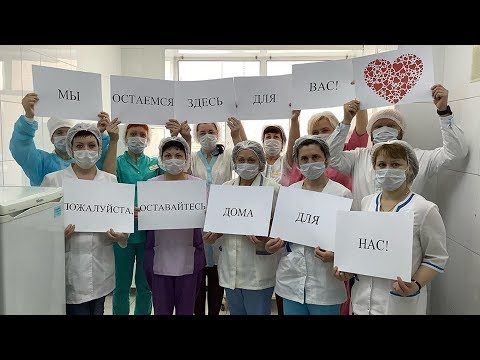
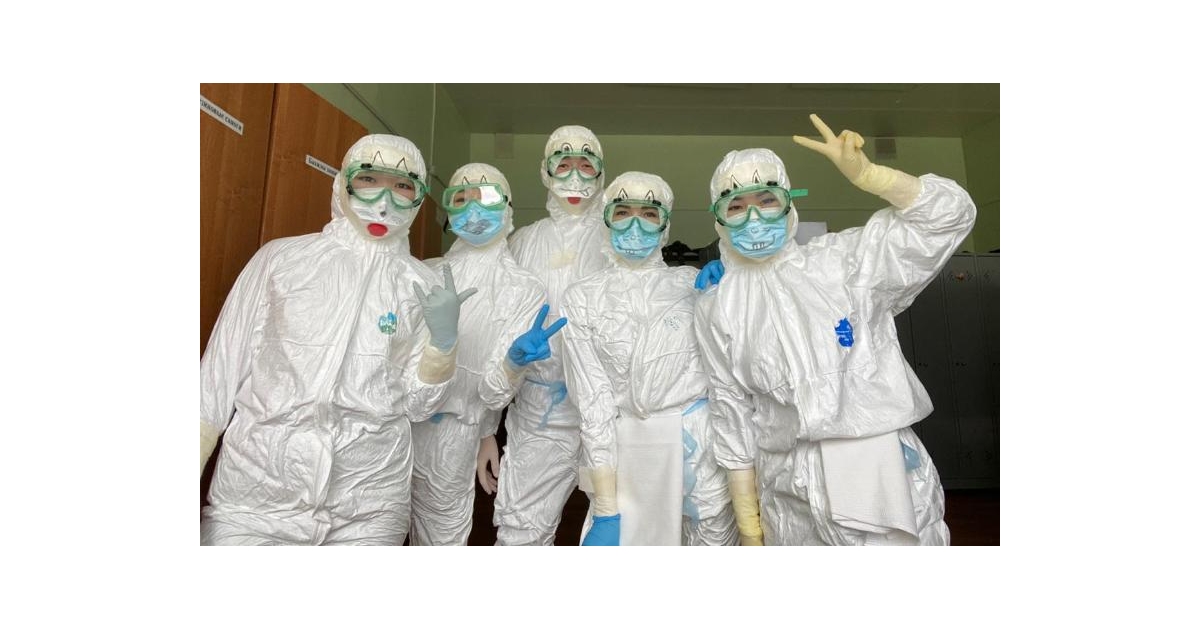
В эти месяцы все мы понимаем, насколько важны и нужны нам медики: они — наши Герои, которые отважно сражаются на передовой с непредсказуемым вирусом, нередко отдавая в этой борьбе жизнь.
Сейчас идёт бактериологическая война, в которой не видно врага, и Медики — наши солдаты и единственная защита!
Ситуацию, в которой мы оказались, можно сравнить с военными действиями, когда медики из-под обстрела вытаскивали раненых с поля боя, оказывая первую помощь под ливнем пуль и грохотом снарядов, в полевых условиях проводили сложнейшие операции, спасая жизни и отдавая свои.
Помянем всех врачей, фельдшеров, медсестёр, санитаров, которые отдали свои жизни в борьбе со страшной коронавирусной инфекцией, пожелаем здоровья всем тем медикам, кто продолжает стоять на рубежах жизни и смерти, сражаясь за каждого человека!
Список памяти медиков, погибших от Covid 19 (по официальным данным на данный момент в России от коронавируса погибло 474 медика): https://sites.google.com/view/covid-memory/home


Пронзительный отрывок из музыкальной композиции Игоря Демарина:
«Белые халаты, вечные солдаты,
Вы за жизнь простую бьётесь до конца!
Клятву Гиппократа дали вы когда-то,
Белые халаты, чистые сердца…»
.jpg)
Традиционно, в честь этого праздника вручается Премия лучшим врачам России «Призвание» — совместный проект Первого канала и Министерства здравоохранения и социального развития РФ реализуется с 2001 года, главная медицинская премия России.
Торжественная церемония ежегодно проходит в канун Дня медицинского работника и транслируется на Первом канале в день праздника (третье воскресенье июня), широко освещается в средствах массовой информации. Торжественную церемонию вручения Премии ежегодно ведут профессор, доктор медицинских наук, ведущая программ «Здоровье» и «Жить здорово» на Первом канале Елена Малышева и Народный артист России, врач «Скорой помощи» Александр Розенбаум. Поздравить врачей приходят политики, общественные деятели, знаменитые артисты и спортсмены. Открывают церемонию первые лица страны. «Золотые руки врача держат хрустальную Жизнь Человека!», -символ премии «Призвание».
Не пропустите сегодя, в 16.40, «Призвание» в эфире Первого канала!
Гимн «Медицина», написанный композитором Александрой Пахмутовой и поэтом Никлаем Добронравовым, исполненный Иосифом Кобзоном:
«Спасительная бухта Состраданья
Укроет от сомнений и невзгод.
Великое искусство врачеванья
Больное человечество спасет.
Ты к этому служению готов.
Рецепты безошибочно добры…
А Вера, и Надежда, и Любовь –
Три наши медицинские сестры.
Медицина – наше имя,
Наша радость, наша боль.
Медицина, медицина, —
Это больше, чем любовь…»
Строки Льва Ошанина:
«Смерть не хочет щадить красоты,
Ни веселых, ни злых, ни крылатых,
Но встают у нее на пути
Люди в белых халатах.
Вечный подвиг — он Вам по плечу,
Ваши руки — бессонны и святы,
Низко Вам поклониться хочу,
Люди в белых халатах!»

Уважаемые Врачи разных специализаций и направлений, фельдшера, медицинские сёстры – Все причастные к Призванию Медицина, с Праздником!
Самое главное – Здоровья Вам и Вашим близким, неиссякаемой энергии, бодрости, сил, оптимальных показателей гемодинамики! Пожалуйста, берегите себя и не забывайте о своей безопасности!
Пусть всегда в Вашей Жизни царят гармония и баланс, тонометр демонстрирует идеальное давление 120/80, а термометр стабильно держится на уровне «36.6»!
Автор: Бурулева Юлия
Фото: интернет-источники
.jpg)
В колледже состоялось самое долгожданное событие – Праздник белого халата (посвящение в студенты). Это ежегодное традиционное мероприятие, которое служит началом отсчета самого яркого и незабываемого периода в жизни каждого студента.
Именно в этот день студенты Медицинского колледжа официально надевают белые халаты — символ своей будущей профессии, получают зачетные книжки.
С приветственными словами к первокурсникам обратились — директор колледжа Т.В. Васильева, главная медсестра БСМП и президент Карельской Региональной Общественной Организации Медицинских Работников «Союз профессионалов» Т.В. Вирки, главный врач поликлиники №4 О.Ю. Билко.
Студенты первого курса творчески подошли к мероприятию и подготовили такие номера, которые никого не оставили равнодушными! Они пели, танцевали, показывали сценки. Постарались полностью раскрыть свои таланты!
С новым этапом в жизни новичков поздравили преподаватели. А студенты старших курсов внесли в церемонию театрализованные элементы, благодаря этому в адрес собравшихся прозвучало приветствие от бога врачевания — Эскулапа.
В финале студенты принесли традиционную клятву первокурсников.
Праздник прошёл замечательно!
Впереди – очень трудный, но безгранично интересный путь в медицину, благороднейшая цель которого — спасение и сохранение жизней людей.
В добрый путь, студенты-медики! Успехов вам в учёбе!
From Wikipedia, the free encyclopedia

The white coat ceremony (WCC) is a ritual in some schools of medicine and other health-related fields that marks the student’s transition from the study of preclinical to clinical health sciences. At some schools, where students begin meeting patients early in their education, the white coat ceremony is held before the first year begins. It is an example of a matriculation. The ritual is a recent invention, first being popularized in the 1990s.[1]
WCCs typically involve a formal «coating» of students.
Description[edit]
Over 100 medical schools in the United States now have a WCC,[2] and many students now consider it a rite of passage in the journey toward a healthcare career. Some schools also use this as a graduation from the entire program.
According to some,[3] WCCs have taken on a quasi-religious significance which symbolizes a «conversion» of a lay person into a member of the healthcare profession[3] and is similar to a priest’s ordination to the priesthood, although it is notable that the white coat is a recent adoption by the medical profession. However, in many medical schools around the world students begin wearing their white coats during first-year anatomy class, so there is no official white coat ceremony.
In the nineteenth century respect for the certainty of science was in stark contrast to the quackery and mysticism of nineteenth-century medicine. To emphasize the transition to the more scientific approach to modern medicine, physicians sought to represent themselves as scientists and began to wear the most recognizable symbol of the scientist — the white laboratory coat.[4] This led to the more recent association of the white coat with medicine since its continued adoption.[5][6]
History[edit]

RCSI Bahrain students taking a group photo following the 2013 White coat ceremony
WCCs originated in University of Chicago’s Pritzker School of Medicine in 1989,[1] but the first full-fledged ceremony was at the Columbia University College of Physicians and Surgeons in 1993.[1] In 1993, Dr. Arnold P. Gold, a teacher and pediatric neurologist, created the first full-fledged WCC at Columbia University College of Physicians and Surgeons.[7] Before this ceremony, medical students typically received the Hippocratic Oath for the first time at commencement.[8] This ceremony marks a change in tradition, introducing students to the Oath before starting their first year of study.[8] This was intended to provide students with well-defined guidelines regarding the expectations and responsibilities appropriate for the medical profession prior to their first day of class.[9] Since its conception at Columbia, the WCC has spread rapidly to schools of medicine, dentistry, pharmacy, osteopathic medicine, optometry, and nursing worldwide.[10]
Since starting in the US, several medical schools in countries outside of the United States (such as Iran, Israel, Canada, Dominican Republic, Brazil and Poland) have also started holding WCCs. The ceremony is no longer limited to medical students; starting in 1995, US pharmacy schools started holding WCCs, with the difference that most pharmacy students receive their coats at the end of their first academic year. In 2003 a survey found that the majority of US pharmacy schools hold WCCs.[11] An Arnold P. Gold Foundation-sponsored version of the WCC, or a similar rite of passage, is currently used by 97 percent of Association of American Medical Colleges (AAMC)-accredited schools of medicine in the United States, and takes place at medical and osteopathic schools in 13 other countries.[12]
In December 2006 the first white coat ceremony was held by Fatima Jinnah Dental College (FJDC), in Karachi, Pakistan.
In October 2008 the white coat ceremony was held at the VU University Medical Center Amsterdam, it was the first ceremony held in The Netherlands. In 2011 Erasmus Medical Center in Rotterdam also participated in holding the ceremony at their medical faculty.
On October 13, 2010, the faculty of medicine at the University of Cologne, Germany, became the first German-speaking University to integrate this ritual into its programme.[13] Initiated by then-student representative Hormos Salimi Dafsari in Cologne,[14] the ceremony has been spread to various German cities such as Leipzig and Halle via channels of the German Medical Students’ Association (bvmd).[15]
On April 12, 2010, the University of Queensland’s (Australia) School of Pharmacy became the first in Australia to adopt the ceremony for its incoming Bachelor of Pharmacy students.
On April 29, 2011, University of Warmia and Mazury in Olsztyn was the first medical school in Poland, that has introduced the White Coat Ceremony.[16][17]
In September 2011, Jagiellonian University in Kraków became the first medical school in Poland to introduce a white coat ceremony for the incoming class.[18]
On February 28, 2011, the Faculty of Medicine at the Università del Piemonte Orientale «Amedeo Avogadro» in Novara became the first Italian medical school to introduce a white coat ceremony for its third-year students.[19]
On October 5, 2012, the Faculty of Medicine at the University of Medicine and Pharmacy «Gr. T. POPA» of Iasi, Romania, became the first Romanian university to integrate this ritual, for its first-year medical students, into the symbolism of developing as a physician.
On October 8, 2012, the Medical University of Graz became the first university in Austria to celebrate a white coat ceremony of its third-year students.
On December 6, 2012, the School of Medicine at the All American Institute of Medical Sciences, Jamaica, became the first in Jamaica to introduce this ritual, for its Basic Sciences medical students.
In 2014 the Arnold P. Gold Foundation for Humanism in Medicine partnered with the American Association of Colleges of Nursing (AACN) to pilot the White Coat Ceremony at nursing schools.[20]
On July 13, 2017, the medical school of the University Of Tripoli became the first Libyan University to introduce this event.
On September 18, 2019, the Faculty of Medicine of Tunis became the first in Tunisia to introduce this ritual in collaboration with Hygie Organization for the Promotion of Ethics.
See also[edit]
- Pinning ceremony (nursing)
References[edit]
- ^ a b c Warren, Peter M. «For New Medical Students, White Coats Are a Warmup» Los Angeles Times, 18 October 1999.
- ^ Russell PC (2002). «The White Coat Ceremony: turning trust into entitlement». Teaching and Learning in Medicine. National Library of Medicine. 14 (1): 56–59. doi:10.1207/S15328015TLM1401_13. PMID 11865752. S2CID 219640050.
- ^ a b Veatch RM (February 2002). «White coat ceremonies: a second opinion». J Med Ethics. 28 (1): 5–9. doi:10.1136/jme.28.1.5. PMC 1733513. PMID 11834749.
- ^ Jones VA, «The White Coat: Why not Follow Suit?» JAMA. 1999;281:478. Full Text.
- ^ Hardy, Susan and Corones, Anthony, «Dressed to Heal: The Changing Semiotics of Surgical Dress», Fashion Theory, (2015), pp.1-23. doi=10.1080/1362704X.2015.1077653
- ^ Jones VA (February 1999). «The white coat: why not follow suit?». JAMA. 281 (5): 478. doi:10.1001/jama.281.5.478. PMID 9952213.
- ^ Uscher, Jen (2013-12-13). «Celebrating 20 Years of the White Coat Ceremony». Columbia Medicine Magazine. Retrieved 28 August 2015.
- ^ a b «White Coat Ceremony». Retrieved 28 August 2015.
- ^ «White Coat Ceremony — History». Archived from the original on 2015-12-07. Retrieved 28 August 2015.
- ^ «New York Medical College School of Medicine Welcomes 200 Entering Students at White Coat Ceremony». Archived from the original on 2015-08-03. Retrieved 28 August 2015.
- ^ Brown DL, Ferrill MJ, Pankaskie MC (October 2003). «White coat ceremonies in US schools of pharmacy». Ann Pharmacother. 37 (10): 1414–9. doi:10.1345/aph.1D124. PMID 14519030. S2CID 40895980.
- ^ «The Arnold P. Gold Foundation White Coat Ceremony — The Arnold P. Gold Foundation». The Arnold P. Gold Foundation. Archived from the original on 2015-10-13. Retrieved 28 August 2015.
- ^ «White Coat Ceremony». Fachschaft Medizin Köln (in German). Archived from the original on 2014-03-28.
- ^ «White Coat Ceremony Winter 2010 Cologne, Key Note Speech Hormos Salimi Dafsari» White Coat Ceremony Winter 2010 Cologne, Key Note Speech Hormos Salimi Dafsari
- ^ «Bundesvertretung der Medizinstudierenden in Deutschland e.V. (bvmd)» Bundesvertretung der Medizinstudierenden in Deutschland e.V. (bvmd) Wikipedia Page
- ^ «White Coat Ceremony | School of Medicine». wl.uwm.edu.pl. Retrieved 2021-02-21.
- ^ «UWM Chronicle». University of Warmia and Mazury in Olsztyn. 2014-10-01. Retrieved 2021-02-21.
- ^ «www.cm-uj.krakow.pl — Uniwersytet Jagielloński Collegium Medicum». Archived from the original on 2014-12-13. Retrieved 2014-12-11.
- ^ «Debutto per la Cerimonia del Camice Bianco, NovaraOggi.com»
- ^ «American Association of Colleges of Nursing — The Arnold P. Gold Foundation and AACN Initiate White Coat Ceremony». Archived from the original on 2014-07-08. Retrieved 28 August 2015.
From Wikipedia, the free encyclopedia
The white coat ceremony (WCC) is a ritual in some schools of medicine and other health-related fields that marks the student’s transition from the study of preclinical to clinical health sciences. At some schools, where students begin meeting patients early in their education, the white coat ceremony is held before the first year begins. It is an example of a matriculation. The ritual is a recent invention, first being popularized in the 1990s.[1]
WCCs typically involve a formal «coating» of students.
Description[edit]
Over 100 medical schools in the United States now have a WCC,[2] and many students now consider it a rite of passage in the journey toward a healthcare career. Some schools also use this as a graduation from the entire program.
According to some,[3] WCCs have taken on a quasi-religious significance which symbolizes a «conversion» of a lay person into a member of the healthcare profession[3] and is similar to a priest’s ordination to the priesthood, although it is notable that the white coat is a recent adoption by the medical profession. However, in many medical schools around the world students begin wearing their white coats during first-year anatomy class, so there is no official white coat ceremony.
In the nineteenth century respect for the certainty of science was in stark contrast to the quackery and mysticism of nineteenth-century medicine. To emphasize the transition to the more scientific approach to modern medicine, physicians sought to represent themselves as scientists and began to wear the most recognizable symbol of the scientist — the white laboratory coat.[4] This led to the more recent association of the white coat with medicine since its continued adoption.[5][6]
History[edit]
RCSI Bahrain students taking a group photo following the 2013 White coat ceremony
WCCs originated in University of Chicago’s Pritzker School of Medicine in 1989,[1] but the first full-fledged ceremony was at the Columbia University College of Physicians and Surgeons in 1993.[1] In 1993, Dr. Arnold P. Gold, a teacher and pediatric neurologist, created the first full-fledged WCC at Columbia University College of Physicians and Surgeons.[7] Before this ceremony, medical students typically received the Hippocratic Oath for the first time at commencement.[8] This ceremony marks a change in tradition, introducing students to the Oath before starting their first year of study.[8] This was intended to provide students with well-defined guidelines regarding the expectations and responsibilities appropriate for the medical profession prior to their first day of class.[9] Since its conception at Columbia, the WCC has spread rapidly to schools of medicine, dentistry, pharmacy, osteopathic medicine, optometry, and nursing worldwide.[10]
Since starting in the US, several medical schools in countries outside of the United States (such as Iran, Israel, Canada, Dominican Republic, Brazil and Poland) have also started holding WCCs. The ceremony is no longer limited to medical students; starting in 1995, US pharmacy schools started holding WCCs, with the difference that most pharmacy students receive their coats at the end of their first academic year. In 2003 a survey found that the majority of US pharmacy schools hold WCCs.[11] An Arnold P. Gold Foundation-sponsored version of the WCC, or a similar rite of passage, is currently used by 97 percent of Association of American Medical Colleges (AAMC)-accredited schools of medicine in the United States, and takes place at medical and osteopathic schools in 13 other countries.[12]
In December 2006 the first white coat ceremony was held by Fatima Jinnah Dental College (FJDC), in Karachi, Pakistan.
In October 2008 the white coat ceremony was held at the VU University Medical Center Amsterdam, it was the first ceremony held in The Netherlands. In 2011 Erasmus Medical Center in Rotterdam also participated in holding the ceremony at their medical faculty.
On October 13, 2010, the faculty of medicine at the University of Cologne, Germany, became the first German-speaking University to integrate this ritual into its programme.[13] Initiated by then-student representative Hormos Salimi Dafsari in Cologne,[14] the ceremony has been spread to various German cities such as Leipzig and Halle via channels of the German Medical Students’ Association (bvmd).[15]
On April 12, 2010, the University of Queensland’s (Australia) School of Pharmacy became the first in Australia to adopt the ceremony for its incoming Bachelor of Pharmacy students.
On April 29, 2011, University of Warmia and Mazury in Olsztyn was the first medical school in Poland, that has introduced the White Coat Ceremony.[16][17]
In September 2011, Jagiellonian University in Kraków became the first medical school in Poland to introduce a white coat ceremony for the incoming class.[18]
On February 28, 2011, the Faculty of Medicine at the Università del Piemonte Orientale «Amedeo Avogadro» in Novara became the first Italian medical school to introduce a white coat ceremony for its third-year students.[19]
On October 5, 2012, the Faculty of Medicine at the University of Medicine and Pharmacy «Gr. T. POPA» of Iasi, Romania, became the first Romanian university to integrate this ritual, for its first-year medical students, into the symbolism of developing as a physician.
On October 8, 2012, the Medical University of Graz became the first university in Austria to celebrate a white coat ceremony of its third-year students.
On December 6, 2012, the School of Medicine at the All American Institute of Medical Sciences, Jamaica, became the first in Jamaica to introduce this ritual, for its Basic Sciences medical students.
In 2014 the Arnold P. Gold Foundation for Humanism in Medicine partnered with the American Association of Colleges of Nursing (AACN) to pilot the White Coat Ceremony at nursing schools.[20]
On July 13, 2017, the medical school of the University Of Tripoli became the first Libyan University to introduce this event.
On September 18, 2019, the Faculty of Medicine of Tunis became the first in Tunisia to introduce this ritual in collaboration with Hygie Organization for the Promotion of Ethics.
See also[edit]
- Pinning ceremony (nursing)
References[edit]
- ^ a b c Warren, Peter M. «For New Medical Students, White Coats Are a Warmup» Los Angeles Times, 18 October 1999.
- ^ Russell PC (2002). «The White Coat Ceremony: turning trust into entitlement». Teaching and Learning in Medicine. National Library of Medicine. 14 (1): 56–59. doi:10.1207/S15328015TLM1401_13. PMID 11865752. S2CID 219640050.
- ^ a b Veatch RM (February 2002). «White coat ceremonies: a second opinion». J Med Ethics. 28 (1): 5–9. doi:10.1136/jme.28.1.5. PMC 1733513. PMID 11834749.
- ^ Jones VA, «The White Coat: Why not Follow Suit?» JAMA. 1999;281:478. Full Text.
- ^ Hardy, Susan and Corones, Anthony, «Dressed to Heal: The Changing Semiotics of Surgical Dress», Fashion Theory, (2015), pp.1-23. doi=10.1080/1362704X.2015.1077653
- ^ Jones VA (February 1999). «The white coat: why not follow suit?». JAMA. 281 (5): 478. doi:10.1001/jama.281.5.478. PMID 9952213.
- ^ Uscher, Jen (2013-12-13). «Celebrating 20 Years of the White Coat Ceremony». Columbia Medicine Magazine. Retrieved 28 August 2015.
- ^ a b «White Coat Ceremony». Retrieved 28 August 2015.
- ^ «White Coat Ceremony — History». Archived from the original on 2015-12-07. Retrieved 28 August 2015.
- ^ «New York Medical College School of Medicine Welcomes 200 Entering Students at White Coat Ceremony». Archived from the original on 2015-08-03. Retrieved 28 August 2015.
- ^ Brown DL, Ferrill MJ, Pankaskie MC (October 2003). «White coat ceremonies in US schools of pharmacy». Ann Pharmacother. 37 (10): 1414–9. doi:10.1345/aph.1D124. PMID 14519030. S2CID 40895980.
- ^ «The Arnold P. Gold Foundation White Coat Ceremony — The Arnold P. Gold Foundation». The Arnold P. Gold Foundation. Archived from the original on 2015-10-13. Retrieved 28 August 2015.
- ^ «White Coat Ceremony». Fachschaft Medizin Köln (in German). Archived from the original on 2014-03-28.
- ^ «White Coat Ceremony Winter 2010 Cologne, Key Note Speech Hormos Salimi Dafsari» White Coat Ceremony Winter 2010 Cologne, Key Note Speech Hormos Salimi Dafsari
- ^ «Bundesvertretung der Medizinstudierenden in Deutschland e.V. (bvmd)» Bundesvertretung der Medizinstudierenden in Deutschland e.V. (bvmd) Wikipedia Page
- ^ «White Coat Ceremony | School of Medicine». wl.uwm.edu.pl. Retrieved 2021-02-21.
- ^ «UWM Chronicle». University of Warmia and Mazury in Olsztyn. 2014-10-01. Retrieved 2021-02-21.
- ^ «www.cm-uj.krakow.pl — Uniwersytet Jagielloński Collegium Medicum». Archived from the original on 2014-12-13. Retrieved 2014-12-11.
- ^ «Debutto per la Cerimonia del Camice Bianco, NovaraOggi.com»
- ^ «American Association of Colleges of Nursing — The Arnold P. Gold Foundation and AACN Initiate White Coat Ceremony». Archived from the original on 2014-07-08. Retrieved 28 August 2015.
-

-
May 12 2019, 16:00
- Спорт
- Праздники
- Cancel
Праздник белых халатов
Сегодня Международный день медицинской сестры. И у меня был праздничный забег с улучшение личного рекорда.

Вы думаете медсёстры были вечно? А вот и нет. Профессия медсестра появилась в 1853 году во время Крымской войны. Англичанка Флоренс Найтингейл организовала штаб сестёр милосердия, куда могли прийти все желающие, и крестьянки, и аристократки.

Отмечают праздник 12 мая в день рождения Флоренс. Вот такая история. Поздравляю всех медсистер и медбратьев с нашим замечательным праздником!

А я пробежала свои репетиционные 10 км и в честь праздника улучшила личный рекорд.

20 сентября 2008 года в Центральном музее Вооруженных Сил состоялся традиционный праздник «Белого халата» среди медицинских (фармацевтического) училищ и колледжей Департамента здравоохранения города Москвы.
Праздник «Белого халата» — это посвящение учащихся I –II курсов (нового набора) в студенты – медики и проводится он в рамках открытого проекта «Во славу Отечества», идея которого зародилась еще в 2003 году.
В 5 медицинских колледжах, 1 фармацевтическом и 19 медицинских училищах Департамента здравоохранения города Москвы сегодня обучается более 13 тысяч студентов по специальностям: «Сестринское дело», «Лечебное дело», «Акушерское дело», «Лабораторная диагностика», «Стоматология», «Стоматология ортопедическая» и «Фармация».
В проведении праздника «Белого халата» приняли участие представители Департамента здравоохранения города Москвы, ветераны Великой Отечественной войны, студенты и преподаватели образовательных учреждений (фото 1).
 Фото 1 Участники праздника.
|
Для студентов – первокурсников открылась дверь в мир самой благородной и гуманной профессии на земле – профессии медицинского работника. Во все времена профессия медицинского работника востребована и пользуется особым уважением и почетом особенно в городских учреждениях здравоохранения – отметил в своем выступлении начальник Управления организации медицинской помощи Департамента здравоохранения города Москвы Ш.М. Гайнулин (фото 2) |
|
 Фото 2. Фото 2. |
|
О великих событиях и великих людях в белых халатах в годы Великой Отечественной войны рассказала начальник научно-просветительного отдела музея О.В.Тихомирова (фото3). На празднике были представлены Боевые Знамена из коллекции фонда (фото 4).

Фото 3 |
Фото 4 |

В память о героическом подвиге народов нашей страны в годы Великой Отечественной войны студенты возложили цветы к Знамени Победы (фото 5)
 Фото5
Фото5
Поскольку в России 2008 год объявлен Годом Семьи, на празднике «Белого халата» были представлены сведения о медицинских династиях, представители которых не только сражались во славу Отечества, трудятся на благо его и в наши дни и продолжают медицинские династии являясь студентами медицинских училищ и колледжей департамента.
Концертная программа и музыкальные приветствия студентов из разных медицинских училищ закончилась торжественным гимном студентов (фото 6)
 Фото 6