
|
Сон убивает. |
| Тэглайн первого фильма |
|
Раз, два, Фредди заберет тебя, |
| Считалочка |

«Кошмар на улице Вязов» (англ. A Nightmare on Elm Street) — классика ужасов. Франшиза состоит из фильмов,телесериала, комиксов и игр и повествует о Фредди Крюгере, маньяке из мира снов, убивающем детей в маленьком городке Спрингвуде.
Мать Фредди Крюгера была монахиней, работавшей в клинике для душевнобольных. Однажды она случайно оказалась в башне, в которой содержали маньяков. Они изнасиловали её, и она забеременела, а после родов сошла с ума. Фредди жил в приёмной семье, его избивал отчим и ненавидели одноклассники. После школы Фредди женился и устроился работать кочегаром. В это время он и начал совершать свои преступления. Крюгер заманивал маленьких детей в котельную, где подвергал ужасным пыткам при помощи самодельной перчатки с ножами на пальцах. В конце концов полиция вышла на след Крюгера, но так как улики были получены без соответствующего ордера, их оказалось невозможно использовать в суде, и Фредди вышел на свободу. Разгневанные жители городка выследили его и сожгли в собственной котельной; однако в огне умирающему маньяку явились демоны снов и предложили сделку: он отдаёт им свою душу, а они дают ему новую жизнь в мире снов.
В ремейке 2010 года сценаристы слегка переписали историю Фредди: теперь он работал в котельной детского сада. Пользуясь служебным положением, Фредди изнасиловал нескольких детей, но для заключения под стражу оказалось недостаточно доказательств. Ну а дальше всё по-старому: разгневанные родители устроили самосуд — загнали Фредди в котельную и сожгли. Следует помнить, что поскольку большинство поклонников категорически отказались принять как ремейк, так и изложенную в нём новую версию событий, в которой грозный маньяк вдруг превратился в обычного извращенца, подлинной следует считать первоначальную историю.
Всего с 1984 по 2011 годы было снято 9 фильмов, включая кроссовер «Фредди против Джейсона» (Джейсон Вурхес — серийный убийца из франшизы «Пятница, 13-е»). На протяжении всех сиквелов сюжет изменяется мало, основная линия: Фредди убивает подростков Спрингвуда во сне, подростки пытаются выжить, в конце Фредди побеждён, но, конечно, не убит.
По утверждению некоторых психологов, Фредди Крюгер отражает детский страх о переходе во взрослую жизнь (здесь, конечно, примечателен мотив сна), поэтому в фильмах главные роли играют подростки. Кроме того, Фредди является одним из самых популярных и узнаваемых злодеев в мировой культуре.

Все сцены смерти из фильмов
Интересна также история создания первого фильма: режиссер Уэс Крейвен прочитал в Los Angeles Times историю о нескольких подростках из Калифорнии, которые видели настолько страшные сны, что отказывались спать. Тогда врачи стали давать им снотворное, но через некоторое время все дети умерли во сне. Крейвен взялся за написание сценария; по его версии, причиной гибели детей был убийца из их снов. Недолго думая, он дал ему имя парня, который часто издевался над ним в школе, а прототипом злодея стал бомж, напугавший режиссёра в детстве. Сначала Фредди должен был ходить в плаще, но во время съёмок плащ потерялся, и Крейвен одолжил у одного из осветителей свитер, связанный его невестой. Сочетание обгоревшего лица, руки с лезвиями, шляпы и красно-зелёного свитера оказалось настолько отвратительным, жутким и в то же время чрезвычайно эффектным, что свитер остался на Фредди до конца съёмок, а затем перекочевал в мировой фольклор: маньяк в красно-зелёном свитере узнаваем, как упомянуто выше, теперь повсеместно и моментально. Фильм имел оглушительный успех и был обречён стать классикой жанра.
Официальный клип по третьему фильму
Список фильмов[править]
Кошмар на улице Вязов (1984)[править]
То, с чего всё началось. Девушка по имени Тина постоянно видит кошмары, в которых её преследует уродливый мужчина в чёрной шляпе и полосатом свитере, а на правой руке у него перчатка с тонкими острыми лезвиями. Беда в том, что если во сне маньяк доберётся до жертвы, то она умрёт и реальности, что с Тиной и произошло. Её лучшая подруга — по совместительству главная героиня — Нэнси Томпсон понимает, что здесь что-то нечисто. Пока маньяк методично расправляется с её друзьями (пока те, естественно, спят), девушка узнают пугающую историю своего городка. Оказывается, за 13 лет до событий фильма в городе орудовал маньяк-детоубийца Фредди Крюгер, который похищал соседских детишек и убивал их в старой котельной. Родители, естественно, быстро просекли что к чему и добились его ареста. Но из-за судебной ошибки Фредди отпустили и тот снова принялся за старое. Тогда родители решили устроить Крюгеру самосуд и сожгли его в той самой котельной. С тех пор, его призрак блуждает по снам детей, чьи родители когда-то убили его, и расправляется с ними, играя на их страхах. Понимая, что вскоре Фредди доберётся и до неё, Нэнси пытается «вытащить» маньяка в реальность (лишая его особых сил, которые у него есть во снах), чтобы победить его. И, на первый взгляд, у неё получается. Героиня побеждает призрака (перестаёт его бояться, и тот, в буквальном смысле, исчезает) и просыпается в реальности, где все её друзья живы, но ни черта подобного — она всё ещё во сне, а Фредди всё ещё жаждет расправиться с ней.
Кошмар на улице Вязов 2: Месть Фредди (1985)[править]
Сиквел, имеющий косвенную связь с оригиналом. Главный герой Джесси переезжает с родителями и сестрой в домик на улице Вязов (где жила героиня первой части Нэнси), и пытается наладить отношения со своей подругой Лизой. Но не тут то было — Фредди вернулся, и пытается вселиться в разум юноши, пока тот спит. Мало помалу, у него это получается — Крюгер руками Джесси продолжает серию кровавых убийств, а потом и вовсе, разорвав его тело, вырывается на свободу (почти — разум Джесси остался внутри маньяка). Но любовь, в итоге, спасла героев Лиза обращается к юноше, сидящему внутри Фредди, и тот побеждает Крюгера. Казалось бы, снова всё хорошо, но Фредди убивает героев.
В фендоме считается самой слабой частью. Несмотря на годную атмосферу, сюжет оказался слишком запутанным и глупым, Фредди чудовищно мало (где-то на 10 минут), убийства мало, а те, что есть, оригинальностью не отличаются (и это на фоне то первой части!), ну а фанаты обнаружили кучу гейских намёков (немудрено, так как актёр, исполняющий главную роль, и правда гей; да и сцена в душе получилась… ну слишком…). Сейчас этим никого не удивишь, но тогда это казалось очень странным. Особенно в фильме жанра слэшер.
Кошмар на улице Вязов 3: Воины Сна (1987)[править]
Нэнси Томпсон выросла и стала врачом — в качестве приглашенного специалиста она приходит на помощь психиатру, который лечит группу подростков, склонных к суициду, и уже потерял часть своих пациентов. На деле же убивает их Фредди, одного за другим. С ее помощью (и благодаря дару одной из девочек, способной затаскивать в свои сны других людей) удается сколотить из оставшихся в живых тинейджеров отряд борцов с Фредди. Также на помощь приходит отец Нэнси, открывший второй фронт в реальности (он ценой своей жизни похоронил прах Крюгера в освященной земле). В финале Крюгер временно побежден, но Нэнси погибает от его руки.
Кошмар на улице Вязов 4: Повелитель Сна (1988)[править]
Фредди восстает из могилы и начинает свою охоту за подростками с тех выживших ребят, которые отправили его на тот свет в прошлый раз. Однако Кристен перед смертью передает свой дар — втягивать других людей в свои сны — школьной подруге Элис. Поначалу та не способна контролировать полученную способность и Фредди откровенно использует ее, чтобы убивать ее друзей, но в финале Элис находит способ справиться с Фредди и освободить души убитых им подростков.
Кошмары Фредди (1988)[править]
Телесериал, идея которого возникла еще после успеха третьей части. Несмотря на два сезона, имеет низкие рейтинги, и мало кто знает о его существовании. Выходил только на видео. Сериал не связан с киновселенной, несмотря на то, что происходит там же. Быть может за исключением первой серии, где показан еще живой Фредди, суд, его казнь родителями и первая жертва сна.
Кошмар на улице Вязов 5: Дитя Сна (1989)[править]
Элис и ее друг Ден живут обычной жизнью, когда внезапно Элис начинают сниться сны об Аманде Крюгер — матери Фредди, — и одновременно снова начинается эпидемия смертей подростков, в числе прочих погибает и Ден. После этого Элис узнает, что беременна. Не сразу она понимает, что Крюгер обосновался во снах ее нерожденного ребенка и пользуется уже им как проходом в чужие сновидения, а также, похоже, собирается возродиться в его облике. В итоге Элис удается победить Фредди и освободить своего сына с помощью призрака Аманды.
Фредди мёртв: Последний кошмар (1991)[править]
Джон, потерявший память подросток, находится в реабилитационном центре. Все, что он помнит о своей прошлой жизни — это город Спрингвуд, где случилось нечто странное. Карлос, Спенсер и Трейси, с которыми Джон познакомился в центре, сбегают оттуда вместе с ним и отправляются в названный им город, где действительно происходит какая-то дичь: не осталось живых детей и все взрослые ведут себя как сумасшедшие. Джон — последний из детей Спрингвуда. Он находит в сиротском приюте картинку с изображением Фредди и подписью «К. Крюгер», после чего ошибочно решает, что выжил потому, что является сыном Крюгера, но тот убийственно разубеждает мальчика и расправляется с его спутниками. Выживает лишь Трейси, которую спасает и увозит из Спрингвуда Мэган Берроуз — доктор из реабилитационного центра. Выслушав историю девочки, Мэган ловит флэшбек из прошлого и понимает, что К. Крюгер — это она сама, приемные родители сменили ей имя, чтобы не травмировать ребенка, и так ставшего свидетелем смерти собственной матери и преступлений отца. В финале Мэгги сражается с отцом и побеждает его, убив его собственной перчаткой.
В оригинальной версии сценария главным героем должен был стать шестнадцатилетний сын Элис Джонсон, героини предыдущего фильма, также планировалось вернуть некоторых погибших ранее персонажей из третьего фильма.
Новый кошмар Уэса Крэйвена (1994)[править]
Также известен как A Nightmare On Elm Street Part 7: The Ascension и A Nightmare On Elm Street 7: The Real Story. Хизер Ландженкамп, исполнительница роли Нэнси Томпсон, на сей раз играет саму себя, в нашем реальном мире, где в связи с девятой годовщиной первого фильма о Фредди планируют снять еще один сиквел и Уэс Крейвен собирается позвать ее на главную роль. Ей снятся кошмары, в которых погибает ее муж Чейз, а затем тот умирает и в реальности, причем на его теле обнаруживаются странные порезы, как у жертв Фредди. Одновременно кошмары мучают и ее сына Дилана, а врачи полагают, что тот просто насмотрелся ужастиков с мамой в главной роли. Уэс объясняет Хизер, что в образе Фредди воплотилось некое древнее зло, и единственный способ не выпустить его в наш мир — снять еще один фильм. На этом месте происходящее в фильме окончательно превращается в фантасмагорию, которая завершается гибелью Фредди и сценой, в которой Хизер вместе с сыном читают сценарий. Самая невнятная часть франшизы, собравшая меньше всего денег в прокате.
Фредди против Джейсона (2003)[править]
Жители Спрингвуда нашли способ забыть о Фредди. Новое поколение детей «посажено» родителями на лекарство «Гипносил», отключающее сновидения. Правда, некоторые подростки из-за этого лекарства впадают в кому, но это малая цена за спасение. Однако Фредди недоволен, и решает напомнить о себе, пригласив в город маньяка Джейсона Вурхиза, который убивает подростков наяву. Прикинувшись матерью Джейсона, он является тому во сне. Джейсон ведется и учиняет в городе резню, которую поначалу ошибочно списывают на Фредди и пытаются все замять. Но Джейсон начинает убивать тех подростков, которых уже наметил для себя Фредди, отбирая у него тем самым силы, а офицер Стаббс понимает, что в городе орудуют два маньяка. В итоге Фредди пытается убить вышедшего из-под контроля Джейсона, а попутно гибнет большая часть персонажей-подростков. Финальная схватка маньяков заканчивается в водах Хрустального озера. В эпилоге картины Джейсон выходит из озера с отрезанной головой Фредди в руке — но неожиданно Фредди подмигивает, намекая, что еще ничего не кончилось.
Кошмар на улице Вязов (2010)[править]
Ремейк фильма 1984 года от режиссера-дебютанта Сэмюэля Байера, ранее снимавшего только видеоклипы. В этой экранизации Крюгера впервые играл не Инглунд, а Джеки Эрл Хейли, созданный им образ злодея вышел более жестоким, менее эмоциональным, куда менее харизматичным и был принят публикой скорее негативно. Также не слишком удачной оказалась идея акцентировать внимание на педофилии Фредди, это значительно упростило и опошлило идею фильма. Несмотря на то, что было запланировано снять еще две части, продолжения так и не сняли из-за низких сборов.
Что здесь есть?[править]
- Высокоточный матснаряд — обращение Фредди к своей очередной жертве: «Welcome to Prime Time, bitch!» («Добро пожаловать в эфир, сука!»).
- В русскоязычном переводе потеряно: «Круто ты попала на ТВ!»
- В одном из ранних переводов 90-х таки звучало «Добро пожаловать в прямой эфир, сучка»
- Гад-франшизик — собственно, сам Фредди Крюгер.
- Гад-невидимка — он же в некоторых фильмах, но особенно в четвёртом.
- Звукоимитатор — Фредди умеет подделывать голоса, чтобы завлекать своих жертв в засаду. Также он может принимать вид убитых им людей.
- Закадровое гуро — смерть парня Нэнси в первом фильме.
- Казнь сделала его круче — продав свою душу Демонам Сновидений в момент сожжения, Фредди получил возможность проникать в сновидения подростков и тем самым безнаказанно мстить некогда убившим его горожанам.
- Мир снов — без комментариев.
- На тебе! — начнём с того, что главного злодея режиссер Уэс Крейвен назвал в честь своего школьного обидчика…
- Неприемлемый финал — если бы первый фильм закончился хэппи-эндом, возможно, никогда бы не родилась такая большая кинофраншиза.
- Низведён до крутого смертного — даже вытащенный в реальный мир Крюгер представляет угрозу.
- Опухание сиквелов — как ни печально, серьёзная проблема данной франшизы.
- Из демона в клоуна — закономерный результат.
- Поседеть за одну ночь — Нэнси после очередного «свидания» во сне с Крюгером обзаводится седой прядкой.
- Пнуть сукиного сына — во второй части смерть тренера школьной команды, садюги и морального урода, воспринимается зрителями скорее положительно.
- Суд Линча — разгневанные горожане заживо сожгли Крюгера в котельной.
- Упростили и опошлили: делать из харизматичного маньяка-убийцы банального педофила, до чего додумались авторы ремейка, оказалось не очень хорошей идеей. Версия о том, что это было и в изначальной задумке выглядит маркетинговой уткой, но даже если она правдива — Крейвен поступил крайне разумно, отказавшись о неё в оригинале.
- Шоу внутри шоу — вся седьмая часть строится на этом.
- Это был только сон — инверсия.
- Камео — в седьмом фильме самих себя играют Уэс Крейвен, исполнитель роли Фредди Крюгера Роберт Инглунд, а также актеры, игравшие Нэнси Томпсон и ее отца в первом и третьем фильмах.
- Также в первой, второй, четвертой, шестой и седьмой частях небольшие роли исполнил продюсер франшизы Роберт Шей.
Интересные факты[править]
- Популярность Фредди была настолько велика, что он в конце концов даже стал одним из персонажей культовой франшизы Mortal Kombat.
- Существовала идея создать сериал с персонажами из третьего и четвертого фильма, в котором Фредди противостояла бы полиция сновидений, состоящая из его освобожденных жертв.
- Инглунд после выхода последнего фильма сфотографировался с плакатом «Ремейк 2010 — отстой».
|
[изменить] Уэс Крейвен |
|
|---|---|
| Фильмы | Последний дом слева • У холмов есть глаза • Кошмар на улице Вязов • Змей и радуга • Электрошок • Люди под лестницей • Крик • Ночной рейс |
|
[изменить] Фильмы ужасов |
|
|---|---|
| Слешеры | Кошмар на улице Вязов • Кровавая жатва • Крик • Окровавленные холмы • Психо • Пятница, 13 • Спящий лагерь • Техасская Резня Бензопилой • Улица Страха • Хэллоуин |
| Мистика | Верхом на пуле • Восставший из ада • Дина • Дневной представитель • Доктор Сон • Жажда страсти • Иногда они возвращаются • Корабль-Призрак • Кэндимэн • Лабиринт Фавна • Карнавал Душ • Кладбище домашних животных • Прикосновение • Пункт назначения • Сайлент Хилл (1 • 2) • Сияние • Сонная Лощина • Страшилы • Ужас на глубине 9 миль • Фантазм • Чернокнижник • Электрошок |
| Вампиры | От заката до рассвета |
| Оборотни | Американский оборотень в Лондоне • Вой • Зловещая луна • Псы-Воины • Серебряная пуля |
| Монстры | Джиперс Криперс • Дрожь Земли • Коллекция монстров • Легенда о динозавре • Люми • Монстро • От заката до рассвета • Подъём с глубины • Капля |
| Злобные пришельцы | Нечто • Чужой/Чужие |
| Зомби | Возвращение живых мертвецов • Добро пожаловать в Zомбиленд • Зловещие мертвецы • Ночь живых мертвецов (её продолжения) • Обитель Зла • Поезд в Пусан • Телемертвецы |
| Другое | Анаконда • Белоснежка: Страшная сказка • Верхом на пуле • Извне • Имитатор • Люди под лестницей • Лихорадка • Людоед • Лепрекон • Маньяк • Мученицы • Ночь Кометы • Исчезновение • Очень страшное кино • Пила • Сквозь Горизонт • Снеговик • Уродцы • У холмов есть глаза • Хижина в лесу • Экзистенция |
| Альманахи и антологии | З/Л/О • Калейдоскоп Ужасов • Кошелёк или жизнь • Чёрные праздники |
| A Nightmare on Elm Street | |
|---|---|
 |
|
| Created by | Wes Craven |
| Original work | A Nightmare on Elm Street (1984) |
| Owner | Warner Bros. Pictures |
| Years | 1984–present |
| Films and television | |
| Television series | Freddy’s Nightmares (1988–1990) |
| Miscellaneous | |
| Character(s) | List of characters |
A Nightmare on Elm Street is an American supernatural slasher-horror media franchise consisting of nine films, a television series, novels, comic books, and various other media. The franchise began with the film A Nightmare on Elm Street (1984), written and directed by Wes Craven. The overall plot of the franchise centers around the fictional character Fred «Freddy» Krueger, the apparition of a former-child killer who was burned alive by the vengeful parents of his victims, who returns from the grave to terrorize and kill the teenage residents of Springwood, Ohio in their dreams. Craven returned to the franchise to co-script the second sequel, A Nightmare on Elm Street 3: Dream Warriors (1987), and to write/direct New Nightmare (1994). The films collectively grossed $472 million at the box office worldwide.
The original film was released in 1984. A series of sequels produced by the independent film company New Line Cinema followed. New Line often attributes the growth of their company to the success of the Nightmare series.[1] The film series as a whole has received mixed reviews by critics, but has been a financial success at the box office. When comparing the United States box office grosses of other American horror film series, A Nightmare on Elm Street is the third highest grossing series in adjusted US dollars.[2] In 1988, a television series was produced with Freddy as the host. The pilot episode focused on the night Freddy was burned alive by the angry parents of the children he had killed, though the rest of the series featured episodes with independent plots. Twelve novels, separate from the adaptations of the films, and multiple comic book series were published featuring Freddy Krueger, as well as a crossover film featuring fellow horror icon Jason Voorhees from the Friday the 13th franchise. A remake of the 1984 film was released in 2010, while a reboot is in development.[3][4][5]
Films[edit]
Overview[edit]
The original film, written and directed by Wes Craven and titled A Nightmare on Elm Street, was released in 1984. The story focuses on Freddy Krueger (Robert Englund) attacking Nancy Thompson (Heather Langenkamp) and her friends in their dreams, successfully killing all but Nancy, in fictional Springwood, Ohio. Krueger’s back-story is revealed by Nancy’s mother, Marge, who explains he was a child murderer. The parents of Springwood killed Krueger after he was acquitted on a technicality. Nancy defeats Freddy by pulling him from the dream world and stripping him of his powers when she stops being afraid of him.[6] Freddy returns to attack the new family, the Walshes, living in Nancy Thompson’s house in 1985’s A Nightmare on Elm Street 2: Freddy’s Revenge. Freddy possesses the body of Jesse Walsh (Mark Patton), using him to kill. Jesse is temporarily saved by his girlfriend Lisa (Kim Myers), who helps him exorcise Krueger’s spirit.[7]
Wes Craven returned to write A Nightmare on Elm Street 3: Dream Warriors, released in 1987. In the second sequel, Freddy is systematically killing the last of the Elm Street children. The few remaining children have been placed in Westin Hills Mental Institution, for allegedly attempting suicide. Nancy Thompson arrives at Westin Hills as a new intern, and realizes the children are being killed by Freddy. With the help of Dr. Neil Gordon (Craig Wasson), Nancy helps Kristen Parker (Patricia Arquette), Joey (Rodney Eastman), Taryn (Jennifer Rubin), Kincaid (Ken Sagoes), and Will (Ira Heiden) find their dream powers, so they can kill Freddy once and for all. Neil, unknowingly until the end, meets the spirit of Freddy’s mother, Amanda Krueger (Nan Martin), who instructs him to bury Freddy’s remains in hallowed ground in order to stop him for good. Neil completes his task, but not before Freddy kills Nancy.[8]
The story of Kristen Parker would continue with 1988’s A Nightmare on Elm Street 4: The Dream Master. This time, Kristen (Tuesday Knight) unwittingly releases Freddy, who immediately kills Kincaid and Joey. Before Freddy can kill Kristen, she transfers her dream powers to Alice Johnson (Lisa Wilcox), a friend from school. Alice begins inadvertently providing victims for Freddy when she begins pulling people into her dreams while she sleeps. Alice, who begins taking on traits of the friends who were murdered, confronts Freddy. She uses the power of the Dream Master to release all the souls Freddy has taken; they subsequently rip themselves from Freddy’s body, killing him in the process.[9]
Picking up shortly after the events of The Dream Master, A Nightmare on Elm Street 5: The Dream Child involves Freddy using Alice’s unborn child, Jacob (Whitby Hertford), to resurrect himself and find new victims. The spirit of Amanda Krueger (Beatrice Boepple) returns, revealing that Freddy was conceived when she, a nun working in a mental asylum, was accidentally locked in a room with «100 maniacs» and raped «hundreds of times». Amanda Krueger convinces Jacob to use the powers he was given by Freddy against him, which gives her the chance to subdue Freddy long enough for Alice and Jacob to escape the dream world.[10]
Two years later, 1991’s Freddy’s Dead: The Final Nightmare followed the exploits of «John Doe» (Shon Greenblatt), an amnesiac teenager from Springwood, who was sent out to find Freddy’s daughter Maggie (Lisa Zane), who he needs to leave Springwood. Freddy’s goal is to create new «Elm Streets», and begin a new killing spree after having killed all of the children in Springwood. Maggie, utilizing new dream techniques, uncovers Krueger’s past, which include: being taunted by schoolmates for being the «son of 100 maniacs», being cruel to animals, beaten by his stepfather, the murder of his own wife when she discovers he has been killing children, and the moment when the Dream Demons arrive in his boiler room to make him the offer of eternal life. Eventually, Maggie pulls Freddy out of the dream world, and uses a pipe bomb to blow him up.[11]
Wes Craven returned to the Nightmare series a third time with New Nightmare in 1994. This film focuses on a fictional «reality», where Craven, Langenkamp, and Englund all play themselves, and where the character of Freddy Krueger is really an evil entity that has been trapped in the realm of fiction by all the movies that have been made. Since the movies have stopped, the entity, which likes being Freddy Krueger, is trying to escape into the real world. The only person in its way is Heather Langenkamp, who the entity sees as «Nancy» – the first person who defeated him. Craven explains to Langenkamp the only way to keep the entity contained is for her to «play Nancy one last time». Langenkamp pursues «Krueger», who has kidnapped her son, into the dream world as «Nancy». There, she and her son trap Krueger in a furnace until he is finally destroyed.[12]
In 2003, New Line pitted Friday the 13th’s Jason Voorhees against Freddy Krueger. The film, Freddy vs. Jason, explains that Freddy Krueger has grown weak as people in Springwood, his home, have suppressed their fear of him. Freddy, who is impersonating Pamela Voorhees, the mother of Jason Voorhees, sends Jason (Ken Kirzinger) to Springwood to cause panic and fear. Jason accomplishes this, but refuses to stop killing. A battle ensues in both the dream world and Crystal Lake between the two villains. The winner is left ambiguous, as Jason surfaces from the lake holding Freddy’s severed head, which winks and laughs.[13]
In 2010, a remake of the original Nightmare on Elm Street was released. Here, Freddy (Jackie Earle Haley) stalks the dreams of Nancy Holbrook (Rooney Mara) and her friends as they discover that they all share a common link from their childhood; they were all molested by Freddy before he was murdered by their vengeful parents. Now a supernatural force in their dreams, Freddy kills off the children that alerted the parents about his transgressions. Freddy slowly works his way to Nancy, his favorite of the children, and manipulates her into going without sleep long enough that her body falls into a coma, resulting in permanent sleep and life with Freddy forever. Nancy is awakened when her friend Quentin (Kyle Gallner) injects adrenaline into her and pulls Freddy out of the dreamworld, where she and Quentin kill him and burn the remains of his body.[14]
Development[edit]
The basis for the original Nightmare on Elm Street has been said to have been inspired by several newspaper articles printed in the LA Times in the 1970s on a group of Khmer refugees, who, after fleeing to America from the Khmer Rouge Genocide in Cambodia, were suffering disturbing nightmares after which they refused to sleep. Some of the men died in their sleep soon after. Medical authorities called the phenomenon «Asian Death Syndrome». The condition itself afflicted only men between the ages of 19-57 and is believed to be sudden unexplained death syndrome and/or Brugada syndrome.[15] The 1970s pop song «Dream Weaver» by Gary Wright sealed the story for Craven, giving him not only an artistic setting to «jump off» from, but a synthesizer riff from the Elm Street soundtrack as well.[16] It has also been stated that he drew some inspiration after studying eastern religions.[17]
Initially, Fred Krueger was intended to be a child molester, but Craven eventually decided to characterize him as a child murderer to avoid being accused of exploiting a spate of highly publicized child molestation cases that occurred in California around the time of production of the film.[18] By Craven’s account, his own adolescent experiences led to the naming of Fred Krueger. He had been bullied at school by a child named Fred Krueger, and named his villain accordingly.[18] The colored sweater he chose for his villain was based on the DC Comics character Plastic Man, and Craven chose to make Krueger’s sweater colors that of red and green, after reading an article in Scientific American in 1982 that said the two most clashing colors to the human retina were this particular combination.[19]
Robert Englund has revealed that at a time, there was a serious development toward a prequel for Freddy’s story called The First Kills, which would have been centered around two policemen chasing for the Springwood Slasher and two lawyers during the legal proceedings. Englund claims that John McNaughton was considered for directing the prequel, but these plans were forgotten after New Line Cinema was merged with Turner Broadcasting System in 1994.[20][21] McNaughton came back later around the millennium shift and hoped to produce an alternative prequel story, alongside scriptwriter R.J. Tsarov, which would have been set in Hell, where McNaughton imagined Freddy to have been stuck in between his lynching and the events of the 1984 film. New Line Cinema rejected this idea due to the film Little Nicky (2000) having been partially set in Hell while also being a box-office bomb, deterring the company from producing another film set in Hell at that time.[22][23]
On January 29, 2008, Variety reported that Michael Bay and his Platinum Dunes production company would be rebooting the Nightmare on Elm Street franchise with a remake of the original 1984 film.[24] To provide a freshness to the character, producer Brad Fuller explained that they were abandoning the things that made the character less scary—Freddy would not be «cracking jokes» as had become a staple of his character in later sequels—and focus more on trying to craft a «horrifying movie».[25] There was not agreement among the original crew as to whether it would be a good idea to remake the film. Craven expressed his displeasure, primarily because the filmmakers chose not to have him as a consultant to the film, unlike with the 2009 remake The Last House on the Left where he «shepherd[ed] it towards production».[26] In contrast, Robert Englund felt it was time for A Nightmare on Elm Street to be remade. Englund liked the idea of being able to «exploit the dreamscape» with CGI and other technologies that did not exist when Craven was making the original Nightmare on Elm Street in 1984.[27]
Box office[edit]
When comparing A Nightmare on Elm Street with the other top-grossing horror series—Child’s Play, Friday the 13th, Halloween, the Hannibal Lecter series, Psycho, Saw, Scream, and The Texas Chainsaw Massacre—and adjusting for the 2010 inflation,[28] A Nightmare on Elm Street is the third highest grossing horror series, in the United States, at approximately $583.4 million.[2] The series is topped by Friday the 13th at $671.5 million.[29] A Nightmare on Elm Street is after the Halloween series with $620.4 million,[30] then Hannibal Lecter series with $579.4 million,[31] Saw with $404.5 million,[32] Scream with $398.3 million,[33] Psycho with $370.3 million,[34] The Texas Chainsaw Massacre with $314.6 million,[35] and the Child’s Play film series rounding out the list with approximately $199.7 million.[36]
Future[edit]
In August 2015, it was reported that Warner Bros. Pictures and New Line Cinema were developing a second remake with Orphan writer David Leslie Johnson, with Toby Emmerich, Walter Hamada and Dave Neustadter producing it.[57]
In June 2016, Brad Fuller said the remake was in development hell. Englund expressed interest in returning to the series in a cameo role.[58] He later expressed interest in having Kevin Bacon to portray Freddy.[59]
In October 2018, Robert Englund reprised his role as Freddy Krueger on a Halloween-themed episode of The Goldbergs.[60]
In December 2018, Leslie Johnson said the remake of A Nightmare on Elm Street was still in development, but New Line Cinema was more focused on The Conjuring Universe:
«It’s still happening. Nothing is percolating just yet. The Conjuring universe is sort of first and foremost on [New Line Cinema’s] horror burner. Everybody wants to see Freddy again I think, so I think it’s inevitable at some point».[61]
In September 2019, it was announced that film rights had reverted back to Wes Craven’s estate. By November, the estate had begun work on future project pitches for new A Nightmare on Elm Street projects; with pitches received for both feature film and a potential HBO Max series, with the intent to have Robert Englund reprise his role as Freddy Krueger.[62][63][64]
Television[edit]
Beginning on October 9, 1988, Freddy’s Nightmares was an anthology series, in the vein of The Twilight Zone, which featured different horror stories each week. The show was hosted by Freddy Krueger, with Robert Englund reprising his role from the films. Freddy played more of a background character, but occasionally showed up to influence the plot of particular episodes. The series ran for two seasons and a total of 44 episodes, ending March 10, 1990.[65] Although most of the episodes did not feature Freddy taking a major role in the plot, the pilot episode «No More Mr. Nice Guy» depicts the events of Krueger’s trial, and his subsequent death at the hands of the parents of Elm Street after his acquittal. Directed by Tobe Hooper, creator of The Texas Chainsaw Massacre franchise, Freddy’s acquittal is based on the arresting officer, Lt. Tim Blocker, not reading him his Miranda rights, which is different from the original Nightmare that stated he was acquitted because someone forgot to sign a search warrant. After the town’s parents burn Freddy to death he returns to haunt Blocker in his dreams. Freddy gets his revenge when Blocker is put to sleep at the dentist’s office, and Freddy shows up and kills him.[66]
In other media[edit]
Literature[edit]
Novels[edit]
Between 1987 and 2003, Freddy Krueger appeared in the novelization of each of the films. The first five films were adapted by St. Martin’s Press. Those adaptations follow the films closely, with minor changes to specific details that occurred in the film. A Nightmare on Elm Street 3 does not follow the respective film, instead utilizing the same plot elements to tell a different story altogether. This novel also provides a different backstory for Freddy.[67][68] In 1992, Abdo & Daughters Publishing Company released adaptations of their own for the first six films. Written by Bob Italia, each was under one hundred pages and followed the films’ plot.[69][70][71][72][73][74] The final two books, Wes Craven’s New Nightmare and Freddy vs. Jason, were published by Tor Books and Black Flame. These novels also followed the films closely, with the adaptation of Freddy vs. Jason containing a different ending than the movie.[75][76]
Comic books[edit]
The popularity of the film series also led to the creation of several comic book series published by companies such as Marvel Comics, Innovation Comics, Trident Comics, Avatar Press and, most recently, WildStorm Comics. Writers such as Steve Gerber, Andy Mangels, Chuck Dixon and Brian Pulido have all contributed stories to the various series. There have been crossovers with other franchises, such as Freddy vs. Jason vs. Ash: The Nightmare Warriors.
Documentary[edit]
On May 4, 2010, a 4-hour documentary chronicling the Nightmare on Elm Street series was released. The documentary includes interviews with the cast and crew for all of the Nightmare films.[77] In a wish to utilize individuals who contributed to the series, the makers of the documentary procured poster artist Matthew Joseph Peak to create the artwork for the release poster and DVD cover, and composer Charles Bernstein for the film’s main title music.[78][79] As part of a special offering, the filmmakers gave away a limited edition poster to anyone that ordered the documentary from the official website. Those same individuals would also be entered into a drawing to win one of three 27″ × 40″ teaser posters signed by dozens of people who worked on the films and were interviewed in the documentary.[80] Michael Gingold of Fangoria felt the filmmakers did an amazing job bringing together all of the behind-the-scenes footage, picture, never-before-seen deleted scenes, FX scenes, and other «treasures». Gingold noted that even die-hard fans would find something new.[81] Bloody Disgusting’s Ryan Daley praised the film for being educational, and looking at the legacy of both A Nightmare on Elm Street and New Line Cinema. Daley believed that there was no better horror documentary.[82] Nick Hyman of Under the Radar noted that Never Sleep Again, unlike the earlier His Name Was Jason documentary, provided a more candid interview process with the people involved. Hyman pointed out that the best part of the documentary is the look at New Line’s success through the Elm Street films, and the financial struggles and deadlines that plagued the film series.[83]
Aside from the Never Sleep Again: The Elm Street Legacy documentary, some smaller documentaries have been made; The Making of ‘Nightmare on Elm Street IV’ (1989) and The Making of Freddy’s Dead: The Final Nightmare (1991) covered the making of part 4 and 6 respectively.[84][85] MTV released another short promotional special Slash & Burn: The Freddy Krueger Story in 1991.[86] Robert Englund also narrated the documentary Freddy Speaks in 1992, both as himself and as Freddy Krueger.[87] Heather Langenkamp released her own documentary called I Am Nancy in 2011, while Mark Patton also released a personal documentary, Scream, Queen! My Nightmare on Elm Street in 2019.[88]
Merchandise[edit]
In February 2010, Funko released a Freddy Bobblehead.[89] Also in 2010, NECA released a 10″ puppet of Freddy Krueger from Phillip’s death scene in A Nightmare on Elm Street 3: Dream Warriors,[90] a metal replica of his glove, and two action figures: Freddy before he was burned, and the other being him after the burning, including two interchangeable heads.[91]
Video games[edit]
A Nightmare on Elm Street is the shared name of two unrelated video games released in 1989, both loosely based on the series. From among those films, Dream Warriors and The Dream Master were particular influences on the gameplay of each. LJN (programmed by Rare) released one title for the NES, and Monarch Software the other for the Commodore 64 and IBM PC compatibles.
- A Nightmare on Elm Street: A Nintendo Entertainment System videogame released in 1989. Up to four players control characters who jump and punch their way through Elm Street locations as they collect the bones of Freddy Krueger to place them in a furnace and end his reign of terror. Each character can withstand only four hits from opponents before losing a life. An on-screen meter slowly diminishes (more quickly when sustaining damage), representing how close a particular character is to falling asleep. Obtaining cups of coffee within the game restores characters’ sleep bar. When any character’s sleep bar empties, all the players are transported to the dream world, where enemies take on new appearances and are more difficult to defeat. In the dream world, coffee cups are replaced with radios, which return the characters to the normal world and difficulty. Dream Warrior icons appear that once collected by any player, permit transformation into one of three «Dream Warriors». Each warrior has a projectile attack and improved movement: ninja (throwing stars, jump kick), acrobat (javelins, somersault), and magician (fireballs, hovering). These icons appear only in the normal world, and can be used only in the dream. If a character remains asleep too long, the film’s theme song plays and a combative encounter with Freddy ensues. Upon collecting all the bones in a level, the player is automatically put in the dream world and battles Freddy, who takes on a special form similar to those presented in the films. The final level is set at Elm Street High School as players navigate to the boiler room to burn Freddy’s bones. Here one final battle with Freddy Krueger occurs. The game can utilize the NES Four Score or NES Satellite accessories to enable four-player gameplay.
- A Nightmare on Elm Street: A game produced by Monarch Software for C64/IBM-PC gaming. Developed by Westwood Associates, its role-playing elements and overhead viewpoint bear some similarity to Gauntlet. The player chooses to play as either Kincaid, Kristen Parker, Will, Nancy, or Taryn on a quest to save Joey and defeat Freddy. The player must locate keys to open doors. Weapons and items are scattered about the levels or can be purchased from vending machines. Enemies are varied, from skeletons to wheelchairs. Freddy assumes the role of «boss monster» and transforms into a snake, much like his appearance in A Nightmare on Elm Street 3: Dream Warriors.
David Bergantino, video game developer, wanted to produce a Freddy vs. Jason game called Freddy vs. Jason: Hell Unbound, but the film being stuck in development hell constantly delayed any release of a video game, and once a release date had been set for the film, there would have been insufficient time to develop the game to correspond with the film’s release date. The game would have continued on from Jason Goes to Hell: The Final Friday (1993) and have been its own storyline instead of being based on any screenplay. Bergantino considered Dreamcast, PlayStation 2 and later Xbox as possible platforms for the video game. The game would have allowed up to four players with Freddy or Jason as player characters, in various forms such as «Hooded Jason» or «Snake-Freddy». The premise would have been that Freddy and Jason are permanently stuck in Hell due to their countless unforgivable sins; Death makes the offer that whoever of the two can fight their way out of Hell, against demons and others of its denizens, gaining the highest body-count, would have been allowed to leave Hell, while the loser will remain stuck there forever. As each of the slashers are stuck in their personal hells, versions of Elm Street and Camp Crystal Lake would have existed there in some form. Freddy-based levels would have been more surreal, while Freddy could have toyed with Jason’s perceptions.[92]
References[edit]
- ^ Guido Henkel (August 11, 1999). «A Nightmare on Elm Street DVD Box set». DVD Review. Archived from the original on May 11, 2008. Retrieved April 14, 2008.
- ^ a b «A Nightmare on Elm Street box office rankings». Box Office Mojo. IMDb. Archived from the original on January 19, 2013. Retrieved January 17, 2008.
- ^ Roffman, Michael (August 6, 2015). «Yep, A Nightmare on Elm Street is getting remade again». Consequence of Sound. Retrieved September 20, 2015.
- ^ Orange, B. Alan (August 6, 2015). «‘Nightmare on Elm Street’ Is Getting Remade Again». Movieweb. Retrieved September 20, 2015.
- ^ Allen, Clark (August 5, 2015). «{TB EXCLUSIVE} New Line Cinema Plots New «Nightmare On Elm Street» Reboot». The Tracking Board. Retrieved September 20, 2015.
- ^ Wes Craven (Director) (1984). A Nightmare on Elm Street (DVD). United States: New Line Cinema.
- ^ Jack Sholder (Director) (1985). A Nightmare on Elm Street 2: Freddy’s Revenge (DVD). United States: New Line Cinema.
- ^ Chuck Russell (Director) (1987). A Nightmare on Elm Street 3: Dream Warriors (DVD). United States: New Line Cinema.
- ^ Renny Harlin (Director) (1988). A Nightmare on Elm Street 4: The Dream Master (DVD). United States: New Line Cinema.
- ^ Stephen Hopkins (Director) (1989). A Nightmare on Elm Street 5: The Dream Child (DVD). United States: New Line Cinema.
- ^ Rachel Talalay (Director) (1991). Freddy’s Dead: The Final Nightmare (DVD). United States: New Line Cinema.
- ^ Wes Craven (Director) (1994). Wes Craven’s New Nightmare (DVD). United States: New Line Cinema.
- ^ Ronny Yu (Director) (2003). Freddy vs. Jason (DVD). United States: New Line Cinema.
- ^ Samuel Bayer (Director) (2010). A Nightmare on Elm Street (2010 film). United States: New Line Cinema.
- ^ CDCR Alert at Centers for Disease Control and Prevention; accessed September 13, 2009.
- ^ Wes Craven. A Nightmare on Elm Street DVD audio commentary.
- ^ «Wes Craven interview». Twitch. Archived from the original on November 13, 2005. Retrieved November 23, 2007.
- ^ a b Rockoff, Adam, Going to Pieces: The Rise and Fall of the Slasher Film, 1978-1986 (McFarland & Company, 2002), p. 151, ISBN 0-7864-1227-5.
- ^ Biodrowski, Steve (October 15, 2008). «Wes Craven on Dreaming Up Nightmares». Cinefantastique. Retrieved November 22, 2007.
- ^ Cameron Bonomolo (September 7, 2019). «Robert Englund’s Never Made Freddy Krueger Prequel Movie Is His «Only Regret»«. Comicbook.com.
- ^ John Squires (October 12, 2018). «Robert Englund Still Wants to See a Prequel to ‘A Nightmare on Elm Street’«. Bloody Disgusting.
- ^ «John McNaughton Talks The Harvest and Nightmare on Elm Street Prequel». Dread Central (Interview). Interviewed by Steve Barton. April 10, 2005. Retrieved October 16, 2019.
- ^ Patrick Cooper (April 9, 2015). «How Adam Sandler Ruined John McNaughton’s ‘Elm Street’ Prequel! (Exclusive)». Bloody Disgusting. Retrieved October 1, 2019.
- ^ Fleming, Michael (January 29, 2008). «New Line sets up new ‘Nightmare’«. Variety. Reed Business Information. Archived from the original on January 30, 2008. Retrieved January 29, 2008.
- ^ Rotten, Ryan (December 11, 2008). «Nightmare on Elm Street is Go, Shooting in Spring». Shock Till You Drop. CraveOnline. Archived from the original on December 12, 2008. Retrieved June 20, 2009.
- ^ Parfitt, Orlando (June 9, 2009). «Craven’s Elm Street Nightmare Exclusive: Original director angry over remake». IGN Entertainment. News Corporation. Archived from the original on June 12, 2009. Retrieved June 19, 2009.
- ^ McCabe, Joseph (June 27, 2009). «Robert Englund on Jackie Earle Haley and the ‘Nightmare’ Remake!». FEARnet. Horror Entertainment. Retrieved June 29, 2009.
- ^ «Tom’s Inflation Calculator». Halfhill.com. Archived from the original on January 26, 2011. Retrieved January 17, 2011.
- ^ «Friday the 13th box office ranking». Box Office Mojo. IMDb. Archived from the original on June 10, 2007. Retrieved January 17, 2008.
- ^ «The Hannibal Lector series box office rankings». Box Office Mojo. IMDb. Archived from the original on May 9, 2012. Retrieved January 17, 2008.
- ^ «Halloween box office rankings». Box Office Mojo. IMDb. Archived from the original on May 10, 2012. Retrieved January 17, 2008.
- ^ «Saw box office rankings». Box Office Mojo. IMDb. Archived from the original on May 6, 2012. Retrieved September 5, 2008.
- ^ «Scream box office rankings». Box Office Mojo. IMDb. Archived from the original on June 7, 2012. Retrieved January 17, 2008.
- ^ «Psycho box office rankings». Box Office Mojo. IMDb. Archived from the original on May 6, 2012. Retrieved January 17, 2008.
- ^ «The Texas Chainsaw Massacre box office rankings». Box Office Mojo. IMDb. Archived from the original on May 6, 2012. Retrieved January 17, 2008.
- ^ «Child’s Play box office rankings». Box Office Mojo. IMDb. Archived from the original on May 9, 2012. Retrieved January 17, 2008.
- ^ John Kenneth Muir (February 24, 2004). Wes Craven: The Art of Horror. McFarland. p. 18. ISBN 0-7864-1923-7.
- ^ «A Nightmare on Elm Street (1984)». Box Office Mojo. IMDb. Retrieved December 10, 2007.
- ^ a b c d Mitchell, Chris (August 10, 1992). «Shrewd marketing fuels Freddy promotion». Variety. p. 36.
- ^ A Nightmare on Elm Street at the American Film Institute Catalog
- ^ «A Nightmare on Elm Street 2 budget». The Numbers. Nash Information Services. Archived from the original on December 22, 2007. Retrieved January 24, 2008.
- ^ «A Nightmare on Elm Street 2: Freddy’s Dead (1985)». Box Office Mojo. IMDb. Retrieved December 10, 2007.
- ^ A Nightmare on Elm Street 3: Dream Warriors at the American Film Institute Catalog
- ^ «A Nightmare on Elm Street 3: Dream Warriors (1987)». Box Office Mojo. IMDb. Retrieved December 10, 2007.
- ^ A Nightmare on Elm Street 4: The Dream Master at the American Film Institute Catalog
- ^ «A Nightmare on Elm Street 4: The Dream Master (1988)». Box Office Mojo. IMDb. Retrieved December 10, 2007.
- ^ A Nightmare on Elm Street 5: The Dream Child at the American Film Institute Catalog
- ^ «A Nightmare on Elm Street 5: The Dream Child (1989)». Box Office Mojo. IMDb. Retrieved December 10, 2007.
- ^ «Freddy’s Dead: The Final Nightmare (1991)». Box Office Mojo. IMDb. Retrieved December 10, 2007.
- ^ «New Nightmare budget». The-Numbers. Nash Information Services. Archived from the original on May 26, 2009. Retrieved June 9, 2009.
- ^ «Wes Craven’s New Nightmare (1994)». Box Office Mojo. IMDb. Retrieved December 10, 2007.
- ^ «Freddy Vs. Jason»
- ^ «Freddy vs. Jason (2003)». Box Office Mojo. IMDb. Retrieved June 12, 2007.
- ^ Fritz, Ben (April 29, 2010). «Movie projector: ‘Nightmare’ to rule at home with $30 million while ‘Iron Man 2’ explodes to $100 million-plus overseas». Los Angeles Times. Archived from the original on May 2, 2010. Retrieved April 30, 2010.
The new «Nightmare» isn’t expected to do quite that well but should still be a solid performer for the studio given its production budget of about $35 million.
- ^ «A Nightmare on Elm Street (2010) main page». Box Office Mojo. Internet Movie Database. Archived from the original on May 12, 2010. Retrieved May 12, 2010.
- ^ «The Numbers».
- ^ «Nightmare on Elm Street Gets Remake With Writer of Horror Flick Orphan». usmagazine.com. August 7, 2015. Archived from the original on August 10, 2015. Retrieved August 9, 2015.
- ^ Danny Cox (June 3, 2016). «Robert Englund Wants To Come Back For ‘A Nightmare On Elm Street’ Remake». Inquisitr. Archived from the original on December 3, 2016. Retrieved December 2, 2016.
- ^ Squires, John (September 28, 2017). «Robert Englund Wants Kevin Bacon to Play Freddy Krueger!». Bloody Disgusting. Retrieved February 16, 2019.
- ^ October 24, Gerrad Hall; EDT, 2018 at 05:02 PM. «How ‘The Goldbergs’ got Robert Englund to reprise Freddy Krueger for its Halloween episode». EW.com. Retrieved July 20, 2022.
- ^ Miska, Brad (December 26, 2018). «New Line Will Eventually Get Around to Remaking ‘A Nightmare on Elm Street’«. Bloody Disgusting. Retrieved May 16, 2019.
- ^ Miska, Brad (September 20, 2019). «[Exclusive] U.S. Rights to ‘A Nightmare on Elm Street’ Have Reverted Back to Wes Craven’s Estate». Bloody Disgusting. Retrieved November 22, 2019.
- ^ Miska, Brad (November 21, 2019). «Wes Craven’s Estate Begins Taking ‘A Nightmare on Elm Street’ Pitches [Exclusive]». Bloody Disgusting. Retrieved November 22, 2019.
- ^ Hermanns, Grant (November 21, 2019). «Doctor Sleep’s Mike Flanagan Has a Nightmare on Elm Street Pitch». Coming Soon. Retrieved November 22, 2019.
- ^ «Freddy’s Nightmares DVD». TV Addicts. Archived from the original on October 20, 2007. Retrieved February 3, 2008.
- ^ ««No More Mr. Nice Guy» summary». I-Mockery.com. Archived from the original on February 13, 2008. Retrieved February 3, 2008.
- ^ Jeffrey Cooper (February 1987). The Nightmares on Elm Street Parts 1, 2, 3: The Continuing Story. St. Martins Mass Market Paper. p. 216. ISBN 0-312-90517-3.
- ^ Joseph Locke (July 1989). The Nightmares on Elm Street Parts 4 & 5. St. Martin’s Press. p. 188. ISBN 0-312-91764-3.
- ^ Bob Italia (1992). The Nightmares on Elm Street. Abdo & Daughters Publishing. p. 64. ISBN 1-56239-156-9.
- ^ Bob Italia (1992). The Nightmares on Elm Street 2: Freddy’s Revenger. Abdo & Daughters Publishing. p. 64. ISBN 1-56239-157-7.
- ^ Bob Italia (1992). The Nightmares on Elm Street 3: Dream Warriors. Abdo & Daughters Publishing. p. 64. ISBN 1-56239-158-5.
- ^ Bob Italia (1992). The Nightmares on Elm Street 4: The Dream Master. Abdo & Daughters Publishing. p. 64. ISBN 1-56239-159-3.
- ^ Bob Italia (July 1992). The Nightmares on Elm Street 5: The Dream Child. Abdo & Daughters Publishing. p. 64. ISBN 1-56239-160-7.
- ^ Bob Italia (September 1992). Freddy’s Dead: The Final Nightmare. Abdo & Daughters Publishing. p. 64. ISBN 1-56239-161-5.
- ^ David Bergantino (November 15, 1994). Wes Craven’s New Nightmare. Tor Books. p. 216. ISBN 0-8125-5166-4.
- ^ Stephen Hand (July 29, 2003). Freddy vs. Jason. Black Flame. ISBN 1-84416-059-9.
- ^ Michael Gingold (September 21, 2009). «Exclusive promo art, comments on Nightmare docu Never Sleep Again». Fangoria. Archived from the original on September 23, 2009. Retrieved September 22, 2009.
- ^ «Interview: Up All Night With «Never Sleep Again»«. Fangoria. Archived from the original on May 21, 2012. Retrieved May 16, 2010.
- ^ «Interview: Never Sleep Again: Dan Farrands, Andrew Kasch and Thommy Hutson Speak!». Dread Central. Archived from the original on May 9, 2010. Retrieved May 16, 2010.
- ^ Joseph McCabe (April 20, 2010). «Get a Free ‘Elm Street’ Poster Signed by Nancy». FearNet. Archived from the original on April 24, 2010. Retrieved May 16, 2010.
- ^ Gingold, Michael. «DVD review: Never Sleep Again: The Elm Street Legacy«. Fangoria. Retrieved May 16, 2010.
- ^ Daley, Ryan. «review: Never Sleep Again: The Elm Street Legacy». Bloody Disgusting. Archived from the original on May 4, 2010. Retrieved May 16, 2010.
- ^ Hyman, Nick. «review: Never Sleep Again: The Elm Street Legacy«. Under The Radar. Archived from the original on May 11, 2010. Retrieved May 16, 2010.
- ^ Drew Cummings (director) (October 31, 1989). The Making of ‘Nightmare on Elm Street IV’ (documentary).
- ^ «The Making of Freddy’s Dead: The Final Nightmare» (documentary). RHI Entertainment. October 19, 1991 – via Internet Archive.
- ^ «Slash & Burn: The Freddy Krueger Story» (promotional special). MTV. October 25, 1991 – via Internet Archive.
- ^ Dan Greenberger (September 19, 1992). «Freddy Speaks». IMDb. Showtime Networks.
- ^ Roman Chimienti & Tyler Jensen (director), Mark Patton (himself) (April 5, 2019). ‘Scream, Queen! My Nightmare On Elm Street’. The End Productions.
- ^ «Freddy Is Ready to Bobble in Your Dreams». DreadCentral. July 27, 2012.
- ^ «Toy Fair ’10: NECA’s Incredibly Creepy Freddy Krueger Puppet». Bloody Disgusting. February 14, 2010. Retrieved March 26, 2010.
- ^ «Toy Fair ’10: New Freddy Krueger Figures Reveal New Glove?!?!». Bloody Disgusting. February 14, 2010. Retrieved March 26, 2010.
- ^ Dustin McNeill (March 25, 2017). «Ch. 10 — The Bergantino Treatments». Slash of the Titans: The Road to Freddy vs Jason. Harker Press. ISBN 978-0692033494.
External links[edit]
- Films
- A Nightmare on Elm Street at IMDb
- A Nightmare on Elm Street 2: Freddy’s Revenge at IMDb
- A Nightmare on Elm Street 3: Dream Warriors at IMDb
- A Nightmare on Elm Street 4: The Dream Master at IMDb
- A Nightmare on Elm Street 5: The Dream Child at IMDb
- Freddy’s Dead: The Final Nightmare at IMDb
- Wes Craven’s New Nightmare at IMDb
- Freddy vs. Jason at IMDb
- A Nightmare on Elm Street (2010) at IMDb
- Video games
- A Nightmare on Elm Street at MobyGames
- PC Game Review at I-Mockery
- Miscellaneous
- Nightmare on Elm Street Companion
| A Nightmare on Elm Street | |
|---|---|
|
|
| Created by | Wes Craven |
| Original work | A Nightmare on Elm Street (1984) |
| Owner | Warner Bros. Pictures |
| Years | 1984–present |
| Films and television | |
| Television series | Freddy’s Nightmares (1988–1990) |
| Miscellaneous | |
| Character(s) | List of characters |
A Nightmare on Elm Street is an American supernatural slasher-horror media franchise consisting of nine films, a television series, novels, comic books, and various other media. The franchise began with the film A Nightmare on Elm Street (1984), written and directed by Wes Craven. The overall plot of the franchise centers around the fictional character Fred «Freddy» Krueger, the apparition of a former-child killer who was burned alive by the vengeful parents of his victims, who returns from the grave to terrorize and kill the teenage residents of Springwood, Ohio in their dreams. Craven returned to the franchise to co-script the second sequel, A Nightmare on Elm Street 3: Dream Warriors (1987), and to write/direct New Nightmare (1994). The films collectively grossed $472 million at the box office worldwide.
The original film was released in 1984. A series of sequels produced by the independent film company New Line Cinema followed. New Line often attributes the growth of their company to the success of the Nightmare series.[1] The film series as a whole has received mixed reviews by critics, but has been a financial success at the box office. When comparing the United States box office grosses of other American horror film series, A Nightmare on Elm Street is the third highest grossing series in adjusted US dollars.[2] In 1988, a television series was produced with Freddy as the host. The pilot episode focused on the night Freddy was burned alive by the angry parents of the children he had killed, though the rest of the series featured episodes with independent plots. Twelve novels, separate from the adaptations of the films, and multiple comic book series were published featuring Freddy Krueger, as well as a crossover film featuring fellow horror icon Jason Voorhees from the Friday the 13th franchise. A remake of the 1984 film was released in 2010, while a reboot is in development.[3][4][5]
Films[edit]
Overview[edit]
The original film, written and directed by Wes Craven and titled A Nightmare on Elm Street, was released in 1984. The story focuses on Freddy Krueger (Robert Englund) attacking Nancy Thompson (Heather Langenkamp) and her friends in their dreams, successfully killing all but Nancy, in fictional Springwood, Ohio. Krueger’s back-story is revealed by Nancy’s mother, Marge, who explains he was a child murderer. The parents of Springwood killed Krueger after he was acquitted on a technicality. Nancy defeats Freddy by pulling him from the dream world and stripping him of his powers when she stops being afraid of him.[6] Freddy returns to attack the new family, the Walshes, living in Nancy Thompson’s house in 1985’s A Nightmare on Elm Street 2: Freddy’s Revenge. Freddy possesses the body of Jesse Walsh (Mark Patton), using him to kill. Jesse is temporarily saved by his girlfriend Lisa (Kim Myers), who helps him exorcise Krueger’s spirit.[7]
Wes Craven returned to write A Nightmare on Elm Street 3: Dream Warriors, released in 1987. In the second sequel, Freddy is systematically killing the last of the Elm Street children. The few remaining children have been placed in Westin Hills Mental Institution, for allegedly attempting suicide. Nancy Thompson arrives at Westin Hills as a new intern, and realizes the children are being killed by Freddy. With the help of Dr. Neil Gordon (Craig Wasson), Nancy helps Kristen Parker (Patricia Arquette), Joey (Rodney Eastman), Taryn (Jennifer Rubin), Kincaid (Ken Sagoes), and Will (Ira Heiden) find their dream powers, so they can kill Freddy once and for all. Neil, unknowingly until the end, meets the spirit of Freddy’s mother, Amanda Krueger (Nan Martin), who instructs him to bury Freddy’s remains in hallowed ground in order to stop him for good. Neil completes his task, but not before Freddy kills Nancy.[8]
The story of Kristen Parker would continue with 1988’s A Nightmare on Elm Street 4: The Dream Master. This time, Kristen (Tuesday Knight) unwittingly releases Freddy, who immediately kills Kincaid and Joey. Before Freddy can kill Kristen, she transfers her dream powers to Alice Johnson (Lisa Wilcox), a friend from school. Alice begins inadvertently providing victims for Freddy when she begins pulling people into her dreams while she sleeps. Alice, who begins taking on traits of the friends who were murdered, confronts Freddy. She uses the power of the Dream Master to release all the souls Freddy has taken; they subsequently rip themselves from Freddy’s body, killing him in the process.[9]
Picking up shortly after the events of The Dream Master, A Nightmare on Elm Street 5: The Dream Child involves Freddy using Alice’s unborn child, Jacob (Whitby Hertford), to resurrect himself and find new victims. The spirit of Amanda Krueger (Beatrice Boepple) returns, revealing that Freddy was conceived when she, a nun working in a mental asylum, was accidentally locked in a room with «100 maniacs» and raped «hundreds of times». Amanda Krueger convinces Jacob to use the powers he was given by Freddy against him, which gives her the chance to subdue Freddy long enough for Alice and Jacob to escape the dream world.[10]
Two years later, 1991’s Freddy’s Dead: The Final Nightmare followed the exploits of «John Doe» (Shon Greenblatt), an amnesiac teenager from Springwood, who was sent out to find Freddy’s daughter Maggie (Lisa Zane), who he needs to leave Springwood. Freddy’s goal is to create new «Elm Streets», and begin a new killing spree after having killed all of the children in Springwood. Maggie, utilizing new dream techniques, uncovers Krueger’s past, which include: being taunted by schoolmates for being the «son of 100 maniacs», being cruel to animals, beaten by his stepfather, the murder of his own wife when she discovers he has been killing children, and the moment when the Dream Demons arrive in his boiler room to make him the offer of eternal life. Eventually, Maggie pulls Freddy out of the dream world, and uses a pipe bomb to blow him up.[11]
Wes Craven returned to the Nightmare series a third time with New Nightmare in 1994. This film focuses on a fictional «reality», where Craven, Langenkamp, and Englund all play themselves, and where the character of Freddy Krueger is really an evil entity that has been trapped in the realm of fiction by all the movies that have been made. Since the movies have stopped, the entity, which likes being Freddy Krueger, is trying to escape into the real world. The only person in its way is Heather Langenkamp, who the entity sees as «Nancy» – the first person who defeated him. Craven explains to Langenkamp the only way to keep the entity contained is for her to «play Nancy one last time». Langenkamp pursues «Krueger», who has kidnapped her son, into the dream world as «Nancy». There, she and her son trap Krueger in a furnace until he is finally destroyed.[12]
In 2003, New Line pitted Friday the 13th’s Jason Voorhees against Freddy Krueger. The film, Freddy vs. Jason, explains that Freddy Krueger has grown weak as people in Springwood, his home, have suppressed their fear of him. Freddy, who is impersonating Pamela Voorhees, the mother of Jason Voorhees, sends Jason (Ken Kirzinger) to Springwood to cause panic and fear. Jason accomplishes this, but refuses to stop killing. A battle ensues in both the dream world and Crystal Lake between the two villains. The winner is left ambiguous, as Jason surfaces from the lake holding Freddy’s severed head, which winks and laughs.[13]
In 2010, a remake of the original Nightmare on Elm Street was released. Here, Freddy (Jackie Earle Haley) stalks the dreams of Nancy Holbrook (Rooney Mara) and her friends as they discover that they all share a common link from their childhood; they were all molested by Freddy before he was murdered by their vengeful parents. Now a supernatural force in their dreams, Freddy kills off the children that alerted the parents about his transgressions. Freddy slowly works his way to Nancy, his favorite of the children, and manipulates her into going without sleep long enough that her body falls into a coma, resulting in permanent sleep and life with Freddy forever. Nancy is awakened when her friend Quentin (Kyle Gallner) injects adrenaline into her and pulls Freddy out of the dreamworld, where she and Quentin kill him and burn the remains of his body.[14]
Development[edit]
The basis for the original Nightmare on Elm Street has been said to have been inspired by several newspaper articles printed in the LA Times in the 1970s on a group of Khmer refugees, who, after fleeing to America from the Khmer Rouge Genocide in Cambodia, were suffering disturbing nightmares after which they refused to sleep. Some of the men died in their sleep soon after. Medical authorities called the phenomenon «Asian Death Syndrome». The condition itself afflicted only men between the ages of 19-57 and is believed to be sudden unexplained death syndrome and/or Brugada syndrome.[15] The 1970s pop song «Dream Weaver» by Gary Wright sealed the story for Craven, giving him not only an artistic setting to «jump off» from, but a synthesizer riff from the Elm Street soundtrack as well.[16] It has also been stated that he drew some inspiration after studying eastern religions.[17]
Initially, Fred Krueger was intended to be a child molester, but Craven eventually decided to characterize him as a child murderer to avoid being accused of exploiting a spate of highly publicized child molestation cases that occurred in California around the time of production of the film.[18] By Craven’s account, his own adolescent experiences led to the naming of Fred Krueger. He had been bullied at school by a child named Fred Krueger, and named his villain accordingly.[18] The colored sweater he chose for his villain was based on the DC Comics character Plastic Man, and Craven chose to make Krueger’s sweater colors that of red and green, after reading an article in Scientific American in 1982 that said the two most clashing colors to the human retina were this particular combination.[19]
Robert Englund has revealed that at a time, there was a serious development toward a prequel for Freddy’s story called The First Kills, which would have been centered around two policemen chasing for the Springwood Slasher and two lawyers during the legal proceedings. Englund claims that John McNaughton was considered for directing the prequel, but these plans were forgotten after New Line Cinema was merged with Turner Broadcasting System in 1994.[20][21] McNaughton came back later around the millennium shift and hoped to produce an alternative prequel story, alongside scriptwriter R.J. Tsarov, which would have been set in Hell, where McNaughton imagined Freddy to have been stuck in between his lynching and the events of the 1984 film. New Line Cinema rejected this idea due to the film Little Nicky (2000) having been partially set in Hell while also being a box-office bomb, deterring the company from producing another film set in Hell at that time.[22][23]
On January 29, 2008, Variety reported that Michael Bay and his Platinum Dunes production company would be rebooting the Nightmare on Elm Street franchise with a remake of the original 1984 film.[24] To provide a freshness to the character, producer Brad Fuller explained that they were abandoning the things that made the character less scary—Freddy would not be «cracking jokes» as had become a staple of his character in later sequels—and focus more on trying to craft a «horrifying movie».[25] There was not agreement among the original crew as to whether it would be a good idea to remake the film. Craven expressed his displeasure, primarily because the filmmakers chose not to have him as a consultant to the film, unlike with the 2009 remake The Last House on the Left where he «shepherd[ed] it towards production».[26] In contrast, Robert Englund felt it was time for A Nightmare on Elm Street to be remade. Englund liked the idea of being able to «exploit the dreamscape» with CGI and other technologies that did not exist when Craven was making the original Nightmare on Elm Street in 1984.[27]
Box office[edit]
When comparing A Nightmare on Elm Street with the other top-grossing horror series—Child’s Play, Friday the 13th, Halloween, the Hannibal Lecter series, Psycho, Saw, Scream, and The Texas Chainsaw Massacre—and adjusting for the 2010 inflation,[28] A Nightmare on Elm Street is the third highest grossing horror series, in the United States, at approximately $583.4 million.[2] The series is topped by Friday the 13th at $671.5 million.[29] A Nightmare on Elm Street is after the Halloween series with $620.4 million,[30] then Hannibal Lecter series with $579.4 million,[31] Saw with $404.5 million,[32] Scream with $398.3 million,[33] Psycho with $370.3 million,[34] The Texas Chainsaw Massacre with $314.6 million,[35] and the Child’s Play film series rounding out the list with approximately $199.7 million.[36]
Future[edit]
In August 2015, it was reported that Warner Bros. Pictures and New Line Cinema were developing a second remake with Orphan writer David Leslie Johnson, with Toby Emmerich, Walter Hamada and Dave Neustadter producing it.[57]
In June 2016, Brad Fuller said the remake was in development hell. Englund expressed interest in returning to the series in a cameo role.[58] He later expressed interest in having Kevin Bacon to portray Freddy.[59]
In October 2018, Robert Englund reprised his role as Freddy Krueger on a Halloween-themed episode of The Goldbergs.[60]
In December 2018, Leslie Johnson said the remake of A Nightmare on Elm Street was still in development, but New Line Cinema was more focused on The Conjuring Universe:
«It’s still happening. Nothing is percolating just yet. The Conjuring universe is sort of first and foremost on [New Line Cinema’s] horror burner. Everybody wants to see Freddy again I think, so I think it’s inevitable at some point».[61]
In September 2019, it was announced that film rights had reverted back to Wes Craven’s estate. By November, the estate had begun work on future project pitches for new A Nightmare on Elm Street projects; with pitches received for both feature film and a potential HBO Max series, with the intent to have Robert Englund reprise his role as Freddy Krueger.[62][63][64]
Television[edit]
Beginning on October 9, 1988, Freddy’s Nightmares was an anthology series, in the vein of The Twilight Zone, which featured different horror stories each week. The show was hosted by Freddy Krueger, with Robert Englund reprising his role from the films. Freddy played more of a background character, but occasionally showed up to influence the plot of particular episodes. The series ran for two seasons and a total of 44 episodes, ending March 10, 1990.[65] Although most of the episodes did not feature Freddy taking a major role in the plot, the pilot episode «No More Mr. Nice Guy» depicts the events of Krueger’s trial, and his subsequent death at the hands of the parents of Elm Street after his acquittal. Directed by Tobe Hooper, creator of The Texas Chainsaw Massacre franchise, Freddy’s acquittal is based on the arresting officer, Lt. Tim Blocker, not reading him his Miranda rights, which is different from the original Nightmare that stated he was acquitted because someone forgot to sign a search warrant. After the town’s parents burn Freddy to death he returns to haunt Blocker in his dreams. Freddy gets his revenge when Blocker is put to sleep at the dentist’s office, and Freddy shows up and kills him.[66]
In other media[edit]
Literature[edit]
Novels[edit]
Between 1987 and 2003, Freddy Krueger appeared in the novelization of each of the films. The first five films were adapted by St. Martin’s Press. Those adaptations follow the films closely, with minor changes to specific details that occurred in the film. A Nightmare on Elm Street 3 does not follow the respective film, instead utilizing the same plot elements to tell a different story altogether. This novel also provides a different backstory for Freddy.[67][68] In 1992, Abdo & Daughters Publishing Company released adaptations of their own for the first six films. Written by Bob Italia, each was under one hundred pages and followed the films’ plot.[69][70][71][72][73][74] The final two books, Wes Craven’s New Nightmare and Freddy vs. Jason, were published by Tor Books and Black Flame. These novels also followed the films closely, with the adaptation of Freddy vs. Jason containing a different ending than the movie.[75][76]
Comic books[edit]
The popularity of the film series also led to the creation of several comic book series published by companies such as Marvel Comics, Innovation Comics, Trident Comics, Avatar Press and, most recently, WildStorm Comics. Writers such as Steve Gerber, Andy Mangels, Chuck Dixon and Brian Pulido have all contributed stories to the various series. There have been crossovers with other franchises, such as Freddy vs. Jason vs. Ash: The Nightmare Warriors.
Documentary[edit]
On May 4, 2010, a 4-hour documentary chronicling the Nightmare on Elm Street series was released. The documentary includes interviews with the cast and crew for all of the Nightmare films.[77] In a wish to utilize individuals who contributed to the series, the makers of the documentary procured poster artist Matthew Joseph Peak to create the artwork for the release poster and DVD cover, and composer Charles Bernstein for the film’s main title music.[78][79] As part of a special offering, the filmmakers gave away a limited edition poster to anyone that ordered the documentary from the official website. Those same individuals would also be entered into a drawing to win one of three 27″ × 40″ teaser posters signed by dozens of people who worked on the films and were interviewed in the documentary.[80] Michael Gingold of Fangoria felt the filmmakers did an amazing job bringing together all of the behind-the-scenes footage, picture, never-before-seen deleted scenes, FX scenes, and other «treasures». Gingold noted that even die-hard fans would find something new.[81] Bloody Disgusting’s Ryan Daley praised the film for being educational, and looking at the legacy of both A Nightmare on Elm Street and New Line Cinema. Daley believed that there was no better horror documentary.[82] Nick Hyman of Under the Radar noted that Never Sleep Again, unlike the earlier His Name Was Jason documentary, provided a more candid interview process with the people involved. Hyman pointed out that the best part of the documentary is the look at New Line’s success through the Elm Street films, and the financial struggles and deadlines that plagued the film series.[83]
Aside from the Never Sleep Again: The Elm Street Legacy documentary, some smaller documentaries have been made; The Making of ‘Nightmare on Elm Street IV’ (1989) and The Making of Freddy’s Dead: The Final Nightmare (1991) covered the making of part 4 and 6 respectively.[84][85] MTV released another short promotional special Slash & Burn: The Freddy Krueger Story in 1991.[86] Robert Englund also narrated the documentary Freddy Speaks in 1992, both as himself and as Freddy Krueger.[87] Heather Langenkamp released her own documentary called I Am Nancy in 2011, while Mark Patton also released a personal documentary, Scream, Queen! My Nightmare on Elm Street in 2019.[88]
Merchandise[edit]
In February 2010, Funko released a Freddy Bobblehead.[89] Also in 2010, NECA released a 10″ puppet of Freddy Krueger from Phillip’s death scene in A Nightmare on Elm Street 3: Dream Warriors,[90] a metal replica of his glove, and two action figures: Freddy before he was burned, and the other being him after the burning, including two interchangeable heads.[91]
Video games[edit]
A Nightmare on Elm Street is the shared name of two unrelated video games released in 1989, both loosely based on the series. From among those films, Dream Warriors and The Dream Master were particular influences on the gameplay of each. LJN (programmed by Rare) released one title for the NES, and Monarch Software the other for the Commodore 64 and IBM PC compatibles.
- A Nightmare on Elm Street: A Nintendo Entertainment System videogame released in 1989. Up to four players control characters who jump and punch their way through Elm Street locations as they collect the bones of Freddy Krueger to place them in a furnace and end his reign of terror. Each character can withstand only four hits from opponents before losing a life. An on-screen meter slowly diminishes (more quickly when sustaining damage), representing how close a particular character is to falling asleep. Obtaining cups of coffee within the game restores characters’ sleep bar. When any character’s sleep bar empties, all the players are transported to the dream world, where enemies take on new appearances and are more difficult to defeat. In the dream world, coffee cups are replaced with radios, which return the characters to the normal world and difficulty. Dream Warrior icons appear that once collected by any player, permit transformation into one of three «Dream Warriors». Each warrior has a projectile attack and improved movement: ninja (throwing stars, jump kick), acrobat (javelins, somersault), and magician (fireballs, hovering). These icons appear only in the normal world, and can be used only in the dream. If a character remains asleep too long, the film’s theme song plays and a combative encounter with Freddy ensues. Upon collecting all the bones in a level, the player is automatically put in the dream world and battles Freddy, who takes on a special form similar to those presented in the films. The final level is set at Elm Street High School as players navigate to the boiler room to burn Freddy’s bones. Here one final battle with Freddy Krueger occurs. The game can utilize the NES Four Score or NES Satellite accessories to enable four-player gameplay.
- A Nightmare on Elm Street: A game produced by Monarch Software for C64/IBM-PC gaming. Developed by Westwood Associates, its role-playing elements and overhead viewpoint bear some similarity to Gauntlet. The player chooses to play as either Kincaid, Kristen Parker, Will, Nancy, or Taryn on a quest to save Joey and defeat Freddy. The player must locate keys to open doors. Weapons and items are scattered about the levels or can be purchased from vending machines. Enemies are varied, from skeletons to wheelchairs. Freddy assumes the role of «boss monster» and transforms into a snake, much like his appearance in A Nightmare on Elm Street 3: Dream Warriors.
David Bergantino, video game developer, wanted to produce a Freddy vs. Jason game called Freddy vs. Jason: Hell Unbound, but the film being stuck in development hell constantly delayed any release of a video game, and once a release date had been set for the film, there would have been insufficient time to develop the game to correspond with the film’s release date. The game would have continued on from Jason Goes to Hell: The Final Friday (1993) and have been its own storyline instead of being based on any screenplay. Bergantino considered Dreamcast, PlayStation 2 and later Xbox as possible platforms for the video game. The game would have allowed up to four players with Freddy or Jason as player characters, in various forms such as «Hooded Jason» or «Snake-Freddy». The premise would have been that Freddy and Jason are permanently stuck in Hell due to their countless unforgivable sins; Death makes the offer that whoever of the two can fight their way out of Hell, against demons and others of its denizens, gaining the highest body-count, would have been allowed to leave Hell, while the loser will remain stuck there forever. As each of the slashers are stuck in their personal hells, versions of Elm Street and Camp Crystal Lake would have existed there in some form. Freddy-based levels would have been more surreal, while Freddy could have toyed with Jason’s perceptions.[92]
References[edit]
- ^ Guido Henkel (August 11, 1999). «A Nightmare on Elm Street DVD Box set». DVD Review. Archived from the original on May 11, 2008. Retrieved April 14, 2008.
- ^ a b «A Nightmare on Elm Street box office rankings». Box Office Mojo. IMDb. Archived from the original on January 19, 2013. Retrieved January 17, 2008.
- ^ Roffman, Michael (August 6, 2015). «Yep, A Nightmare on Elm Street is getting remade again». Consequence of Sound. Retrieved September 20, 2015.
- ^ Orange, B. Alan (August 6, 2015). «‘Nightmare on Elm Street’ Is Getting Remade Again». Movieweb. Retrieved September 20, 2015.
- ^ Allen, Clark (August 5, 2015). «{TB EXCLUSIVE} New Line Cinema Plots New «Nightmare On Elm Street» Reboot». The Tracking Board. Retrieved September 20, 2015.
- ^ Wes Craven (Director) (1984). A Nightmare on Elm Street (DVD). United States: New Line Cinema.
- ^ Jack Sholder (Director) (1985). A Nightmare on Elm Street 2: Freddy’s Revenge (DVD). United States: New Line Cinema.
- ^ Chuck Russell (Director) (1987). A Nightmare on Elm Street 3: Dream Warriors (DVD). United States: New Line Cinema.
- ^ Renny Harlin (Director) (1988). A Nightmare on Elm Street 4: The Dream Master (DVD). United States: New Line Cinema.
- ^ Stephen Hopkins (Director) (1989). A Nightmare on Elm Street 5: The Dream Child (DVD). United States: New Line Cinema.
- ^ Rachel Talalay (Director) (1991). Freddy’s Dead: The Final Nightmare (DVD). United States: New Line Cinema.
- ^ Wes Craven (Director) (1994). Wes Craven’s New Nightmare (DVD). United States: New Line Cinema.
- ^ Ronny Yu (Director) (2003). Freddy vs. Jason (DVD). United States: New Line Cinema.
- ^ Samuel Bayer (Director) (2010). A Nightmare on Elm Street (2010 film). United States: New Line Cinema.
- ^ CDCR Alert at Centers for Disease Control and Prevention; accessed September 13, 2009.
- ^ Wes Craven. A Nightmare on Elm Street DVD audio commentary.
- ^ «Wes Craven interview». Twitch. Archived from the original on November 13, 2005. Retrieved November 23, 2007.
- ^ a b Rockoff, Adam, Going to Pieces: The Rise and Fall of the Slasher Film, 1978-1986 (McFarland & Company, 2002), p. 151, ISBN 0-7864-1227-5.
- ^ Biodrowski, Steve (October 15, 2008). «Wes Craven on Dreaming Up Nightmares». Cinefantastique. Retrieved November 22, 2007.
- ^ Cameron Bonomolo (September 7, 2019). «Robert Englund’s Never Made Freddy Krueger Prequel Movie Is His «Only Regret»«. Comicbook.com.
- ^ John Squires (October 12, 2018). «Robert Englund Still Wants to See a Prequel to ‘A Nightmare on Elm Street’«. Bloody Disgusting.
- ^ «John McNaughton Talks The Harvest and Nightmare on Elm Street Prequel». Dread Central (Interview). Interviewed by Steve Barton. April 10, 2005. Retrieved October 16, 2019.
- ^ Patrick Cooper (April 9, 2015). «How Adam Sandler Ruined John McNaughton’s ‘Elm Street’ Prequel! (Exclusive)». Bloody Disgusting. Retrieved October 1, 2019.
- ^ Fleming, Michael (January 29, 2008). «New Line sets up new ‘Nightmare’«. Variety. Reed Business Information. Archived from the original on January 30, 2008. Retrieved January 29, 2008.
- ^ Rotten, Ryan (December 11, 2008). «Nightmare on Elm Street is Go, Shooting in Spring». Shock Till You Drop. CraveOnline. Archived from the original on December 12, 2008. Retrieved June 20, 2009.
- ^ Parfitt, Orlando (June 9, 2009). «Craven’s Elm Street Nightmare Exclusive: Original director angry over remake». IGN Entertainment. News Corporation. Archived from the original on June 12, 2009. Retrieved June 19, 2009.
- ^ McCabe, Joseph (June 27, 2009). «Robert Englund on Jackie Earle Haley and the ‘Nightmare’ Remake!». FEARnet. Horror Entertainment. Retrieved June 29, 2009.
- ^ «Tom’s Inflation Calculator». Halfhill.com. Archived from the original on January 26, 2011. Retrieved January 17, 2011.
- ^ «Friday the 13th box office ranking». Box Office Mojo. IMDb. Archived from the original on June 10, 2007. Retrieved January 17, 2008.
- ^ «The Hannibal Lector series box office rankings». Box Office Mojo. IMDb. Archived from the original on May 9, 2012. Retrieved January 17, 2008.
- ^ «Halloween box office rankings». Box Office Mojo. IMDb. Archived from the original on May 10, 2012. Retrieved January 17, 2008.
- ^ «Saw box office rankings». Box Office Mojo. IMDb. Archived from the original on May 6, 2012. Retrieved September 5, 2008.
- ^ «Scream box office rankings». Box Office Mojo. IMDb. Archived from the original on June 7, 2012. Retrieved January 17, 2008.
- ^ «Psycho box office rankings». Box Office Mojo. IMDb. Archived from the original on May 6, 2012. Retrieved January 17, 2008.
- ^ «The Texas Chainsaw Massacre box office rankings». Box Office Mojo. IMDb. Archived from the original on May 6, 2012. Retrieved January 17, 2008.
- ^ «Child’s Play box office rankings». Box Office Mojo. IMDb. Archived from the original on May 9, 2012. Retrieved January 17, 2008.
- ^ John Kenneth Muir (February 24, 2004). Wes Craven: The Art of Horror. McFarland. p. 18. ISBN 0-7864-1923-7.
- ^ «A Nightmare on Elm Street (1984)». Box Office Mojo. IMDb. Retrieved December 10, 2007.
- ^ a b c d Mitchell, Chris (August 10, 1992). «Shrewd marketing fuels Freddy promotion». Variety. p. 36.
- ^ A Nightmare on Elm Street at the American Film Institute Catalog
- ^ «A Nightmare on Elm Street 2 budget». The Numbers. Nash Information Services. Archived from the original on December 22, 2007. Retrieved January 24, 2008.
- ^ «A Nightmare on Elm Street 2: Freddy’s Dead (1985)». Box Office Mojo. IMDb. Retrieved December 10, 2007.
- ^ A Nightmare on Elm Street 3: Dream Warriors at the American Film Institute Catalog
- ^ «A Nightmare on Elm Street 3: Dream Warriors (1987)». Box Office Mojo. IMDb. Retrieved December 10, 2007.
- ^ A Nightmare on Elm Street 4: The Dream Master at the American Film Institute Catalog
- ^ «A Nightmare on Elm Street 4: The Dream Master (1988)». Box Office Mojo. IMDb. Retrieved December 10, 2007.
- ^ A Nightmare on Elm Street 5: The Dream Child at the American Film Institute Catalog
- ^ «A Nightmare on Elm Street 5: The Dream Child (1989)». Box Office Mojo. IMDb. Retrieved December 10, 2007.
- ^ «Freddy’s Dead: The Final Nightmare (1991)». Box Office Mojo. IMDb. Retrieved December 10, 2007.
- ^ «New Nightmare budget». The-Numbers. Nash Information Services. Archived from the original on May 26, 2009. Retrieved June 9, 2009.
- ^ «Wes Craven’s New Nightmare (1994)». Box Office Mojo. IMDb. Retrieved December 10, 2007.
- ^ «Freddy Vs. Jason»
- ^ «Freddy vs. Jason (2003)». Box Office Mojo. IMDb. Retrieved June 12, 2007.
- ^ Fritz, Ben (April 29, 2010). «Movie projector: ‘Nightmare’ to rule at home with $30 million while ‘Iron Man 2’ explodes to $100 million-plus overseas». Los Angeles Times. Archived from the original on May 2, 2010. Retrieved April 30, 2010.
The new «Nightmare» isn’t expected to do quite that well but should still be a solid performer for the studio given its production budget of about $35 million.
- ^ «A Nightmare on Elm Street (2010) main page». Box Office Mojo. Internet Movie Database. Archived from the original on May 12, 2010. Retrieved May 12, 2010.
- ^ «The Numbers».
- ^ «Nightmare on Elm Street Gets Remake With Writer of Horror Flick Orphan». usmagazine.com. August 7, 2015. Archived from the original on August 10, 2015. Retrieved August 9, 2015.
- ^ Danny Cox (June 3, 2016). «Robert Englund Wants To Come Back For ‘A Nightmare On Elm Street’ Remake». Inquisitr. Archived from the original on December 3, 2016. Retrieved December 2, 2016.
- ^ Squires, John (September 28, 2017). «Robert Englund Wants Kevin Bacon to Play Freddy Krueger!». Bloody Disgusting. Retrieved February 16, 2019.
- ^ October 24, Gerrad Hall; EDT, 2018 at 05:02 PM. «How ‘The Goldbergs’ got Robert Englund to reprise Freddy Krueger for its Halloween episode». EW.com. Retrieved July 20, 2022.
- ^ Miska, Brad (December 26, 2018). «New Line Will Eventually Get Around to Remaking ‘A Nightmare on Elm Street’«. Bloody Disgusting. Retrieved May 16, 2019.
- ^ Miska, Brad (September 20, 2019). «[Exclusive] U.S. Rights to ‘A Nightmare on Elm Street’ Have Reverted Back to Wes Craven’s Estate». Bloody Disgusting. Retrieved November 22, 2019.
- ^ Miska, Brad (November 21, 2019). «Wes Craven’s Estate Begins Taking ‘A Nightmare on Elm Street’ Pitches [Exclusive]». Bloody Disgusting. Retrieved November 22, 2019.
- ^ Hermanns, Grant (November 21, 2019). «Doctor Sleep’s Mike Flanagan Has a Nightmare on Elm Street Pitch». Coming Soon. Retrieved November 22, 2019.
- ^ «Freddy’s Nightmares DVD». TV Addicts. Archived from the original on October 20, 2007. Retrieved February 3, 2008.
- ^ ««No More Mr. Nice Guy» summary». I-Mockery.com. Archived from the original on February 13, 2008. Retrieved February 3, 2008.
- ^ Jeffrey Cooper (February 1987). The Nightmares on Elm Street Parts 1, 2, 3: The Continuing Story. St. Martins Mass Market Paper. p. 216. ISBN 0-312-90517-3.
- ^ Joseph Locke (July 1989). The Nightmares on Elm Street Parts 4 & 5. St. Martin’s Press. p. 188. ISBN 0-312-91764-3.
- ^ Bob Italia (1992). The Nightmares on Elm Street. Abdo & Daughters Publishing. p. 64. ISBN 1-56239-156-9.
- ^ Bob Italia (1992). The Nightmares on Elm Street 2: Freddy’s Revenger. Abdo & Daughters Publishing. p. 64. ISBN 1-56239-157-7.
- ^ Bob Italia (1992). The Nightmares on Elm Street 3: Dream Warriors. Abdo & Daughters Publishing. p. 64. ISBN 1-56239-158-5.
- ^ Bob Italia (1992). The Nightmares on Elm Street 4: The Dream Master. Abdo & Daughters Publishing. p. 64. ISBN 1-56239-159-3.
- ^ Bob Italia (July 1992). The Nightmares on Elm Street 5: The Dream Child. Abdo & Daughters Publishing. p. 64. ISBN 1-56239-160-7.
- ^ Bob Italia (September 1992). Freddy’s Dead: The Final Nightmare. Abdo & Daughters Publishing. p. 64. ISBN 1-56239-161-5.
- ^ David Bergantino (November 15, 1994). Wes Craven’s New Nightmare. Tor Books. p. 216. ISBN 0-8125-5166-4.
- ^ Stephen Hand (July 29, 2003). Freddy vs. Jason. Black Flame. ISBN 1-84416-059-9.
- ^ Michael Gingold (September 21, 2009). «Exclusive promo art, comments on Nightmare docu Never Sleep Again». Fangoria. Archived from the original on September 23, 2009. Retrieved September 22, 2009.
- ^ «Interview: Up All Night With «Never Sleep Again»«. Fangoria. Archived from the original on May 21, 2012. Retrieved May 16, 2010.
- ^ «Interview: Never Sleep Again: Dan Farrands, Andrew Kasch and Thommy Hutson Speak!». Dread Central. Archived from the original on May 9, 2010. Retrieved May 16, 2010.
- ^ Joseph McCabe (April 20, 2010). «Get a Free ‘Elm Street’ Poster Signed by Nancy». FearNet. Archived from the original on April 24, 2010. Retrieved May 16, 2010.
- ^ Gingold, Michael. «DVD review: Never Sleep Again: The Elm Street Legacy«. Fangoria. Retrieved May 16, 2010.
- ^ Daley, Ryan. «review: Never Sleep Again: The Elm Street Legacy». Bloody Disgusting. Archived from the original on May 4, 2010. Retrieved May 16, 2010.
- ^ Hyman, Nick. «review: Never Sleep Again: The Elm Street Legacy«. Under The Radar. Archived from the original on May 11, 2010. Retrieved May 16, 2010.
- ^ Drew Cummings (director) (October 31, 1989). The Making of ‘Nightmare on Elm Street IV’ (documentary).
- ^ «The Making of Freddy’s Dead: The Final Nightmare» (documentary). RHI Entertainment. October 19, 1991 – via Internet Archive.
- ^ «Slash & Burn: The Freddy Krueger Story» (promotional special). MTV. October 25, 1991 – via Internet Archive.
- ^ Dan Greenberger (September 19, 1992). «Freddy Speaks». IMDb. Showtime Networks.
- ^ Roman Chimienti & Tyler Jensen (director), Mark Patton (himself) (April 5, 2019). ‘Scream, Queen! My Nightmare On Elm Street’. The End Productions.
- ^ «Freddy Is Ready to Bobble in Your Dreams». DreadCentral. July 27, 2012.
- ^ «Toy Fair ’10: NECA’s Incredibly Creepy Freddy Krueger Puppet». Bloody Disgusting. February 14, 2010. Retrieved March 26, 2010.
- ^ «Toy Fair ’10: New Freddy Krueger Figures Reveal New Glove?!?!». Bloody Disgusting. February 14, 2010. Retrieved March 26, 2010.
- ^ Dustin McNeill (March 25, 2017). «Ch. 10 — The Bergantino Treatments». Slash of the Titans: The Road to Freddy vs Jason. Harker Press. ISBN 978-0692033494.
External links[edit]
- Films
- A Nightmare on Elm Street at IMDb
- A Nightmare on Elm Street 2: Freddy’s Revenge at IMDb
- A Nightmare on Elm Street 3: Dream Warriors at IMDb
- A Nightmare on Elm Street 4: The Dream Master at IMDb
- A Nightmare on Elm Street 5: The Dream Child at IMDb
- Freddy’s Dead: The Final Nightmare at IMDb
- Wes Craven’s New Nightmare at IMDb
- Freddy vs. Jason at IMDb
- A Nightmare on Elm Street (2010) at IMDb
- Video games
- A Nightmare on Elm Street at MobyGames
- PC Game Review at I-Mockery
- Miscellaneous
- Nightmare on Elm Street Companion
«ФРЕДДИ ПРОТИВ ДЖЕЙСОНА» (2003)
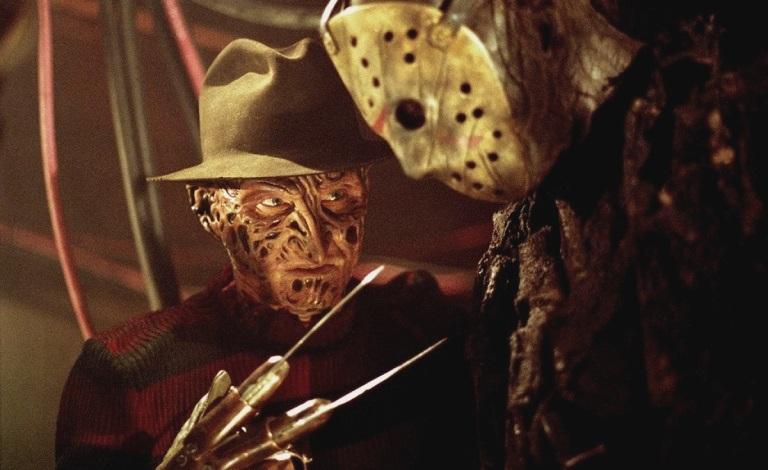
Фредди Крюгер (Роберт Инглунд) жаждет выбраться из загробного мира, однако новое поколение детей на улице Вязов уже давно не воспринимает всерьез страшилки про сгоревшего заживо маньяка. Чтобы пробраться в их сны, Фредди вытаскивает из глубин ада Джейсона Вурхиза, чтобы тот учинил на улице Вязов резню и наполнил дома страхом.
Кроссовер двух знаменитых хоррор-франшиз в Голливуде разрабатывали с конца 1980-х, но только в 2003-м проект добрался до больших экранов. Режиссер Ронни Ю к тому времени уже реанимировал еще одного маньяка из слэшеров, сняв «Невесту Чаки», так что опыт у него был. И нельзя сказать, что «Фредди против Джейсона» вышел совсем уж блеклым. Скорее перед нами типичный молодежный хоррор эпохи пост-«Крика». Картонные персонажи и обилие CGI здесь соседствуют с кровавыми убийствами и динамичным сюжетом, однако на фоне классических частей «Кошмара…» «Фредди против Джейсона» выглядит быстро забывающимся фанфиком.
«КОШМАР НА УЛИЦЕ ВЯЗОВ 2: МЕСТЬ ФРЕДДИ» (1985)
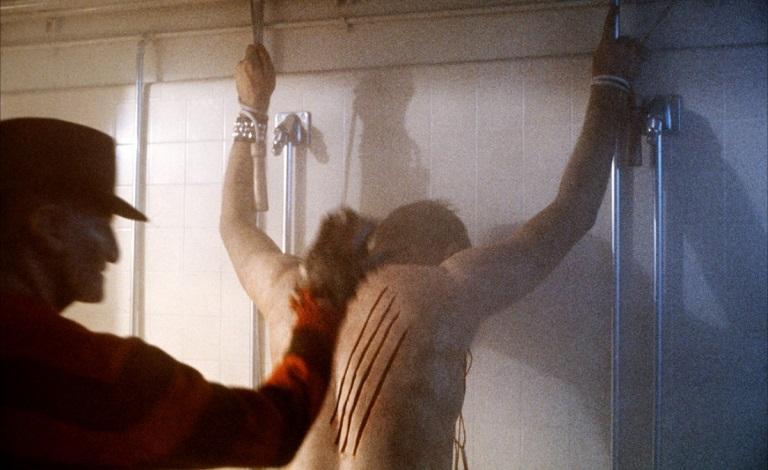
Фредди Крюгер начинает преследовать новую жертву — тинейджера Джесси Уолша, семья которого заселилась в дом главной героини первой части. Крюгер планирует переселиться в тело Джесси, чтобы получить возможность убивать за пределами мира сновидений.
Сиквел, хотя и был разгромлен критиками, собрал отличную кассу, и со временем стал культовым, причем по весьма неожиданной причине — это один из первых мейнстримных хорроров с гей-подтекстом. Эта линия была особенно заметной в отношениях между главным героем и его учителем физкультуры: сцена убийства, в которой Фредди нещадно полосовал лезвиями связанного в душевой физрука, выглядела как болезненная подростковая фантазия. Кроме того, Марк Паттон, сыгравший Джесси, как выяснилось, действительно гей. Но если отвлечься от темы ЛГБТ, то второй «Кошмар…» заметно слабее первого концептуально: не вполне ясно, зачем Фредди становиться человеком — ведь во снах его возможности убивать поистине беспредельны.
«КОШМАР НА УЛИЦЕ ВЯЗОВ 5: ДИТЯ СНА» (1989)
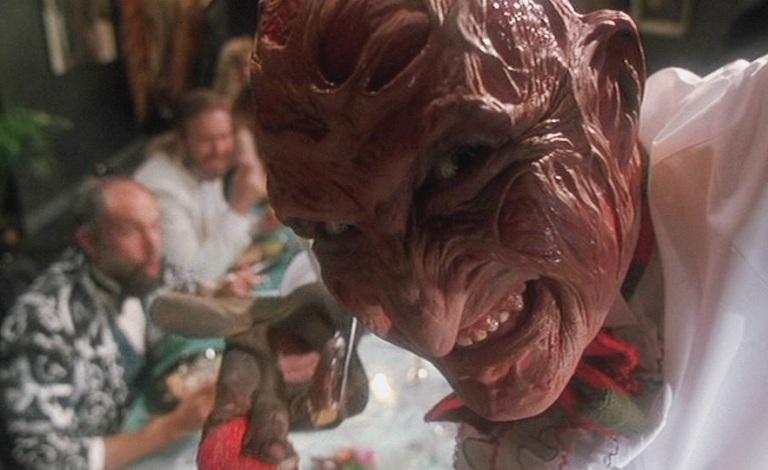
Элис, победившая Крюгера в прошлом фильме, готовится стать матерью, но вскоре ее друзья начинают умирать один за другим, и девушка понимает, что опасность грозит и ее ребенку. Фредди использует сны еще не рожденного сына Элис, чтобы свести счеты с ней самой.
Первый голливудский проект австралийца Стивена Хопкинса получился ярким, но зачастую бессвязным слэшером. В центре сюжета оказались детско-родительские отношения, что придавало истории фрейдистский оттенок (взять хотя бы сцену, в которой мать Крюгера буквально впихивает его обратно в утробу), но сценарий затрагивал слишком много тем, чтобы как-то эффектно использовать этот потенциал. Зато сцены смертей получились на редкость креативными — например, слияние тела одного из героев с мотоциклом прямо во время поездки или драка фаната комиксов с Супер-Фредди. Тем не менее визуальное изящество пятой части не особенно впечатлило зрителей: фильм стал одним из худших по кассовым показателям во всей франшизе.
«КОМШАР НА УЛИЦЕ ВЯЗОВ 3: ВОИНЫ СНА» (1987)
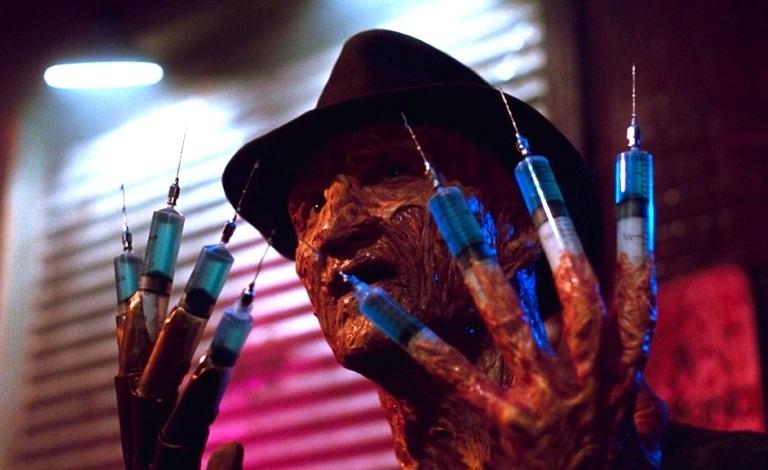
Родители помещают Кристен Паркер в клинику, где работает Нэнси Томпсон, главная героиня первой части. У Кристен, как и у других пациентов, одна и та же проблема: стоит им заснуть, как за ними начинает охотиться Фредди Крюгер. Но благодаря Нэнси подростки осознают, что каждый из них в мире сновидений обладает сверхспособностями, и, объединившись, «воины сна» могут остановить маньяка.
Уэс Крэйвен, разочарованный сиквелом своего «Кошмара на улице Вязов», в третьей части решил снова взять дело в свои руки, став соавтором сценария (вместе с Фрэнком Дарабонтом). В итоге триквел неплохо выступил в прокате и собрал теплые отзывы критиков. Режиссер Чак Расселл умело соединил мрачную атмосферу с черным юмором: именно с третьей части Крюгер становится главной звездой франшизы, сопровождая убийства хлесткими ванлайнами.
«КОШМАР НА УЛИЦЕ ВЯЗОВ 6: ФРЕДДИ МЕРТВ» (1991)
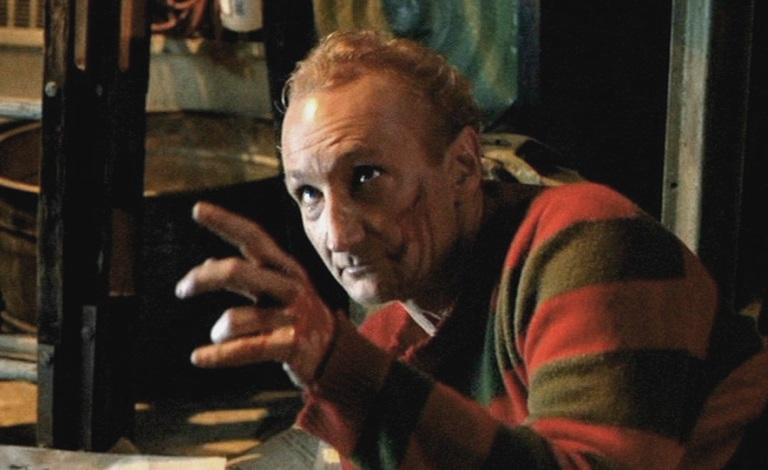
Трое трудных подростков собираются бежать из шелтера, спрятавшись в минивэне одной из сотрудниц. Но их план раскрывается, когда машина ломается неподалеку от Спрингвуда, городка с той самой улицей Вязов. С этого момента герои попадают во владения Фредди Крюгера, превратившего городок в один большой кошмар.
По настроению фильм, снятый Рейчел Талалей, намного больше напоминает сюрреалистическую черную комедию, нежели хоррор. Как и пятая часть, шестая была построена вокруг семейной истории, однако на этот раз в центре сюжета — семья самого Крюгера, а также история его превращения в монстра. При этом убийства оформлены в комедийном — и даже пародийном — ключе: Фредди забрасывает своих жертв в видеоигру, взрывает барабанные перепонки скрежетом когтей по грифельной доске и то и дело ломает стену между реальным и воображаемым мирами.
«КОШМАР НА УЛИЦЕ ВЯЗОВ 4: ПОВЕЛИТЕЛЬ СНА» (1988)
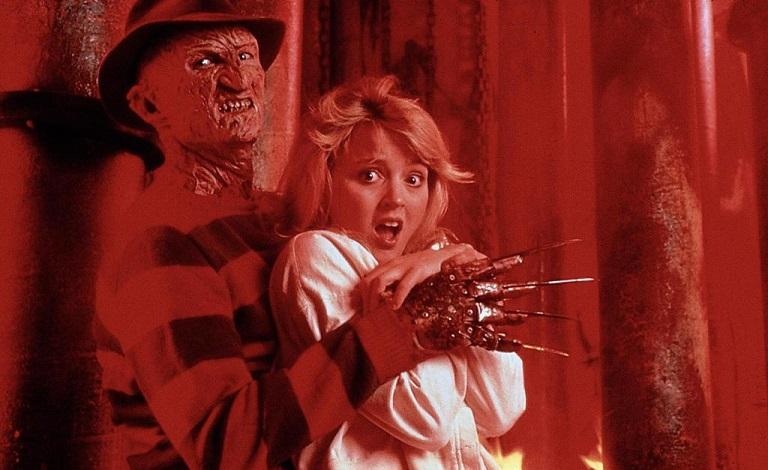
После победы над Крюгером главные герои третьей части возвращаются к нормальной жизни, но Кристен вновь начинают сниться кошмары, и она убеждена, что маньяк с улицы Вязов все еще рядом. Вскоре ее друзья начинают умирать во сне, и Кристен рассказывает легенду о Фредди Крюгере своей подруге Элис, которой теперь предстоит перенять эстафету в борьбе со злом.
Снятая на излете золотого века слэшеров, четвертая часть — образцовый молодежный ужастик восьмидесятых. Ренни Харлин лихо соединил едва ли не все тогдашние жанровые тренды воедино, создав динамичный, полный ярких смертей экшн-хоррор: здесь есть и кунг-фу, и любовная линия, и сильная главная героиня. Фредди окончательно стал душой и сердцем франшизы, а сны превратились в мизансцены, заполненные ожившими страхами подростков — от внезапного приступа астмы до гигантских тараканов. О популярности Фредди говорит и то, что в том же 1988 году на ТВ вышел сериал-антология «Кошмары Фредди».
«КОШМАР НА УЛИЦЕ ВЯЗОВ 7» (1994)
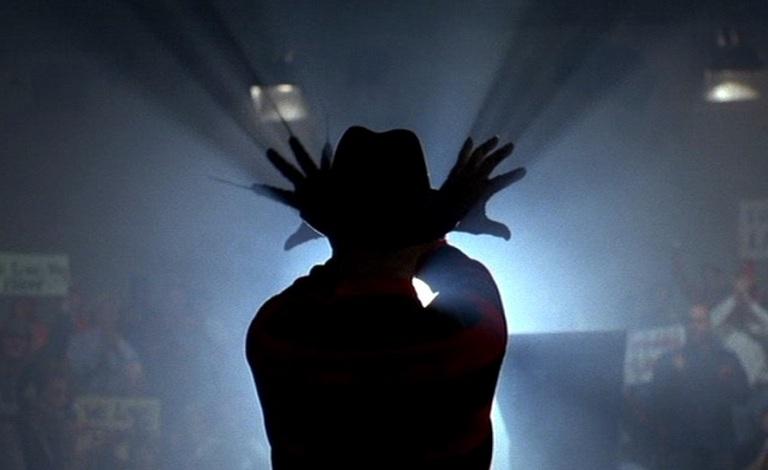
Хизер Лангенкамп — актриса, игравшая главную героиню первого «Кошмара на улице Вязов» — обнаруживает, что ее сын Дилан страдает от кошмаров, в которых появляется Фредди Крюгер. Хотя все вокруг пытаются убедить Хизер, что все дело в расстройстве психики, она вскоре убеждается в том, что знаменитый убийца из слэшеров — на самом деле древняя демоническая сущность, которая обрела форму благодаря кинематографу.
Крэйвен, вновь занявший режиссерское кресло, впервые опробовал подход, позже ставший основой для «Крика»: маньяк использует хоррор-культуру, стирая грань между искусством и жизнью. Кроме того, режиссер элегантно отменил все прошлые части франшизы, поместив действие в Голливуд. В стилистическом плане седьмой «Кошмар» опирается на классический образ Фредди Крюгера, лишенный черного юмора. Здесь мало убийств, зато много саспенса, а также постмодернистской иронии — фирменной черты грядущей эпохи ремейков.
«КОШМАР НА УЛИЦЕ ВЯЗОВ» (1984)
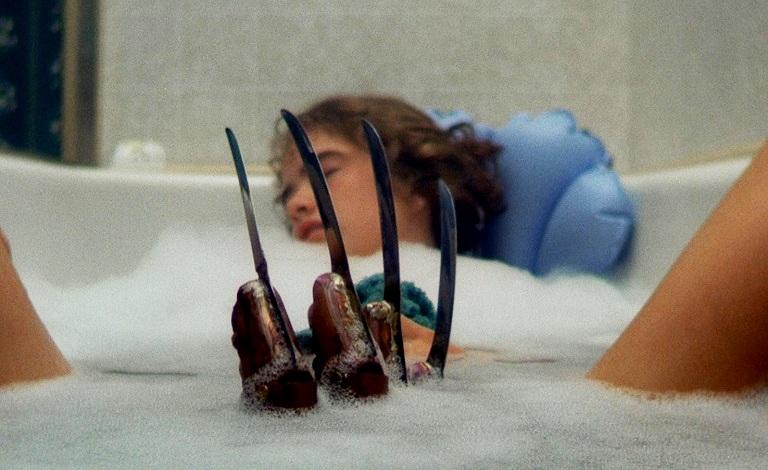
Компанию подростков с улицы Вязов преследуют одинаковые кошмары, в которых фигурирует человек, вооруженный перчаткой с лезвиями на пальцах. После того как одна из девушек гибнет жуткой смертью, ее подруга Нэнси Томпсон узнает жуткую тайну, которую хранят все родители на улице: когда-то давно они заживо сожгли убийцу детей Фредди Крюгера. Но Крюгер стал призраком, проникающим в сны тинейджеров, и теперь он убивает их одного за другим.
Первый фильм вышел в разгар лихорадки слэшеров, но, в отличие от многих фильмов того времени, он предлагал одну действительно яркую идею — маньяк действовал в пространстве сновидений, что давало огромный простор для фантазии. Хотя в полной мере этот концепт использовали только в сиквелах, уже в первой части Крэйвен отлично продемонстрировал его возможности, постоянно обыгрывая опасность сна и невозможность вечно оставаться бодрствующим. Кроме того, сложно представить успех «Кошмара на улице Вязов» без Роберта Инглунда, харизма которого вскоре стала одной из важнейших движущих сил всей франшизы.