
Представлено сочинение на английском языке Масленица/ Maslenitsa с переводом на русский язык.
| Maslenitsa | Масленица |
| Since long ago there is a tradition in Russia to say “goodbye” to winter and “hello” to spring. The holiday of seeing off of the winter is called Maslenitsa. | С давних пор на Руси принято провожать зиму и встречать весну. Праздник проводов зимы называется Масленица. |
| The concert is held in our city on this matter, the artists sing age-old songs, chastushkas and organize practical jokes. People take part in different competitions, ride horses and drink hot tea with pancakes not to be frozen. | У нас в городе по этому поводу проходит концерт, артисты поют старинные песни, частушки и устраивают розыгрыши. Люди участвуют в разных конкурсах, катаются на лошадях и чтоб не замёрзнуть пьют горячий чай с блинами. |
| The pancakes are the main attribute of this festival because a pancake is a symbol of the sun. | Блины считаются самым главным атрибутом этого праздника, так как блин символизирует солнце. |
| The festival always ends in burning of a big man of straw. The Lenten fast begins after Maslenitsa for orthodox believers. On Forgiveness Sunday in the morning my whole family goes on a visit to my grandmother. She bakes the most delicious pancakes with different fillings. In the afternoon I meet with friends and we go to the central square and see street festivities. | Праздник всегда заканчивается сжиганием большого соломенного чучела. Для православных людей после масленицы начинается Великий пост. В прощеное воскресенье, мы с утра идём всей семьёй в гости к бабушке. Она печёт самые вкусные блины, делает их с разной начинкой. Днём я встречаюсь с подругами, и мы идём на центральную площадь смотреть народные гулянья. |
| I consider that this festival brings people together and let them enjoy themselves and meet the spring together. | Я считаю, что этот праздник сближает людей и позволяет им вдоволь повеселиться и встретить долгожданную весну вместе. |
Maslenitsa (Belarusian: Масленіца, Russian: Мaсленица, Rusyn: Пущаня, Ukrainian: Масниця; also known as Butter Lady, Butter Week, Crepe week, or Cheesefare Week) is an Eastern Slavic religious and folk holiday, which has retained a number of elements of Slavic mythology in its ritual, celebrated during the last week before Great Lent, that is, the eighth week before Eastern Orthodox Pascha.
| Maslenitsa | |
|---|---|
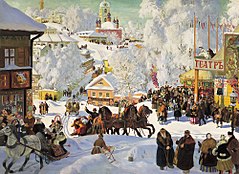
Maslenitsa, Boris Kustodiev, 1919 (Isaak Brodsky Museum, St. Petersburg) |
|
| Also called | Butter Week, Crepe week, Cheesefare Week, Syropust, Kolodiya, Masnytsia |
| Observed by | Eastern Slavs mostly Russia, Ukraine and Belarus, as well as Russian, Ukrainian and Belarusian diaspora communities |
| Type | Ethnic |
| Significance | seeing off winter last week before Great Lent |
| Celebrations | making blini (pancakes), making visits, sleigh rides, dressing up, bonfires, snowball fights, the capture of the Snow Fortress, burning of the Maslenitsa Scarecrow, In Ukraine and Belarus: eating varenyky with cottage cheese |
| 2022 date | 27 February to 6 March |
| 2023 date | 20 February to 26 February |
| Frequency | annual |
| Related to | Mardi Gras |
The date of Maslenitsa changes every year, depending on the date of the celebration of Easter. It corresponds to the Western Christian Carnival, except that Orthodox Lent begins on a Monday instead of a Wednesday, and the Orthodox date of Easter can differ greatly from the Western Christian date.
The traditional attributes of the Maslenitsa celebration are the Maslenitsa effigy, sleigh rides, festivities. Russians bake bliny and flatbread, while Belarusians and Ukrainians cook pierogi and syrniki.
TraditionsEdit
According to archeological evidence from 2nd century A.D. Maslenitsa may be the oldest surviving Slavic holiday.[1]
In the Christian tradition, Maslenitsa is the last week before the onset of Great Lent.[2]
During the week of Maslenitsa, meat is already forbidden to Orthodox Christians, and it is the last week during which eggs, milk, cheese and other dairy products are permitted, leading to its name of «Cheese-fare week» or «Crepe week». The most characteristic food of Maslenitsa is bliny — thin pancakes or crêpes, made from the rich foods still allowed by the Orthodox tradition that week: butter, eggs and milk.
Since Lent excludes parties, secular music, dancing and other distractions from spiritual life, Maslenitsa represents the last chance to take part in social activities that are not appropriate during the more prayerful, sober and introspective Lenten season.[1]
In some regions, each day of Maslenitsa had its traditional activity. Monday may be the welcoming of «Lady Maslenitsa». The community builds the Maslenitsa effigy out of straw (из соломы), decorated with pieces of rags, and fixed to a pole formerly known as Kostroma. It is paraded around, and the first pancakes may be made and offered to the poor. On Tuesday, young men might search for a fiancée to marry after Lent. On Wednesday, sons-in-law may visit their mother-in-law, who has prepared pancakes and invited other guests for a party. Thursday may be devoted to outdoor activities. People may take off work and spend the day sledding, ice skating, snowball fights and with sleigh rides. On Friday, sons-in-law may invite their mothers-in-law for dinner. Saturday may be a gathering of a young wife with her sisters-in-law to work on a good relationship.
Sunday of ForgivenessEdit
Celebration of Forgiveness Sunday in Belgorod, February 21, 2015.
The last day of Cheesefare Week is called «Forgiveness Sunday» (Прощёное воскресенье). Relatives and friends ask each other for forgiveness and might offer them small presents. As the culmination of the celebration, people gather to «strip Lady Maslenitsa of her finery» and burn her in a bonfire. Left-over pancakes may also be thrown into the fire, and Lady Maslenitsa’s ashes are buried in the snow to «fertilize the crops».[3]
At Vespers on Sunday evening, people may make a poklon (bow) before one another and ask forgiveness. Another name for Forgiveness Sunday is «Cheesefare Sunday», because for devout Orthodox Christians it is the last day on which dairy products may be consumed until Easter. Fish, wine and olive oil will also be forbidden on most days of Great Lent. The day following Cheesefare Sunday is called Clean Monday, because people have confessed their sins, asked forgiveness, and begun Great Lent with a clean slate.[citation needed]
Modern timesEdit
A girl wearing a traditional Russian kokoshnik hat for Maslenitsa in Slovenia.
During Soviet times, Maslenitsa, like other religious holidays, was not celebrated officially. However, it was widely observed in families without its religious significance, as an opportunity to prepare crêpes with all sorts of fillings and coverings and to eat and share them with friends. After the start of perestroika, the outdoor celebrations resumed, although they were seen by some as an artificial restoration of a dead tradition. Since the dissolution of the Soviet Union, many Russians have returned to practicing Christianity, the tradition is still being revived.[citation needed]
With increasing secularization, many Russians do not abstain from meat and Maslenitsa celebrations can be accompanied by shashlik vendors. Nevertheless, «meat still does not play a major role in the festivities».[1]
Many countries with a significant number of Russian immigrants consider Maslenitsa a suitable occasion to celebrate Russian culture, although the celebrations are usually reduced to one day and may not coincide with the date of the religious celebrations.[citation needed]
On 20 March 2017, the British tabloid newspaper Daily Mirror painted the Maslenitsa as a Hooligan training ground. One of the centuries-old traditions in this folk festival is «wall-on-wall» (‘stenka na stenku’, Ru), which involves sparring between men dressed in traditional folk clothes. This tradition was misrepresented by the Mirror in pictures and text as a collective act of violence without providing context about the Russian traditional festival. The Mirror article was titled «Russia’s Ultra yobs infiltrated amid warnings England fans could be KILLED at World Cup», and was received negatively by the Russian media, which described it as fake news.[4][5]
GalleryEdit
-
K. Kryzhanovsky. Sunday of Forgiveness, 19th century.
-
Scenery at Celebration of Maslenitsa
-
Maslenitsa celebrations in Kharkiv, 2014.
See alsoEdit
- Candlemas
- Slavic carnival
- Fašiangy (in Slovakia)
- Rio Carnival (in Brazil)
- Carnaval (in the Netherlands)
- Fat Thursday (in Poland)
- Mardi Gras (in other countries)
- Mărţişor (in Romania and Moldova)
- Marzanna (in Poland)
- Meteņi (in Latvia)
- Patras Carnival (in Greece)
- Tsiknopempti
- Shrove Tuesday or «Pancake Day» (in the United Kingdom and Ireland)
- Petrushka (ballet)
- Užgavėnės (in Lithuania)
- Farsang (Hungarian carnival)[6][circular reference]
- Shrovetide
ReferencesEdit
- ^ a b c Maslenitsa, Blin! The Food and Celebration of the Russians Archived 2008-01-09 at the Wayback Machine By Josh Wilson, Newsletter, The School of Russian and Asian Studies, 9 March 2005.
- ^ Maslenitsa by Margaret McKibben, Russian Folk Group of Seattle, WA, Seattle Community Network. undated.
- ^ Ruslanguage School Moscow (22 February 2012). «Malenitsa, a Week of Festivities». Archived from the original on 1 February 2013. Retrieved 26 February 2015.
- ^ «Brits scared about pancake battles Gazeta.ru». Gazeta.ru. 21 March 2017.
- ^ «Daily Mirror misleads with wrong pictures for article on football ‘Ultras’ in Russia». Retrieved 21 March 2017.
- ^ Busójárás
External linksEdit
Wikimedia Commons has media related to Maslenitsa.
- Lives of the Saints The Orthodox Church in America, undated.
- Marks, Gil (2010). Encyclopedia of Jewish Food. Wiley. pp. 56–58. ISBN 9780470943540. Retrieved April 18, 2012. ISBN 9780470391303
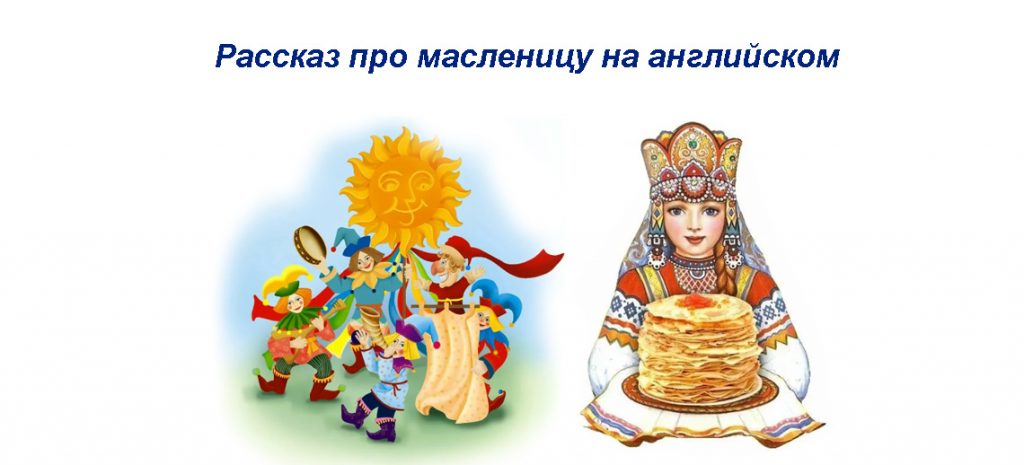
Не секрет, что изучение языка неотрывно связано со знакомством с иностранной культурой. Однако, беседа не бывает односторонней, поэтому в разговоре с иностранцем нужно уметь о своей стране тоже рассказать что-нибудь интересное. Этой теме и посвятим сегодняшнюю статью, а именно разъясним, как составить рассказ про Масленицу на английском языке. Традиция провожать зиму и встречать весну – одна из уникальных особенностей нашей страны, и познакомиться с историей этого праздника будет интересно большинству собеседников. Так что сегодня изучим лексику на эту тему, а также научимся составлять познавательный рассказ. Присоединяйтесь к чтению!
Содержание
- Какую пользу несет рассказ про Масленицу на английском
- Составляем английский рассказ про Масленицу
- Что писать
- Словарный запас
- Пример рассказа про Масленицу на английском языке с переводом
Какую пользу несет рассказ про Масленицу на английском
Прежде чем разбираться в том, как написать рассказ о Масленице на английском языке с переводом, немного поговорим об общей пользе такой работы. Понимание того, зачем выполнять данное задание, не только поможет быстро справиться с составлением текста, но и значительно повысит эффективность работы. Ведь когда знаешь, чего достигнешь, выполнять поставленные задачи становится намного проще.
Итак, какую же пользу несет для учеников топик «Масленица» на английском? На самом деле достаточно большую, чтобы улучшить навык владения английской речью. Судите сами, в числе преимуществ данной темы можно отметить:
- Увеличение словарного запаса. Чем больше слов изучите, тем свободнее будете говорить на английском.
- Практика собственных знаний английского. Составление рассказа – комплексная работа, которая требует должной подготовки «по всем фронтам» изучения языка. Так, необходимо и обширным словарным запасом обладать, и достаточным знанием грамматики, и уверенным произношением (для устного рассказа).
- Наработка умения «думать по-английски». Составляя текст, мы машинально редактируем его под стиль английского языка. Соответственно, развивается навык мышления по-английски.
- Популяризация страны. Рассказом о местных традициях вы заинтересуете собеседника культурой и историей России.
- Развитие коммуникативных навыков. Вы всегда сможете поддержать беседу на тему обычаев, традиций и культурных особенностей стран.
Вот сколько положительных моментов несет в себе Масленичная тема, т.е. рассказ про Масленицу на английском. Польза очевидна, и поэтому давайте учиться говорить о праздновании Масленицы по-английски. Приступаем к написанию текста!
Составляем английский рассказ про Масленицу
Итак, для начала рассмотрим несколько рекомендаций, которые помогут легко и быстро написать по теме «Масленица» сочинение на английском языке. Начнем с содержания текста (или устной речи для пересказа).
Что писать
Глобальная проблема письменных или устных творческих работ заключается в том, что многие ученики не могут быстро сориентироваться в теме задания. А когда человек не знает, о чем писать, появляется ненужная нервозность, которая на корню убивает все желание выполнить задание и улучшить свой навык владения английской речью. Так что первый совет: don’t panic (Не паникуйте)! И сразу же второй совет – прежде чем составлять английский рассказ, накидайте несколько пунктов плана будущего сочинения на русском языке. Например, что можно рассказать о Масленице? Да полно интересных вещей! Вот вам для примера несколько идей:
- История праздника;
- Главные символы Масленицы;
- Русские масленичные традиции;
- Праздничные блюда на Масленицу.
Все указанные моменты можно раскрыть подробно, посвятив сочинение одной конкретной теме, или же упомянуть кратко, но при этом обобщить в тексте основную информацию об известном славянском празднике. Кроме того, можно дополнить рассказ про Масленицу на английском историей из собственной жизни. Например, рассказать о вкуснейших бабушкиных блинах или о своем участии в каком-нибудь масленичном конкурсе.
Так что с содержанием особых проблем быть не должно, ведь существует множество способов раскрытия темы. Но есть один нюанс: для раскрытия идеи необходимо обладать достаточным словарным запасом. Пробелы по этому вопросу и устраним прямо сейчас.
Словарный запас
Итак, для написания сочинения мало просто знать, как пишется рассказ «Масленица» на английском. Нужно еще и уметь описать этот праздник своими словами, соответственно, необходимо выучить тематическую подборку лексики. И специально для вас мы уже отобрали популярные английские слова по данной теме, так что вам осталось лишь заучить таблицу наизусть. Причем заметьте, что помимо перевода к лексике добавлена английская транскрипция. Так что, делая устный пересказ, вы будете на 100% уверены в правильности произношения новых слов.
| Английская лексика по теме «Масленица» | ||
| Слово | Транскрипция | Перевод |
| tradition | [trəˈdɪʃən] | традиция |
| holiday | [ˈhɒlədeɪ] | праздник |
| Maslenitsa | [Maslenitsa] | Масленица |
| Maslenitsa week | [Maslenitsa wiːk] | Масленичная неделя |
| the Wide Maslenitsa | [ðə waɪd Maslenitsa] | Широкая Масленица |
| the Sunday of Forgiveness | [ðə ˈsʌndeɪ ɒv fəˈgɪvnɪs] | Прощеное Воскресенье |
| festival | [ˈfɛstəvəl] | праздник, фестиваль |
| the Great Lent | [ðə greɪt lɛnt] | Великий пост |
| religious | [rɪˈlɪʤəs] | религиозный |
| pagan | [ˈpeɪgən] | языческий |
| symbol | [ˈsɪmbəl] | символ |
| spring | [sprɪŋ] | весна |
| winter | [ˈwɪntə] | зима |
| sun | [sʌn] | солнце |
| last | [lɑːst] | длиться, продолжаться |
| attribute | [ˈætrɪbjuːt] | атрибуты |
| Lady Maslenitsa | [ˈleɪdi Maslenitsa] | Масленица (чучело) |
| doll | [dɒl] | кукла |
| dummy | [ˈdʌmi] | чучело |
| straw | [strɔː] | солома |
| rag | [ræg] | тряпка |
| pole | [pəʊl] | шест |
| prizes | [ˈpraɪzɪz] | призы |
| burn | [bɜːn] | поджигать, жечь |
| treat | [triːt] | угощение |
| pancake | [ˈpænkeɪk] | блин |
| entertainments | [ˌɛntəˈteɪnmənts] | развлечения |
| dance | [dɑːns] | танцевать |
| sing | [sɪŋ] | петь |
| sledding | [ˈslɛdɪŋ] | катание на санях |
| snowballs | [ˈsnəʊbɔːlz] | снежки |
| fights | [faɪts] | бои |
| riding on horses | [ˈraɪdɪŋ ɒn ˈhɔːsɪz] | катание на лошадях |
| relatives | [ˈrɛlətɪvz] | родственники |
| friends | [frɛndz] | друзья |
| ask forgiveness | [ɑːsk fəˈgɪvnɪs] | просить прощения |
| jam | [ʤæm] | варенье, джем |
| mushrooms | [ˈmʌʃrʊmz] | грибы |
| sour cream | [ˈsaʊə kriːm] | сметана |
| butter | [ˈbʌtə] | масло |
| caviar | [ˈkævɪɑː] | икра |
| cottage cheese | [ˈkɒtɪʤ ʧiːz] | творог |
| condensed milk | [kənˈdɛnst mɪlk] | сгущенное молоко |
Вот теперь о том, как проходит масленичная неделя, рассказать на английском языке стало намного проще. Остается лишь связать слова в предложения, и получится готовый текст. Хотите убедиться? Взгляните на приведенный ниже образец.
Возможно будут интересны и другие темы:
- Рассказ про Пасху на английском языке
- Рассказ про любимую игрушку на английском языке
- Рассказ про кота на английском языке
- Рассказ о себе на английском языке
- Рассказ о семье на английском
Пример рассказа про Масленицу на английском языке с переводом
Maslenitsa
There are many holidays and festivals in Russia. But Maslenitsa is the most original Russian festival. It lasts the whole week (from Monday till Sunday) and includes many events. Furthermore, according to archeological evidence Maslenitsa may be the oldest surviving Slavic holiday.
Maslenitsa originated from pagan times. This holiday symbolized the beginning of spring. The Slavs welcomed the Sun and made pancakes. They believed that a hot pancake is a symbol of the sun. Later Maslenitsa became a Christian holiday. The festival starts right before the Great Lent, so it is the last chance to bask in worldly delights. During the Maslenitsa week people enjoy almost any food, except meat.
Historically the festival was devided in two parts. The first three days were called a Small Maslenitsa. During this time people worked, cleaned, cooked pancakes and prepared for the main events of Maslenitsa. On Thursday the Wide Maslenitsa came and brought a lot of amazing entertainments. Everybody took off work and spent the day ridding on horses, sledding, fighting snowballs and etc. Of course, all people also ate pancakes with caviar, sour cream, jam or others fillings. On the last day of Maslenitsa people burnt the Lady Maslenitsa (a doll of straw and rags). In this way the Slavic said goodbye to winter and greeted a warm spring.
Nowadays Maslenitsa is not celebrated so wide. But the main treat of Maslenitsa (different pancakes) and tradition to burn a dummy have survived to this day. So, come to Russia and join to the celebration of Maslenitsa!
Масленица
В России есть много праздников и фестивалей. Но Масленица – наиболее самобытный русский праздник. Он продолжается целую неделю (с понедельника по воскресенье) и включает в себя множество событий. Более того, согласно исследованиям археологов, Масленица может считаться старейшим действующим славянским праздником.
Масленица зародилась в языческие времена. Этот праздник символизировал наступление весны. Славяне приветствовали солнце и пекли блины. Они верили, что горячий блин символизирует солнце. Позднее Масленица стала христианским праздником. Фестиваль начинается прямо перед Великим Постом, так что это последний шанс насладится мирскими радостями. На протяжении Масленичной недели люди наслаждаются любыми вкусностями, за исключением мяса.
Исторически праздник делился на две части. Первые три дня назывались Малой Масленицей. На протяжении этого времени люди работали, убирались, делали блины и подготавливались к главным событиям Масленицы. В четверг приходила Широкая Масленица и приносила множество восхитительных развлечений. Все прекращали работать и проводили день катаясь на конях или санях, играя в снежки и т.п. Конечно, все люди также ели блины с икрой, сметаной, вареньем или другими начинками. В последний день Масленицы люди сжигали «Масленицу» (куклу из соломы и тряпок). Таким способом Славяне прощались с зимой и приветствовали теплую весну.
Сейчас Масленицу не празднуют так широко. Но главное угощение Масленицы (различные блины) и традиция сжигать чучело сохранились до наших дней. Так что, приезжайте в Россию и присоединяйтесь к празднованию Масленицы!
Вот такой рассказ про Масленицу на английском языке с переводом получился у нас. А теперь и вы попробуйте свои силы в сочинении или пересказе. Удачи!
Просмотры: 6 740
Сочинение на тему “Масленица” на английском языке с переводом на русский язык
Maslenitsa
Maslenitsa is a traditional Russian festival. It doesn’t have a fixed date but happens a week before the Great Lent. Even though Maslenitsa originates from pagan festivities it has naturally blended with Orthodox traditions. It celebrates the end of winter and the beginning of spring. The main treatment during the Maslenitsa week is blini that symbolize sun.
Blini are round and thin pancakes made of special dough. They are served with different fillings like caviar, sour crème, herring or other salt fish, as well as with jam or condensed milk or chocolate butter. It depends on individual family traditions and fantasy.
Historically the Maslenitsa week was divided in two parts. The first three days was a so called Small Maslenitsa when men and women would still be engaged in working, cleaning, cooking, building a snow fortress. On Thursday a Big Maslenitsa would begin, when everybody stopped working and started having fun. There were snow fights, songs and of course treatment. It was the last opportunity to eat meat or to party, as those things were strictly forbidden and inappropriate during the Great Lent. It is still true for those who believe in God and go to Orthodox church.
Today many of the traditions are gone. But there are still snow fights and blini. And also on Sunday you can always witness or even participate in burning a straw puppet that embodies Winter and its end. Maslenitsa is a bright and entertaining holiday that has a long history and keeps reminding us about our origins.
Перевод:
Масленица
Масленица – традиционный русский праздник. У нет него фиксированной даты, но он бывает за неделю до Великого поста. Несмотря на то, что Масленица – языческий праздник, он очень органично вписался в православные традиции. Праздник прославляет конец зимы и начало весны. Главное угощение в масленичную неделю – блины, символизирующие солнце.
Блины – круглые и тонкие оладьи, которые пекутся из особого теста. Их подают с различными начинками, например с икрой, сметаной, селедкой или другой соленой рыбой, а также с вареньем, сгущенным молоком или шоколадным маслом – все зависит от семейных традиций и фантазии.
Раньше масленичная неделя делилась на две части. Первые три – это так называемая Малая масленица, когда мужчины и женщины еще работали, убирались, готовили, строили снежную крепость. С четверга начиналась Широкая масленица, когда все прекращали работать и начинались гулянья: снежные бои, песни и, конечно, угощение. Это была последняя возможность поесть мяса и повеселиться, потому что это возбранялось и считалось неприличным во время Великого поста, что справедливо для православных верующих людей и сегодня.
Сейчас многие традиции уже не соблюдаются. Но до сих пор можно поучаствовать в нежном бою и поесть блинов. А в воскресенье посмотреть или даже поучаствовать в сожжении чучела, олицетворяющего зиму и ее конец. Масленица – яркий и веселый праздник с долгой историей, который не дает забывать о наших корнях.
Автор – Дарья Царева
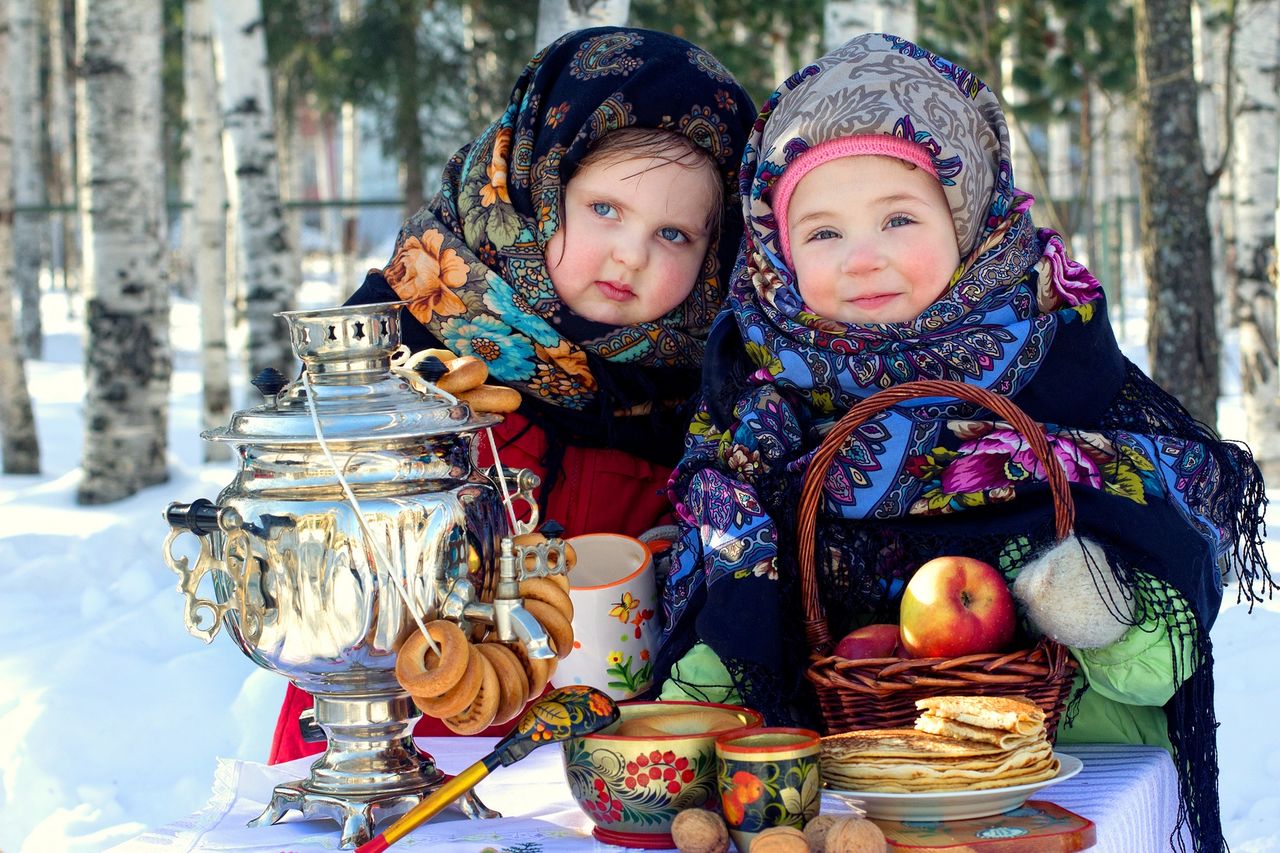
I’m going to talk about an important and ancient festival in my country, in Russia. It is called Maslenitsa and it’s celebrated in late winter, in February. Maslenitsa lasts one week. Its main tradition is the burning of the straw figure of the Winter. It symbolizes the end of cold long winter. We usually play games, ride horses, go sledding and enjoy Russian dances. We also visit relatives, eat and drink much in preparation for the Lent which starts the next day after this folk festival. Russian people make delicious pancakes all the week. Everybody has a great time.
Я собираюсь рассказать о важном и древнем фестивале в моей стране, в России. Он называется Масленицей и празднуется поздней зимой, в феврале. Масленица продолжается в течение одной недели. Его основной традицией считается поджигание соломенного чучела Зимы. Это символизирует конец холодной длинной зимы. Мы обычно играем в игры, катаемся на лошадях, катаемся на санках и наслаждаемся русскими танцами. Мы также навещаем родственников, много едим и пьем, готовясь в Посту, который начинается на следующий день после этого народного фестиваля. Русский народ готовит вкусные блины всю неделю. Все весело проводят время.
A special day in my country – Особый день в моей стране — 3.8 out of
5
based on
10 votes
- Home
- Russia
- Traditions
- Maslenitsa
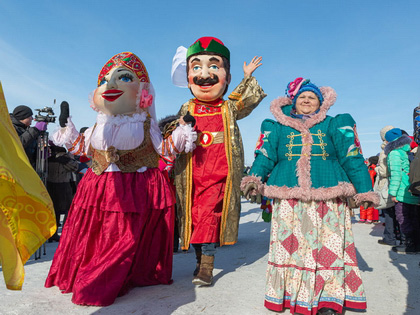
Siberian Maslenitsa Tour
Participate in the fascinating festival of Maslenitsa (Russian “pancake week”), while discovering the history, culture, and nature of the Altai region and experiencing the fairy-tale Siberian winter.
Novosibirsk, Gorno-Altaisk, Ust-Muny, Chemal, Blue Eyes of Katun, Altaiskoye, Belokurikha, Sibiryachikha, Novotyryshkino, Solonovka, Lake Svetloye, Barnaul
8 Days | Winter | from US$ 2,220 / personDetails
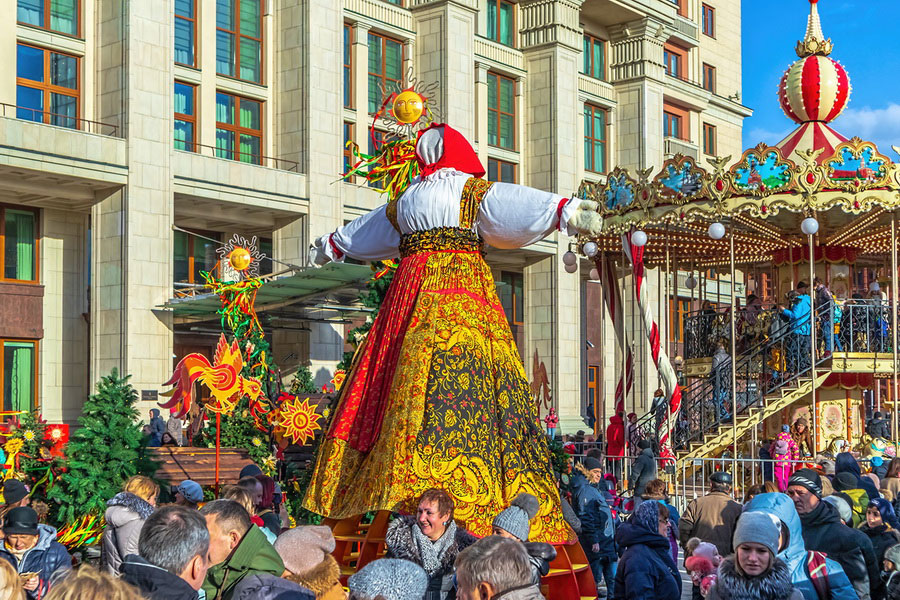
Perhaps the most cheerful holiday in Russia is the Pancake week (Shrovetide). This holiday is considered to come from pre-Christian times, when the Slavs were still pagans.
In the old days Maslenitsa was for remembrance of the dead. So the burning of the figure of Maslenitsa means her funeral, and blini (pancakes) – coliphia. But with time the Russians longing for fun and entertainment turned the sad holiday into jolly Maslenitsa with blini — round, yellow and hot as the sun, sledding and horse sleigh riding, fistfights and mother-in-law chatting. The rituals of Maslenitsa are very unusual and interesting because they combine the end of the winter holiday rituals and the opening of new spring festivals and ceremonies, which were to promote a rich harvest.
Maslenitsa is celebrated during the week preceding the Lent. Every day of Maslenitsa was devoted to special rituals.
Monday, Maslenitsa
On Monday Maslenitsa was welcomed. On that day people made the straw-stuffed figure of Winter, dressed it in old women’s clothing and singing carried it on sleigh around the village. Then the figure was put onto snow-covered slope that people used for tobogganing, which was considered not just fun, but the ancient rite, because it was thought that the one who came down the hill more than once was likely to have tall flax in summer.
Tuesday, Maslenitsa
Tuesday was called “zaigrysh” (game day). From that day on the whole village started all sorts of activities: sleigh riding, folk festivals, skomorokh (traveling actors) and puppet shows. The streets were full of people in carnival costumes and masks, who visited homes of their neighbors and organized impromptu concerts. Large companies rode troikas and simple sleighs.
Pancake Week in 18th century Moscow was hard to imagine without bear shows. Bear fun was very popular among all classes of the population of towns and cities, towns, and villages. Trained bears amused the audience, imitating girls putting makeup are in front of the mirror or women baking pancakes.
Wednesday, Maslenitsa
Wednesday — gourmand – opened feasts in houses with blini and other dishes. Each household had tables with delicious food, baked pancakes, and brewed beer. Tents selling all kinds of food appeared everywhere. They sold hot sbiten (drinks from water, honey and spices), nuts, honey gingerbreads and poured tea from boiling samovars.
Thursday, Maslenitsa
On Thursday – revelry – came the climax of games and fun. It was then that the hottest fistfights took place.
Friday, Maslenitsa
If on Wednesday sons-in-law were treated with pancakes in their mothers-in-law homes, on Friday it was their turn to arrange evenings with blini. On the day before mothers-in-law had to send to their sons-in-law homes everything necessary for blini making: pans, ladles etc., and fathers-in-law sent a bag of buckwheat and some butter. The disrespect of the tradition from the part of a son-in-law was considered dishonor and insult; it was a reason for life-long enmity.
A special attention during Maslenitsa was paid to conjugal relations: the couples, married the previous were honored and celebrated. The newlyweds were put on the spot in villages: they were forced to each other in public, thrown at with old bast shoes and straw and sometimes could come to the home of newlyweds and kiss the young wife. Tradition required that they dress smartly and go to public places in painted sleigh, pay a call to all who had visited their wedding, and go down icy slope under accompaniment of a solemn song. Maslenitsa was the time of mutual visits of families, which recently became related.
Saturday, Maslenitsa
Saturday was devoted to the visits of relatives paid to young wives.
Sunday, Maslenitsa
Sunday was named “forgiveness”. On that day people asked each other for forgiveness for all grievances and troubles; in the evening people went to cemeteries and “bid farewell” to the dead. On the last day of Maslenitsa comes the most interesting event – saying goodbye to Maslenitsa — a solemn burning of the stuffed figure of winter. People threw the remnants of pancakes and food to the huge bonfire explaining their children that all the nourishing food disappeared in fire to prepare them for the Lent.
The end of Maslenitsa
Maslenitsa ended with the first day of the Lent – Clean Monday, which was considered the day of purification from sin and fast forbidden food. On Clean Monday people usually washed in a bath; women washed dishes, cleaning them from grease and remains of forbidden food.
Additional information about Maslenitsa

[23.01.2017]
olga
Посмотрели: 39232
Рейтинг: 9
Коментариев: 0

9


Maslenitsa
The tradition of Maslenitsa dates back to pagan times, when Russian folk would bid farewell to winter and welcome spring. This holiday combines pagan and Christian beliefs of the Russian people.
On the pagan side, Maslenitsa marked the welcoming of spring, and was all about the enlivening of nature and bounty of sunny warmth. On the Christian side, Maslenitsa was the last week before the onset of Lent (fasting which precedes Easter), giving the last chance to bask in worldly delights.
The name of the holiday, Maslenitsa (derived from maslo, which means butter or oil in Russian) owes its existence to the tradition of baking pancakes (or blini , in Russian). They are essential to the celebration of Maslenitsa. Hot, round, and golden pancakes embody the sun’s grace and might, helping to warm up the frozen earth. In old days pancakes were cooked from buckwheat flour, and it gave them a red color, making the significance even more evident.
At Maslenitsa pancakes are cooked in very large quantities to be used in almost every ritual, they are given to friends and family all through the week. Pancakes are served with caviar , mushrooms, jam, sour cream, and of course, lots of butter.
During this holiday people are involved into many activities. Children and grown-ups assemble a Maslenitsa doll out of straw and old woman’s clothes. They place it on a pole and go dancing around it. The climax of the holiday week is burning the effigy, which takes place on Sunday, the Forgiveness Day. After it has turned to ashes, young people would walk over the fire, marking the end of the Maslenitsa festivities.
Масленица
Традиции Масленицы восходит к языческим временам, когда русские люди прощались с зимой и встречали весну. Этот праздник объединяет в себе языческие и христианские верования русского народа.
Согласно языческим верованиям, Масленица отмечается как приветствие весны, ожидания оживления природы и щедрости солнечного тепла. С христианской стороны, Масленица была последней неделей перед началом Великого поста (поста, который предшествует Пасхе), и давала последний шанс наслаждаться мирскими радостями.
Название праздника, Масленица (происходит от слова «масло») и связано с существованием традиции выпечки блинов. Они имеют важное значение для празднования Масленицы. Горячие, круглые и золотистые блинчики воплощают благодать солнца и помогают разогреть замерзшую землю. В старину блины готовили из гречневой муки, и это дало им красный цвет, что делало их значение еще более очевидным.
На Масленицу блины готовят в очень больших количествах, так как они используются почти в каждом ритуале; их дают своим друзьям и семье всю неделю. Блины подаются с икрой, грибами, вареньем, сметаной, и, конечно же, с большим количеством сливочного масла.
Во время этого праздника люди участвуют во многих мероприятиях. Дети и взрослые изготавливают куклу Масленицы из соломы и старой женской одежды. Они помещают её на шесте и танцуют вокруг неё. Кульминацией праздничной недели становится сожжение чучела, которое проходит в Прощеное воскресенье. После того как оно превращается в пепел, молодые люди ходят по костру, отмечая конец Масленичных торжеств.