
Из этой статьи вы узнаете:
-
Праздники Колеса Года
-
Праздник Имболк — день начала весны
-
Праздник Остара — день весеннего равноденствия
-
Праздник Лита — день летнего солнцестояния
-
Лугнасад — праздник урожая и осени
-
Мабон — день осеннего равноденствия
-
Самайн — праздник кельтского нового года
-
Йоль — день зимнего солнцестояния
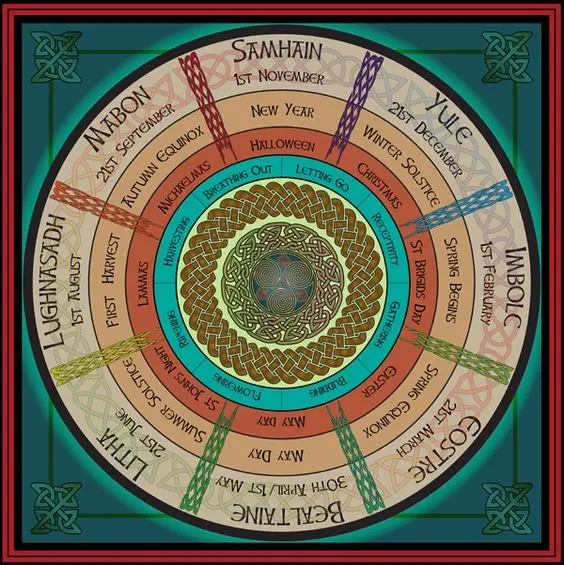
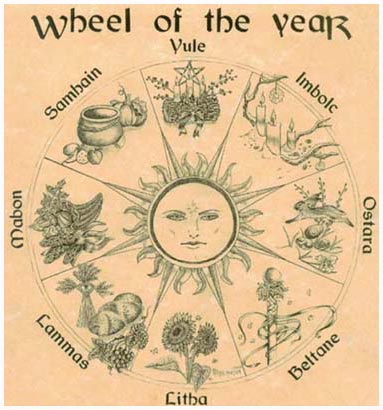
Колесо Года — это магический календарь современного язычества. Он отражает смену сезонов, а собственно праздники Колеса Года являются важными точками переходов, днями особого напряжения энергий.
Издавна мудрые люди обращали внимание на связь времен года и человеческой жизни. Таким образом, сложились традиции отмечания праздников Колеса Года — точек перехода из сезона в сезон. В основе современного магического календаря, который можно назвать универсальным по той причине, что именно он более всего распространен и применяется колдунами, ведьмами и язычниками на всех континентах, лежат кельтские праздники Колеса Года. Всего их восемь. Четыре связаны с астрономическими событиями — это равноденствия и солнцестояния, остальные четыре являются Праздниками Огня (Костров).
Колесо года у Викки также включает в себя Лунные эсбаты — полнолуния, но мы в этой статье остановимся именно на «общепринятом» колдовском календаре, поскольку он связан с движением звезд и планет, с длиной дня и ночи.
Ниже вы найдете информацию про Колесо Года, о ритуалах и традициях, о том, как отмечаются праздники годового цикла у современных язычников.
Праздники Колеса Года
Имболк (Imbolc) — 1-2 февраля
Остара (Ostara) — весеннее равноденствие, 21-22 марта
Белтайн (Bealtaine) — ночь с 30 апреля на 1 мая
Лита (Litha) — летнее солнцестояние, 21-22 июня
Ламмас/Лугнасад (Lughnasadh) — 1-2 августа
Мабон (Mabon) — осеннее равноденствие, 21-22 сентября
Самайн (Samhain) — ночь с 31 октября на 1 ноября
Йоль (Yule) — зимнее солнцестояние, 21-22 декабря
Праздник Имболк — день начала весны
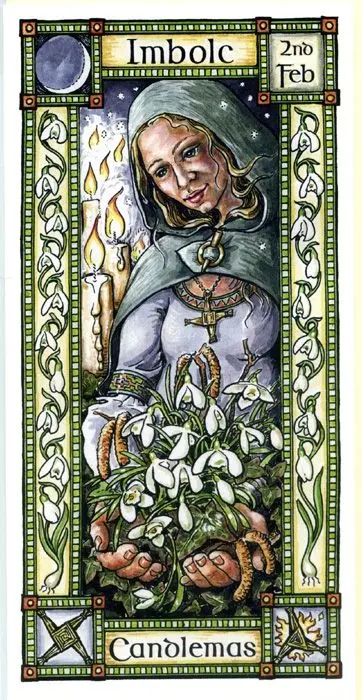
1-2 февраля. Несмотря на то, что Имболк приходится на начало февраля, «волчьего месяца», именно он является праздником порога, перехода от Темного Времени года к новому времени пробуждения природы от зимнего сна. Традиция Викки говорит, что богиня оправилась от родов и кормит грудью маленького бога — и само название праздника, Imbolc, восходит, очевидно, к староирландскому mblek («молоко»). У славян соответствующий праздник назывался Громницы, т.к. в некоторых регионах в феврале уже случались грозы. В последнюю субботу перед Громницей хозяева отливали особую свечу, «громничку», зажигали ее в праздник и после, в грозы, чтобы защитить дом и хозяйство от ударов молний.
Имболк — время очищения. В прежние времена на Имболк вычищали дом и все хозяйственные помещения, мылись сами и окатывали водой скот, чистили домашний очаг и двор. В этот день все было посвящено богине Бригитте, покровительнице дома и семьи, ремесел, домашних животных и всего, что дает человеку силы и средства для жизни.
Цвета Имболка: белый, кремовый, красный, желтый, розовый.
Ритуалы на Имболк: очищение дома, благословение новых инструментов, в том числе колдовских, сотворение талисманов.
ВСЁ ДЛЯ ИМБОЛКА
Праздник Остара — день весеннего равноденствия
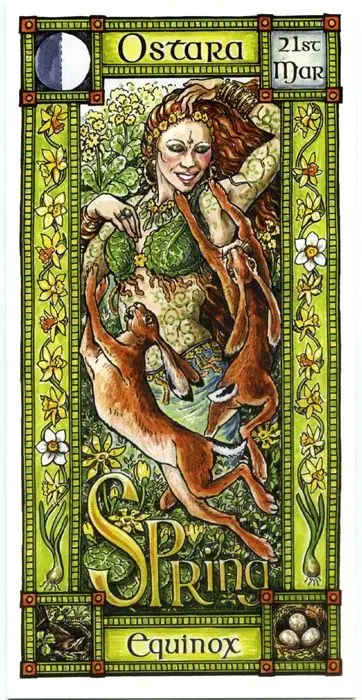
21-22 марта. Остара отмечается уже как праздник весны, вступившей в свои права. Это день середины весны, момент равновесия — день равен по длительности ночи, и после Остары день будет удлиняться. Название «Остара» связывают с именем европейской языческой богини рассвета и плодородия Эостры. Судя по всему, европейское название христианской Пасха, Easter, также происходит от ее имени.
День весеннего равноденствия и традиции его празднования плотно связаны с весной, с пробуждением земли от зимнего сна, с «отворением земли» и началом сельскохозяйственных работ. Интересно, что животным Остары является заяц, и поныне это животное является одним из символов Пасхи.
Цвета Остары: белый, красный, зеленый.
Ритуалы на Остару: призывание удачи, ритуалы на привлечение денег.
АТРИБУТЫ ОСТАРЫ
Белтейн — праздник начала лета
С 30 апреля на 1 мая.Бельтейн — это праздник начала лета. История его происхождения теряется во мгле времен, но известно, что в древности он становился началом пастбищного сезона, лето полностью вступает в свои права, и Темная половина года наконец заканчивается. Виккане в это время славят Зеленого человека, бога леса — полную сил ипостась бога, оставившего странствия и присоединяющегося к богине. Это волшебное время, когда граница между мирами тонка и зыбка.
Если позволяет погода, праздновать Бельтайн лучше всего в лесу — в царстве Бога.
Основные символы Бельтайна — костер и майский шест.
Цвета Бельтайна: зеленый, красный, золотой, белый.
Ритуалы на Бельтайн: привлечение любви, все ритуалы плодородия, сексуальная магия.
ТОВАРЫ ДЛЯ БЕЛТАЙНА
Эксперты магазина «Ведьмино Счастье» рекомендуют:
Праздник Лита — день летнего солнцестояния
21-22 июня. Лита — праздник солнечный и теплый. Кельтское колесо года определяло Литу, как день середины лета. В том или ином виде, летнее солнцестояние нашло отражение в культурах всех народов, населяющих землю. Шаманы и колдуны всех народностей осознавали важность этого дня.
В викканской традиции Лита — день бракосочетания бога и богини. Также, как и на Бельтейн, зажигаются костры, и в целом огню, как проявлению солярной энергии, придается большое значение.
Цвета Литы: зеленый, оранжевый, красный, золотой, голубой, белый, желтый.
Ритуалы на Литу: магическое очищение, ритуалы любовной магии, исцеление, денежная магия.
ВСЁ ДЛЯ ВСТРЕЧИ ЛИТЫ
Лугнасад — праздник урожая и осени
1-2 августа. Лугнасад, или Ламмас — первый праздник урожая, время начала его сбора. Колесо времен года кельтов определяло этот день, как момент конца лета и начало осени. Название «Лугнасад» берет начало у имени бога Луга, покровителя земледелия и ремесел, прекрасный бог творцов всех мастей — от поэта до кузнеца.
Это время радостных пиршеств, время благодарности земле за ее дары. В этот день хорошо печь хлеб и делать расклады на остаток года. Вместе с тем, это и поминальный праздник — то, что нужно, люди берут от земли, остальное же возвращается в ее чрево.
Цвета Лугнасада: все оттенки осени — оранжевый, рыжий, золотой, красный, коричневый, темно-зеленый, темно-синий.
Ритуалы на Лугнасад: создание и посвящение колдовских инструментов, очищение и избавление от отжившего.
МАГИЯ ЛАММАСА
Мабон — день осеннего равноденствия
21-22 сентября. В середине осени, ровно через полгода после Остары, отмечается Мабон. Это момент, когда день равен ночи, точка равновесия. Уже на следующий день светлое время суток станет короче, и мир сделает шаг навстречу Темному Времени. Природа готовится к зиме, и люди вместе с ней. Богиня нисходит в Нижний Мир, и бог остается бродить по земле в одиночестве, чтобы присоединиться в богине, когда наступит Самайн.
Мабон также является праздником второго урожая, подведения итогов, пожинания плодов прошедших дней.
Цвета Мабона: цвета поздней осени — темно-красный, золотой, коричневый, оранжевый, голубой и синий, темно-зеленый.
Ритуалы на Мабон: ритуалы поминовения, освобождения от изжившего и вредного, подведение итогов, формирование желаний и планов на будущее.
ГОТОВИМСЯ К МАБОНУ
Самайн — праздник кельтского нового года
С 31 октября на 1 ноября. Самайн — один из самых главных праздников Колеса Года, и, пожалуй, самый знаменитый. Он известен людям всего мира, как Хеллоуин, и многие ведьмы с радостью отмечают его, не забывая и об истинно колдовской стороне этого праздника. У кельтов он знаменовал окончание сбора урожая и окончание сельскохозяйственных работ.
Самайн тесно связан с почитанием умерших предков и темой угасания, смерти. Дни Самайна еще называют Временем Безвременья. Именно в эти дни граница между мирами истончается максимально, и духи приходят в мир живых.
Цвета Самайна: красный, рыжий, коричневыый, черный, оранжевый, темно-красный и все оттенки пламени.
Ритуалы на Самайн: магия очищения, защита, избавления от негатива, гадание.
ВСТЕЧАЕМ САМАЙН
Эксперты магазина «Ведьмино Счастье» рекомендуют:
Йоль — день зимнего солнцестояния
21-22 декабря. Самая длинная ночь в году. В это время Солнце астрономически наиболее удалено от зенита. Несмотря на то, что это самая длинная и темная ночь, праздник этот радостный и полный надежд. После Йоля день начинает прибавляться, становиться длинней, темнота отступает, чтобы дать дорогу свету. Богиня дает жизнь богу и новому времени.
Этот праздник хорошо отмечать в кругу семьи, при свете свечей или камина, с любимыми людьми.
Цвета Йоля: красный, золотой и зеленый.
Ритуалы на Йоль: привлечение успеха и удачи, благополучия, семейного счастья.
ПОДАРКИ К ЙОЛЮ
Кельты делили год на четыре четверти, приблизительно соответствующие современным временам года: весне, лету, осени и зиме. Кельты были народом земледельцев, поэтому придавали огромное значение определению времен года и очень чтили великие дни, считавшиеся их началом. В древней Ирландии, к примеру, месяцы не имели специальных имен, а просто брали своё название от четырёх важнейших праздников. Источник — Эзотерика. Живое Знание
В году у кельтов было четыре главных праздника:
Имболк (Imbolc) – время родов/кормления – 1 февраля
Бельтан (Beltaine) – весёлый костёр – 1 мая
Лугнаса (д) (Lughnasadh) – свадьба Луга – 1 августа
Самайн (Samhain) – смерть лета – 1 ноября
В кельтской традиции (которая вообще ставила ночь или тьму прежде дня и света) считалось, что каждый праздник начинается вечером предыдущего дня. Поэтому часто даты этих праздников указываются как 31 января, 30 апреля, 31 июля и 31 октября.
Хотя все эти праздники отмечались приблизительно в названные дни, день торжества определялся не по календарю, а по соответствующим проявлениям времен года. Так, например, Бельтан отмечали, когда отцветал Боярышник. Кроме того, все праздники приурочивались к полнолунию, и начинались они вечером. Кельты считали дни от вечера к вечеру, а не так как мы, от утра к утру.
Имболк знаменовал ослабление хватки зимы и приход новой жизни весной. В это время рождались ягнята, и вымя у овец наполнялось молоком. Это был праздник всех начал. Поскольку считалось, что отправляться в далёкие путешествия в это время года не стоит, ибо погода этому не благоприятствует. Имболк часто был праздником семейным.
В этот день молодые мужчины и женщины посвящали песнопения и бдения богине Бригите, которая, кроме всего прочего, была богиней родовспоможения и воспитания. Возможно, в это время рождалось много детей, как результат празднования Бельтана предыдущим летом. Считалось также, что Имболк – это лучшее время для гаданий – как о судьбах отдельных людей, так и об общих тенденциях на следующий год.
Таким образом, год делится на четыре части. Однако есть ещё и “скрытое” деление на две половины – тёмную и светлую. Представление об этих точках года отражено во многих преданиях. Так, например, существует легенда о ежегодном сражении между зимой и летом за овладение Девой Весны. Отражавший это предание обычай бытовал среди народов Европы вплоть до конца столетия.
Год также делится моментами равноденствий и солнцестояний:
- Весеннее равноденствие: 21 марта
- Летнее солнцестояние: 21 июня
- Осеннее равноденствие: 21 сентября
- Зимнее солнцестояние: 21 декабря.
Кельтские праздники могут помочь в понимании культуры кельтов и хоть чуть-чуть раскрыть их мировоззрение.
Самайн
1 ноября. Название переводится как «Конец Лета». Это Праздник Мертвых и начало нового Года. По верованиям друидов, Смерть предшествует Рождению в Круговороте Жизни. В этот день граница между Миром Живых и Иным Миром нарушена. Каждый очаг зажигался заново, от ритуальных огней, горящих в Таре и Ойснех; передавали их бегуны с факелами. Конец уходящего года и начало «темной» половины следующего кельты отмечали великим празником Самайном. Вначале он приходился на семнадцатый день второго лунного месяца после осеннего равноденствия. Впоследствии, в результате реформ римского календаря, его дата стала выпадать на ноябрьские календы (1 ноября).
В Галлии праздник длился три ночи (trinoux / tion / Samon / i / sindiu / os/ — «Три ночи Самайна с сего дня» ), а в Ирландии — семь дней.
Галлы называли себя сынами темного бога Диспатера (Dispater). Все они величали себя потомками Дита-отца и утверждали, что таково учение друидов. Самайн — это и есть праздник Дита.
Самайн считался моментом, когда открывался Сид (могильный курган, врата загробного мира) и все сверхъестественное устремлялось наружу, готовое поглотить людской мир.
В эту ночь бессмертные боги приходили в мир смертных людей, а герои получали доступ в Сид. Наступал краткий период битв, союзов, браков людей с обитателями Сида, уплаты или отсрочки всевозможных долгов. Во время Самайна умирали великие герои и боги.
Особое значение этому празднику придавалось торжественным собранием всех королей, вождей, воинов, друидов и простолюдинов страны. Согласно поверью, любой кельт, не пришедший в сакральный центр страны в ночь Самония, терял рассудок. На следующее утро для него следовало выкопать яму, насыпать могильный холм и подготовить могильный камень.
В эту же ночь друиды зажигали королевский огонь. Всем жителям страны воспрещалось под страхом смерти зажигать огонь прежде короля. Поэтому образ ночи Самайна — огонь в веселом стане на холме.
В Самайн подданные платили владыке подать и подносили дары. Треть плодов, орехов, рыбы, колбасы, пива, молока и хлебов отдавали для жертвоприношений друидам.
Если верховный король страны давал в Самайн отсрочку по выплате подати общине или кому-либо из младших по рангу королей на один день и одну ночь, то это означало, что он отказывается от подати безвозвратно.
После жертвоприношений начинались обильные пиршества, игры и пляски, состязания певцов и силачей.
В праздник Самайна на столе было положено иметь рыбу, колбасы, свинину, сбитое молоко, свежее масло, хлеб и пиво. Король задавал угощение и пир, на котором подавали мясо откормленных за прошедший год свиней. Сытную и обильную закуску уравновешивало внушительное количество выпитого.
Конечно, всенародное торжество, сопровождаемое обильными возлияниями, основательно подрывало здоровье кельтского населения: для большинства веселящихся дело заканчивалось либо пьяной дракой «стенка на стенку», либо жестоким похмельем. «В Самайн у уладов не больше сил, чем у женщины после родов», — свидетельствовал современник.
Праздник Самайн также традиционно считался подходящим временем, чтобы избавиться от короля, вызвавшего недовольство правящей элиты. В этом случае неугодного короля подвергали ритуальному умерщвлению: его топили в бочке с вином или просто сжигали живьем в королевском доме.
Йоль
Ман Геври (MEAN GEIMHRIDH ), 21 декабря. Йоль — дни великого пира и праздника, в которые все члены клана собирались вместе, дабы вновь встретить Солнце, восставшее из мрака, и узреть возрожденный мир. Неслучайно элементы Йоля сохранились и в христианском Рождестве — как, например, вечнозеленое дерево, символизирующее жизнь, которая продолжится и после зимних холодов.
Происхождение слова «Йоль» теряется в глубине веков. Скорее всего, оно восходит к индоевропейскому корню со значением «вращаться», «крутиться», «колесо». Возможно, оно означает «время поворота», «поворот года», «время жертвоприношений» или «темное время».
По традиции Йоль длится 13 ночей, которые называют «Ночи духов», что сохранилось и в немецком их наименовании, Weihnachten. Эти тринадцать ночей, от первого заката солнца и до последнего рассвета, — брешь между двумя годами, сакральный период, в течение которого нет ни привычного времени, ни привычных границ, когда вершиться жребий богов и вращается веретено богини Судьбы, Урд.
В древности у англосаксонских племен Йоль начинался за ночь до зимнего солнцестояния (19 или 20 декабря в зависимости от года). По свидетельству Беды Историка, эта ночь называлась «материнской», и если раньше, судя по всему, она была посвящена ритуалам, связанным с дисами и Фригг, то сейчас это выражается как вечер «в кругу семьи».
Однако самая важная ночь Йоля — это, конечно же, солнцестояние, самая длинная ночь года, во время которой настоящими властителями в этом мире становятся духи. В эту ночь зажигали «костер Йоля» и охраняли дом от злых духов; в эту же ночь давались самые искренние клятвы и обещания. Верили также, что не следует быть одному в эту ночь — ведь тогда человек остается наедине с мертвыми и духами Иного Мира…
Заканчивается Йоль на «двенадцатую ночь» (собственно, тринадцатую, о чем свидетельствует даже ее древнеисландское наименование, Threttandi) — то есть, 6 января по христианскому летоисчислению (если считать от ночи христианского Рождества на 25 декабря), или же 1-2 января по древнегерманскому летоисчислению (если считать от 19 или 20 декабря).
Следующий день считался «днем судьбы» — все, что сказано и сделано до захода солнца, определяло все события наступившего года (откуда и повелось наше «как Новый год встретишь, так его и проведешь»). Считалось, что нет более верных знамений, чем те, что были явлены во время «Двенадцатой Ночи»; и самые сильные слова — те, что сказаны в эту ночь.
Заметим, впрочем, что, по мнению некоторых историков, в древние времена германский Йоль отмечался на несколько дней позже, нежели чем христианское Рождество. Так, в Норвегии «Двенадцатая Ночь» («Кнутов день») приходилась на 13 января; некоторые считают, что «Двенадцатую Ночь» отмечали 14 января по современному календарю. Однако большинство современных общин Асатру, тем не менее, предпочитают совмещать Йоль с христианским праздником Рождества и зимним солнцестоянием.
Имболк и колесо года Кельтов
1 февраля. «Возвращение Света», когда зима подходит к концу и появляются первые цветы. Имболку покровительствует Бригида, и ритуалы, проводящиеся в этот день, посвящены дому и благополучию.
Он тесно связан со священным огнем, который очищает землю и поддерживает плодородие, и пробуждением солнца от зимнего сна. В этот день совершались обряды прогнозирования и свадебного гадания. Вплоть до совсем недавних времен юноши и девушки собирались в Телтауне в графстве Мит и шли навстречу друг другу, целовались и обручались. Такие браки, которые могли быть расторгнуты на следующий год, вероятно, были последними остатками древних кельтских обычаев, по которым мужчина и женщина имели равные права в заключении или расторжении брака.
Церемония белых камней в костре, записанная во многих местах Ирландии — другой отголосок древних времен, который утратил свое первоначальное значение за долгие века. Белые камни с именами или личными отметками юношей, клались в большой имболкский костер. Когда костер догорал и остывал достаточно, чтобы вынуть камни, каждый искал свою отметку, и как только находил ее, бежал со всех ног от кострища. Hе найти свой камень изначально означало, что боги огня отметили тебя высшей честью, избрав твой живой дух для жертвоприношения во имя очищения и общего блага всего племени.
Остара у кельтов
Ман Ари (MEAN EARRAIGH ), Весеннее равноденствие, 21 марта. Один из праздников викканского цикла. Он известен как первый день истинной весны. Богиня благословляет Землю на плодородие, буквально взрывающим ее изнутри после зимнего сна, Бог наливается силой и мужает. Он шагает по зеленеющим полям и дает изобилие природе. Богиня и Бог побуждают к размножению дикие сущства Земли.
Белтэйн. Времена года — Кельты
1 мая — половина пути между Весенним Равноденствием и Летним Солнцестоянием, возвещал приход лета и должен был умиротворить богов, чтобы они сохранили хорошую погоду и хороший урожай. Наряду с Самайном — это день, когда двери «Другого Мира» открывались и что-нибудь могло случиться. Счастливое истечение ночи под утро отмечали вином и орехами. До конца XIX века это был один из важнейших праздников.
Ман Саури
(MEAN SAMHRAIDH) Летнее солнцестояние, 21 июня. Солнце достигло пика своей силы и Зеленый Мир полон энергии. Это время Лета, время силы и зрелости. С этого дня Солнце начнет свое путешествие на юг, где оно найдет свою смерть. Это главное «межвременье» для друидов. Самый длинный день года открывает дверь во время встречи рассвета, это момент Великой Магии. Мы творим ритуалы во имя восхода, чтобы приветствовать Бога Солнца во всей его славе и мощи. Солнце проведет в этот день в небе наибольшее количество времени в году. Но этот день сочетает в себе как радость, так и печаль, потому что миру становятся известны события ближайшего будущего — Солнце начинает уходить от нас все дальше и дальше.
Лугнасад
1 августа. – один из самых значимых праздников годового колеса, который всегда проходит с разнообразными игрищами, песнями и плясками.
Назван в честь кельтского бога Луга (на самом деле название праздника по правилам читается как Лу-на-са (Lou-na-sa), Лугнасад – русифицированный вариант). Lou-na-sa — «сборище Луга» или «свадьба Луга». Луг — один из богов кельтского пантеона, покровитель земледелия и многих ремесел. Кельты называли его «длиннорукий» и «многоискусный». Согласно легенде, праздник отмечает женитьбу Луг на Хранительнице Ирландии – богине Эйре. Слово же Ламмас произошло от соединение двух староанглийских слов «хлеб» и «месса» — это христианизированное название для праздника первых плодов.
Сохранилась древняя легенда о происхождении этого праздника: его будто бы установил Луг в честь своей приемной матери богини Таилтине после ее смерти. Образ этой богини связывают с землей, плодородием, ведь ее имя «Tailtin» — от слова «talam» — земля.
Мабон
(МАН ФОВЭРЬ/MEAN FOMHAIR) 21 сентября. День осеннего равноденствия. Этот день является своеобразным подведением (или началом подведения) итогов за год. Это последний и главный сбор урожая.
Название «МАБОН» происходит от уэльского божества, символизировавшего мужское плодородие в цикле мифов о короле Артуре.
Альбан Эльвед
Кельтский «Праздник виноградной лозы».
Этот праздник урожая обычно отмечается в ближайшее к дню осеннего равноденствия полнолуние, проводится сбор спелых плодов (часто турнепса или тыкв/кабачков для Самхейна), сбор урожая поздних зерновых и вязание снопов, рыбная ловля, сбор винограда/выдавливание (приготовление) нового вина.
Его символы: гроздь винограда/виноградная лоза, снопы злаковых культур, рыба, рог изобилия, бутыль из тыквы.
Священная пища: красные вина, дичь (оленина, медвежатина, рыба, мясо фазана, перепела и т. п.), кабачки, дыни и любые другие сочные плоды, сдобные овощные хлебы и лепешки, овощное рагу.
Рейтинг: 5.91 (Проcмотров: 56173)
Читайте раздел Друиды на портале эзотерики naturalworld.guru.
| Beltane | |
|---|---|

A wicker man bonfire for Beltane at Butser Ancient Farm |
|
| Also called | Lá Bealtaine (Irish) Latha Bealltainn (Scottish Gaelic) Laa Boaltinn/Boaldyn (Manx)[1] Beltain; Beltine; Beltany[2][3] |
| Observed by | Historically: Gaels Today: Irish people, Scottish people, Manx people, Modern Pagans |
| Type | Cultural, Pagan (Celtic neopaganism, Wicca) |
| Significance | Beginning of summer |
| Celebrations | lighting bonfires, decorating homes with May flowers, making May bushes, visiting holy wells, feasting |
| Date | 1 May[4] (or 1 November in the Southern Hemisphere) |
| Frequency | annual |
| Related to | May Day, Calan Mai, Walpurgis Night |
Beltane ()[5][6] is the Gaelic May Day festival. Commonly observed on the first of May, the festival falls midway between the spring equinox and summer solstice in the northern hemisphere. The festival name is synonymous with the month marking the start of summer in Ireland, May being Mí na Bealtaine. Historically, it was widely observed throughout Ireland, Scotland, and the Isle of Man. In Irish the name for the festival day is Lá Bealtaine ([l̪ˠaː ˈbʲal̪ˠt̪ˠənʲə]), in Scottish Gaelic Latha Bealltainn ([l̪ˠaː ˈpjaul̪ˠt̪ɪɲ]), and in Manx Gaelic Laa Boaltinn/Boaldyn. Beltane is one of the principal four Gaelic seasonal festivals—along with Samhain, Imbolc, and Lughnasadh—and is similar to the Welsh Calan Mai.
Bealtaine is mentioned in the earliest Irish literature and is associated with important events in Irish mythology. Also known as Cétshamhain («first of summer»), it marked the beginning of summer and was when cattle were driven out to the summer pastures. Rituals were performed to protect cattle, people and crops, and to encourage growth. Special bonfires were kindled, whose flames, smoke and ashes were deemed to have protective powers. The people and their cattle would walk around or between bonfires, and sometimes leap over the flames or embers. All household fires would be doused and then re-lit from the Bealtaine bonfire. These gatherings would be accompanied by a feast, and some of the food and drink would be offered to the aos sí. Doors, windows, byres and livestock would be decorated with yellow May flowers, perhaps because they evoked fire. In parts of Ireland, people would make a May Bush: typically a thorn bush or branch decorated with flowers, ribbons, bright shells and rushlights. Holy wells were also visited, while Bealtaine dew was thought to bring beauty and maintain youthfulness. Many of these customs were part of May Day or Midsummer festivals in parts of Great Britain and Europe.
Public celebrations of Beltane fell out of popularity, though some customs continue to be revived as local cultural events. Since the late 20th century, Celtic neopagans and Wiccans have observed a festival based on Beltane as a religious holiday. Some neopagans in the Southern Hemisphere celebrate Beltane on or around 1 November.[citation needed]
Historic customs[edit]
Beltane was one of four Gaelic seasonal festivals: Samhain (1 November), Imbolc (1 February), Beltane (1 May), and Lughnasadh (1 August). Beltane marked the beginning of the pastoral summer season, when livestock were driven out to the summer pastures.[7][8] Rituals were held at that time to protect them from harm, both natural and supernatural, and this mainly involved the «symbolic use of fire».[7] There were also rituals to protect crops, dairy products and people, and to encourage growth. The aos sí (often referred to as spirits or fairies) were thought to be especially active at Beltane (as at Samhain)[7] and the goal of many Beltane rituals was to appease them. Most scholars see the aos sí as remnants of the pagan gods and nature spirits.[9] Beltane was a «spring time festival of optimism» during which «fertility ritual again was important, perhaps connecting with the waxing power of the sun».[3]
Ancient and medieval[edit]
Beltane (the beginning of summer) and Samhain (the beginning of winter) are thought to have been the most important of the four Gaelic festivals. Sir James George Frazer wrote in The Golden Bough: A Study in Magic and Religion that the times of Beltane and Samhain are of little importance to European crop-growers, but of great importance to herdsmen. Thus, he suggests that halving the year at 1 May and 1 November dates from a time when the Celts were mainly a pastoral people, dependent on their herds.[10]
The earliest mention of Beltane is in Old Irish literature from Gaelic Ireland. According to the early medieval texts Sanas Cormaic (written by Cormac mac Cuilennáin) and Tochmarc Emire, Beltane was held on 1 May and marked the beginning of summer. The texts say that, to protect cattle from disease, druids would make two fires «with great incantations» and drive the cattle between them.[11][12][13]
According to 17th-century historian Geoffrey Keating, there was a great gathering at the hill of Uisneach each Beltane in medieval Ireland, where a sacrifice was made to a god named Beil. Keating wrote that two bonfires would be lit in every district of Ireland, and cattle would be driven between them to protect them from disease.[14] There is no reference to such a gathering in the annals, but the medieval Dindsenchas (lore of places) includes a tale of a hero lighting a holy fire on Uisneach that blazed for seven years. Ronald Hutton writes that this may «preserve a tradition of Beltane ceremonies there», but adds «Keating or his source may simply have conflated this legend with the information in Sanas Chormaic to produce a piece of pseudo-history».[7] Nevertheless, excavations at Uisneach in the 20th century found evidence of large fires and charred bones, and showed it to have been a place of ritual since ancient times.[7][15][16] Evidence suggests it was «a sanctuary-site, in which fire was kept burning perpetually, or kindled at frequent intervals», where animal sacrifices were offered.[17]
Beltane is also mentioned in medieval Scottish literature.[18] An early reference is found in the poem ‘Peblis to the Play’, contained in the Maitland Manuscripts of 15th- and 16th-century Scots poetry, which describes the celebration in the town of Peebles.[19]
Modern era[edit]
From the late 18th century to the mid 20th century, many accounts of Beltane customs were recorded by folklorists and other writers. For example John Jamieson, in his Etymological Dictionary of the Scottish Language (1808), describes some of the Beltane customs which persisted in the 18th and early 19th centuries in parts of Scotland, which he noted were beginning to die out.[20] In the 19th century, folklorist Alexander Carmichael (1832–1912), collected the Scottish Gaelic song Am Beannachadh Bealltain (The Beltane Blessing) in his Carmina Gadelica, which he heard from a crofter in South Uist.[19] The first two verses were sung as follows:
Beannaich, a Thrianailt fhioir nach gann, (Bless, O Threefold true and bountiful,)
Mi fein, mo cheile agus mo chlann, (Myself, my spouse and my children,)
Mo chlann mhaoth’s am mathair chaomh ‘n an ceann, (My tender children and their beloved mother at their head,)
Air chlar chubhr nan raon, air airidh chaon nam beann, (On the fragrant plain, at the gay mountain sheiling,)
Air chlar chubhr nan raon, air airidh chaon nam beann. (On the fragrant plain, at the gay mountain sheiling.)Gach ni na m’ fhardaich, no ta ‘na m’ shealbh, (Everything within my dwelling or in my possession,)
Gach buar is barr, gach tan is tealbh, (All kine and crops, all flocks and corn,)
Bho Oidhche Shamhna chon Oidhche Bheallt, (From Hallow Eve to Beltane Eve,)
Piseach maith, agus beannachd mallt, (With goodly progress and gentle blessing,)
Bho mhuir, gu muir, agus bun gach allt, (From sea to sea, and every river mouth,)
Bho thonn gu tonn, agus bonn gach steallt. (From wave to wave, and base of waterfall.)[19]
Bonfires[edit]

Bonfires continued to be a key part of the festival in the modern era. All hearth fires and candles would be doused before the bonfire was lit, generally on a mountain or hill.[3][21] Ronald Hutton writes that «To increase the potency of the holy flames, in Britain at least they were often kindled by the most primitive of all means, of friction between wood.»[7] This is known as a need-fire or force-fire. In the 19th century, John Ramsay described Scottish Highlanders kindling such a fire at Beltane, which was deemed sacred.[7] In the 19th century, the ritual of driving cattle between two fires—as described in Sanas Cormaic almost 1000 years before—was still practised across most of Ireland and in parts of Scotland.[7] Sometimes the cattle would be driven around a bonfire or be made to leap over flames or embers. The people themselves would do likewise.[7] On the Isle of Man, people ensured that the smoke blew over them and their cattle.[8] When the bonfire had died down, people would daub themselves with its ashes and sprinkle it over their crops and livestock.[7] Burning torches from the bonfire would be taken home, carried around the house or boundary of the farmstead,[22] and used to re-light the hearth.[7] From these rituals, it is clear that the fire was seen as having protective powers.[7] Similar rituals were part of May Day or Midsummer customs in other parts of the British Isles and mainland Europe.[23] Frazer believed the fire rituals are a kind of imitative or sympathetic magic. He suggests they were meant to mimic the Sun and «ensure a needful supply of sunshine for men, animals, and plants», as well as to symbolically «burn up and destroy all harmful influences».[24]

A Beltane bonfire at WEHEC 2015
Food was also cooked at the bonfire and there were rituals involving it. In the Scottish Highlands, Alexander Carmichael recorded that there was a feast featuring lamb, and that formerly this lamb was sacrificed.[25] In 1769, Thomas Pennant wrote of bonfires in Perthshire, where a caudle made from eggs, butter, oatmeal and milk was cooked. Some of the mixture was poured on the ground as a libation. Everyone present would then take an oatmeal cake, called the bannoch Bealltainn or «Beltane bannock». A bit was offered to the spirits to protect their livestock (one to protect the horses, one to protect the sheep, and so forth) and a bit offered to each of the predators that might harm their livestock (one to the fox, one to the eagle, and so forth). Afterwards, they would drink the caudle.[7]
According to 18th century writers, in parts of Scotland there was another ritual involving the oatmeal cake. The cake would be cut and one of the slices marked with charcoal. The slices would then be put in a bonnet and everyone would take one out while blindfolded. According to one writer, whoever got the marked piece had to leap through the fire three times. According to another, those present pretended to throw the person into the fire and, for some time afterwards, would speak of them as if they were dead. This «may embody a memory of actual human sacrifice», or it may have always been symbolic.[7] A similar ritual (i.e. of pretending to burn someone in the fire) was part of spring and summer bonfire festivals in other parts of Europe.[26]
Flowers and May Bushes[edit]

Yellow and white flowers such as primrose, rowan, hawthorn, gorse, hazel, and marsh marigold were traditionally placed at doorways and windows; this is documented in 19th century Ireland, Scotland and Mann. Sometimes loose flowers were strewn at doors and windows and sometimes they were made into bouquets, garlands or crosses and fastened to them. They would also be fastened to cows and equipment for milking and butter making. It is likely that such flowers were used because they evoked fire.[7] Similar May Day customs are found across Europe.
The May Bush or May Bough was popular in parts of Ireland until the late 19th century.[27] This was a small tree or branch—typically hawthorn, rowan, holly or sycamore—decorated with bright flowers, ribbons, painted shells or eggshells from Easter Sunday, and so forth. The tree would either be decorated where it stood, or branches would be decorated and placed inside or outside the house (particularly above windows and doors, on the roof, and on barns).[27] It was generally the responsibility of the oldest person of the house to decorate the May Bush, and the tree would remain up until May 31st.[28][29] The tree would also be decorated with candles or rushlights.[21] Sometimes a May Bush would be paraded through the town. In parts of southern Ireland, gold and silver hurling balls known as May Balls would be hung on these May Bushes and handed out to children or given to the winners of a hurling match.[21] In Dublin and Belfast, May Bushes were brought into town from the countryside and decorated by the whole neighbourhood.[21] Each neighbourhood vied for the most handsome tree and, sometimes, residents of one would try to steal the May Bush of another. This led to the May Bush being outlawed in Victorian times.[21] In some places, it was customary to sing and dance around the May Bush, and at the end of the festivities it may be burnt in the bonfire.[30] In some areas the May Bush or Bough has also been called the «May Pole», but it is the bush or tree described above, and not the more commonly-known European maypole.[27]
Thorn trees are traditionally seen as special trees, associated with the aos sí. Frazer believed the customs of decorating trees or poles in springtime are a relic of tree worship and wrote: «The intention of these customs is to bring home to the village, and to each house, the blessings which the tree-spirit has in its power to bestow.»[31] Emyr Estyn Evans suggests that the May Bush custom may have come to Ireland from England, because it seemed to be found in areas with strong English influence and because the Irish saw it as unlucky to damage certain thorn trees.[32] However, «lucky» and «unlucky» trees varied by region, and it has been suggested that Beltane was the only time when cutting thorn trees was allowed.[33] The practice of bedecking a May Bush with flowers, ribbons, garlands and bright shells is found among the Gaelic diaspora, most notably in Newfoundland, and in some Easter traditions on the East Coast of the United States.[21]
Appeasing the fairies[edit]
Many Beltane practices were designed to ward off or appease the fairies and prevent them from stealing dairy products. For example, three black coals were placed under a butter churn to ensure the fairies did not steal the butter, and May Boughs were tied to milk pails, the tails of cattle or hung in the barns to ensure the cattle’s milk was not stolen.[34][29] Flowers were also used to decorate the horns of cattle, which was believed to bring good fortune.[35] Food was left or milk poured at the doorstep or places associated with the aos sí, such as ‘fairy trees’, as an offering.[36][37] However, milk was never given to a neighbor on May Day because it was feared that the milk would be transferred to the neighbor’s cow.[38] In Ireland, cattle would be brought to ‘fairy forts’, where a small amount of their blood would be collected. The owners would then pour it into the earth with prayers for the herd’s safety. Sometimes the blood would be left to dry and then be burnt.[36] It was thought that dairy products were especially at risk from harmful spirits.[21][39][40] To protect farm produce and encourage fertility, farmers would lead a procession around the boundaries of their farm. They would «carry with them seeds of grain, implements of husbandry, the first well water, and the herb vervain (or rowan as a substitute). The procession generally stopped at the four cardinal points of the compass, beginning in the east, and rituals were performed in each of the four directions».[41] People made the sign of the cross with milk for good luck on Beltane, and the sign of the cross was also made on the backsides of cattle.[42][43]
Other customs[edit]
Holy wells were often visited at Beltane, and at the other Gaelic festivals of Imbolc and Lughnasadh. Visitors to holy wells would pray for health while walking sunwise (moving from east to west) around the well. They would then leave offerings; typically coins or clooties (see clootie well).[21] The first water drawn from a well on Beltane was thought to be especially potent, and would bring good luck to the person who drew it. Beltane morning dew was also thought to bring good luck and health. At dawn or before sunrise on Beltane, maidens would roll in the dew or wash their faces with it.[44] The dew was collected in a jar, left in sunlight, then filtered. The dew was thought to increase sexual attractiveness, maintain youthfulness, protect from sun damage (particularly freckles and sunburn) and help with skin ailments for the ensuing year.[8][21][44][45] It was also thought that a man who washed his face with soap and water on Beltane will grow long whiskers on his face.[27]
It was widely believed that no one should light a fire on May Day morning until they saw smoke rising from a neighbor’s house.[29] It was also believed to be bad luck to put out ashes or clothes on May Day, and to give away coal or ashes would cause the giver difficulty in lighting fires for the next year.[46][45] Also, if the family owned a white horse, it should remain in the barn all day, and if any other horse was owned, a red rag should be tied to its tail.[27] Any foal born on May Day was fated to kill a man, and any cow that calved on May Day would die.[46] Any birth or marriage on May Day was generally believed to be ill-fated.[47][30] On May Night a cake and a jug were left on the table, because it was believed that the Irish who had died abroad would return on May Day to their ancestral homes, and it was also believed that the dead returned on May Day to visit their friends.[47][42] A robin that flew into the house on Beltane was believed to portend the death of a household member.[30]
The festival persisted widely up until the 1950s, and in some places the celebration of Beltane continues today.[16][39][40]
Revival[edit]
As a festival, Beltane had largely died out by the mid-20th century, although some of its customs continued and in some places it has been revived as a cultural event. In Ireland, Beltane fires were common until the mid-20th century,[21] but the custom seems to have lasted to the present day only in County Limerick (especially in Limerick itself) and in Arklow, County Wicklow.[48] The lighting of a community Beltane fire from which each hearth fire is then relit is observed today in some parts of the Gaelic diaspora, though in most of these cases it is a cultural revival rather than an unbroken survival of the ancient tradition.[21][49][50] In parts of Newfoundland, the custom of decorating the May Bush also survives.[51] The town of Peebles in the Scottish Borders holds a traditional week-long Beltane Fair every year in June, when a local girl is crowned Beltane Queen on the steps of the parish church. Like other Borders festivals, it incorporates a Common Riding.[19][52]
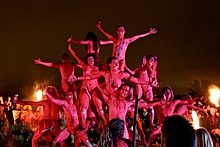
Since 1988, a Beltane Fire Festival has been held every year on the night of 30 April on Calton Hill in Edinburgh, Scotland. While inspired by traditional Beltane, it is a modern celebration of summer’s beginning which draws on many influences.[53] The performance art event involves fire dances and a procession by costumed performers, led by the May Queen and the Green Man, culminating in the lighting of a bonfire.[54]
Butser Ancient Farm, an open-air archaeology museum in Hampshire, UK, has also held a Beltane festival since the 1980s. The festival mixes historical reenactment with folk influences, and features a May Queen and Green Man, living history displays, reenactor battles, demonstrations of traditional crafts, performances of folk music, and Celtic storytelling. The festival ends with the burning of a 30-40ft wickerman, with a new historical or folk-inspired design each year.[55]
A similar Bealtaine Festival has been held each year since 2009 at Uisneach in Ireland.[56] It culminates in a torchlit procession by participants in costume, some on horseback, and the lighting of a large bonfire at dusk.[57] In 2017, the ceremonial fire was lit by the President of Ireland, Michael D Higgins.[58]
The 1970 recording ‘Ride a White Swan’, written and performed by Marc Bolan and his band T.Rex, contains the line «Ride a white Swan like the people of the Beltane».[59]
Neopaganism[edit]
Beltane and Beltane-based festivals are held by some Neopagans. As there are many kinds of Neopaganism, their Beltane celebrations can be very different despite the shared name. Some try to emulate the historic festival as much as possible.[60] Other Neopagans base their celebrations on many sources, the Gaelic festival being only one of them.[61][62]
Neopagans usually celebrate Beltane on 30 April – 1 May in the Northern Hemisphere and 31 October – 1 November in the Southern Hemisphere, beginning and ending at sunset.[63][64][65][66][67] Some Neopagans celebrate it at the astronomical midpoint between the spring equinox and summer solstice (or the full moon nearest this point). In the Northern Hemisphere, this midpoint is when the ecliptic longitude of the Sun reaches 45 degrees.[68] In 2014, this was on 5 May.[69]
Celtic Reconstructionist[edit]
Celtic Reconstructionists strive to reconstruct ancient Celtic religion. Their religious practices are based on research and historical accounts,[60][70] but modified to suit modern life. They avoid syncretism and eclecticism (i.e. combining practises from unrelated cultures).[71]
Celtic Reconstructionists usually celebrate Beltane when the local hawthorn trees are in bloom. Many observe the traditional bonfire rites, to whatever extent this is feasible where they live. This may involve passing themselves and their pets or livestock between two bonfires, and bringing home a candle lit from the bonfire. If they are unable to make a bonfire or attend a bonfire ceremony, candles may be used instead. They may decorate their homes with a May Bush, branches from blooming thorn trees, or equal-armed rowan crosses. Holy wells may be visited and offerings made to the spirits or deities of the wells. Traditional festival foods may also be prepared.[72][73]
Wicca[edit]
Wiccans use the name Beltane or Beltain for their May Day celebrations. It is one of the yearly Sabbats of their Wheel of the Year, following Ostara and preceding Midsummer. Unlike Celtic Reconstructionism, Wicca is syncretic and melds practices from many different cultures. In general, the Wiccan Beltane is more akin to the Germanic/English May Day festival, both in its significance (focusing on fertility) and its rituals (such as maypole dancing). Some Wiccans enact a ritual union of the May Lord and May Lady.[63]
Name[edit]
In Irish, the festival is usually called Lá Bealtaine (‘day of Beltane’) while the month of May is Mí Bhealtaine («month of Beltane»). In Scottish Gaelic, the festival is Latha Bealltainn and the month is An Cèitean or a’ Mhàigh. Sometimes the older Scottish Gaelic spelling Bealltuinn is used. The word Céitean comes from Cétshamain (‘first of summer’), an old alternative name for the festival.[74][75] The term Latha Buidhe Bealltainn (Scottish) or Lá Buidhe Bealtaine (Irish), ‘the bright or yellow day of Beltane’, means the first of May. In Ireland it is referred to in a common folk tale as Luan Lae Bealtaine; the first day of the week (Monday/Luan) is added to highlight the first day of summer.[76]
The name is anglicized as Beltane, Beltain, Beltaine, Beltine and Beltany.[2]
Etymology[edit]
Two modern etymologies have been proposed. Beltaine could derive from a Common Celtic *belo-te(p)niâ, meaning ‘bright fire’. The element *belo- might be cognate with the English word bale (as in bale-fire) meaning ‘white’, ‘bright’ or ‘shining’. Alternatively, Beltaine might stem from a Common Celtic form reconstructed as *Beltiniyā, which would be cognate with the name of the Lithuanian goddess of death Giltinė, both from an earlier *gʷel-tiōn-, formed with the Proto-Indo-European root *gʷelH- (‘suffering, death’). The absence of syncope (Irish sound laws rather predict a **Beltne form) can be explained by the popular belief that Beltaine was a compound of the word for ‘fire’, tene.[77][78]
In Ó Duinnín’s Irish dictionary (1904), Beltane is referred to as Céadamh(ain) which it explains is short for Céad-shamh(ain) meaning ‘first (of) summer’. The dictionary also states that Dia Céadamhan is May Day and Mí Céadamhan is the month of May.
Toponymy[edit]

There are place names in Ireland containing the word Bealtaine, indicating places where Bealtaine festivities were once held. It is often anglicised as Beltany. There are three Beltanys in County Donegal, including the Beltany stone circle, and two in County Tyrone. In County Armagh there is a place called Tamnaghvelton/Tamhnach Bhealtaine (‘the Beltane field’). Lisbalting/Lios Bealtaine (‘the Beltane ringfort’) is in County Tipperary, while Glasheennabaultina/Glaisín na Bealtaine (‘the Beltane stream’) is the name of a stream joining the River Galey in County Limerick.[79]
See also[edit]
- Samhain
- Celtic calendar
- Calan Mai
- Walpurgis Night
References[edit]
- ^ Celtic myths and legends by Charles Squire ISBN 1-84204-015-4
- ^ a b «Beltane – The Fire Festival». Newgrange. Archived from the original on 30 April 2019. Retrieved 30 April 2019.
- ^ a b c Chadwick, Nora (1970) The Celts London, Penguin. ISBN 0-14-021211-6 p. 181
- ^ «Origins of Bealtaine festival». Irish Independent. 24 April 2013. Archived from the original on 30 April 2019. Retrieved 30 April 2019.
- ^ «Beltane». Dictionary.com. Archived from the original on 2 May 2014. Retrieved 1 May 2014.
- ^ «Beltane». Merriam-Webster Dictionary. Archived from the original on 2 May 2014. Retrieved 1 May 2014.
- ^ a b c d e f g h i j k l m n o Hutton, Ronald. The Stations of the Sun: A History of the Ritual Year in Britain. Oxford University Press, 1996. pp. 218–225
- ^ a b c Koch, John T. Celtic Culture: A Historical Encyclopedia. 2006. p. 202
- ^ Santino, Jack. The Hallowed Eve: Dimensions of Culture in a Calendar Festival of Northern Ireland. University Press of Kentucky, 1998. p. 105
- ^ Frazer, Sir James George. The Golden Bough: A Study in Magic and Religion. Forgotten Books, 2008. p. 644
- ^ Stokes, Whitley (ed.) and John O’Donovan (tr.). Sanas Cormaic: Cormac’s Glossary. Irish Archaeological and Celtic Society. Calcutta: O.T. Cutter, 1868.
- ^ The Wooing of Emer by Cú Chulainn – Translated by Kuno Meyer Archived 14 February 2013 at the Wayback Machine. CELT: Corpus of Electronic Texts.
- ^ «Beltane | ancient Celtic festival». Encyclopedia Britannica. Archived from the original on 14 February 2021. Retrieved 8 March 2021.
- ^ Keating, Geoffrey. The History of Ireland – Translated by David Comyn and Patrick S. Dinneen Archived 22 February 2013 at the Wayback Machine. CELT: Corpus of Electronic Texts.
- ^ Patterson, Nerys. Cattle Lords and Clansmen: The Social Structure of Early Ireland. University of Notre Dame Press, 1994. p. 139
- ^ a b MacKillop, James. A Dictionary of Celtic Mythology. Oxford University Press, 1998. pp. 39, 400–402, 421
- ^ Schot, Roseanne (2006). «Uisneach Midi a medón Érenn: a prehistoric cult centre and royal site in Co. Westmeath». Journal of Irish Archaeology, issue 15. pp.47-66
- ^ «Dictionary of the Scots Language :: DOST :: Beltane n.» www.dsl.ac.uk. Archived from the original on 1 May 2019. Retrieved 1 May 2019.
- ^ a b c d «The Songs and Rhymes of May» (PDF). Traditional Arts & Culture Scotland. Archived from the original (PDF) on 15 February 2018. Retrieved 15 February 2018.
- ^ «Jamieson’s Dictionary Online». www.scotsdictionary.com. Archived from the original on 5 April 2019. Retrieved 1 May 2019.
- ^ a b c d e f g h i j k Danaher, Kevin (1972) The Year in Ireland: Irish Calendar Customs Dublin, Mercier. ISBN 1-85635-093-2 pp. 86–127
- ^ Evans, Irish Folk Ways, pp. 274–275
- ^ Frazer, James George (1922). The Golden Bough: A Study in Magic and Religion. Chapter 62, Section 8: The Need-fire. Internet Sacred Text Archive.
- ^ Frazer, James George (1922). The Golden Bough: A Study in Magic and Religion. Chapter 63, Part 1: On the Fire-festivals in general Archived 12 October 2013 at the Wayback Machine.
- ^ Carmichael, Carmina Gadelica Volume 1, p. 191
- ^ Frazer, James George (1922). The Golden Bough: A Study in Magic and Religion. Chapter 64, Part 2: The Burning of Men and Animals in the Fires Archived 9 May 2013 at the Wayback Machine.
- ^ a b c d e «Uachtar Árd | The Schools’ Collection». dúchas.ie. Retrieved 12 February 2022.
- ^ «Uachtar Árd | The Schools’ Collection». dúchas.ie. Retrieved 12 February 2022.
- ^ a b c «Uachtar Árd | The Schools’ Collection». dúchas.ie. Retrieved 12 February 2022.
- ^ a b c «Festivals of the Year — May Day». dúchas.ie. Retrieved 12 February 2022.
- ^ Frazer, James George (1922). The Golden Bough: A Study in Magic and Religion. Chapter 10: Relics of Tree Worship in Modern Europe Archived 9 May 2013 at the Wayback Machine.
- ^ Evans, Emyr Estyn. Irish Folk Ways. Routledge, 1957. pp. 272–274
- ^ Watts, D C. Dictionary of Plant Lore. Academic Press, 2007. p. 246
- ^ «Uachtar Árd | The Schools’ Collection». dúchas.ie. Retrieved 12 February 2022.
- ^ «May Day and May Eve». dúchas.ie. Retrieved 12 February 2022.
- ^ a b Evans, Irish Folk Ways, p. 272
- ^ Danaher, The Year in Ireland, p. 121
- ^ «Druim an t-Seagail | The Schools’ Collection». dúchas.ie. Retrieved 12 February 2022.
- ^ a b McNeill (1959) Vol. 2. p. 63
- ^ a b Campbell, John Gregorson (1900, 1902, 2005) The Gaelic Otherworld. Edited by Ronald Black. Edinburgh, Birlinn Ltd. ISBN 1-84158-207-7 pp. 552–554
- ^ Danaher, The Year in Ireland, pp. 116–117
- ^ a b «Baile an Daingin (C.) | The Schools’ Collection». dúchas.ie. Retrieved 12 February 2022.
- ^ «Baile an Daingin (C.) | The Schools’ Collection». dúchas.ie. Retrieved 12 February 2022.
- ^ a b «Baile an Churraigh | The Schools’ Collection». dúchas.ie. Retrieved 25 December 2021.
- ^ a b «Baile an Daingin (C.) | The Schools’ Collection». dúchas.ie. Retrieved 12 February 2022.
- ^ a b «Druim an t-Seagail | The Schools’ Collection». dúchas.ie. Retrieved 12 February 2022.
- ^ a b «Baile an Daingin (C.) | The Schools’ Collection». dúchas.ie. Retrieved 12 February 2022.
- ^ Council faces clean-up after maybush fires. Wicklow People, 5 May 2005.
- ^ Dames, Michael (1992) Mythic Ireland. London, Thames & Hudson ISBN 0-500-27872-5. pp. 206–210
- ^ McNeill, F. Marian (1959) The Silver Bough, Vol. 2. William MacLellan, Glasgow ISBN 0-85335-162-7 p. 56
- ^ «The May Bush in Newfoundland: Newfoundland and Labrador Heritage». Heritage.nf.ca. Archived from the original on 27 February 2014. Retrieved 1 May 2014.
- ^ «Home». Peeblesbeltanefestival.co.uk. Archived from the original on 2 May 2014. Retrieved 1 May 2014.
- ^ «About Beltane Fire Festival». Beltane Fire Society. 11 February 2013. Retrieved 1 May 2022.
- ^ Melis, Claudia (2020). «City on fire: Deterritorialisation and becoming at Edinburgh’s Beltane Fire Festival». In Nicholas Wise (ed.). Tourism, Cultural Heritage and Urban Regeneration. Springer. pp. 113–114.
- ^ «Beltain Celtic Fire Festival». Butser Ancient Farm. Retrieved 25 November 2022.
- ^ «Bealtaine». Uisneach.ie. Retrieved 1 May 2022.
- ^ «Festival of fire reignites pagan passions». The Irish Times. 4 May 2010.
- ^ «President lights Hill of Uisneach fire». Meath Chronicle. 8 May 2017.
- ^ Dicks,Ted & Platz,Paul; ‘Marc Bolan: A Tribute’. Wise Publications,1992. ISBN 0711929955, 9780711929951, et al.
- ^ a b Gallagher, Eugene V.; Ashcraft, W. Michael (2006). Introduction to new and alternative religions in America. Westport, Conn.: Greenwood Press. p. 178. ISBN 0-275-98713-2.
- ^ Adler, Margot (1979) Drawing Down the Moon: Witches, Druids, Goddess-Worshippers, and Other Pagans in America Today. Boston, Beacon Press ISBN 0-8070-3237-9. p. 397 – Excerpts from Manhattan Pagan Way Beltane ritual script, 1978
- ^ McColman, Carl (2003) Complete Idiot’s Guide to Celtic Wisdom. Alpha Press ISBN 0-02-864417-4. p. 51
- ^ a b Starhawk (1979, 1989) The Spiral Dance: A Rebirth of the Ancient Religion of the Great Goddess. New York, Harper and Row ISBN 0-06-250814-8 pp. 181 196 (revised edition)
- ^ Nevill Drury (2009). «The Modern Magical Revival: Esbats and Sabbats». In Pizza, Murphy; Lewis, James R (eds.). Handbook of Contemporary Paganism. Leiden, Netherlands: Brill Publishers. pp. 63–67. ISBN 9789004163737. Archived from the original on 26 January 2021. Retrieved 7 November 2016.
- ^ Hume, Lynne (1997). Witchcraft and Paganism in Australia. Melbourne: Melbourne University Press. ISBN 978-0522847826.
- ^ Vos, Donna (2002). Dancing Under an African Moon: Paganism and Wicca in South Africa. Cape Town: Zebra Press. pp. 79–86. ISBN 978-1868726530.
- ^ Bodsworth, Roxanne T (2003). Sunwyse: Celebrating the Sacred Wheel of the Year in Australia. Victoria, Australia: Hihorse Publishing. ISBN 978-0909223038.
- ^ «Equinoxes, Solstice, Cross Quarters shown as seasonal cusps, worshipped by pagans and later religious holidays». Archaeoastronomy.com. Archived from the original on 23 January 2013. Retrieved 5 March 2013.
- ^ «Chart of 2013 equinox, solstice and cross quarter dates and times, worldwide from». archaeoastronomy.com. Archived from the original on 4 March 2013. Retrieved 5 March 2013.
- ^ McColman (2003) pp. 12, 51
- ^ NicDhàna, Kathryn et al. (2007) The CR FAQ: An Introduction to Celtic Reconstructionist Paganism. River House Publishing. ISBN 978-0-615-15800-6 pp. 53–56, 64, 130–131
- ^ NicDhàna (2007) pp. 100–103
- ^ Healy, Elizabeth (2001) In Search of Ireland’s Holy Wells. Dublin, Wolfhound Press ISBN 0-86327-865-5 p. 27
- ^ Proceedings of the Harvard Celtic Colloquium, Volume 23. Harvard University Press, 2003. p. 258
- ^ Green, Miranda. The Celtic World. Routledge, 2012. p. 437
- ^ Ó Crualaoich, Gearóid (1 January 1994). «Non-Sovereignty Queen Aspects of the Otherworld Female in Irish Hag Legends: The Case of Cailleach Bhéarra». Béaloideas. 62/63: 147–162. doi:10.2307/20522445. JSTOR 20522445.
- ^ Schrijver, Peter (1999). «On Henbane and Early European Narcotics». Zeitschrift für celtische Philologie. 51 (1): 34–35. doi:10.1515/zcph.1999.51.1.17. ISSN 1865-889X. S2CID 162678252.
- ^ Delamarre, Xavier (2003). Dictionnaire de la langue gauloise: Une approche linguistique du vieux-celtique continental. Errance. pp. 70–71. ISBN 9782877723695.
- ^ «The Origin And History of Irish Names of Places by Patrick Weston Joyce». 1875. Retrieved 8 October 2017.
Further reading[edit]
- Carmichael, Alexander (1992). Carmina Gadelica. Lindisfarne Press. ISBN 0-940262-50-9
- Chadwick, Nora (1970) The Celts. London, Penguin ISBN 0-14-021211-6
- Danaher, Kevin (1972) The Year in Ireland. Dublin, Mercier ISBN 1-85635-093-2
- Evans-Wentz, W. Y. (1966, 1990) The Fairy-Faith in Celtic Countries. New York, Citadel ISBN 0-8065-1160-5
- MacKillop, James (1998). Dictionary of Celtic Mythology. Oxford University Press ISBN 0-19-280120-1
- McNeill, F. Marian (1959) The Silver Bough, Vol. 1–4. William MacLellan, Glasgow
- Simpson, Eve Blantyre (1908), Folk Lore in Lowland Scotland, London: J.M. Dent.
External links[edit]
- Edinburgh’s Beltane Fire Society
- Extract on The Beltane Fires from Sir James George Frazer’s book The Golden Bough – 1922; from bartleby.com
| Beltane | |
|---|---|
|
A wicker man bonfire for Beltane at Butser Ancient Farm |
|
| Also called | Lá Bealtaine (Irish) Latha Bealltainn (Scottish Gaelic) Laa Boaltinn/Boaldyn (Manx)[1] Beltain; Beltine; Beltany[2][3] |
| Observed by | Historically: Gaels Today: Irish people, Scottish people, Manx people, Modern Pagans |
| Type | Cultural, Pagan (Celtic neopaganism, Wicca) |
| Significance | Beginning of summer |
| Celebrations | lighting bonfires, decorating homes with May flowers, making May bushes, visiting holy wells, feasting |
| Date | 1 May[4] (or 1 November in the Southern Hemisphere) |
| Frequency | annual |
| Related to | May Day, Calan Mai, Walpurgis Night |
Beltane ()[5][6] is the Gaelic May Day festival. Commonly observed on the first of May, the festival falls midway between the spring equinox and summer solstice in the northern hemisphere. The festival name is synonymous with the month marking the start of summer in Ireland, May being Mí na Bealtaine. Historically, it was widely observed throughout Ireland, Scotland, and the Isle of Man. In Irish the name for the festival day is Lá Bealtaine ([l̪ˠaː ˈbʲal̪ˠt̪ˠənʲə]), in Scottish Gaelic Latha Bealltainn ([l̪ˠaː ˈpjaul̪ˠt̪ɪɲ]), and in Manx Gaelic Laa Boaltinn/Boaldyn. Beltane is one of the principal four Gaelic seasonal festivals—along with Samhain, Imbolc, and Lughnasadh—and is similar to the Welsh Calan Mai.
Bealtaine is mentioned in the earliest Irish literature and is associated with important events in Irish mythology. Also known as Cétshamhain («first of summer»), it marked the beginning of summer and was when cattle were driven out to the summer pastures. Rituals were performed to protect cattle, people and crops, and to encourage growth. Special bonfires were kindled, whose flames, smoke and ashes were deemed to have protective powers. The people and their cattle would walk around or between bonfires, and sometimes leap over the flames or embers. All household fires would be doused and then re-lit from the Bealtaine bonfire. These gatherings would be accompanied by a feast, and some of the food and drink would be offered to the aos sí. Doors, windows, byres and livestock would be decorated with yellow May flowers, perhaps because they evoked fire. In parts of Ireland, people would make a May Bush: typically a thorn bush or branch decorated with flowers, ribbons, bright shells and rushlights. Holy wells were also visited, while Bealtaine dew was thought to bring beauty and maintain youthfulness. Many of these customs were part of May Day or Midsummer festivals in parts of Great Britain and Europe.
Public celebrations of Beltane fell out of popularity, though some customs continue to be revived as local cultural events. Since the late 20th century, Celtic neopagans and Wiccans have observed a festival based on Beltane as a religious holiday. Some neopagans in the Southern Hemisphere celebrate Beltane on or around 1 November.[citation needed]
Historic customs[edit]
Beltane was one of four Gaelic seasonal festivals: Samhain (1 November), Imbolc (1 February), Beltane (1 May), and Lughnasadh (1 August). Beltane marked the beginning of the pastoral summer season, when livestock were driven out to the summer pastures.[7][8] Rituals were held at that time to protect them from harm, both natural and supernatural, and this mainly involved the «symbolic use of fire».[7] There were also rituals to protect crops, dairy products and people, and to encourage growth. The aos sí (often referred to as spirits or fairies) were thought to be especially active at Beltane (as at Samhain)[7] and the goal of many Beltane rituals was to appease them. Most scholars see the aos sí as remnants of the pagan gods and nature spirits.[9] Beltane was a «spring time festival of optimism» during which «fertility ritual again was important, perhaps connecting with the waxing power of the sun».[3]
Ancient and medieval[edit]
Beltane (the beginning of summer) and Samhain (the beginning of winter) are thought to have been the most important of the four Gaelic festivals. Sir James George Frazer wrote in The Golden Bough: A Study in Magic and Religion that the times of Beltane and Samhain are of little importance to European crop-growers, but of great importance to herdsmen. Thus, he suggests that halving the year at 1 May and 1 November dates from a time when the Celts were mainly a pastoral people, dependent on their herds.[10]
The earliest mention of Beltane is in Old Irish literature from Gaelic Ireland. According to the early medieval texts Sanas Cormaic (written by Cormac mac Cuilennáin) and Tochmarc Emire, Beltane was held on 1 May and marked the beginning of summer. The texts say that, to protect cattle from disease, druids would make two fires «with great incantations» and drive the cattle between them.[11][12][13]
According to 17th-century historian Geoffrey Keating, there was a great gathering at the hill of Uisneach each Beltane in medieval Ireland, where a sacrifice was made to a god named Beil. Keating wrote that two bonfires would be lit in every district of Ireland, and cattle would be driven between them to protect them from disease.[14] There is no reference to such a gathering in the annals, but the medieval Dindsenchas (lore of places) includes a tale of a hero lighting a holy fire on Uisneach that blazed for seven years. Ronald Hutton writes that this may «preserve a tradition of Beltane ceremonies there», but adds «Keating or his source may simply have conflated this legend with the information in Sanas Chormaic to produce a piece of pseudo-history».[7] Nevertheless, excavations at Uisneach in the 20th century found evidence of large fires and charred bones, and showed it to have been a place of ritual since ancient times.[7][15][16] Evidence suggests it was «a sanctuary-site, in which fire was kept burning perpetually, or kindled at frequent intervals», where animal sacrifices were offered.[17]
Beltane is also mentioned in medieval Scottish literature.[18] An early reference is found in the poem ‘Peblis to the Play’, contained in the Maitland Manuscripts of 15th- and 16th-century Scots poetry, which describes the celebration in the town of Peebles.[19]
Modern era[edit]
From the late 18th century to the mid 20th century, many accounts of Beltane customs were recorded by folklorists and other writers. For example John Jamieson, in his Etymological Dictionary of the Scottish Language (1808), describes some of the Beltane customs which persisted in the 18th and early 19th centuries in parts of Scotland, which he noted were beginning to die out.[20] In the 19th century, folklorist Alexander Carmichael (1832–1912), collected the Scottish Gaelic song Am Beannachadh Bealltain (The Beltane Blessing) in his Carmina Gadelica, which he heard from a crofter in South Uist.[19] The first two verses were sung as follows:
Beannaich, a Thrianailt fhioir nach gann, (Bless, O Threefold true and bountiful,)
Mi fein, mo cheile agus mo chlann, (Myself, my spouse and my children,)
Mo chlann mhaoth’s am mathair chaomh ‘n an ceann, (My tender children and their beloved mother at their head,)
Air chlar chubhr nan raon, air airidh chaon nam beann, (On the fragrant plain, at the gay mountain sheiling,)
Air chlar chubhr nan raon, air airidh chaon nam beann. (On the fragrant plain, at the gay mountain sheiling.)Gach ni na m’ fhardaich, no ta ‘na m’ shealbh, (Everything within my dwelling or in my possession,)
Gach buar is barr, gach tan is tealbh, (All kine and crops, all flocks and corn,)
Bho Oidhche Shamhna chon Oidhche Bheallt, (From Hallow Eve to Beltane Eve,)
Piseach maith, agus beannachd mallt, (With goodly progress and gentle blessing,)
Bho mhuir, gu muir, agus bun gach allt, (From sea to sea, and every river mouth,)
Bho thonn gu tonn, agus bonn gach steallt. (From wave to wave, and base of waterfall.)[19]
Bonfires[edit]
Bonfires continued to be a key part of the festival in the modern era. All hearth fires and candles would be doused before the bonfire was lit, generally on a mountain or hill.[3][21] Ronald Hutton writes that «To increase the potency of the holy flames, in Britain at least they were often kindled by the most primitive of all means, of friction between wood.»[7] This is known as a need-fire or force-fire. In the 19th century, John Ramsay described Scottish Highlanders kindling such a fire at Beltane, which was deemed sacred.[7] In the 19th century, the ritual of driving cattle between two fires—as described in Sanas Cormaic almost 1000 years before—was still practised across most of Ireland and in parts of Scotland.[7] Sometimes the cattle would be driven around a bonfire or be made to leap over flames or embers. The people themselves would do likewise.[7] On the Isle of Man, people ensured that the smoke blew over them and their cattle.[8] When the bonfire had died down, people would daub themselves with its ashes and sprinkle it over their crops and livestock.[7] Burning torches from the bonfire would be taken home, carried around the house or boundary of the farmstead,[22] and used to re-light the hearth.[7] From these rituals, it is clear that the fire was seen as having protective powers.[7] Similar rituals were part of May Day or Midsummer customs in other parts of the British Isles and mainland Europe.[23] Frazer believed the fire rituals are a kind of imitative or sympathetic magic. He suggests they were meant to mimic the Sun and «ensure a needful supply of sunshine for men, animals, and plants», as well as to symbolically «burn up and destroy all harmful influences».[24]
A Beltane bonfire at WEHEC 2015
Food was also cooked at the bonfire and there were rituals involving it. In the Scottish Highlands, Alexander Carmichael recorded that there was a feast featuring lamb, and that formerly this lamb was sacrificed.[25] In 1769, Thomas Pennant wrote of bonfires in Perthshire, where a caudle made from eggs, butter, oatmeal and milk was cooked. Some of the mixture was poured on the ground as a libation. Everyone present would then take an oatmeal cake, called the bannoch Bealltainn or «Beltane bannock». A bit was offered to the spirits to protect their livestock (one to protect the horses, one to protect the sheep, and so forth) and a bit offered to each of the predators that might harm their livestock (one to the fox, one to the eagle, and so forth). Afterwards, they would drink the caudle.[7]
According to 18th century writers, in parts of Scotland there was another ritual involving the oatmeal cake. The cake would be cut and one of the slices marked with charcoal. The slices would then be put in a bonnet and everyone would take one out while blindfolded. According to one writer, whoever got the marked piece had to leap through the fire three times. According to another, those present pretended to throw the person into the fire and, for some time afterwards, would speak of them as if they were dead. This «may embody a memory of actual human sacrifice», or it may have always been symbolic.[7] A similar ritual (i.e. of pretending to burn someone in the fire) was part of spring and summer bonfire festivals in other parts of Europe.[26]
Flowers and May Bushes[edit]
Yellow and white flowers such as primrose, rowan, hawthorn, gorse, hazel, and marsh marigold were traditionally placed at doorways and windows; this is documented in 19th century Ireland, Scotland and Mann. Sometimes loose flowers were strewn at doors and windows and sometimes they were made into bouquets, garlands or crosses and fastened to them. They would also be fastened to cows and equipment for milking and butter making. It is likely that such flowers were used because they evoked fire.[7] Similar May Day customs are found across Europe.
The May Bush or May Bough was popular in parts of Ireland until the late 19th century.[27] This was a small tree or branch—typically hawthorn, rowan, holly or sycamore—decorated with bright flowers, ribbons, painted shells or eggshells from Easter Sunday, and so forth. The tree would either be decorated where it stood, or branches would be decorated and placed inside or outside the house (particularly above windows and doors, on the roof, and on barns).[27] It was generally the responsibility of the oldest person of the house to decorate the May Bush, and the tree would remain up until May 31st.[28][29] The tree would also be decorated with candles or rushlights.[21] Sometimes a May Bush would be paraded through the town. In parts of southern Ireland, gold and silver hurling balls known as May Balls would be hung on these May Bushes and handed out to children or given to the winners of a hurling match.[21] In Dublin and Belfast, May Bushes were brought into town from the countryside and decorated by the whole neighbourhood.[21] Each neighbourhood vied for the most handsome tree and, sometimes, residents of one would try to steal the May Bush of another. This led to the May Bush being outlawed in Victorian times.[21] In some places, it was customary to sing and dance around the May Bush, and at the end of the festivities it may be burnt in the bonfire.[30] In some areas the May Bush or Bough has also been called the «May Pole», but it is the bush or tree described above, and not the more commonly-known European maypole.[27]
Thorn trees are traditionally seen as special trees, associated with the aos sí. Frazer believed the customs of decorating trees or poles in springtime are a relic of tree worship and wrote: «The intention of these customs is to bring home to the village, and to each house, the blessings which the tree-spirit has in its power to bestow.»[31] Emyr Estyn Evans suggests that the May Bush custom may have come to Ireland from England, because it seemed to be found in areas with strong English influence and because the Irish saw it as unlucky to damage certain thorn trees.[32] However, «lucky» and «unlucky» trees varied by region, and it has been suggested that Beltane was the only time when cutting thorn trees was allowed.[33] The practice of bedecking a May Bush with flowers, ribbons, garlands and bright shells is found among the Gaelic diaspora, most notably in Newfoundland, and in some Easter traditions on the East Coast of the United States.[21]
Appeasing the fairies[edit]
Many Beltane practices were designed to ward off or appease the fairies and prevent them from stealing dairy products. For example, three black coals were placed under a butter churn to ensure the fairies did not steal the butter, and May Boughs were tied to milk pails, the tails of cattle or hung in the barns to ensure the cattle’s milk was not stolen.[34][29] Flowers were also used to decorate the horns of cattle, which was believed to bring good fortune.[35] Food was left or milk poured at the doorstep or places associated with the aos sí, such as ‘fairy trees’, as an offering.[36][37] However, milk was never given to a neighbor on May Day because it was feared that the milk would be transferred to the neighbor’s cow.[38] In Ireland, cattle would be brought to ‘fairy forts’, where a small amount of their blood would be collected. The owners would then pour it into the earth with prayers for the herd’s safety. Sometimes the blood would be left to dry and then be burnt.[36] It was thought that dairy products were especially at risk from harmful spirits.[21][39][40] To protect farm produce and encourage fertility, farmers would lead a procession around the boundaries of their farm. They would «carry with them seeds of grain, implements of husbandry, the first well water, and the herb vervain (or rowan as a substitute). The procession generally stopped at the four cardinal points of the compass, beginning in the east, and rituals were performed in each of the four directions».[41] People made the sign of the cross with milk for good luck on Beltane, and the sign of the cross was also made on the backsides of cattle.[42][43]
Other customs[edit]
Holy wells were often visited at Beltane, and at the other Gaelic festivals of Imbolc and Lughnasadh. Visitors to holy wells would pray for health while walking sunwise (moving from east to west) around the well. They would then leave offerings; typically coins or clooties (see clootie well).[21] The first water drawn from a well on Beltane was thought to be especially potent, and would bring good luck to the person who drew it. Beltane morning dew was also thought to bring good luck and health. At dawn or before sunrise on Beltane, maidens would roll in the dew or wash their faces with it.[44] The dew was collected in a jar, left in sunlight, then filtered. The dew was thought to increase sexual attractiveness, maintain youthfulness, protect from sun damage (particularly freckles and sunburn) and help with skin ailments for the ensuing year.[8][21][44][45] It was also thought that a man who washed his face with soap and water on Beltane will grow long whiskers on his face.[27]
It was widely believed that no one should light a fire on May Day morning until they saw smoke rising from a neighbor’s house.[29] It was also believed to be bad luck to put out ashes or clothes on May Day, and to give away coal or ashes would cause the giver difficulty in lighting fires for the next year.[46][45] Also, if the family owned a white horse, it should remain in the barn all day, and if any other horse was owned, a red rag should be tied to its tail.[27] Any foal born on May Day was fated to kill a man, and any cow that calved on May Day would die.[46] Any birth or marriage on May Day was generally believed to be ill-fated.[47][30] On May Night a cake and a jug were left on the table, because it was believed that the Irish who had died abroad would return on May Day to their ancestral homes, and it was also believed that the dead returned on May Day to visit their friends.[47][42] A robin that flew into the house on Beltane was believed to portend the death of a household member.[30]
The festival persisted widely up until the 1950s, and in some places the celebration of Beltane continues today.[16][39][40]
Revival[edit]
As a festival, Beltane had largely died out by the mid-20th century, although some of its customs continued and in some places it has been revived as a cultural event. In Ireland, Beltane fires were common until the mid-20th century,[21] but the custom seems to have lasted to the present day only in County Limerick (especially in Limerick itself) and in Arklow, County Wicklow.[48] The lighting of a community Beltane fire from which each hearth fire is then relit is observed today in some parts of the Gaelic diaspora, though in most of these cases it is a cultural revival rather than an unbroken survival of the ancient tradition.[21][49][50] In parts of Newfoundland, the custom of decorating the May Bush also survives.[51] The town of Peebles in the Scottish Borders holds a traditional week-long Beltane Fair every year in June, when a local girl is crowned Beltane Queen on the steps of the parish church. Like other Borders festivals, it incorporates a Common Riding.[19][52]
Since 1988, a Beltane Fire Festival has been held every year on the night of 30 April on Calton Hill in Edinburgh, Scotland. While inspired by traditional Beltane, it is a modern celebration of summer’s beginning which draws on many influences.[53] The performance art event involves fire dances and a procession by costumed performers, led by the May Queen and the Green Man, culminating in the lighting of a bonfire.[54]
Butser Ancient Farm, an open-air archaeology museum in Hampshire, UK, has also held a Beltane festival since the 1980s. The festival mixes historical reenactment with folk influences, and features a May Queen and Green Man, living history displays, reenactor battles, demonstrations of traditional crafts, performances of folk music, and Celtic storytelling. The festival ends with the burning of a 30-40ft wickerman, with a new historical or folk-inspired design each year.[55]
A similar Bealtaine Festival has been held each year since 2009 at Uisneach in Ireland.[56] It culminates in a torchlit procession by participants in costume, some on horseback, and the lighting of a large bonfire at dusk.[57] In 2017, the ceremonial fire was lit by the President of Ireland, Michael D Higgins.[58]
The 1970 recording ‘Ride a White Swan’, written and performed by Marc Bolan and his band T.Rex, contains the line «Ride a white Swan like the people of the Beltane».[59]
Neopaganism[edit]
Beltane and Beltane-based festivals are held by some Neopagans. As there are many kinds of Neopaganism, their Beltane celebrations can be very different despite the shared name. Some try to emulate the historic festival as much as possible.[60] Other Neopagans base their celebrations on many sources, the Gaelic festival being only one of them.[61][62]
Neopagans usually celebrate Beltane on 30 April – 1 May in the Northern Hemisphere and 31 October – 1 November in the Southern Hemisphere, beginning and ending at sunset.[63][64][65][66][67] Some Neopagans celebrate it at the astronomical midpoint between the spring equinox and summer solstice (or the full moon nearest this point). In the Northern Hemisphere, this midpoint is when the ecliptic longitude of the Sun reaches 45 degrees.[68] In 2014, this was on 5 May.[69]
Celtic Reconstructionist[edit]
Celtic Reconstructionists strive to reconstruct ancient Celtic religion. Their religious practices are based on research and historical accounts,[60][70] but modified to suit modern life. They avoid syncretism and eclecticism (i.e. combining practises from unrelated cultures).[71]
Celtic Reconstructionists usually celebrate Beltane when the local hawthorn trees are in bloom. Many observe the traditional bonfire rites, to whatever extent this is feasible where they live. This may involve passing themselves and their pets or livestock between two bonfires, and bringing home a candle lit from the bonfire. If they are unable to make a bonfire or attend a bonfire ceremony, candles may be used instead. They may decorate their homes with a May Bush, branches from blooming thorn trees, or equal-armed rowan crosses. Holy wells may be visited and offerings made to the spirits or deities of the wells. Traditional festival foods may also be prepared.[72][73]
Wicca[edit]
Wiccans use the name Beltane or Beltain for their May Day celebrations. It is one of the yearly Sabbats of their Wheel of the Year, following Ostara and preceding Midsummer. Unlike Celtic Reconstructionism, Wicca is syncretic and melds practices from many different cultures. In general, the Wiccan Beltane is more akin to the Germanic/English May Day festival, both in its significance (focusing on fertility) and its rituals (such as maypole dancing). Some Wiccans enact a ritual union of the May Lord and May Lady.[63]
Name[edit]
In Irish, the festival is usually called Lá Bealtaine (‘day of Beltane’) while the month of May is Mí Bhealtaine («month of Beltane»). In Scottish Gaelic, the festival is Latha Bealltainn and the month is An Cèitean or a’ Mhàigh. Sometimes the older Scottish Gaelic spelling Bealltuinn is used. The word Céitean comes from Cétshamain (‘first of summer’), an old alternative name for the festival.[74][75] The term Latha Buidhe Bealltainn (Scottish) or Lá Buidhe Bealtaine (Irish), ‘the bright or yellow day of Beltane’, means the first of May. In Ireland it is referred to in a common folk tale as Luan Lae Bealtaine; the first day of the week (Monday/Luan) is added to highlight the first day of summer.[76]
The name is anglicized as Beltane, Beltain, Beltaine, Beltine and Beltany.[2]
Etymology[edit]
Two modern etymologies have been proposed. Beltaine could derive from a Common Celtic *belo-te(p)niâ, meaning ‘bright fire’. The element *belo- might be cognate with the English word bale (as in bale-fire) meaning ‘white’, ‘bright’ or ‘shining’. Alternatively, Beltaine might stem from a Common Celtic form reconstructed as *Beltiniyā, which would be cognate with the name of the Lithuanian goddess of death Giltinė, both from an earlier *gʷel-tiōn-, formed with the Proto-Indo-European root *gʷelH- (‘suffering, death’). The absence of syncope (Irish sound laws rather predict a **Beltne form) can be explained by the popular belief that Beltaine was a compound of the word for ‘fire’, tene.[77][78]
In Ó Duinnín’s Irish dictionary (1904), Beltane is referred to as Céadamh(ain) which it explains is short for Céad-shamh(ain) meaning ‘first (of) summer’. The dictionary also states that Dia Céadamhan is May Day and Mí Céadamhan is the month of May.
Toponymy[edit]
There are place names in Ireland containing the word Bealtaine, indicating places where Bealtaine festivities were once held. It is often anglicised as Beltany. There are three Beltanys in County Donegal, including the Beltany stone circle, and two in County Tyrone. In County Armagh there is a place called Tamnaghvelton/Tamhnach Bhealtaine (‘the Beltane field’). Lisbalting/Lios Bealtaine (‘the Beltane ringfort’) is in County Tipperary, while Glasheennabaultina/Glaisín na Bealtaine (‘the Beltane stream’) is the name of a stream joining the River Galey in County Limerick.[79]
See also[edit]
- Samhain
- Celtic calendar
- Calan Mai
- Walpurgis Night
References[edit]
- ^ Celtic myths and legends by Charles Squire ISBN 1-84204-015-4
- ^ a b «Beltane – The Fire Festival». Newgrange. Archived from the original on 30 April 2019. Retrieved 30 April 2019.
- ^ a b c Chadwick, Nora (1970) The Celts London, Penguin. ISBN 0-14-021211-6 p. 181
- ^ «Origins of Bealtaine festival». Irish Independent. 24 April 2013. Archived from the original on 30 April 2019. Retrieved 30 April 2019.
- ^ «Beltane». Dictionary.com. Archived from the original on 2 May 2014. Retrieved 1 May 2014.
- ^ «Beltane». Merriam-Webster Dictionary. Archived from the original on 2 May 2014. Retrieved 1 May 2014.
- ^ a b c d e f g h i j k l m n o Hutton, Ronald. The Stations of the Sun: A History of the Ritual Year in Britain. Oxford University Press, 1996. pp. 218–225
- ^ a b c Koch, John T. Celtic Culture: A Historical Encyclopedia. 2006. p. 202
- ^ Santino, Jack. The Hallowed Eve: Dimensions of Culture in a Calendar Festival of Northern Ireland. University Press of Kentucky, 1998. p. 105
- ^ Frazer, Sir James George. The Golden Bough: A Study in Magic and Religion. Forgotten Books, 2008. p. 644
- ^ Stokes, Whitley (ed.) and John O’Donovan (tr.). Sanas Cormaic: Cormac’s Glossary. Irish Archaeological and Celtic Society. Calcutta: O.T. Cutter, 1868.
- ^ The Wooing of Emer by Cú Chulainn – Translated by Kuno Meyer Archived 14 February 2013 at the Wayback Machine. CELT: Corpus of Electronic Texts.
- ^ «Beltane | ancient Celtic festival». Encyclopedia Britannica. Archived from the original on 14 February 2021. Retrieved 8 March 2021.
- ^ Keating, Geoffrey. The History of Ireland – Translated by David Comyn and Patrick S. Dinneen Archived 22 February 2013 at the Wayback Machine. CELT: Corpus of Electronic Texts.
- ^ Patterson, Nerys. Cattle Lords and Clansmen: The Social Structure of Early Ireland. University of Notre Dame Press, 1994. p. 139
- ^ a b MacKillop, James. A Dictionary of Celtic Mythology. Oxford University Press, 1998. pp. 39, 400–402, 421
- ^ Schot, Roseanne (2006). «Uisneach Midi a medón Érenn: a prehistoric cult centre and royal site in Co. Westmeath». Journal of Irish Archaeology, issue 15. pp.47-66
- ^ «Dictionary of the Scots Language :: DOST :: Beltane n.» www.dsl.ac.uk. Archived from the original on 1 May 2019. Retrieved 1 May 2019.
- ^ a b c d «The Songs and Rhymes of May» (PDF). Traditional Arts & Culture Scotland. Archived from the original (PDF) on 15 February 2018. Retrieved 15 February 2018.
- ^ «Jamieson’s Dictionary Online». www.scotsdictionary.com. Archived from the original on 5 April 2019. Retrieved 1 May 2019.
- ^ a b c d e f g h i j k Danaher, Kevin (1972) The Year in Ireland: Irish Calendar Customs Dublin, Mercier. ISBN 1-85635-093-2 pp. 86–127
- ^ Evans, Irish Folk Ways, pp. 274–275
- ^ Frazer, James George (1922). The Golden Bough: A Study in Magic and Religion. Chapter 62, Section 8: The Need-fire. Internet Sacred Text Archive.
- ^ Frazer, James George (1922). The Golden Bough: A Study in Magic and Religion. Chapter 63, Part 1: On the Fire-festivals in general Archived 12 October 2013 at the Wayback Machine.
- ^ Carmichael, Carmina Gadelica Volume 1, p. 191
- ^ Frazer, James George (1922). The Golden Bough: A Study in Magic and Religion. Chapter 64, Part 2: The Burning of Men and Animals in the Fires Archived 9 May 2013 at the Wayback Machine.
- ^ a b c d e «Uachtar Árd | The Schools’ Collection». dúchas.ie. Retrieved 12 February 2022.
- ^ «Uachtar Árd | The Schools’ Collection». dúchas.ie. Retrieved 12 February 2022.
- ^ a b c «Uachtar Árd | The Schools’ Collection». dúchas.ie. Retrieved 12 February 2022.
- ^ a b c «Festivals of the Year — May Day». dúchas.ie. Retrieved 12 February 2022.
- ^ Frazer, James George (1922). The Golden Bough: A Study in Magic and Religion. Chapter 10: Relics of Tree Worship in Modern Europe Archived 9 May 2013 at the Wayback Machine.
- ^ Evans, Emyr Estyn. Irish Folk Ways. Routledge, 1957. pp. 272–274
- ^ Watts, D C. Dictionary of Plant Lore. Academic Press, 2007. p. 246
- ^ «Uachtar Árd | The Schools’ Collection». dúchas.ie. Retrieved 12 February 2022.
- ^ «May Day and May Eve». dúchas.ie. Retrieved 12 February 2022.
- ^ a b Evans, Irish Folk Ways, p. 272
- ^ Danaher, The Year in Ireland, p. 121
- ^ «Druim an t-Seagail | The Schools’ Collection». dúchas.ie. Retrieved 12 February 2022.
- ^ a b McNeill (1959) Vol. 2. p. 63
- ^ a b Campbell, John Gregorson (1900, 1902, 2005) The Gaelic Otherworld. Edited by Ronald Black. Edinburgh, Birlinn Ltd. ISBN 1-84158-207-7 pp. 552–554
- ^ Danaher, The Year in Ireland, pp. 116–117
- ^ a b «Baile an Daingin (C.) | The Schools’ Collection». dúchas.ie. Retrieved 12 February 2022.
- ^ «Baile an Daingin (C.) | The Schools’ Collection». dúchas.ie. Retrieved 12 February 2022.
- ^ a b «Baile an Churraigh | The Schools’ Collection». dúchas.ie. Retrieved 25 December 2021.
- ^ a b «Baile an Daingin (C.) | The Schools’ Collection». dúchas.ie. Retrieved 12 February 2022.
- ^ a b «Druim an t-Seagail | The Schools’ Collection». dúchas.ie. Retrieved 12 February 2022.
- ^ a b «Baile an Daingin (C.) | The Schools’ Collection». dúchas.ie. Retrieved 12 February 2022.
- ^ Council faces clean-up after maybush fires. Wicklow People, 5 May 2005.
- ^ Dames, Michael (1992) Mythic Ireland. London, Thames & Hudson ISBN 0-500-27872-5. pp. 206–210
- ^ McNeill, F. Marian (1959) The Silver Bough, Vol. 2. William MacLellan, Glasgow ISBN 0-85335-162-7 p. 56
- ^ «The May Bush in Newfoundland: Newfoundland and Labrador Heritage». Heritage.nf.ca. Archived from the original on 27 February 2014. Retrieved 1 May 2014.
- ^ «Home». Peeblesbeltanefestival.co.uk. Archived from the original on 2 May 2014. Retrieved 1 May 2014.
- ^ «About Beltane Fire Festival». Beltane Fire Society. 11 February 2013. Retrieved 1 May 2022.
- ^ Melis, Claudia (2020). «City on fire: Deterritorialisation and becoming at Edinburgh’s Beltane Fire Festival». In Nicholas Wise (ed.). Tourism, Cultural Heritage and Urban Regeneration. Springer. pp. 113–114.
- ^ «Beltain Celtic Fire Festival». Butser Ancient Farm. Retrieved 25 November 2022.
- ^ «Bealtaine». Uisneach.ie. Retrieved 1 May 2022.
- ^ «Festival of fire reignites pagan passions». The Irish Times. 4 May 2010.
- ^ «President lights Hill of Uisneach fire». Meath Chronicle. 8 May 2017.
- ^ Dicks,Ted & Platz,Paul; ‘Marc Bolan: A Tribute’. Wise Publications,1992. ISBN 0711929955, 9780711929951, et al.
- ^ a b Gallagher, Eugene V.; Ashcraft, W. Michael (2006). Introduction to new and alternative religions in America. Westport, Conn.: Greenwood Press. p. 178. ISBN 0-275-98713-2.
- ^ Adler, Margot (1979) Drawing Down the Moon: Witches, Druids, Goddess-Worshippers, and Other Pagans in America Today. Boston, Beacon Press ISBN 0-8070-3237-9. p. 397 – Excerpts from Manhattan Pagan Way Beltane ritual script, 1978
- ^ McColman, Carl (2003) Complete Idiot’s Guide to Celtic Wisdom. Alpha Press ISBN 0-02-864417-4. p. 51
- ^ a b Starhawk (1979, 1989) The Spiral Dance: A Rebirth of the Ancient Religion of the Great Goddess. New York, Harper and Row ISBN 0-06-250814-8 pp. 181 196 (revised edition)
- ^ Nevill Drury (2009). «The Modern Magical Revival: Esbats and Sabbats». In Pizza, Murphy; Lewis, James R (eds.). Handbook of Contemporary Paganism. Leiden, Netherlands: Brill Publishers. pp. 63–67. ISBN 9789004163737. Archived from the original on 26 January 2021. Retrieved 7 November 2016.
- ^ Hume, Lynne (1997). Witchcraft and Paganism in Australia. Melbourne: Melbourne University Press. ISBN 978-0522847826.
- ^ Vos, Donna (2002). Dancing Under an African Moon: Paganism and Wicca in South Africa. Cape Town: Zebra Press. pp. 79–86. ISBN 978-1868726530.
- ^ Bodsworth, Roxanne T (2003). Sunwyse: Celebrating the Sacred Wheel of the Year in Australia. Victoria, Australia: Hihorse Publishing. ISBN 978-0909223038.
- ^ «Equinoxes, Solstice, Cross Quarters shown as seasonal cusps, worshipped by pagans and later religious holidays». Archaeoastronomy.com. Archived from the original on 23 January 2013. Retrieved 5 March 2013.
- ^ «Chart of 2013 equinox, solstice and cross quarter dates and times, worldwide from». archaeoastronomy.com. Archived from the original on 4 March 2013. Retrieved 5 March 2013.
- ^ McColman (2003) pp. 12, 51
- ^ NicDhàna, Kathryn et al. (2007) The CR FAQ: An Introduction to Celtic Reconstructionist Paganism. River House Publishing. ISBN 978-0-615-15800-6 pp. 53–56, 64, 130–131
- ^ NicDhàna (2007) pp. 100–103
- ^ Healy, Elizabeth (2001) In Search of Ireland’s Holy Wells. Dublin, Wolfhound Press ISBN 0-86327-865-5 p. 27
- ^ Proceedings of the Harvard Celtic Colloquium, Volume 23. Harvard University Press, 2003. p. 258
- ^ Green, Miranda. The Celtic World. Routledge, 2012. p. 437
- ^ Ó Crualaoich, Gearóid (1 January 1994). «Non-Sovereignty Queen Aspects of the Otherworld Female in Irish Hag Legends: The Case of Cailleach Bhéarra». Béaloideas. 62/63: 147–162. doi:10.2307/20522445. JSTOR 20522445.
- ^ Schrijver, Peter (1999). «On Henbane and Early European Narcotics». Zeitschrift für celtische Philologie. 51 (1): 34–35. doi:10.1515/zcph.1999.51.1.17. ISSN 1865-889X. S2CID 162678252.
- ^ Delamarre, Xavier (2003). Dictionnaire de la langue gauloise: Une approche linguistique du vieux-celtique continental. Errance. pp. 70–71. ISBN 9782877723695.
- ^ «The Origin And History of Irish Names of Places by Patrick Weston Joyce». 1875. Retrieved 8 October 2017.
Further reading[edit]
- Carmichael, Alexander (1992). Carmina Gadelica. Lindisfarne Press. ISBN 0-940262-50-9
- Chadwick, Nora (1970) The Celts. London, Penguin ISBN 0-14-021211-6
- Danaher, Kevin (1972) The Year in Ireland. Dublin, Mercier ISBN 1-85635-093-2
- Evans-Wentz, W. Y. (1966, 1990) The Fairy-Faith in Celtic Countries. New York, Citadel ISBN 0-8065-1160-5
- MacKillop, James (1998). Dictionary of Celtic Mythology. Oxford University Press ISBN 0-19-280120-1
- McNeill, F. Marian (1959) The Silver Bough, Vol. 1–4. William MacLellan, Glasgow
- Simpson, Eve Blantyre (1908), Folk Lore in Lowland Scotland, London: J.M. Dent.
External links[edit]
- Edinburgh’s Beltane Fire Society
- Extract on The Beltane Fires from Sir James George Frazer’s book The Golden Bough – 1922; from bartleby.com
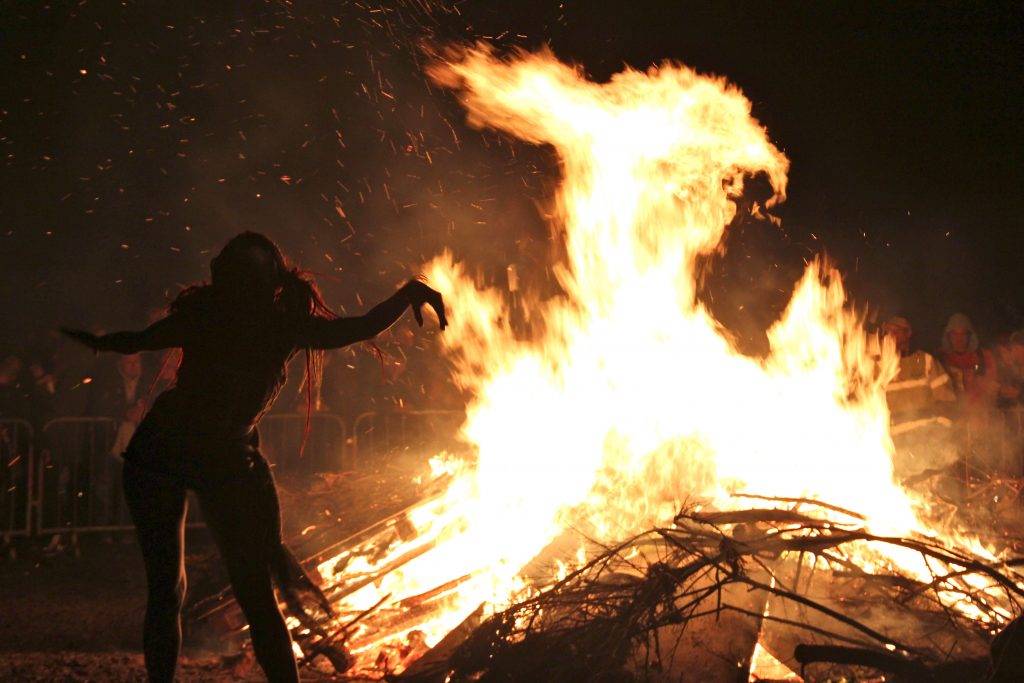
Кельтские сумерки… Жгучее пламя Белтайна,
Юность бурлящая, праздник пьянящей любви,
Яблонь кипенье и лент на ветру трепетанье,
Жаркие вздохи, ожог от простого касанья,
Хмель полнолунья, бродящий в горячей крови…Иннельда «Кельтские сумерки»
Древние кельты намного ближе к нам по времени, чем другие великие народы древности, но много ли мы о них знаем? Они не оставили нам грандиозных памятников своей культуры, как египтяне; не были столь скрупулёзны, записывая каждое своё деяние, как римляне. И всё-таки память о них продолжает жить. Отголоски кельтской цивилизации лучше всего сохранились в праздниках — таких как Самайн, превратившийся в современный Хэллоуин, и Майский день — Белтейн. О последнем и пойдёт речь.
Музыка для настроения: Loreena McKennit — Beltane Fire Dance
Время перемен
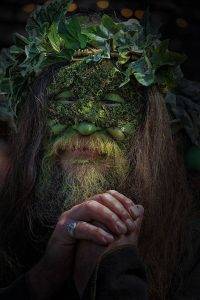
Маска, которую надевают, изображая «Зелёного Джека», когда-то, возможно, должна была изображать Беленоса (Фото: Vicki Burton, СС-BY-SA)
Название «Белтейн» указывает на древнее происхождение праздника. По одной из версий, оно означает «огонь Бела (Беленоса)», одного из кельтских богов солнца. Его культ был настолько распространён, что дошёл даже до римлян, которые отождествляли Беленоса с Аполлоном. Поскольку Белтейн отмечал начало светлой половины года, такое предположение не лишено смысла. Латинский автор Диодор Сициллийский, современник Юлия Цезаря, писал, что раз в девятнадцать лет, во время праздника весеннего равноденствия (то есть как раз Белтейна), Аполлон являлся своим почитателям на целый день и оставался с ними до первой звезды.
Другая версия перевода указывает на слово beltu (смерть), которое в современном гэльском языке не сохранилось, — осталась только его форма at-bai l (умирает). Дело в том, что год у кельтов делился на две основные части — тёмную и светлую, зиму и лето. Белтейн был началом светлой части года, днём рождения «большого солнца», и одновременно обозначал смерть «малого солнца» — тёмной части года, что, возможно, и объясняет название. Немаловажно и то, что Беленос отвечал не только за солнце — во многих легендах он также упоминается как бог смерти.

Согласно «Туманам Авалона», Артуру, чтобы стать королём, нужно было победить Короля-оленя во время празднования Белтейна
Белтейн был переломной точкой года. В этот день, как и на Самайн, граница между миром мёртвых и миром живых истончается. Двойственность этого праздника ярко отражена в мифологии: очень часто на Белтейн происходят великие события. Например, именно в этот день на землю Ирландии прибывали новые народы: род Партолона (первого жителя Ирландии), род Немеда, род Фир Болг, племена богини Дану, сыны Миля Эспейна. Они приносили с собой новую кровь, обычаи и знания, вытесняли предыдущих хозяев этих земель. Белтейн вовсе не обеспечивал безусловной победы нового над старым: так, племена Партолона в канун одного из Майских дней вымерли от чумы, поразившей весь род.
Если чему-то ужасному суждено случиться, оно тоже сбудется именно в день празднования Белтейна. «В ночь под первое мая» погибла Рианнон, кельтская богиня плодородия. В эпоху правления короля Ллудда «вечером на первое мая» два дракона вступили в отчаянную схватку друг с другом. Томас Мэлори в «Смерти Артура» пишет, что именно в этот день сэр Мелигранс похитил супругу Артура, королеву Гвиневру, гулявшую в лесу неподалеку от Вестминстера. Да и турнир лучников, на котором шериф Ноттингемский схватил Робина Гуда, проходил, как гласят баллады, как раз в Майский день.
По заветам друидов
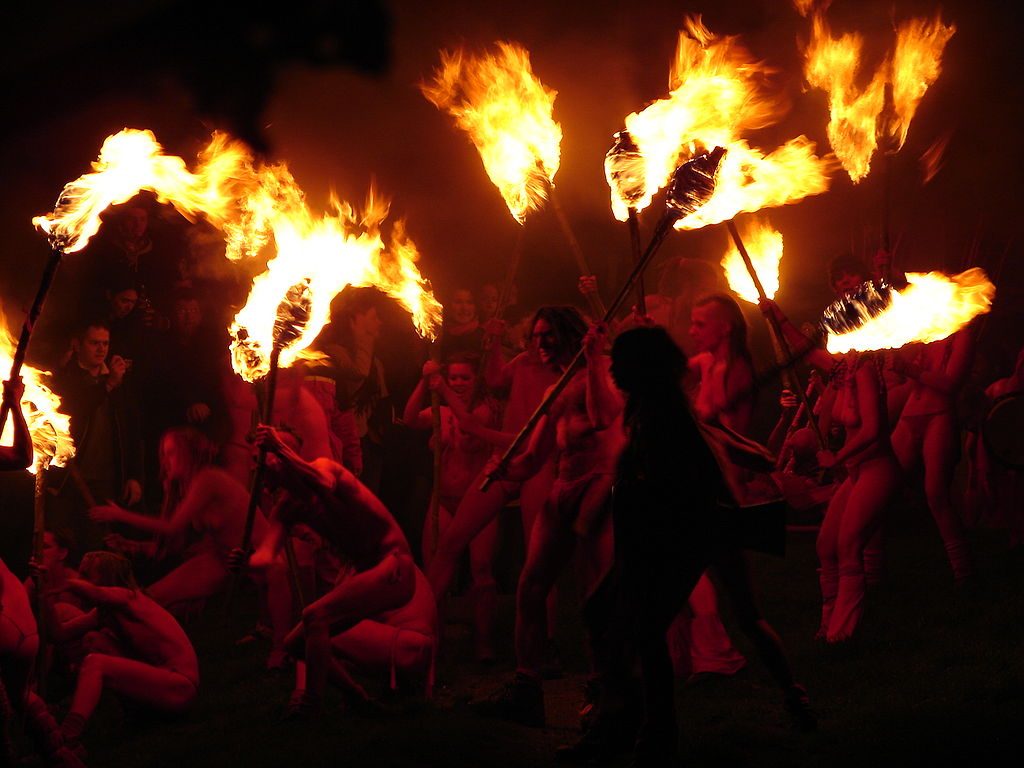
Празднование Белтейна в Шотландии в 2012 году. (Фото: SixSigma, СС-BY-SA)
Накануне праздника в каждом кельтском доме гасили огонь, а на самой высокой точке в селении раскладывали костёр. Деревья для костра можно было брать только определённого вида — обычно это были дубы. С восходом солнца друиды или, позже, старейшины селения добывали огонь трением и разжигали священный костёр. Не допускалось использовать железо или какие-либо инструменты для добывания огня. При этом возносились молитвы солнцу и силам природы с просьбой защитить людей и животных от всех болезней и несчастий, которые могли их подстерегать: засухи, града, наводнения.
Люди трижды обходили костёр сами и прогоняли вокруг него свой скот, зажигали от костра факелы и обносили дома, чтобы очистить их от всего дурного. Должникам, не выплатившим долг, преступникам и другим людям, как-либо запятнавшим себя, нельзя было разжигать огонь от священного костра — этот запрет был своего рода отлучением.
В противоположность щедрому Самайну на Белтейн, напротив, не полагалось делиться ничем: ни водой из дома, ни мукой, ни углём, ни молоком. Считалось, что вместе с даром из дома дающего уйдут удача и достаток.
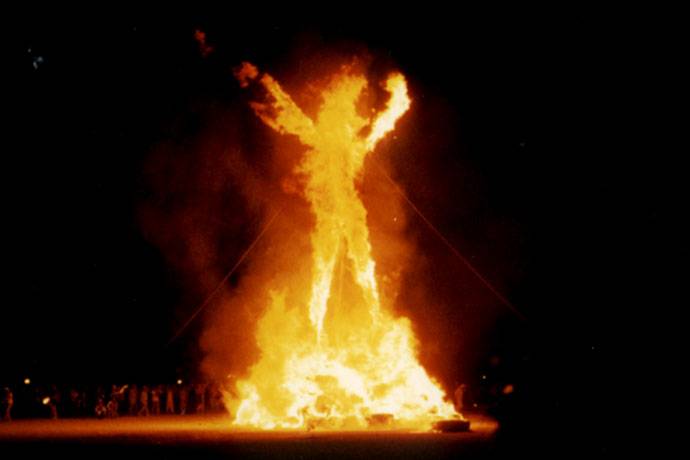
В древности кельты сжигали внутри «плетёного человека» жертвы — от продуктов до животных и людей. В наше гуманное время чучело жгут пустым (Фото: Aaron Logan, СС-BY)
Религия кельтов сохранила человеческие жертвоприношения — отголосок ещё более древних, первобытных верований. Об этом свидетельствуют записи Цезаря и многочисленные средневековые манускрипты, где описаны различные гэльские и ирландские легенды. Христианские переписчики не решились вносить искажение в древние тексты и ограничились лишь осуждением ужасных языческих обрядов на страницах рукописей.
Однако непосредственно на Белтейн человеческие жертвы приносились в основном добровольные: неизлечимые больные или калеки клялись отдать самих себя в жертву, а друиды помогали исполнить эту клятву. Со временем человеческие жертвы сменились сначала принесением в жертву животных, а ещё позже — символическим сожжением фигур или угощений.
Обычаи кельтов успели пострадать ещё до пришествия христианства. Хранителей этих обычаев, друидов, римляне уничтожали. Терпимые к чужим богам, они тем не менее видели в друидах ту силу, которая вдохновляла кельтов на сопротивление захватчикам. С исчезновением друидов многие обряды стали просто традицией, значения которой никто не понимал.
Кельтский календарь
Древние календари были основаны на солнечном или лунном циклах, тесно связанных с сельским хозяйством. День между весенним равноденствием и летним солнцестоянием означал очень важную для крестьянина дату — начало лета. Поэтому у каждого народа Европы был свой праздник, отмечаемый примерно в это время. Древние римляне праздновали фестиваль Флоры, кельты — Белтейн, валлийцы — Галан-Май, германцы и скандинавы — Вальпургиеву ночь, славяне — Живин день. Да и христианская Пасха изначально была иудейским праздником весны и обновления, связанным с легендарным исходом из Египта.
В кельтском календаре было восемь важнейших праздников. Четыре главных — Имболк, Белтейн, Лугнасад, Самайн, каждый из которых отмечал начало одного из времён года. Ещё четыре были связаны с крайними положениями солнца: весеннее равноденствие, летнее солнцестояние, осеннее равноденствие, зимнее солнцестояние. Самыми важными праздниками были Самайн и Белтейн.
Непокорённое язычество
И ещё немного музыки
В христианские времена церковь вытеснила Белтейн другими праздниками, близкими по дате, такими как Пасха, день Святой Вальпургии и праздник Святого Креста. Однако окончательно Белтейн не исчез. В Ирландии и Шотландии, где влияние церкви было слабее, он даже сохранил прежнее название, в других местах стал просто «Майским днём». Языческое наследие уходило медленно, и даже после запрета праздника многие продолжали собираться тайно. Отсюда и появились легенды о Вальпургиевой ночи с 30 апреля на 1 мая как о ночи ведьм.
В средневековой Ирландии главный огонь Белтейна зажигали в Уснехе, одном из религиозных центров страны. На костре обычно пекли «первомайские лепёшки», которые после выпекания нужно было класть только на ладонь, — если положить лепёшку на стол или землю, она становилась «обычной». Лепёшку делили на множество кусков, подкрашивали один углём, а затем, не глядя, тянули. Тот, кому достался кусок чёрного цвета, должен был трижды прыгнуть через костер, чтобы очиститься. Иногда к неудачнику целый день или даже год после праздника относились настороженно, как к нечистому или умершему. Впоследствии это сменилось присваиванием обидной клички на длительный срок.
В Шотландии, Ирландии и Уэльсе, где Белтейн был в основном связан с животноводством, он часто превращался в праздник пастухов — в этот день они ходили по дворам, собирая подношения для посиделок, пекли особые пироги, кусочками которых задабривали диких животных, чтобы те не трогали стада. У англосаксов праздник был в большей степени связан с растениями, цветами и зеленью. Сохраняя некоторые основные черты, такие как майские костры, Белтейн в Англии приобрёл свои особенности. В этот день выбирались Майские Король и Королева (обычно самые красивые юноша и девушка), живые воплощения бога и богини плодородия, которые на этот день становились парой и руководили праздником.
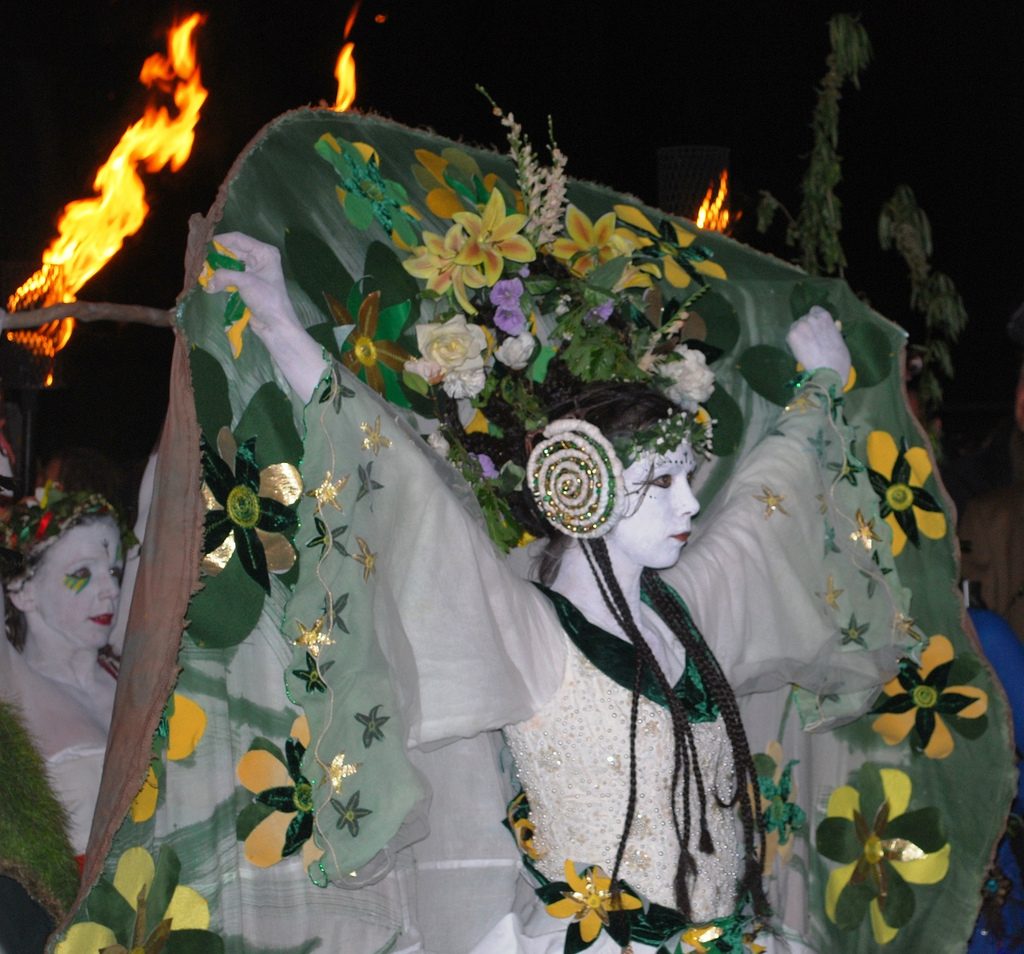
Майская королева (Фото: Debs, CC-BY)
Будучи днём пробуждения природы, пиком силы плодородия, Белтейн считался идеальным временем для заключения браков. Перед праздником и после него пары уходили в лес «собирать май», а к утру возвращались, держа в руках цветы и ветки деревьев. Пуританин Филипп Стейбс, описывая в XVI веке этот обычай, возмущался, что едва ли треть девушек после таких гуляний возвращается домой, не потеряв невинности.
Сегодня Майский день утратил своё сакральное значение, но его продолжают активно отмечать по всей Европе. В этот день проводят народные гулянья; к майским празднованиям приурочивают весенние ярмарки. В Дублине Майский день сопровождается парадом волынщиков, уличным шествием, флагами, выставками, фейерверками и, конечно же, элем. А в современном неоязычестве Белтейн играет почти такую же роль, как у древних кельтов: это священный праздник, один из важнейших в году.
Майский шест
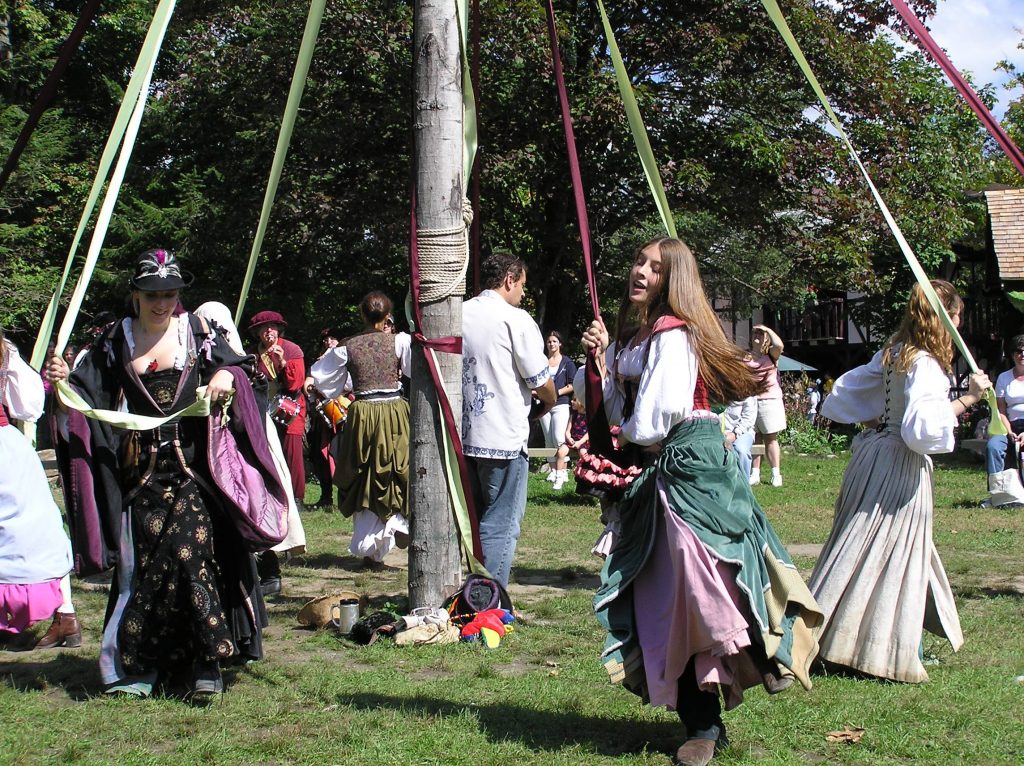
Традиция сооружать «майское древо», или «майский шест» — германского происхождения, на Британские острова её завезли англосаксы. Шест символизировал бога, оплодотворяющего землю. К верхушке шеста подвешивали большой венок, который, как и само древо, украшался цветами и лентами. Шест становился центром майских гуляний: вокруг него водили хороводы, устраивали игры. Каждая деревня бдительно стерегла свое майское древо, одновременно стараясь выкрасть древо соседей. Если это удавалось, проигравшая сторона выкупала своё древо за эль, пиво или сласти.
Вдохновлённые Белтейном
Тёмные силы испортили Ранду праздник в первой же главе. Он будет мстить им одиннадцать томов
Как и многие другие языческие праздники, Белтейн отлично прижился в мирах фантастики. Хотя Майский день и уступает по популярности Самайну-Хэллоуину, зато, в отличие от него, Белтейн в фэнтези практически не отличается от реального прототипа. Лишь название его иногда варьируется, но всегда выглядит узнаваемо. Сохранил он и мистическую природу, оставаясь днём великих перемен и эпохальных событий.
Бэл Тайн герои «Колеса Времени» Роберта Джордана праздновали с размахом: разожгли костёр, поставили празднично украшенный шест и устроили гуляния. Но в этот же день троллоки напали на деревню главного героя, Ранда. Это событие навсегда изменило не только его собственную жизнь, но и судьбу мира. Подобную роль праздник играет и в «Ордене манускрипта» Тэда Уильямса: именно в канун майской ночи король Элиас продал душу за магический меч. А наутро его подданные весело плясали вокруг майского шеста, не подозревая о произошедшем.
У Анджея Сапковского на Беллетэйн в разные годы родились сразу две важных героини цикла «Ведьмак»: колдунья Йеннифэр и Цири, дитя-неожиданность. А ещё одной майской ночью, описанной в рассказе «Нечто большее», Йеннифэр и Геральт снова встретились после долгой разлуки.
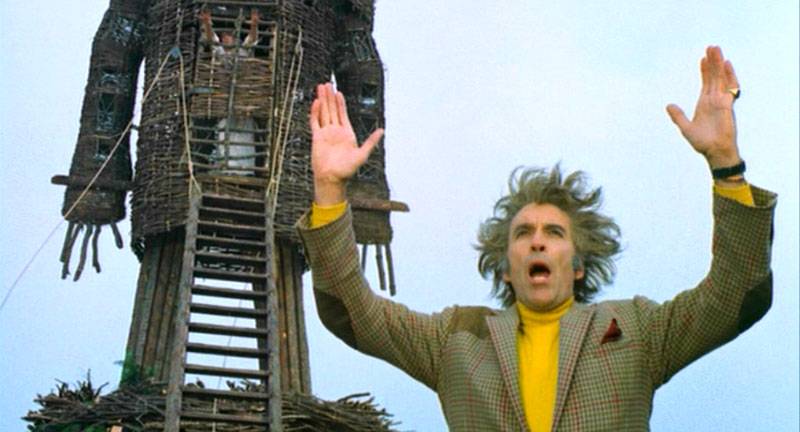
У злодеев из «Плетёного человека» есть реальный план, как поднять сельское хозяйство!
Белтейн продолжает жить не только в вымышленных мирах. Многие авторы описывают таинственные события, напрямую связанные с Белтейном, которые происходят в нашем мире и в наше время. Нередко майская ночь становится ареной для хоррора. Так, убийца-язычник из романа Мэри Стюарт «Костёр в ночи» совершал человеческие жертвоприношения в день Белтейна по юлианскому календарю — 13 мая. Он перерезал жертвам горло и бросал их в костёр. Ещё более жуткую историю рассказывают фильм «Плетёный человек» (1973) и его римейк 2006 года: крестьяне-язычники, пострадавшие от неурожая, вернулись к самым древним культам и на Майский день приносили людей в жертву богам.
Большую популярность обрели сюжеты, в которых именно на Белтейн зарождаются чувства между героями (очень часто — тайными колдунами или неоязычниками). Такие истории рассказываются в книгах Эрин О’Риордан «Белтейн», Жаклин Пэйдж «От магии Белтейна» и Селены Сильвервинд «Однажды накануне Белтейна». В романе «Изабель» Гая Гэвриела Кея юноша по имени Нэд участвует в событиях тысячелетней давности и встречает девушку своей мечты. И всё благодаря Белтайну, дню, когда встречаются прошлое и настоящее.
Для Йеннифэр и Геральта майская ночь стала ночью любви
***
Кельтская цивилизация давно ушла в прошлое, а её потомки растворились и смешались с потомками других народов. Но их наследие пережило своих создателей и продолжает жить в традициях и праздниках, музыке и фольклоре, становится щедрым источником для человеческой фантазии. Кельты оставили нам легенду, миф, заставляющий сердце биться чаще и мечтать об Острове яблок, который вот-вот покажется в тумане.
Поприветствуем же: «Helo, Bealltainn!»
Если вы нашли опечатку, пожалуйста, выделите фрагмент текста и нажмите Ctrl+Enter.

Показать комментарии
Кельтский календарь и праздники
Невозможно постичь истину, не зная ее истоков.
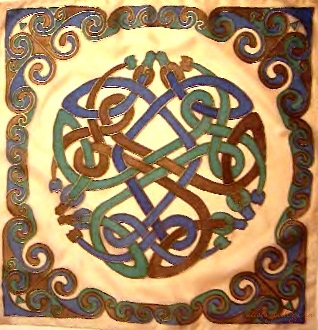
Календарный год кельтов делился на два равных периода, открывавшихся большими праздниками —
Самайном (Самхейн) 1 ноября и Бельтайном (Бельтэйн, Белтан) — 1 мая.
Эти даты были связаны с важнейшими вехами скотоводческого календаря —
выгоном скота на летние пастбища в первые числа мая и возвращение его в стойла на зимний период — к 1 ноября.
Разделы страницы о земледельчески-религиозном календаре древних
и кельтов,
чьи жрецы-друиды изобрели древесный и цветочный
гороскопы:
- Обзор календаря кельтских племён
- Зимние праздники кельтов
- Весенние праздники кельтов
- Летние праздники кельтов
- Осенние праздники кельтов
- Источники по кельтскому календарю
Смотрите также страницу о древних календарях, в т.ч.
календаре славян.
Обзор календаря кельтских племён
Главные календарные кельтские праздники:
- Йоль (Yule) — зимнее солнцестояние, 21-22 декабря
- Имболк (Imbolc) — 1-2 февраля
- Остара (Ostara) — весеннее равноденствие, 21-22 марта
- Белтайн (Bealtaine) — ночь с 30 апреля на 1 мая
- Лита (Litha) — летнее солнцестояние, 21-22 июня
- Ламмас / Лугнасад (Lughnasadh) — 1-2 августа
- Мабон (Mabon) — осеннее равноденствие, 21-22 сентября
- Самайн (Samhain) — ночь с 31 октября на 1 ноября
Зимние праздники кельтов
21-22 декабря — кельтский праздник Йоль (Yule)
Йоль (Yule) — это день зимнего солнцестояния.
В дни этого праздника все приветствовали Новое солнце, которое восстало из мрака.
1-2 февраля — кельтский праздник Имболк (Imbolc)
Имболк (Imbolc) — возвращение Света. Это, по сути, конец зимы.
Традиционно в этот праздники проводили ритуалы, направленные на благополучие.
Это праздник огней и факелов.
Весенние праздники кельтов
21-22 марта — кельтский праздник Остара (Ostara)
Остара (Ostara) — день весеннего равноденствия — истинного начала весны.
Это кельтский гимн свободе и жизни.
1 мая — кельтский праздник Бельтайн (Бельтэйн, Белтан)
Отмечаемый в ночь с 30 апреля на 1 мая праздник Бельтайн (Bealtaine)
был одним из двух самых важных праздников кельтского календарного года.
Считалось, что в этот день приоткрывались двери другого мира.
Белтайн — середина между весенним равноденствием и летним солнцестоянием, знаменовал собой — приход лета.
В этот день люди просили богов продлить хорошую погоду, чтобы бы было больше урожая.
По славянскому языческому календарю
1 мая (по старому стилю) отмечался
День богини Живаны (Живин День),
который сейчас в русском православии
называется «Перенесение мощей благоверных Бориса и Глеба» (по простонародному — «Борис Хлебник», Борис и Глеб – сеятели»).
Этот день также по-народному называется Соловьиный праздник (укр. «Солов’їний Великдень»), День кукушек,
Свистозарник, Свистуньи, Свистопляски, Праздник первых ростков, Всходы, Вьюны
и начинает неделю под названием Зелёные святки.
К этому дню близки и другие христианские праздники, которые в народе называются Афанасий тёплый и Еремей Запрягальник.
Кроме того, к нему иногда приближается и зависящий от Пасхи День Святого Духа.
Летние праздники кельтов
21-22 июня — кельтский праздник Лита (Litha)
Лита (Litha) — день летнего солнцестояния — момент, когда мир знатонится зрелым, наполняется энергией и силой.
Главное межвременье для друидов. Точка отсчета, с которой Солнце начинает свое движение к «смерти».
Языческий праздник Лита — точка, в которой свершается все.
1 августа — кельтский праздник Лугнасад (Луннаса, Лламас)
Лугнаса́д (Lughnasadh) — название месяца август у кельтов, а также кельтский языческий праздник начала осени, который отмечают 1 августа (31.07 -02.08).
Его название переводится как «сборище Луга» или «свадьба Луга» [свадьбами раньше называли просто праздники, как у тюрков — той].
По легенде, его установил кельтский бог Луг в честь своей приёмной матери, богини Тайльтиу после её смерти.
Поэтому праздник этот — в честь бога Луга — покровителя земледелия и ремесел.
Лугнасад всегда сопровождался песнями, плясками и различными игрищами.
В кельтские временя Лугнасад не был исключительно земледельческим праздником сбора урожая.
В это время, например, устраивались собрания законоведов и судей, на которые мог явиться любой свободный человек
и обратиться за справедливостью как к законникам, так и к самому королю.
Эти общие собрания сопровождались торжищами, куда приезжали как земледельцы, так и ремесленники,
так и пирами, которые устраивал король для своих подданных.
Осенние праздники кельтов
21-22 сентября — кельтский праздник Мабон (Mabon)
Мабон (Mabon) день осеннего равноденствия.
Это время для сбора последних урожаев, время подводить итоги.
31 октября — кельтский праздник Хэллоуин
Сейчас это считается кануном Дня всех святых.
У кельтов это был канун перед началом их зимы — днём Самхэйна.
1 ноября — кельтский праздник Самайн (Самхейн)
Праздник Самайн (Самхейн) у кельтов диаметрально противоположен Бельтайну.
Праздник Samhain тесно связан с темой смерти и почитания предков.
Означал окончательное завершение сельскохозяйственных работ.
У католиков 1 ноября (по новому стилю) — День Всех Святых.
В народном календаре славян 1 ноября (по старому стилю) — День св. Кузьмы и Демьяна.
У древних славян это был праздник бога-кузнеца Сварога.
Источники по кельтскому календарю
На правах рекламы (см.
условия):
|
На русском языке: кельтский календарь, праздники кельтов, дни древнекельтских богов,
На английском языке: Celtic calendar, Keltic archeoastronomy.
|
Страница обновлена 29.09.2022
|
|
|
|


Язычество — это Поэзия…
Здравствуйте, друзья!
Вы, конечно, слышали про места силы. А про дни силы? Почему я все это собрала почти в одно предложение, и причем тут Колесо года? Да и кто такие, в конце концов, последователи викки?
Ну, с последними просто. Викка — это неоязыческая религия запада, основанная на почитании природы. Считается, что возникла она в начале 20-го века, но своими корнями уходит далеко вглубь веков. Одной из особенностей викки является празднование восьми праздников Колеса года. На Википедии есть большая статья о ней, можете там подробнее почитать.
А я не стану углубляться в эту религию, меня интересует исключительно языческое Колесо года. Дело в том, что я все чаще и чаще к нему возвращаюсь: у меня было уже две статьи, про два праздника Колеса Года. Скоро февраль, запланирована третья статья. Так вышло случайно, но раз уж я иду по порядку, от одного праздника к другому, то стоит все-таки рассказать о том, что их объединяет.
Что такое Колесо года?
А объединяет их кельтское Колесо года. Но что это?
Люди древности представляли цикличность природы, смену погодных сезонов, как этапы жизни человека: рождение, взросление, старение, смерть, перерождение. Не только кельты, славяне тоже. Языческое Колесо года — это, своего рода, визуализация цикличности природы, где праздниками отмечены точки перехода из сезона в сезон.
В викканской традиции Колесо года — это цикл колдовских праздников.
Состоит оно из восьми праздников: четырех больших (большие огненные шабаши или Великие саббаты) и четырех малых. Четыре праздника завязаны на четырех значимых для язычников астрономических явлениях — равноденствиях (весеннем и осеннем) и солнцестояниях (зимним и летним).
Все восемь праздников очень и очень древние, они дошли до наших дней, естественно, не полностью, не в истинном виде. Что-то потерялось в веках, что-то изменилось.
И если вы думаете, что только современные язычники и эзотерики их отмечают, то глубоко заблуждаетесь. Часть из кельтских праздников, которые входят в Колесо года, со временем были заменены на христианские или светские. Например, всем известный Хеллоуин.
Был канун праздника Юлтайд, и хотя теперь его называют Рождеством, все в глубине души знают, что он старше Вифлеема и Вавилона, старше Мемфиса и вообще человечества…
Праздники Колеса года
У наших предков славян было свое Годовое колесо, оно называлось Коло Сварога, суть та же, но разница есть. О славянских праздниках, мы поговорим в другой статье, а сегодня на повестке дня кельты.
У древних кельтов, не было привычных нам времен года: они делили год на четыре части, которые соответствовали какому-то времени года. Специальных названий тоже не было, кельтские «времена года» назывались по праздникам Годового колеса.
Кельтские праздники
-
Йоль (Yule) — зимнее солнцестояние, 21-22 декабря
-
Имболк (Imbolc) — 1-2 февраля
-
Остара (Ostara) — весеннее равноденствие, 21-22 марта
-
Белтайн (Bealtaine) — ночь с 30 апреля на 1 мая
-
Лита (Litha) — летнее солнцестояние, 21-22 июня
-
Ламмас/Лугнасад (Lughnasadh) — 1-2 августа
-
Мабон (Mabon) — осеннее равноденствие, 21-22 сентября
-
Самайн (Samhain) — ночь с 31 октября на 1 ноября
Из этих восьми, было четыре главных праздника: Имболк, Белтайн, Лугнасад, Самайн. И хотя, у этих праздников была привязка к определенным датам, дни их торжества все же больше ориентировались на какие-либо природные события. Так, Белтайн праздновали, когда отцветал боярышник. Это еще раз показывает нам сильную связь человека и природы.
Начало праздника всегда выпадало на вечер. Ночь для кельтов была, скажем так, важнее дня. То есть, отчет нового дня вели не с утра, как сейчас делаем мы, а с вечера.
Йоль (Yule). В дни этого праздника все приветствовали Новое солнце, которое восстало из мрака. Большая статья об этом празднике находится тут: Языческий праздник Йоль — ритуалы и история: как отмечали праздник зимнего солнцестояния северные народы.
Имболк (Imbolc) — Возвращение Света. Это, по сути, конец зимы. Традиционно в этот праздники проводили ритуалы, направленные на благополучие. Статья о празднике: Имболк (Imbolc) — праздник Огней и факелов: как праздновать Имболк.
Остара (Ostara). День весеннего равноденствия — день истинного начала весны. Про Остару есть отдельная статья: Древний праздник Остара — гимн свободе и жизни: весеннее равноденствие у кельтов.
Белтайн (Bealtaine). День, когда приоткрывались двери другого мира. Белтайн — середина между весенним равноденствием и летним солнцестоянием, знаменовал собой — приход лета. В этот день люди просили богов продлить хорошую погоду, чтобы бы было больше урожая. Статья по теме: Белтайн — кельтский праздник: волшебное время начала лета.
Лита (Litha). Летнее солнцестояние — момент, когда мир знатонится зрелым, наполняется энергией и силой. Главное межвременье для друидов.Точка отсчета, с которой Солнце начинает свое движение к «смерти». Статья: Языческий праздник Лита — точка, в которой свершается все!
Лугнасад (Lughnasadh). Праздник в честь кельтского бога Луга — покровителя земледелия и ремесел. Лугнасад всегда сопровождался песнями, плясками и различными игрищами.
Мабон (Mabon). Осеннее равноденствие — время подводить итоги. Также время для сбора последних урожаев.
Самайн (Samhain). Праздник тесно связан с темой смерти и почитания предков. Означал окончательное завершение сельскохозяйственных работ. Статья на сайте: Хэллоуин (Halloween) канун Дня Всех Святых история и некоторые факты. Древний кельтский праздник Самайн
Какой праздник заканчивал год? Тут несколько вариантов:
- Например, у северных народов, год заканчивался Йолем.
- А в викканской традиции — Самайном.
Зачем отмечают праздники Колеса года?
Да, все верно. Праздники Колеса года отмечают и в наши дни. А зачем? Ладно люди прошлого, тогда важно было знать, когда начинать те или иные сельскохозяйственные работы, сейчас же мы меньше обращаем на это внимания. Раньше наша связь с природой была сильнее, сейчас все не так. Тогда зачем эти праздники?
Ну, кто-то продолжает чтить связь с природой и в 21-ом веке. Но чаще всего, Дни силы (а именно таковыми считались и продолжают считаться праздники Колеса года) отмечают люди, занимающиеся магическими практиками.
-
Для того, чтобы набраться энергии;
-
Увеличить свои силы;
-
Поставить новые цели;
-
И так далее.
Для многих из нас, кельтские праздники не несут какого-то тайного сакрального смысла, а просто вызывают интерес (и то, далеко не у всех).
На этом, я закончу небольшую заметку. Однако, она будет пополняться ссылками на статьи, в которых традиции и история каждого праздника раскрывается более подробно.
Цикл стихов
Но прежде, чем совсем уйду, я хочу познакомить вас с циклом стихов Екатерины Смирновой «Колесо года». Лично я их отметила, может и вам будет интересно.


Вот теперь точно все. Всего вам доброго, друзья!
Последователи викканской традиции насчитывают 8 таких, праздники сегодня: Самайн, Имболк, Бельтайн и Лугнасад являются празднествами, знаменующими начало определенного времени года.
Йоль, Остара, Лита и Мабон — празднества в честь перехода особых сезонных точек: зимнего и летнего солнцестояния, весеннего и осеннего равноденствия.Восьмичастное деление колеса года — изобретение последователей Викки — современной неоязыческой религии, основанной на поклонении природе. Восемь праздников, составляющих викканское колесо года, никогда не праздновались все вместе: они перекочевали в Викку из двух традиций — германской и кельтской.
Четыре великих языческих праздника — Самайн, Имболк, Бельтайн и Лугнасад — были заимствованы неоязычниками именно у кельтов. В кельтской традиции принято считать дни «от вечера к вечеру» и приурочивать праздники к полнолунию, поэтому начало праздника приходилось на вечер предыдущего дня и выпадало, соответственно, на 31 октября (Самайн), 31 января (Имболк), 30 апреля (Бельтайн) и 31 июля (Лугнасад).
Самайн (Samhain) — начало нового года у кельтов, праздник сбора урожая, знаменовавший смену одного аграрного года другим. Самайн считался последним днем сбора урожая, сопряженного с заготовками на зиму съестных припасов и забоем скота, и отмечался в ночь с 31 октября на 1 ноября.
Празднование Самайна тесно связано со смертью — в эту ночь погибало Солнце, чтобы весной воскреснуть вновь. В некоторых частях Британских островов Самайн был известен как «праздник мертвых»: считалось, что в ночь Самайна умирают люди, нарушившие особые запреты — гейсы. Их преступление влечет за собой неминуемую гибель или иные тяжкие последствия. Более того, Самайн считался временем, когда стирается граница между реальным и потусторонним миром — миром живых и мертвых, людей и духов, богов и смертных. Кельты полагали, что в эту ночь к празднованию людей присоединялись сиды — божественные существа, обитающие внутри холмов. Высокие, прекрасные и утонченные, они часто сватались к кельтским женщинам, забирая их с собой по окончании празднования, предсказывали будущее, избавляли от смерти и старости.

Фото: 66.RU от партнеров
Еще одна отличительная особенность этого кельтского праздника — «огни Самайна». По кельтским поверьям, в ночь Самайна силы Солнца вступают в противоборство с силами зимы и холода и терпят поражение. Для того чтобы увеличить силу ослабленного Солнца, кельты разжигали большие костры на вершинах холмов и в священных рощах. Друиды — жрецы кельтов — рассматривали опаленные кости принесенных в жертву животных, предсказывая по ним будущее, и танцевали вокруг пылающих костров до самого рассвета. Простые же люди прыгали через взвивающиеся языки пламени или пробегали между расположенных рядом костров, совершая т.н. «ритуал очищения огнем».
Имболк (Imbolc) — кельтский праздник прихода весны. Именно с него в современной викканской традиции начинается цикл праздников колеса года. Один из переводов названия праздника — «в молоке» или «овечье молоко» и это не случайно: в конце января — начале февраля отеляется домашний скот, поэтому Имболк и считается праздником молока. После суровой зимы, когда съестные запасы иссякают, молочные продукты — главное угощение на праздничном столе.
Так же, как и в другие кельтские праздники, на Имболк сооружают и жгут костры, но, в отличие от погребального костра Самайна, Имболк несет огонь очищения и возрождения. В ночь Имболка на улицах устраиваются фестивали огня и факельные шествия, разводят костры и зажигают свечи, горящие до рассвета. Имболк — длительный, праздники в январе: начинаясь 31 января (в зависимости от года, дата начала может сдвигаться как в сторону 29 января, так и на 1 — 2 февраля), он продолжается целую неделю.
В кельтской традиции Имболк посвящен Бригитте — триединой богине природы, жизненной и творческой силы, пробуждения и возрождения. Она считается покровительницей семейного очага и материнства, а также творчества и ремесла. Согласно легендам, Бригитта родилась с пламенем на голове, но это пламя не жжет и не ранит, а приносит облегчение и исцеление, очищает и вдохновляет, дарит надежду и вдыхает новые силы. Это пламя — истинный огонь Имболка.

Фото: 66.RU от партнеров
Бельтайн (Beltaine) — кельтский праздник начала лета и пастбищного сезона. По наиболее распространенной версии, название праздника переводится как «сияющий огонь» и «огонь Бела», что связывает его с кельтским божеством солнечного света и огня Белом. Считалось, что в этот день Бел спускается на землю, поэтому друиды подносили ему символические жертвы.
Традиционное время празднования Бельтайна — с вечера 30 апреля по вечер 1 мая. В это время зима переходит в лето, темное время суток сменяется светлым, и вместе с возрождением природы начинается новый жизненный цикл.
На Бельтайн, так же, как и на прочие кельтские праздники, разжигались костры, но это были уже не погребальные костры Самайна и не очищающие огни Имболка, а бушующие огни страсти, несущие энергию жизни, обещающие плодородный год. В ночь накануне Бельтайна жители кельтских поселений гасили все огни. Затем, под предводительством жрецов в белоснежных одеждах, они начинали восхождение на ближайшую гору, подгоняя домашний скот вверх по склонам. Добравшись до подготовленного под костер места, они останавливались и в ночной тишине ждали первых лучей солнца. Едва рассвет забрезжил на горизонте — кельты торжественно разжигали два костра и воспевали Солнце — бога Бела. Как и на Самайн, люди прыгали через костры, а также прогоняли между кострами домашний скот, чтобы очистить его от всевозможной скверны.
Лугнасад (Lughnasadh), или «свадьба Луга» — кельтский праздник начала осени и первого урожая. По преданию, его установил бог Луг — покровитель искусств и ремесел — в почитание богини Тайльтиу (Таилтине) — своей приемной матери, имя которой переводится как «земля». Именно в это время года заканчивается цветение растений и деревьев, начинается созревание семян и плодов, и природа от жаркого лета переходит к яркой, изобильной осени. Лугнасад традиционно празднуется с 31 июля на 1 августа, однако зачастую дата праздника выпадает на последнее воскресенье июля или первое воскресенье августа.
Празднование «свадьбы Луга» имеет несколько интересных традиций. Так, кельты брали большое колесо от телеги, смазывали его дегтем, поджигали и спускали с холма. Крутящееся пылающее колесо служило символом окончания лета и началом умирания бога Солнца, который окончательно проиграет и падет в сражении с темными силами на Самайн. В Шотландии на Лугнасад, после окончания жатвы, младший ребенок в семье должен был срезать последний сноп пшеницы и сплести из него куклу. На Лугнасад выпадает начало сбора черники. Эта ягода имела большое значение для ирландцев, считавших ее символом изобилия земли. В окрестностях Дублина и по сей день в последнее воскресенье июля, именуемое «черничным воскресеньем», собирают эти ароматные ягоды.

Фото: 66.RU от партнеров