

St Martin’s Day Kermis by Peeter Baltens (16th century), shows peasants celebrating by drinking the first wine of the season, and a horseman representing the saint
Saint Martin’s Day or Martinmas, sometimes historically called Old Halloween or Old Hallowmas Eve,[1][2] is the feast day of Saint Martin of Tours and is celebrated in the liturgical year on 11 November. In the Middle Ages and early modern period, it was an important festival in many parts of Europe, particularly Germanic-speaking regions. In these regions, it marked the end of the harvest season and beginning of winter.[3] and the «winter revelling season». Traditions include feasting on ‘Martinmas goose’ or ‘Martinmas beef’, drinking the first wine of the season, and mumming. In some German and Dutch-speaking towns, there are processions of children with lanterns (Laternelaufen), sometimes led by a horseman representing St Martin. The saint was also said to bestow gifts on children. In the Rhineland, it is also marked by lighting bonfires.
Martin of Tours (died 397) was a Roman soldier who was baptized as an adult and became a bishop in Gaul. He is best known for the tale whereby he cut his cloak in half with his sword, to give half to a beggar who was dressed in only rags in the depth of winter. That night Martin had a vision of Jesus Christ wearing the half-cloak.[4][5]
Customs[edit]

A tradition on St Martin’s Eve or Day is to share a goose for dinner.
Traditionally, in many parts of Europe, St Martin’s Day marked the end of the harvest and the beginning of winter. The feast coincides with the end of the Octave of Allhallowtide.
Feasting and drinking[edit]
Martinmas was traditionally when livestock were slaughtered for winter provision.[6] It may originally have been a time of animal sacrifice, as the Old English name for November was Blōtmōnaþ (‘sacrifice month’).[7]
Goose is eaten at Martinmas in most places. There is a legend that St Martin, when trying to avoid being ordained bishop, hid in a pen of geese whose cackling gave him away. Once a key medieval autumn feast, a custom of eating goose on the day spread to Sweden from France. It was primarily observed by the craftsmen and noblemen of the towns. In the peasant community, not everyone could afford this, so many ate duck or hen instead.[8]
In winegrowing regions of Europe, the first wine was ready around the time of Martinmas. Although there was no mention of a link between St Martin and winegrowing by Gregory of Tours or other early hagiographers, St Martin is widely credited in France with helping to spread winemaking throughout the region of Tours (Touraine) and facilitating vine-planting. The old Greek tale that Aristaeus discovered the advantage of pruning vines after watching a goat has been appropriated to St Martin.[9] He is credited with introducing the Chenin blanc grape, from which most of the white wine of western Touraine and Anjou is made.[9]
Bonfires and lanterns[edit]
Bonfires are lit on St Martin’s Eve in the Rhineland region of Germany. In the fifteenth century, these bonfires were so numerous that the festival was nicknamed Funkentag (spark day).[7] In the nineteenth century it was recorded that young people danced around the fire and leapt through the flames, and that the ashes were strewn on the fields to make them fertile.[7] Similar customs were part of the Gaelic festival Samhain (1 November).
In some German and Dutch-speaking towns, there are nighttime processions of children carrying paper lanterns or turnip lanterns and singing songs of St Martin.[7] These processions are known in German as Laternelaufen.
Gift-bringers[edit]
In parts of Flanders and the Rhineland, processions are led by a man on horseback representing St Martin, who may give out apples, nuts, cakes or other sweets for children.[7] Historically, in Ypres, children hung up stockings filled with hay on Martinmas Eve, and awoke the next morning to find gifts in them. These were said to have been left by St Martin as thanks for the fodder provided for his horse.[7]
In the Swabia and Ansbach regions of Germany, a character called Pelzmärten (‘pelt Martin’ or ‘skin Martin’) appeared at Martinmas until the 19th century. With a black face and wearing a cow bell, he ran about frightening children, and he dealt out blows as well as nuts and apples.[7]
Eve of St Martin’s Lent[edit]
In the 6th century, church councils began requiring fasting on all days, except Saturdays and Sundays, from Saint Martin’s Day to Epiphany (elsewhere, the Feast of the Three Wise Men for the stopping of the star over Bethlehem)[10] on January 6 (56 days). An addition to and an equivalent to the 40 days fasting of Lent, given its weekend breaks, this was called Quadragesima Sancti Martini (Saint Martin’s Lent, or literally «the fortieth of»).[11] This is rarely observed now. This period was shortened to begin on the Sunday before December and became the current Advent within a few centuries.[12]
Celebrations by culture[edit]
Germanic[edit]
Austrian[edit]
In Austria, St Martin’s Day is celebrated the same way as in Germany. The nights before and on the night of 11 November, children walk in processions carrying lanterns, which they made in school, and sing Martin songs.[citation needed] Martinloben is celebrated as a collective festival. Events include art exhibitions, wine tastings, and live music. Martinigansl (roasted goose) is the traditional dish of the season.[13]
Dutch and Flemish[edit]
In the Netherlands, on the evening of 11 November, children go door to door (mostly under parental supervision) with lanterns made of hollowed-out sugar beet or, more recently, paper, singing songs such as «Sinte(re) Sinte(re) Maarten», to receive sweets or fruit in return. In the past, poor people would visit farms on 11 November to get food for the winter. In the 1600s, the city of Amsterdam held boat races on the IJ, where 400 to 500 light craft, both rowing boats and sailboats, took part with a vast crowd on the banks. St Martin is the patron saint of the city of Utrecht, and St Martin’s Day is celebrated there with a big lantern parade.[citation needed]
In Flanders, the Dutch-speaking part of Belgium, St Martin’s Eve is celebrated on the evening of 10 November, mainly in West Flanders and around Ypres. Children go through the streets with paper lanterns and candles, and sing songs about St Martin. Sometimes, a man dressed as St Martin rides on a horse in front of the procession.[14] The children receive presents from either their friends or family as supposedly coming from St Martin.[citation needed] In some areas, there is a traditional goose meal.[citation needed]
In Wervik, children go from door to door, singing traditional «Séngmarténg» songs, sporting a hollow beetroot with a carved face and a candle inside called «Bolle Séngmarténg»; they gather at an evening bonfire. At the end the beetroots are thrown into the fire, and pancakes are served.[citation needed]
English[edit]
Martinmas was widely celebrated on 11 November in medieval and early modern England. In his study «Medieval English Martinmesse: The Archaeology of a Forgotten Festival», Martin Walsh describes Martinmas as a festival marking the end of the harvest season and beginning of winter.[6] He suggests it had pre-Christian roots.[6] Martinmas ushered in the «winter revelling season» and involved feasting on the meat of livestock that had been slaughtered for winter provision (especially ‘Martlemas beef’), drinking, storytelling, and mumming.[6] It was a time for saying farewell to travelling ploughmen, who shared in the feast along with the harvest-workers.[6]
According to Walsh, Martinmas eventually died out in England as a result of the English Reformation, the emergence of Guy Fawkes Night (5 November), as well as changes in farming and the Industrial Revolution.[6] Today, 11 November is Remembrance Day.
German[edit]

A widespread custom in Germany is to light bonfires, called Martinsfeuer, on St Martin’s Eve. In recent years, the processions that accompany those fires have been spread over almost a fortnight before Martinmas (Martinstag). At one time, the Rhine River valley would be lined with fires on the eve of Martinmas. In the Rhineland, Martin’s day is celebrated traditionally with a get-together during which a roasted suckling pig is shared with the neighbours.
The nights before and on the eve itself, children walk in processions called Laternelaufen, carrying lanterns, which they made in school, and sing St Martin’s songs. Usually, the walk starts at a church and goes to a public square. A man on horseback representing St Martin accompanies the children. When they reach the square, Martin’s bonfire is lit and Martin’s pretzels are distributed.[15]
In the Rhineland, the children also go from house to house with their lanterns, sing songs and get candy in return. The origin of the procession of lanterns is unclear. To some, it is a substitute for the Martinmas bonfire, which is still lit in a few cities and villages throughout Europe. It formerly symbolized the light that holiness brings to the darkness, just as St Martin brought hope to the poor through his good deeds. Even though the bonfire tradition is gradually being lost, the procession of lanterns is still practiced.[16]
A Martinsgans («St Martin’s goose»), is typically served on St Martin’s Eve following the procession of lanterns. «Martinsgans» is usually served in restaurants, roasted, with red cabbage and dumplings.[16]
The traditional sweet of Martinmas in the Rhineland is Martinshörnchen, a pastry shaped in the form of a croissant, which recalls both the hooves of St Martin’s horse and, by being the half of a pretzel, the parting of his mantle. In some areas, these pastries are instead shaped like men (Stutenkerl or Weckmänner).
St Martin’s Day is also celebrated in German Lorraine and Alsace, which border the Rhineland and are now part of France. Children receive gifts and sweets. In Alsace, in particular the Haut-Rhin mountainous region, families with young children make lanterns out of painted paper that they carry in a colourful procession up the mountain at night. Some schools organise these events, in particular schools of the Rudolf Steiner (Waldorf education) pedagogy. In these regions, the day marks the beginning of the holiday season.[citation needed] In the German speaking parts of Belgium, notably Eupen and Sankt Vith, processions similar to those in Germany take place.[citation needed]
German American[edit]
In the United States, St. Martin’s Day celebrations are uncommon, but are typically held by German American communities.[17] Many German restaurants feature a traditional menu with goose and Glühwein (a mulled red wine). St Paul, Minnesota celebrates with a traditional lantern procession around Rice Park. The evening includes German treats and traditions that highlight the season of giving.[18] In Dayton, Ohio the Dayton Liederkranz-Turner organization hosts a St Martin’s Family Celebration on the weekend before with an evening lantern parade to the singing of St Martin’s carols, followed by a bonfire.[19]
Swedish[edit]
St Martin’s Day or St Martin’s Eve (Mårtensafton) was an important medieval autumn feast in Sweden. In early November, geese are ready for slaughter, and on St Martin’s Eve it is tradition to have a roast goose dinner. The custom is particularly popular in Scania in southern Sweden, where goose farming has long been practised, but it has gradually spread northwards. A proper goose dinner also includes svartsoppa (a heavily spiced soup made from geese blood) and apple charlotte.[20]
Slavic[edit]
Croatian[edit]
In Croatia, St. Martin’s Day (Martinje, Martinovanje) marks the day when the must traditionally turns to wine. The must is usually considered impure and sinful, until it is baptised and turned into wine. The baptism is performed by someone who dresses up as a bishop and blesses the wine; this is usually done by the host. Another person is chosen as the godfather of the wine.
Czech[edit]
A Czech proverb connected with the Feast of St. Martin – Martin přijíždí na bílém koni (transl. «Martin is coming on a white horse») – signifies that the first half of November in the Czech Republic is the time when it often starts to snow. St. Martin’s Day is the traditional feast day in the run-up to Advent. Restaurants often serve roast goose as well as young wine from the recent harvest known as Svatomartinské víno, which is similar to Beaujolais nouveau as the first wine of the season. Wine shops and restaurants around Prague pour the first of the St. Martin’s wines at 11:11 a.m. Many restaurants offer special menus for the day, featuring the traditional roast goose.[21]
Polish[edit]

Procession of Saint Martin in Poznań, 2006
In Poland, 11 November is National Independence Day. St. Martin’s Day (Dzień Świętego Marcina) is celebrated mainly in the city of Poznań where its citizens buy and eat considerable amounts of croissants filled with almond paste with white poppy seeds, the Rogal świętomarciński or St. Martin’s Croissants. Legend has it that this centuries-old tradition commemorates a Poznań baker’s dream which had the saint entering the city on a white horse that lost its golden horseshoe. The next morning, the baker whipped up horseshoe-shaped croissants filled with almonds, white poppy seeds and nuts, and gave them to the poor. In recent years, competition amongst local patisseries has become fierce. The product is registered under the European Union Protected Designation of Origin and only a limited number of bakers hold an official certificate. Poznanians celebrate the festival with concerts, parades and a fireworks show on Saint Martin’s Street. Goose meat dishes are also eaten during the holiday.[22]
Slovene[edit]
The biggest event in Slovenia is the St. Martin’s Day celebration in Maribor which marks the symbolic winding up of all the wine growers’ endeavours. There is the ceremonial «christening» of the new wine, and the arrival of the Wine Queen. The square Trg Leona Štuklja is filled with musicians and stalls offering autumn produce and delicacies.[23]
Celtic[edit]
Irish[edit]
In some parts[24] of Ireland, on the eve of St. Martin’s Day (Lá Fhéile Mártain in Irish), it was tradition to sacrifice a cockerel by bleeding it. The blood was collected and sprinkled on the four corners of the house.[25][24] Also in Ireland, no wheel of any kind was to turn on St. Martin’s Day, because Martin was said by some people[24] to have been thrown into a mill stream and killed by the wheel and so it was not right to turn any kind of wheel on that day. A local legend in Co. Wexford says that putting to sea is to be avoided as St. Martin rides a white horse across Wexford Bay bringing death by drowning to any who see him.[26]
Welsh[edit]
In Welsh mythology the day is associated with the Cŵn Annwn, the spectral hounds who escort souls to the otherworld (Annwn). St Martin’s Day was one of the few nights the hounds would engage in a Wild Hunt, stalking the land for criminals and villains.[27] The supernatural character of the day in Welsh culture is evident in the number omens associated with it. Marie Trevelyan recorded that if the hooting of an owl was heard on St Martin’s Day it was seen as a bad omen for that district. If a meteor was seen, then there would be trouble for the whole nation.[28]
Latvian[edit]
Mārtiņi (Martin’s) is traditionally celebrated by Latvians on 10 November, marking the end of the preparations for winter, such as salting meat and fish, storing the harvest and making preserves. Mārtiņi also marks the beginning of masquerading and sledding, among other winter activities.
Maltese[edit]

A Maltese «Borża ta’ San Martin»
St. Martin’s Day (Jum San Martin in Maltese) is celebrated in Malta on the Sunday nearest to 11 November. Children are given a bag full of fruits and sweets associated with the feast, known by the Maltese as Il-Borża ta’ San Martin, «St. Martin’s bag». This bag may include walnuts, hazelnuts, almonds, chestnuts, dried or processed figs, seasonal fruit (like oranges, tangerines, apples and pomegranates) and «Saint Martin’s bread roll» (Maltese: Ħobża ta’ San Martin). In old days, nuts were used by the children in their games.
There is a traditional rhyme associated with this custom:
Ġewż, Lewż, Qastan, Tin
Kemm inħobbu lil San Martin.
(Walnuts, Almonds, Chestnuts, Figs
I love Saint Martin so much.)
A feast is celebrated in the village of Baħrija on the outskirts of Rabat, including a procession led by the statue of Saint Martin. There is also a fair, and a show for local animals. San Anton School, a private school on the island, organises a walk to and from a cave especially associated with Martin in remembrance of the day.
Portuguese and Galician[edit]
In Portugal, St. Martin’s Day (Dia de São Martinho) is commonly associated with the celebration of the maturation of the year’s wine, being traditionally the first day when the new wine can be tasted. It is celebrated, traditionally around a bonfire, eating the magusto, chestnuts roasted under the embers of the bonfire (sometimes dry figs and walnuts), and drinking a local light alcoholic beverage called água-pé (literally «foot water», made by adding water to the pomace left after the juice is pressed out of the grapes for wine – traditionally by stomping on them in vats with bare feet, and letting it ferment for several days), or the stronger jeropiga (a sweet liquor obtained in a very similar fashion, with aguardente added to the water). Água-pé, though no longer available for sale in supermarkets and similar outlets (it is officially banned for sale in Portugal), is still generally available in small local shops from domestic production.[citation needed]
Leite de Vasconcelos regarded the magusto as the vestige of an ancient sacrifice to honor the dead and stated that it was tradition in Barqueiros to prepare, at midnight, a table with chestnuts for the deceased family members to eat.[29] The people also mask their faces with the dark wood ashes from the bonfire.[citation needed]
A typical Portuguese saying related to Saint Martin’s Day:
É dia de São Martinho;
comem-se castanhas, prova-se o vinho.
(It is St. Martin’s Day,
we’ll eat chestnuts, we’ll taste the wine.)
This period is also quite popular because of the usual good weather period that occurs in Portugal in this time of year, called Verão de São Martinho (St. Martin’s Summer). It is frequently tied to the legend since Portuguese versions of St. Martin’s legend usually replace the snowstorm with rain (because snow is not frequent in most parts of Portugal, while rain is common at that time of the year) and have Jesus bringing the end of it, thus making the «summer» a gift from God.[citation needed]
St Martin’s Day is widely celebrated in Galicia. It is the traditional day for slaughtering fattened pigs for the winter. This tradition has given way to the popular saying «A cada cerdo le llega su San Martín from Galician A cada porquiño chégalle o seu San Martiño («Every pig gets its St Martin»). The phrase is used to indicate that wrongdoers eventually get their comeuppance.
Sicilian[edit]
In Sicily, November is the winemaking season. On the day Sicilians eat anise, hard biscuits dipped into Moscato, Malvasia or Passito. l’Estate di San Martino (Saint Martin’s Summer) is the traditional reference to a period of unseasonably warm weather in early to mid November, possibly shared with the Normans (who founded the Kingdom of Sicily) as common in at least late English folklore. The day is celebrated in a special way in a village near Messina and at a monastery dedicated to Saint Martin overlooking Palermo beyond Monreale.[30] Other places in Sicily mark the day by eating fava beans.[citation needed]
In art[edit]
Pieter Bruegel the Elder’s physically largest painting is The Wine of Saint Martin’s Day, which depicts the saint giving charity.
There is a closely similar painting by Peeter Baltens, which can be seen here.
See also[edit]
- St. Catherine’s Day
References[edit]
- ^ Bulik, Mark (1 January 2015). The Sons of Molly Maguire: The Irish Roots of America’s First Labor War. Fordham University Press. p. 43. ISBN 9780823262243.
- ^ Carlyle, Thomas (11 November 2010). The Works of Thomas Carlyle. Cambridge University Press. p. 356. ISBN 9781108022354.
- ^ George C. Homans, English Villagers of the Thirteenth Century, 2nd ed. 1991, «The Husbandman’s year» p355f.
- ^ Sulpicius Severus (397). De Vita Beati Martini Liber Unus [On the Life of St. Martin]. Retrieved 2 November 2021.
- ^ Dent, Susie (2020). Word Perfect: Etymological Entertainment For Every Day of the Year. John Murray. ISBN 978-1-5293-1150-1.
- ^ a b c d e f Walsh, Martin (2000). «Medieval English Martinmesse: The Archaeology of a Forgotten Festival». Folklore. 111 (2): 231–249. doi:10.1080/00155870020004620. S2CID 162382811.
- ^ a b c d e f g Miles, Clement A. (1912). Christmas in Ritual and Tradition. Chapter 7: All Hallow Tide to Martinmas. Reproduced by Internet Sacred Text Archive.
- ^ «St Martin’s Day – or ‘Martin Goose'» Lilja, Agneta. Sweden.se magazine-format website
- ^ a b For instance, in Hugh Johnson, Vintage: The Story of Wine 1989, p 97.
- ^ per Matthew 2:1–2:12
- ^ Philip H. Pfatteicher, Journey into the Heart of God (Oxford University Press 2013 ISBN 978-0-19999714-5)
- ^ «Saint Martin’s Lent». Encyclopædia Britannica. Britannica. Retrieved 4 December 2013.
- ^ «Autumn Feast of St. Martin», Austrian Tourism Board
- ^ Thomson, George William. Peeps At Many Lands: Belgium, Library of Alexandria, 1909
- ^ «St. Martin’s Day traditions honor missionary», Kaiserlautern American, 7 November 2008
- ^ a b «Celebrating St. Martin’s Day on November 11», German Missions in the United States Archived 2012-01-06 at the Wayback Machine
- ^ German traditions in the US for St. Martin’s Day
- ^ «St. Martin’s Day», St. Paul Star Tribune, November 5, 2015
- ^ «St. Martin’s Day Family Celebration». Dayton Liederkranz-Turner. Retrieved 2021-11-02.
- ^ «Mårten Gås», Sweden.SE
- ^ «St. Martin’s Day specials at Prague restaurants», Prague Post, 11 November 2011
- ^ «St. Martin’s Day Celebrations»
- ^ «St. Martin’s Day Celebrations in Maribor», Slovenian Tourist Board
- ^ a b c Marion McGarry (11 November 2020). «Why blood sacrifice rites were common in Ireland on 11 November». RTE. Retrieved 13 November 2020.
Opinion: Blood sacrifices involving pigs, sheep or geese were practiced in Ireland well into living memory on Martinmas. … the custom extended from North Connacht, down to Kerry, and across the midlands and was rarer in Ulster or on the east coast. … some say the saint met his death by being crushed between two wheels
- ^ Súilleabháin, Seán Ó (2012). Miraculous Plenty; Irish Religious Folktales and Legends. Four Courts Press. pp. 183-191 and 269. ISBN 978-0-9565628-2-1.
- ^ «A Wexford Legend — St Martin’s Eve».
- ^ Matthews, John; Matthews, Caitlín (2005). The Element Encyclopedia of Magical Creatures. HarperElement. p. 119. ISBN 978-1-4351-1086-1.
- ^ Trevelyan, Marie (1909). Folk Lore And Folk Stories Of Wales. p. 13. ISBN 9781497817180.
- ^ Leite de Vasconcelos, Opúsculos Etnologia — volumes VII, Lisboa, Imprensa Nacional, 1938
- ^ Gangi, Roberta. «The Joys of St Martin’s Summer», Best of Sicily Magazine, 2010
External links[edit]
 Media related to St. Martin’s Day at Wikimedia Commons
- How to make a St. Martin’s Day lantern
- UK History of Martinmas
- St. Martin’s Day in Germany
- St. Martin of Tours
- Alice’s Medieval Feasts & Fasts
St Martin’s Day Kermis by Peeter Baltens (16th century), shows peasants celebrating by drinking the first wine of the season, and a horseman representing the saint
Saint Martin’s Day or Martinmas, sometimes historically called Old Halloween or Old Hallowmas Eve,[1][2] is the feast day of Saint Martin of Tours and is celebrated in the liturgical year on 11 November. In the Middle Ages and early modern period, it was an important festival in many parts of Europe, particularly Germanic-speaking regions. In these regions, it marked the end of the harvest season and beginning of winter.[3] and the «winter revelling season». Traditions include feasting on ‘Martinmas goose’ or ‘Martinmas beef’, drinking the first wine of the season, and mumming. In some German and Dutch-speaking towns, there are processions of children with lanterns (Laternelaufen), sometimes led by a horseman representing St Martin. The saint was also said to bestow gifts on children. In the Rhineland, it is also marked by lighting bonfires.
Martin of Tours (died 397) was a Roman soldier who was baptized as an adult and became a bishop in Gaul. He is best known for the tale whereby he cut his cloak in half with his sword, to give half to a beggar who was dressed in only rags in the depth of winter. That night Martin had a vision of Jesus Christ wearing the half-cloak.[4][5]
Customs[edit]
A tradition on St Martin’s Eve or Day is to share a goose for dinner.
Traditionally, in many parts of Europe, St Martin’s Day marked the end of the harvest and the beginning of winter. The feast coincides with the end of the Octave of Allhallowtide.
Feasting and drinking[edit]
Martinmas was traditionally when livestock were slaughtered for winter provision.[6] It may originally have been a time of animal sacrifice, as the Old English name for November was Blōtmōnaþ (‘sacrifice month’).[7]
Goose is eaten at Martinmas in most places. There is a legend that St Martin, when trying to avoid being ordained bishop, hid in a pen of geese whose cackling gave him away. Once a key medieval autumn feast, a custom of eating goose on the day spread to Sweden from France. It was primarily observed by the craftsmen and noblemen of the towns. In the peasant community, not everyone could afford this, so many ate duck or hen instead.[8]
In winegrowing regions of Europe, the first wine was ready around the time of Martinmas. Although there was no mention of a link between St Martin and winegrowing by Gregory of Tours or other early hagiographers, St Martin is widely credited in France with helping to spread winemaking throughout the region of Tours (Touraine) and facilitating vine-planting. The old Greek tale that Aristaeus discovered the advantage of pruning vines after watching a goat has been appropriated to St Martin.[9] He is credited with introducing the Chenin blanc grape, from which most of the white wine of western Touraine and Anjou is made.[9]
Bonfires and lanterns[edit]
Bonfires are lit on St Martin’s Eve in the Rhineland region of Germany. In the fifteenth century, these bonfires were so numerous that the festival was nicknamed Funkentag (spark day).[7] In the nineteenth century it was recorded that young people danced around the fire and leapt through the flames, and that the ashes were strewn on the fields to make them fertile.[7] Similar customs were part of the Gaelic festival Samhain (1 November).
In some German and Dutch-speaking towns, there are nighttime processions of children carrying paper lanterns or turnip lanterns and singing songs of St Martin.[7] These processions are known in German as Laternelaufen.
Gift-bringers[edit]
In parts of Flanders and the Rhineland, processions are led by a man on horseback representing St Martin, who may give out apples, nuts, cakes or other sweets for children.[7] Historically, in Ypres, children hung up stockings filled with hay on Martinmas Eve, and awoke the next morning to find gifts in them. These were said to have been left by St Martin as thanks for the fodder provided for his horse.[7]
In the Swabia and Ansbach regions of Germany, a character called Pelzmärten (‘pelt Martin’ or ‘skin Martin’) appeared at Martinmas until the 19th century. With a black face and wearing a cow bell, he ran about frightening children, and he dealt out blows as well as nuts and apples.[7]
Eve of St Martin’s Lent[edit]
In the 6th century, church councils began requiring fasting on all days, except Saturdays and Sundays, from Saint Martin’s Day to Epiphany (elsewhere, the Feast of the Three Wise Men for the stopping of the star over Bethlehem)[10] on January 6 (56 days). An addition to and an equivalent to the 40 days fasting of Lent, given its weekend breaks, this was called Quadragesima Sancti Martini (Saint Martin’s Lent, or literally «the fortieth of»).[11] This is rarely observed now. This period was shortened to begin on the Sunday before December and became the current Advent within a few centuries.[12]
Celebrations by culture[edit]
Germanic[edit]
Austrian[edit]
In Austria, St Martin’s Day is celebrated the same way as in Germany. The nights before and on the night of 11 November, children walk in processions carrying lanterns, which they made in school, and sing Martin songs.[citation needed] Martinloben is celebrated as a collective festival. Events include art exhibitions, wine tastings, and live music. Martinigansl (roasted goose) is the traditional dish of the season.[13]
Dutch and Flemish[edit]
In the Netherlands, on the evening of 11 November, children go door to door (mostly under parental supervision) with lanterns made of hollowed-out sugar beet or, more recently, paper, singing songs such as «Sinte(re) Sinte(re) Maarten», to receive sweets or fruit in return. In the past, poor people would visit farms on 11 November to get food for the winter. In the 1600s, the city of Amsterdam held boat races on the IJ, where 400 to 500 light craft, both rowing boats and sailboats, took part with a vast crowd on the banks. St Martin is the patron saint of the city of Utrecht, and St Martin’s Day is celebrated there with a big lantern parade.[citation needed]
In Flanders, the Dutch-speaking part of Belgium, St Martin’s Eve is celebrated on the evening of 10 November, mainly in West Flanders and around Ypres. Children go through the streets with paper lanterns and candles, and sing songs about St Martin. Sometimes, a man dressed as St Martin rides on a horse in front of the procession.[14] The children receive presents from either their friends or family as supposedly coming from St Martin.[citation needed] In some areas, there is a traditional goose meal.[citation needed]
In Wervik, children go from door to door, singing traditional «Séngmarténg» songs, sporting a hollow beetroot with a carved face and a candle inside called «Bolle Séngmarténg»; they gather at an evening bonfire. At the end the beetroots are thrown into the fire, and pancakes are served.[citation needed]
English[edit]
Martinmas was widely celebrated on 11 November in medieval and early modern England. In his study «Medieval English Martinmesse: The Archaeology of a Forgotten Festival», Martin Walsh describes Martinmas as a festival marking the end of the harvest season and beginning of winter.[6] He suggests it had pre-Christian roots.[6] Martinmas ushered in the «winter revelling season» and involved feasting on the meat of livestock that had been slaughtered for winter provision (especially ‘Martlemas beef’), drinking, storytelling, and mumming.[6] It was a time for saying farewell to travelling ploughmen, who shared in the feast along with the harvest-workers.[6]
According to Walsh, Martinmas eventually died out in England as a result of the English Reformation, the emergence of Guy Fawkes Night (5 November), as well as changes in farming and the Industrial Revolution.[6] Today, 11 November is Remembrance Day.
German[edit]
A widespread custom in Germany is to light bonfires, called Martinsfeuer, on St Martin’s Eve. In recent years, the processions that accompany those fires have been spread over almost a fortnight before Martinmas (Martinstag). At one time, the Rhine River valley would be lined with fires on the eve of Martinmas. In the Rhineland, Martin’s day is celebrated traditionally with a get-together during which a roasted suckling pig is shared with the neighbours.
The nights before and on the eve itself, children walk in processions called Laternelaufen, carrying lanterns, which they made in school, and sing St Martin’s songs. Usually, the walk starts at a church and goes to a public square. A man on horseback representing St Martin accompanies the children. When they reach the square, Martin’s bonfire is lit and Martin’s pretzels are distributed.[15]
In the Rhineland, the children also go from house to house with their lanterns, sing songs and get candy in return. The origin of the procession of lanterns is unclear. To some, it is a substitute for the Martinmas bonfire, which is still lit in a few cities and villages throughout Europe. It formerly symbolized the light that holiness brings to the darkness, just as St Martin brought hope to the poor through his good deeds. Even though the bonfire tradition is gradually being lost, the procession of lanterns is still practiced.[16]
A Martinsgans («St Martin’s goose»), is typically served on St Martin’s Eve following the procession of lanterns. «Martinsgans» is usually served in restaurants, roasted, with red cabbage and dumplings.[16]
The traditional sweet of Martinmas in the Rhineland is Martinshörnchen, a pastry shaped in the form of a croissant, which recalls both the hooves of St Martin’s horse and, by being the half of a pretzel, the parting of his mantle. In some areas, these pastries are instead shaped like men (Stutenkerl or Weckmänner).
St Martin’s Day is also celebrated in German Lorraine and Alsace, which border the Rhineland and are now part of France. Children receive gifts and sweets. In Alsace, in particular the Haut-Rhin mountainous region, families with young children make lanterns out of painted paper that they carry in a colourful procession up the mountain at night. Some schools organise these events, in particular schools of the Rudolf Steiner (Waldorf education) pedagogy. In these regions, the day marks the beginning of the holiday season.[citation needed] In the German speaking parts of Belgium, notably Eupen and Sankt Vith, processions similar to those in Germany take place.[citation needed]
German American[edit]
In the United States, St. Martin’s Day celebrations are uncommon, but are typically held by German American communities.[17] Many German restaurants feature a traditional menu with goose and Glühwein (a mulled red wine). St Paul, Minnesota celebrates with a traditional lantern procession around Rice Park. The evening includes German treats and traditions that highlight the season of giving.[18] In Dayton, Ohio the Dayton Liederkranz-Turner organization hosts a St Martin’s Family Celebration on the weekend before with an evening lantern parade to the singing of St Martin’s carols, followed by a bonfire.[19]
Swedish[edit]
St Martin’s Day or St Martin’s Eve (Mårtensafton) was an important medieval autumn feast in Sweden. In early November, geese are ready for slaughter, and on St Martin’s Eve it is tradition to have a roast goose dinner. The custom is particularly popular in Scania in southern Sweden, where goose farming has long been practised, but it has gradually spread northwards. A proper goose dinner also includes svartsoppa (a heavily spiced soup made from geese blood) and apple charlotte.[20]
Slavic[edit]
Croatian[edit]
In Croatia, St. Martin’s Day (Martinje, Martinovanje) marks the day when the must traditionally turns to wine. The must is usually considered impure and sinful, until it is baptised and turned into wine. The baptism is performed by someone who dresses up as a bishop and blesses the wine; this is usually done by the host. Another person is chosen as the godfather of the wine.
Czech[edit]
A Czech proverb connected with the Feast of St. Martin – Martin přijíždí na bílém koni (transl. «Martin is coming on a white horse») – signifies that the first half of November in the Czech Republic is the time when it often starts to snow. St. Martin’s Day is the traditional feast day in the run-up to Advent. Restaurants often serve roast goose as well as young wine from the recent harvest known as Svatomartinské víno, which is similar to Beaujolais nouveau as the first wine of the season. Wine shops and restaurants around Prague pour the first of the St. Martin’s wines at 11:11 a.m. Many restaurants offer special menus for the day, featuring the traditional roast goose.[21]
Polish[edit]
Procession of Saint Martin in Poznań, 2006
In Poland, 11 November is National Independence Day. St. Martin’s Day (Dzień Świętego Marcina) is celebrated mainly in the city of Poznań where its citizens buy and eat considerable amounts of croissants filled with almond paste with white poppy seeds, the Rogal świętomarciński or St. Martin’s Croissants. Legend has it that this centuries-old tradition commemorates a Poznań baker’s dream which had the saint entering the city on a white horse that lost its golden horseshoe. The next morning, the baker whipped up horseshoe-shaped croissants filled with almonds, white poppy seeds and nuts, and gave them to the poor. In recent years, competition amongst local patisseries has become fierce. The product is registered under the European Union Protected Designation of Origin and only a limited number of bakers hold an official certificate. Poznanians celebrate the festival with concerts, parades and a fireworks show on Saint Martin’s Street. Goose meat dishes are also eaten during the holiday.[22]
Slovene[edit]
The biggest event in Slovenia is the St. Martin’s Day celebration in Maribor which marks the symbolic winding up of all the wine growers’ endeavours. There is the ceremonial «christening» of the new wine, and the arrival of the Wine Queen. The square Trg Leona Štuklja is filled with musicians and stalls offering autumn produce and delicacies.[23]
Celtic[edit]
Irish[edit]
In some parts[24] of Ireland, on the eve of St. Martin’s Day (Lá Fhéile Mártain in Irish), it was tradition to sacrifice a cockerel by bleeding it. The blood was collected and sprinkled on the four corners of the house.[25][24] Also in Ireland, no wheel of any kind was to turn on St. Martin’s Day, because Martin was said by some people[24] to have been thrown into a mill stream and killed by the wheel and so it was not right to turn any kind of wheel on that day. A local legend in Co. Wexford says that putting to sea is to be avoided as St. Martin rides a white horse across Wexford Bay bringing death by drowning to any who see him.[26]
Welsh[edit]
In Welsh mythology the day is associated with the Cŵn Annwn, the spectral hounds who escort souls to the otherworld (Annwn). St Martin’s Day was one of the few nights the hounds would engage in a Wild Hunt, stalking the land for criminals and villains.[27] The supernatural character of the day in Welsh culture is evident in the number omens associated with it. Marie Trevelyan recorded that if the hooting of an owl was heard on St Martin’s Day it was seen as a bad omen for that district. If a meteor was seen, then there would be trouble for the whole nation.[28]
Latvian[edit]
Mārtiņi (Martin’s) is traditionally celebrated by Latvians on 10 November, marking the end of the preparations for winter, such as salting meat and fish, storing the harvest and making preserves. Mārtiņi also marks the beginning of masquerading and sledding, among other winter activities.
Maltese[edit]
A Maltese «Borża ta’ San Martin»
St. Martin’s Day (Jum San Martin in Maltese) is celebrated in Malta on the Sunday nearest to 11 November. Children are given a bag full of fruits and sweets associated with the feast, known by the Maltese as Il-Borża ta’ San Martin, «St. Martin’s bag». This bag may include walnuts, hazelnuts, almonds, chestnuts, dried or processed figs, seasonal fruit (like oranges, tangerines, apples and pomegranates) and «Saint Martin’s bread roll» (Maltese: Ħobża ta’ San Martin). In old days, nuts were used by the children in their games.
There is a traditional rhyme associated with this custom:
Ġewż, Lewż, Qastan, Tin
Kemm inħobbu lil San Martin.
(Walnuts, Almonds, Chestnuts, Figs
I love Saint Martin so much.)
A feast is celebrated in the village of Baħrija on the outskirts of Rabat, including a procession led by the statue of Saint Martin. There is also a fair, and a show for local animals. San Anton School, a private school on the island, organises a walk to and from a cave especially associated with Martin in remembrance of the day.
Portuguese and Galician[edit]
In Portugal, St. Martin’s Day (Dia de São Martinho) is commonly associated with the celebration of the maturation of the year’s wine, being traditionally the first day when the new wine can be tasted. It is celebrated, traditionally around a bonfire, eating the magusto, chestnuts roasted under the embers of the bonfire (sometimes dry figs and walnuts), and drinking a local light alcoholic beverage called água-pé (literally «foot water», made by adding water to the pomace left after the juice is pressed out of the grapes for wine – traditionally by stomping on them in vats with bare feet, and letting it ferment for several days), or the stronger jeropiga (a sweet liquor obtained in a very similar fashion, with aguardente added to the water). Água-pé, though no longer available for sale in supermarkets and similar outlets (it is officially banned for sale in Portugal), is still generally available in small local shops from domestic production.[citation needed]
Leite de Vasconcelos regarded the magusto as the vestige of an ancient sacrifice to honor the dead and stated that it was tradition in Barqueiros to prepare, at midnight, a table with chestnuts for the deceased family members to eat.[29] The people also mask their faces with the dark wood ashes from the bonfire.[citation needed]
A typical Portuguese saying related to Saint Martin’s Day:
É dia de São Martinho;
comem-se castanhas, prova-se o vinho.
(It is St. Martin’s Day,
we’ll eat chestnuts, we’ll taste the wine.)
This period is also quite popular because of the usual good weather period that occurs in Portugal in this time of year, called Verão de São Martinho (St. Martin’s Summer). It is frequently tied to the legend since Portuguese versions of St. Martin’s legend usually replace the snowstorm with rain (because snow is not frequent in most parts of Portugal, while rain is common at that time of the year) and have Jesus bringing the end of it, thus making the «summer» a gift from God.[citation needed]
St Martin’s Day is widely celebrated in Galicia. It is the traditional day for slaughtering fattened pigs for the winter. This tradition has given way to the popular saying «A cada cerdo le llega su San Martín from Galician A cada porquiño chégalle o seu San Martiño («Every pig gets its St Martin»). The phrase is used to indicate that wrongdoers eventually get their comeuppance.
Sicilian[edit]
In Sicily, November is the winemaking season. On the day Sicilians eat anise, hard biscuits dipped into Moscato, Malvasia or Passito. l’Estate di San Martino (Saint Martin’s Summer) is the traditional reference to a period of unseasonably warm weather in early to mid November, possibly shared with the Normans (who founded the Kingdom of Sicily) as common in at least late English folklore. The day is celebrated in a special way in a village near Messina and at a monastery dedicated to Saint Martin overlooking Palermo beyond Monreale.[30] Other places in Sicily mark the day by eating fava beans.[citation needed]
In art[edit]
Pieter Bruegel the Elder’s physically largest painting is The Wine of Saint Martin’s Day, which depicts the saint giving charity.
There is a closely similar painting by Peeter Baltens, which can be seen here.
See also[edit]
- St. Catherine’s Day
References[edit]
- ^ Bulik, Mark (1 January 2015). The Sons of Molly Maguire: The Irish Roots of America’s First Labor War. Fordham University Press. p. 43. ISBN 9780823262243.
- ^ Carlyle, Thomas (11 November 2010). The Works of Thomas Carlyle. Cambridge University Press. p. 356. ISBN 9781108022354.
- ^ George C. Homans, English Villagers of the Thirteenth Century, 2nd ed. 1991, «The Husbandman’s year» p355f.
- ^ Sulpicius Severus (397). De Vita Beati Martini Liber Unus [On the Life of St. Martin]. Retrieved 2 November 2021.
- ^ Dent, Susie (2020). Word Perfect: Etymological Entertainment For Every Day of the Year. John Murray. ISBN 978-1-5293-1150-1.
- ^ a b c d e f Walsh, Martin (2000). «Medieval English Martinmesse: The Archaeology of a Forgotten Festival». Folklore. 111 (2): 231–249. doi:10.1080/00155870020004620. S2CID 162382811.
- ^ a b c d e f g Miles, Clement A. (1912). Christmas in Ritual and Tradition. Chapter 7: All Hallow Tide to Martinmas. Reproduced by Internet Sacred Text Archive.
- ^ «St Martin’s Day – or ‘Martin Goose'» Lilja, Agneta. Sweden.se magazine-format website
- ^ a b For instance, in Hugh Johnson, Vintage: The Story of Wine 1989, p 97.
- ^ per Matthew 2:1–2:12
- ^ Philip H. Pfatteicher, Journey into the Heart of God (Oxford University Press 2013 ISBN 978-0-19999714-5)
- ^ «Saint Martin’s Lent». Encyclopædia Britannica. Britannica. Retrieved 4 December 2013.
- ^ «Autumn Feast of St. Martin», Austrian Tourism Board
- ^ Thomson, George William. Peeps At Many Lands: Belgium, Library of Alexandria, 1909
- ^ «St. Martin’s Day traditions honor missionary», Kaiserlautern American, 7 November 2008
- ^ a b «Celebrating St. Martin’s Day on November 11», German Missions in the United States Archived 2012-01-06 at the Wayback Machine
- ^ German traditions in the US for St. Martin’s Day
- ^ «St. Martin’s Day», St. Paul Star Tribune, November 5, 2015
- ^ «St. Martin’s Day Family Celebration». Dayton Liederkranz-Turner. Retrieved 2021-11-02.
- ^ «Mårten Gås», Sweden.SE
- ^ «St. Martin’s Day specials at Prague restaurants», Prague Post, 11 November 2011
- ^ «St. Martin’s Day Celebrations»
- ^ «St. Martin’s Day Celebrations in Maribor», Slovenian Tourist Board
- ^ a b c Marion McGarry (11 November 2020). «Why blood sacrifice rites were common in Ireland on 11 November». RTE. Retrieved 13 November 2020.
Opinion: Blood sacrifices involving pigs, sheep or geese were practiced in Ireland well into living memory on Martinmas. … the custom extended from North Connacht, down to Kerry, and across the midlands and was rarer in Ulster or on the east coast. … some say the saint met his death by being crushed between two wheels
- ^ Súilleabháin, Seán Ó (2012). Miraculous Plenty; Irish Religious Folktales and Legends. Four Courts Press. pp. 183-191 and 269. ISBN 978-0-9565628-2-1.
- ^ «A Wexford Legend — St Martin’s Eve».
- ^ Matthews, John; Matthews, Caitlín (2005). The Element Encyclopedia of Magical Creatures. HarperElement. p. 119. ISBN 978-1-4351-1086-1.
- ^ Trevelyan, Marie (1909). Folk Lore And Folk Stories Of Wales. p. 13. ISBN 9781497817180.
- ^ Leite de Vasconcelos, Opúsculos Etnologia — volumes VII, Lisboa, Imprensa Nacional, 1938
- ^ Gangi, Roberta. «The Joys of St Martin’s Summer», Best of Sicily Magazine, 2010
External links[edit]
Media related to St. Martin’s Day at Wikimedia Commons
- How to make a St. Martin’s Day lantern
- UK History of Martinmas
- St. Martin’s Day in Germany
- St. Martin of Tours
- Alice’s Medieval Feasts & Fasts
Содержание
- Все, что вам нужно знать об этом празднике
- Праздник в одной фразе:
- Кто такой Святой Мартин
- Где в Нидерландах отмечают этот праздник
- Где можно присоединиться к шествию
- Традиционно этот праздник отмечается с наибольшим размахом в Утрехте: святой Мартин – покровитель этого города
- Как отмечают этот праздник в Нидерландах
- Полный текст этого знаменитого куплета, с подстрочным переводом:
- Что принято делать или покупать в этот день
- Если вы идете на шествие, вам понадобятся:
- Палочка с фонариком, или lampionstokje met lampje, а также – пакет для сбора сладостей
- А напоследок – веселый рассказ о том, как впервые пережить Синт Мартин, если только переехал в страну и ничего о нем не знаешь. Его автор – карьерный коуч Ирина Мушук.
Все, что вам нужно знать об этом празднике
Праздник в одной фразе:
Вечернее шествие с лампионами в честь Святого Мартина,
а также пение песенок и танцы в обмен на леденцы
Кто такой Святой Мартин
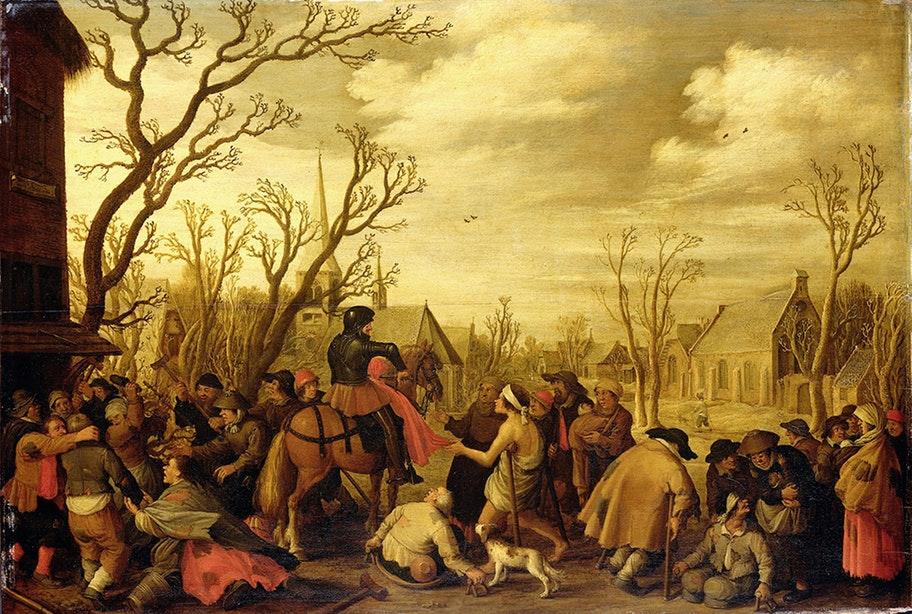
Святой Мартин – историческая личность IV века нашей эры. Праведник, целитель. Самое известное его деяние – когда он служил по воле родителей в римском легионе, однажды зимой он отдал половину своего плаща продрогшему от холода нищему. Почему половину, а не целый плащ? Потому что по правилам Римской империи половина солдатской одежды являлась собственностью Рима.
11 ноября – день святого Мартина. Как случилось. что его день так масштабно отмечается? Этот день совпал с языческим праздником – днем сбора урожая и традицией возжигать огни для молитв о плодородии. За плодородие в языческие времена отвечал бог Водан, известный еще как Один, и изначально огни, шествия и песнопения предназначались ему.
В христианские времена все это было переиначено на новый лад, и с тех пор шествие связано в народной памяти со Святым Мартином. Теперь огни – лампионы – и праздник в честь святого неразрывно связаны.
Где в Нидерландах отмечают этот праздник
Вообще-то, по опросам, 72 процента нидерландцев понятия не имеют, о чем этот праздник. Дальше леденцов и лампионов их знания не простираются. Праздник отмечают далеко не по всей стране, и в последние годы все меньше. Конечно, он нравится маленьким детям: леденцы в обмен на песенки – это прекрасно. Но не все дети постарше и взрослые разделяют их энтузиазм.
В то же время многие, даже не религиозные люди, все же отмечают праздник, не сильно вдаваясь в его смысл, а просто отдавая дань традиции. Известно, что до сих пор около половины нидерландцев отмечает праздник. Особенно активны провинции Лимбург, Гронинген, Фрисланд, Дренте, Норд-Брабант.
Где можно присоединиться к шествию
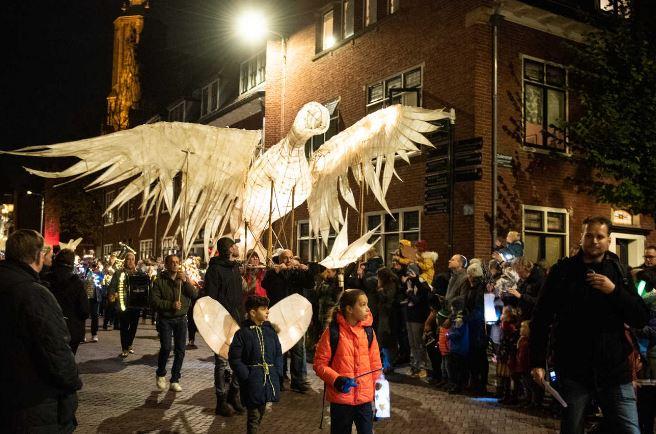
Традиционно этот праздник отмечается с наибольшим размахом в Утрехте: святой Мартин – покровитель этого города
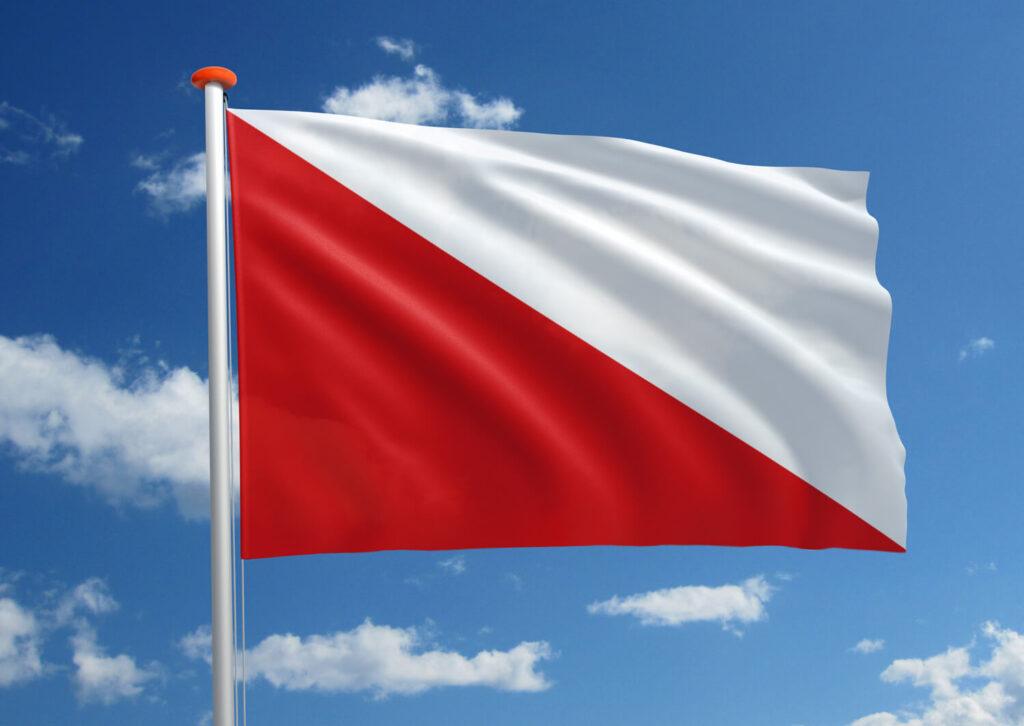
О том, как святой Мартин одним взмахом меча отрезал половину своего плаща, чтобы согреть нищего, нам всегда будет напоминать герб/флаг Утрехта . Его полотнище по диагонали разрезано на красный и белый цвета.
Святой Мартин – покровитель Утрехта. В этом городе праздник отмечается с наибольшим размахом.

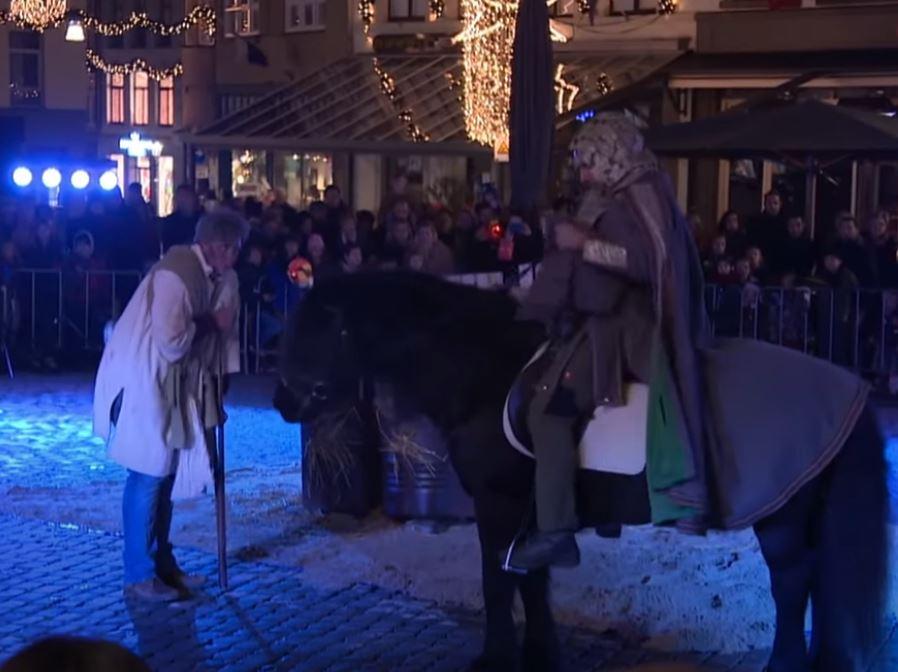
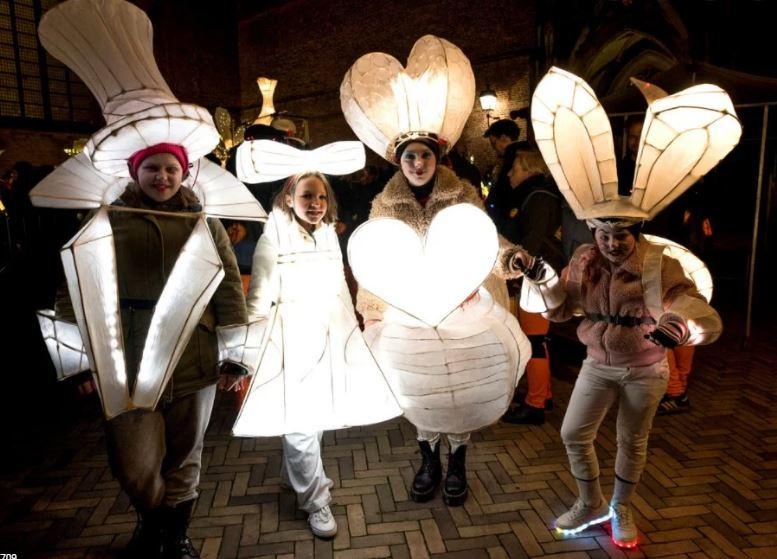
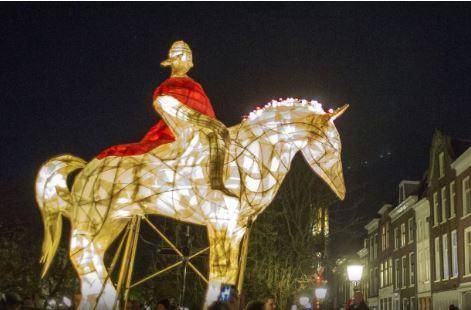
В этом году Утрехту исполняется 900 лет, и можно ожидать, что традиционное шествие – Sint Maarten Parade – будет еще красочнее, чем обычно. Начнется оно в 18 часов у Spoorwegmuseum и продлится до 21 часа.
Как отмечают этот праздник в Нидерландах
Отмечают так: поют песенки, ходят по домам, просят сладости.
Самая известная и простая песенка –
Синт Мартин, Синт Мартин, у коров есть хвосты…
Sint Maarten, Sint Maarten, de koeien hebben staarten
– эту строчку знают все нидерландские дети, а поется она раз в год.
Есть и другие песенки (Sint-Maartensliedjes), но именно эту песню вы услышите много раз, если будете открывать дверь, когда в нее позвонят дети, собирающие урожай леденцов.
Полный текст этого знаменитого куплета, с подстрочным переводом:
Sint Maarten, Sint Maarten, de koeien hebben staarten.
Синт Маартен, .Синт Маартен, у коров есть хвосты.
De meisjes hebben rokjes aan. Daar komt Sint Martinus aan.
На девочках – юбочки. Вот идет Синт Маартен.
Geef een appel of een peer. Ik kom het hele jaar niet weer.
Дай яблоко или грушу. Я не приду еще целый год.
Het hele jaar dat duurt zo lang, tot mijn lichtje branden kan.
Год, который длится так долго, пока горит мой огонек.
Как правило, этим куплетом все представление у вашего порога и заканчивается. Хотя чаще всего можно и не дожидаться конца куплета. Как только дети поймут, что вы готовы расстаться со сладостями, они сами закончат, деловито соберут добычу и поскачут к следующей двери.
Околевшие от холода родители, стоящие чуть в стороне, обменяются с вами понимающими взглядами, gezellig!
Что принято делать или покупать в этот день
- Если вы не отмечаете этот праздник или у вас есть маленькие дети, которым нужна тишина, вам стоит повесить на дверь соответствующую записку – просьбу не беспокоить. Некоторые поступают радикально: выключают свет, а также отключают дверной звонок из опасений, что дети все равно будут звонить в дверь
- Если вы собираетесь открывать дверь детям, стоит запастись фруктами и сладостями
- Если вы идете на шествие, вам понадобится лампион.
Если вы идете на шествие, вам понадобятся:
Палочка с фонариком, или lampionstokje met lampje, а также – пакет для сбора сладостей
Их можно купить или сделать самим. Иногда учителя посвящают этому урок в школе.




А напоследок – веселый рассказ о том, как впервые пережить Синт Мартин, если только переехал в страну и ничего о нем не знаешь. Его автор – карьерный коуч Ирина Мушук.
Наш первый Синт Мартин свалился на нас нежданно, негаданно. Мы 5 месяцев как переехали в Голландию и хоть наши дети и ходили в школу для изучения языка, и им там что-то даже рассказывали про этот праздник, суть его мы не поняли.
Так вот, сидим мы себе спокойненько вечером, пьём чай, как раздаётся звонок в дверь. На пороге стоят соседские детишки в карнавальных костюмах с фонариками в руках и начинают петь заунывную песенку на голландском. А сзади стоят родители и таинственно улыбаются. Ну мы не дураки, поняли что какой-то праздник, поблагодарили детей, поздравили как смогли на голландском. А они стоят и не уходят.
Тут один из детишек спрашивает: “Waar zijn de snoepjes?”, что в переводе означает: А где, собственно ,конфеты? Тут младший сын как подскочит: “Точно, на Синт Мартин надо детям конфеты дарить! Ну, я пошёл тогда тоже конфеты собирать по соседям.” Конфет у нас не было. Мы раздали детям мандарины. Сердобольные соседи нам объяснили что к нам весь вечер будут дети ходить с песенками и ждать конфет. И у нас есть 2 выхода: выключить в прихожей свет, затаиться и тогда в дверь даже не позвонят, или быстренько сгонять в Альберт Хайн и купить конфет, если найдём. Муж побежал в магазин, еле нашёл какие-то залежалые конфеты. А мы то думали, почему все конфеты так рьяно скупали в эти дни? В общем, младший сын присоединился к группе соседей и принес спустя час пакет сладостей. С тех пор мы в каждый год запасаемся перед 11 ноября конфетами, включаем свет в коридоре и ждём гостей. Наши ребята тоже ходили пару лет с друзьями по домам, пели песенки про Синт Мартина в обмен на сладости. Я к ним тоже присоединялась и действительно, в некоторых домах свет выключен, а значит – вас не ждут. Но у нас свет всегда включён, и мне нравится эта добрая Голландская традиция.
Вся зима для жителей Нидерландов — это сплошной Мидвинтерфеест, что буквально переводится как «праздник зимы». На самом деле, это название относится в наибольшей степени к началу зимы. Ее приносят с собою три любимых и почитаемых в стране святых — Мартин, Клаас, Томас.
Святому Мартину, епископу Турскому, чей день празднуется 11 ноября, посвящены сорок церквей в Нидерландах из числа самых древних и четыреста церквей в Бельгии. А город Утрехт считается находящимся под его непосредственным покровительством.
В наше время самое интересное представление в Мартинов день разыгрывается в городе Венлоо в провинции Лимбург. На улицах города появляется сам святой Мартин в епископском костюме. Он едет в старинном экипаже, а по обе стороны экипажа и за ним важно выступает оркестр — свита ряженых, несущих в руках фонарики, вырезанные из репы со свечками внутри.
В день святого Мартина почти на каждой голландской кухне в духовке запекается гусь. Этот обычай берет начало еще в те времена, когда количество корма на зиму заготавливалось ограниченное, его берегли для несущих яйца, а нагулявших осенний жирок гусей к праздникам забивали. Легенда же гласит, что однажды гуси своим гоготаньем очень мешали святому Мартину произносить проповедь, и тот в сердцах сказал, что на столе они ему куда милее. Согласно другой версии, гуси досадили святому куда сильнее — бестолковые птицы выдали криком его тайное убежище, каким как раз и являлся гусиный сарайчик. С тех пор люди и наказывают их в день памяти святого.
В этот день популярен еще один вид «угощения святого Мартина». Изготавливается оно так: бумажные кулечки поплотнее набиваются изюмом, орехами, конфетами, печеньем вперемешку с мелкими монетками, маленькими игрушками, сувенирами, маленькими косметическими принадлежностями и прочим — в зависимости от состава и возраста тех, кому предназначено угощение. Такие кулечки подвешиваются к потолку в залах и комнатах, где происходят детские праздники и молодежные дискотеки — примерно на высоте поднятой руки взрослого человека. В кульминационный момент праздника кулечки поджигают, «начинка» в беспорядке падает на гостей, и те радостно расхватывают подарки. Правда, из соображений пожарной опасности в последнее время все происходит по другому — гостинцы перемешиваются в большой корзине, и кто-нибудь из хозяев или устроителей праздника просто опрокидывает корзину в толпу.
День святого Мартина в Нидерландах или Сент-Мартинс отмечается 11 ноября. Праздник посвящён памяти римского солдата, который был крещён во взрослом возрасте и позже стал епископом. Одной из самых важных традиций, отмечаемых в День святого Мартина в Нидерландах, является парад фонарей. Дети мастерят бумажные фонарики, гуляют с ними по улицам и поют песни о Сент-Мартине. Они обходят дома и получают конфеты. Прочитав статью, вы узнаете историю святого Мартина. А также подробнее познакомитесь с тем, как День святого Мартина отмечается в Нидерландах.
1. История о святом Мартине (316-397 годы)
Святой Мартин родился в начале IV века (316 год) в Паннонии (Венгрия). Ещё в детстве он мечтал стать священником. Однако отец хотел, чтобы сын стал военным. Однажды, находясь на военной службе Мартин повстречал нищего, который замерзал в студёную пору. Он накормил его и отдал ему часть своего плаща.
Как только с военной службой было закончено, Мартин отправился к епископу города Пуатье (в Галлии) Илларию, который повелел ему стать экзорцистом.

За его служение в эту пору Мартина прозвали «Милосердным». Он много времени уделял заботе о бедных и обездоленных людях. Позже Мартин стал миссионером. В этом качестве он нёс веру Христа кельтскому населению. В 360 году рядом с Пуатье (в Лигуже) им был заложен монастырь. Его мечта осуществилась, ведь с детства он хотел стать монахом.
Однако однажды ему пришлось ещё раз изменить свою жизнь. В 371 году Мартина позвали помолиться за одного больного в город Тур. Таким способом жители города заманили его, чтобы сделать епископом. Известна история про то, как он спасался на гусиной ферме, не желая принимать сан. В результате он все-таки стал епископом Тура. Находясь в этом сане им был основан ещё один монастырь в Мармутье. Позднее из него вышли многие епископы, которые продвигали христианское учение по миру.

Умер святой Мартин в храме Канди во время молитвы 11 ноября в конце 4 века (предположительно в 397 или 400 году). Позднее он стал у христиан почитаемым и любым святым за доброту и милосердие к обездоленным людям.Святой Мартин покровительствует бедным, солдатам, сукноделам и животным.
2. Как в старину в Нидерландах отмечали День святого Мартина?
В старину День святого Мартина или Сент-Мартинс совпадал со временем, когда семена озимой пшеницы были посеяны в полях. Сельскохозяйственные работники обычно посещали ярмарки вакансий, где они могли найти новые рабочие места на следующий сезон.
В это время также проводились большие ярмарки, на которых продавались разные виды колбасных изделий. Нидерландцы здесь не только покупали еду, но и дегустировали вино нового урожая и Рождественское пиво.
Вечером на Праздник святого Мартина семьи собирались, чтобы вспомнить любимого святого, а также вдоволь наесться. В центре стола ставился жареный гусь. К началу ноября гуси нагуливали много жира и их забивали на праздники. Согласно одной из легенд, когда-то святого Мартина в Туре выдало кудахтанье этих птиц. За этот «грех» птица поплатилась тем, что её стали готовить на праздничный ужин…

Во время застолья взрослые пили вино и пели песни в честь святого Мартина. После сытного ужина молодые люди выходили на улицы, где устраивали гуляния. Празднество содержало обход домов, где юноши и девушки выпрашивали дрова и угощения. Веселье завершалось разжиганием костра и прыжками через него. В некоторых местах организовывались процессии во главе с ряженным святым Мартином на коне.

3. Как в Нидерландах отмечают День святого Мартина в настоящее время?
День святого мартина или Сент-Мартинс (одиннадцатого ноября) в настоящее время отмечается во многих частях Европы, в том числе и в Нидерландах.
Одной из самых важных традиций, отмечаемых на праздник в Нидерландах, является парад фонарей. Дети носят бумажные фонарики и свечи, гуляют по населенным пунктам и распевают песенки о Сен-Мартене. В Нидерландах дети делают то, что напоминает американский «трюк или удовольствие» на Хэллоуин. За исполнение своих песен они требуют конфеты или другие сладости.

В крупных нидерландских городах, таких как Амстердам, Роттердам, проводятся красочные шествия с самодельными фонарями в руках… И конечно День святого Мартина славится большим количеством съеденных жареных гусей… За этим праздником начинается Адвент, а во время него всякие излишества запрещены.

Вот так День святого Мартина отмечается в Нидерландах! Как этот праздник отмечается в Венгрии, на родине святого, вы узнаете, перейдя по ссылке ниже:
Читать статью: «День святого Мартина в Венгрии»
Читайте также:
Праздники и фестивали Нидерландов
Уважаемые читатели! Пишите комментарии! Читайте статьи на сайте «Мир праздников»!

Как отмечают день святого Мартина в Германии

Очевидно, что традиции каждого народа уникальны. И нагляднее всего это можно проследить в праздниках той или иной страны.
В Германии, к примеру, как и в других странах, есть праздники, которым сотни лет, а есть и совсем «юные», возраст которых не превышает и пары десятков годков. Праздник, о котором пойдет речь, отмечают в наши дни в Германии с очень давних пор. Причем традиции его празднования очень колоритны и оставляют незабываемые впечатления независимо от того, небольшой это городок или столица Германии — Берлин. Это — День святого Мартина. Справедливости ради нужно отметить, что католики считают святого Мартина покровителем Франции. В протестантской Германии также очень почитают и любят этого святого.
Немцы отмечают этот праздник всегда в последний день перед началом Рождественского поста — одиннадцатого ноября. Время праздника выбрано очень удачно: снега в ноябре пока еще нет, а за окном уже быстро начинает темнеть, холодно и сыро. До Рождества еще нужно ждать достаточно долго. И Laternenumzug — церемонии прохождения улицами с факелами и фонариками — с особым восторгом ждут взрослые и дети. Но об этом чуть позже. Если Вы приехали в Германию специально, чтобы поучаствовать в празднике, советуем посмотреть список лучших отелей мира, чтобы Вам было где остановиться.
Кто же он, святой Мартин?
Легенда гласит, что история, положившая начало празднику, произошла давным-давно, еще в четвертом веке неподалеку от города Амьена. Темной холодной ночью мимо городских ворот проезжал всадник. В молодости он, (а это был Мартин), служил солдатом в римской армии. Всадник, разумеется, ехал верхом на коне, одет он был в теплый плащ, который спасал его от ветра и непогоды. У ворот Амьена и произошла встреча Мартина с нищим, который судорожно кутался в лохмотья. Недолго думая, Мартин выхватил свой меч, отрезал половину своего плаща и отдал несчастному, чтобы тот мог хоть немного согреться. Вскоре Мартину во сне явился Господь и поблагодарил его за совершенное добро. Завернут Иисус Христос был в ту самую половину плаща. Потрясенный Мартин принял решение уйти с военной службы. Начав проповедовать учение Христа, Мартин вел благочестивую жизнь. Заботясь о бедных, всячески старался помогать им. За доброту к людям и сострадание нуждающимся Мартина называли Милостивым. Впоследствии его выбрали епископом.
Традиции праздника
Но вернемся к традиции празднования Дня святого Мартина в Германии. Несмотря на некоторые несущественные различия празднования, неизменными остаются две обязательные составляющие. Первая — торжественное шествие улицами с фонариками (Laterne). Сам фонарик обычно бумажный со свечой внутри. Его закрепляют на палочке. Изготовлением этого праздничного атрибута в Германии, как правило, занимаются дети в дошкольных учреждениях и ученики начальных классов. Ведь все дети Германии знают о святом Мартине, который делился с другими тем, что у него было. Детей учат поступать так, как поступал святой Мартин.

Процессия с фонариками (взрослые идут с зажженными факелами) начинается всегда от главного храма города, к которому по традиции приходят все желающие. В столице же Германии действие начинается около великолепного Берлинского кафедрального собора. Далее всех участников делят на колонны, которые следуют каждая своим маршрутом к указанному месту. Шествие не должно превышать по времени сорока минут. Связана эта традиция с тем, что (по легенде), Мартин потерялся, а крестьяне с зажженными факелами принялись разыскивать его. Со стороны зрелище выглядит потрясающе: в сумерках огненные точки движутся в одно место разными улицами, при этом участники воодушевленно поют песни и разыгрывают театральные миниатюры, связанные с сюжетом поиска Мартина.
Второй составляющей праздника является приготовление обеда, причем в качестве главного блюда здесь выступает жареный гусь. Согласно легенде, узнав о том, что его избрали епископом, Мартин спрятался в стае гусей. Поиски крестьянам будущего епископа облегчили гуси, выдавшие место нахождения Мартина своим шумным гоготаньем. С той поры гуси «расплачиваются» за свой поступок, став обязательным украшением праздничного стола в День святого Мартина. Но скорее всего, версия о том, что день одиннадцатого ноября был последним днем перед началом Рождественского поста, когда можно было употреблять мясную пищу, более правдоподобна. Кроме того, заслуживает внимания и версия, которая заключается в том, что вместо денег за землю по окончании сбора урожая, крестьяне чаще всего расплачивались именно гусями. Как бы там ни было, но население планеты, говорящее на немецком языке и живущее в разных странах, непременно старается соблюсти давние традиции и отметить окончание сбора урожая праздником Дня святого Мартина.